Here’s a little detail about The Martyr Murderess Charlotte Corday (you can catch up on her by reading the link below) most normal people probably wouldn’t be interested in. But I am admittedly morbid, (and you are too if you follow this page right?) so when I read that the dagger she used to murder Marat was purchased in one of the little shops surrounding the Palais Royal- of course I had to know which one!
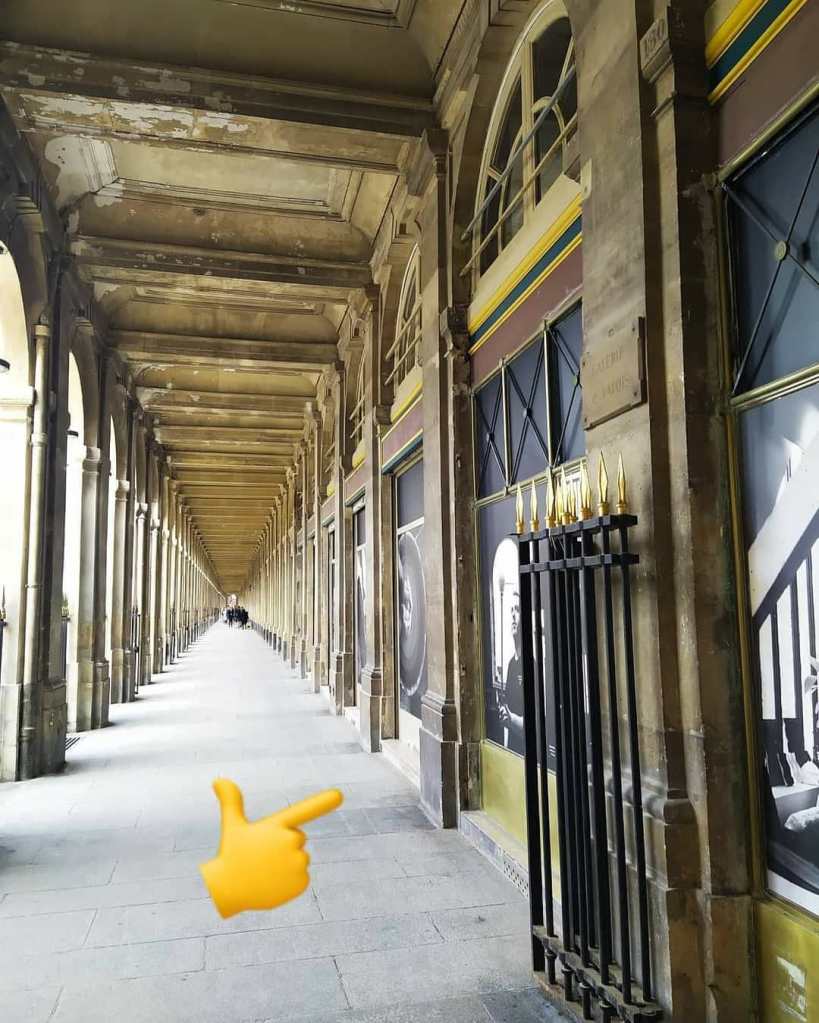
177 Galerie de Valois today, empty
In the galleries surrounding the gardens of the Palais Royal (then known as the Palais de l’Egalité because of strong anti-royal sentiments and such) you can still see this shop where Charlotte bought her murder weapon. It was known in 1793 as a knife shop, Le Coutelier Badin.
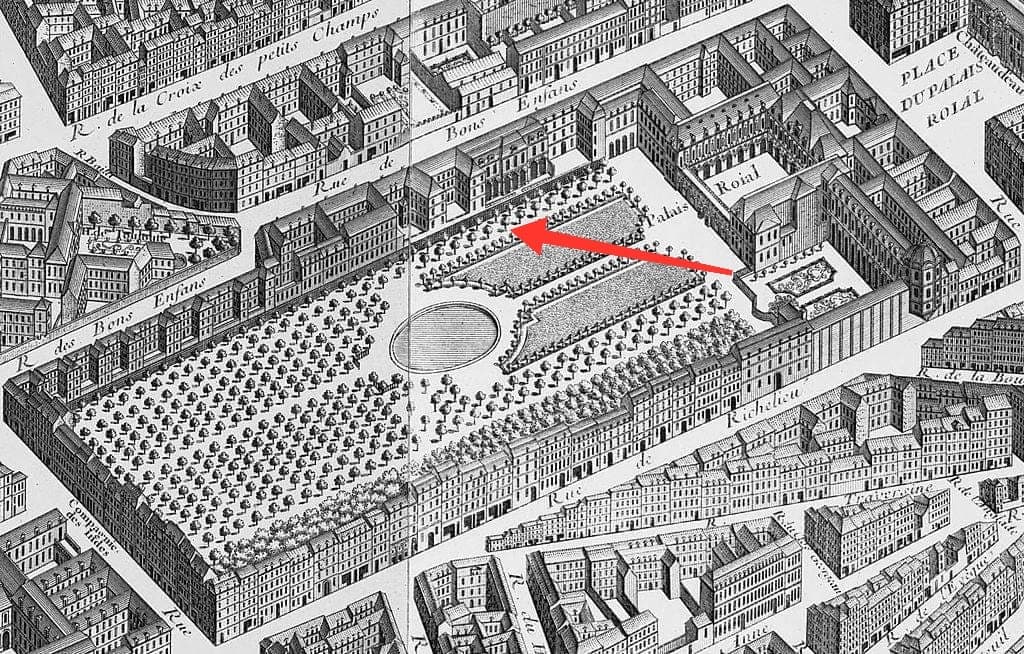
Approximate location of the shop where Charlotte purchased the dagger she would use to kill Marat. Turgot map, 1739
According to her testimony, Charlotte purchased the 15cm blade for 40 sous around 8am on July 13, 1793. She then took a carriage to Marat’s home across the river. It took her multiple tries to enter his home that day (both the guardienne of the building and Marat’s companion told her off) but on her 3rd attempt in the evening, she yelled loudly enough for Marat to hear her from his bathroom, insisting she had information for him.
Assassination of Marat, Paul Baudry 1860
And like an 18th century bath ridden Mr. Rodgers, he told her to come on in! The rest is history,.. check out the post below.
Ernest Hemingway once said, “Paris is so very beautiful that it satisfies something in you that is always hungry in America” and no one can attest to that in a more literal sense than Culinary TV personality Julia Child.
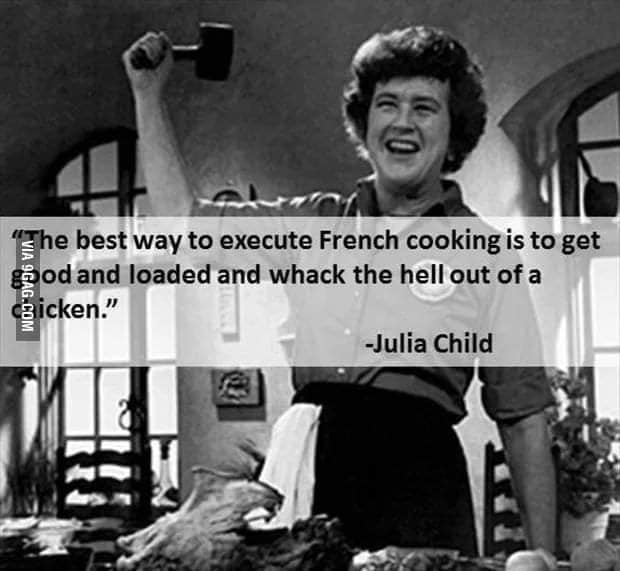
Before Rachel Ray and Martha Steward, there was the OG American Celebrity Chef whose high pitched, resonating voice filled the kitchens of America in the 60’s and 70’s. Not only was she responsible for introducing French cuisine to American housewives who lacked the culinary expertise and confidence to cook à la française, she wrote the first English cookbook that made French recipes accessible to American kitchens.
“You don’t have to cook fancy or complicated masterpieces – just good food from fresh ingredients.”
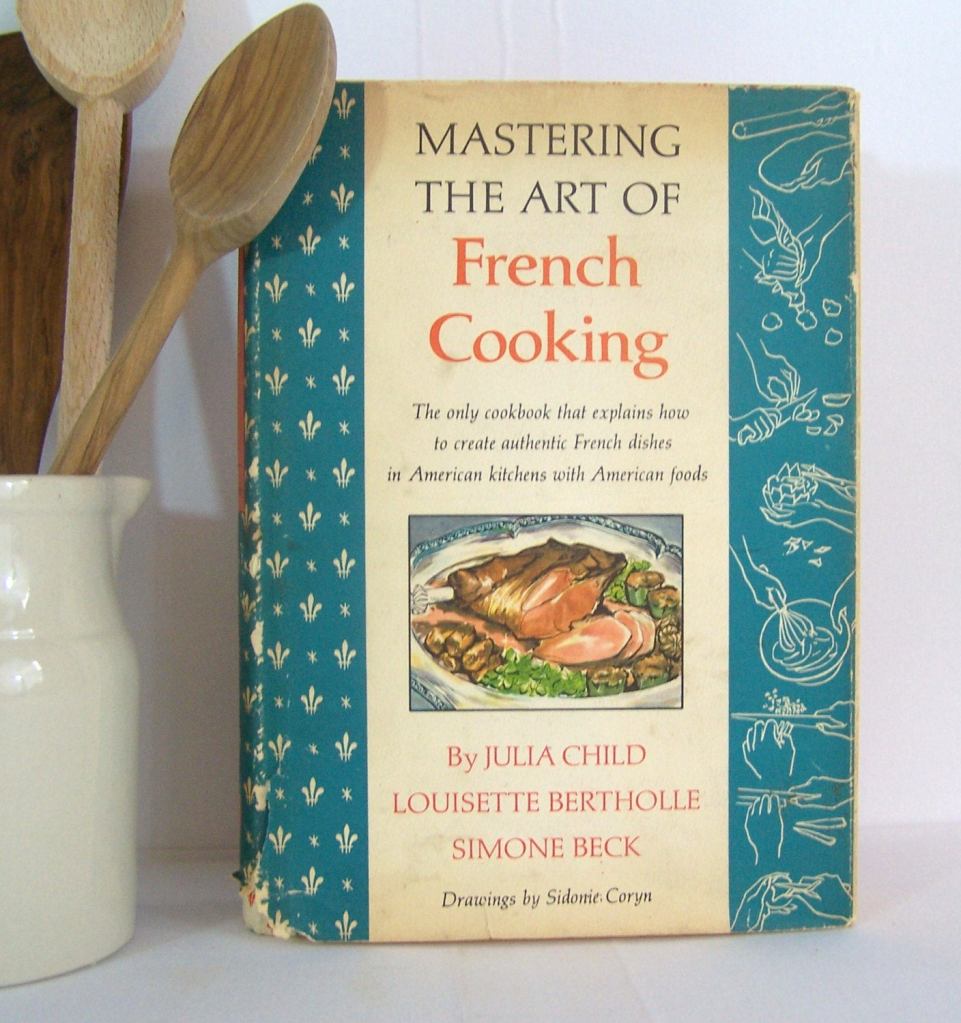
No one had ever attempted to translate French classics like Boeuf Bourguignon and Coq au Vin until Mastering the Art of French Cooking was published in 1961. Her TV show, The French Chef, came about soon after and America loved the goofy and always cheery Julia who would make her raw chickens dance and laugh about her frequent kitchen blunders which were broadcasted live on TV. Her approachable personality made chic French cuisine less intimidating in a time when meat and potatoes dominated the dinner table.
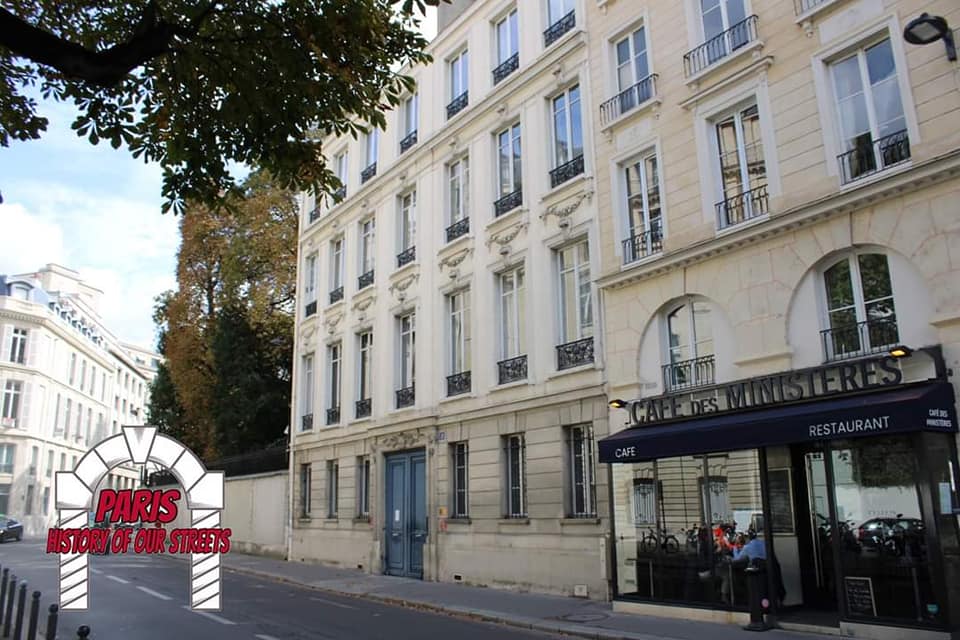
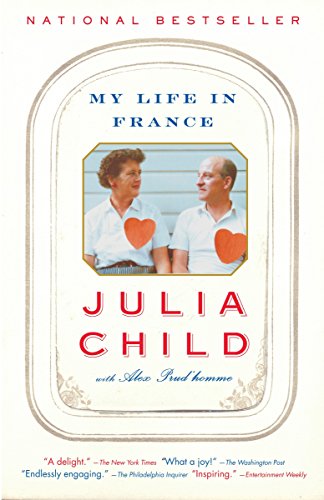
I’m no chef and I avoid spending any longer in my tiny Parisian kitchen than I have to, but after reading her book, My Life in France; I was inspired to learn more about Julia and the life she lived in post WWII Paris with her husband Paul, whose job at the US Embassy brought them to Rue de l’Université.
Rue de l’Université, lovingly dubbed Rue de Loo by the Childs when they moved there in 1948.
At 34, Julia had never been interested in cuisine, but after a meal of Chablis, Oysters, and Sole Meunière her first evening in France, she was blown away by what she would always refer to as a life changing experience. She enrolled in the famous Le Cordon Bleu culinary school as the only woman amongst American GIs and the rest is history. Interestingly enough, Le Cordon Bleu would turn out to be a bit of a disappointment for Julia, but I’ll let you read about her experience there and decide for yourself.
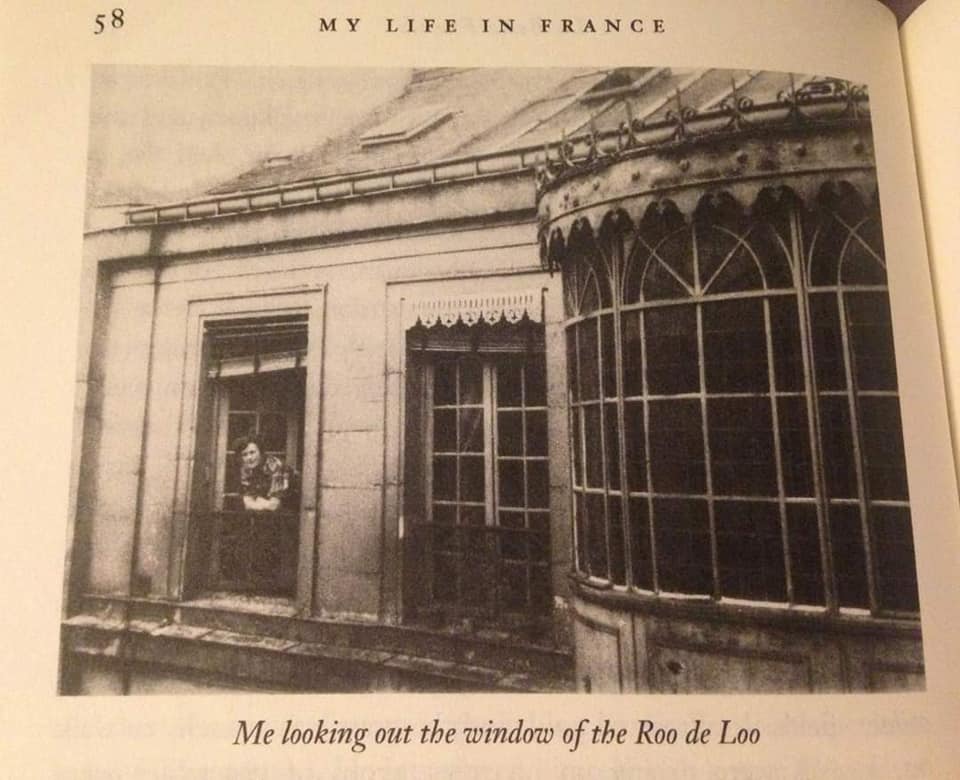
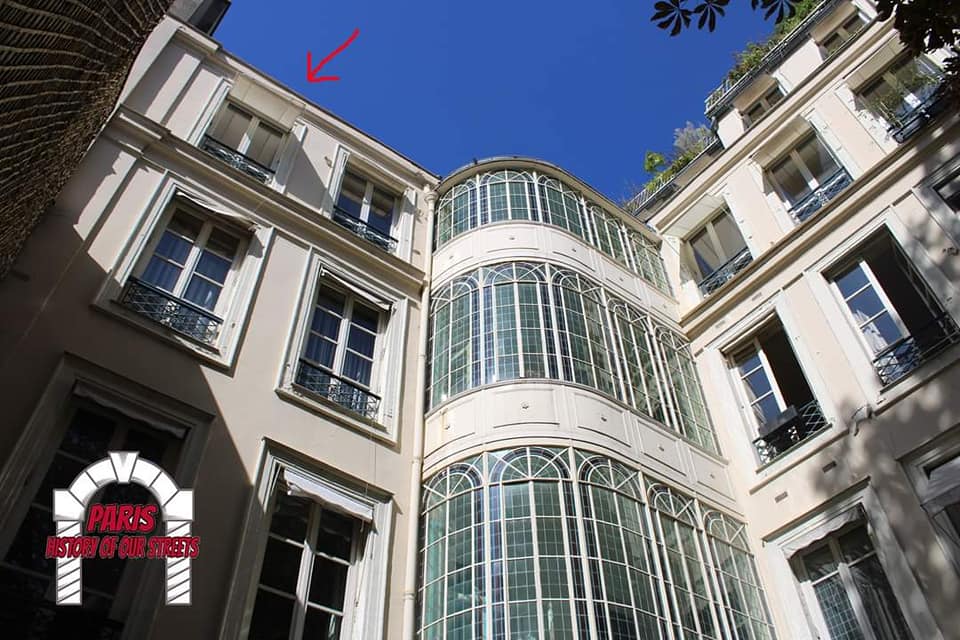
While reading her book, I came across a beautiful picture of Julia leaning out of her window at Rue de Loo, and I was determined to see if this same building was still around. I found the address online and came across numerous photos of other (less motivated if I may dare say..) bloggers and aspiring chefs who also wanted to walk amongst the steps of Julia. But I was curious to see that the picture I had seen, was clearly not the same building where Julia had taken the photo, although it was labeled with correct address. I determined that it must have been taken from the interior courtyard and so I went to investigate.
Where is this window??
Because you can’t enter apartment buildings without the code, (or in general, but I follow the ideology that nothing is forbidden until I am told otherwise) I had to wait about 10 minutes for someone to come out. As soon as the door opened and someone walked out, (I wondered if they even knew of Julia and that she lived there. She was never very popular in France; although she did receive the French Legion of Honor for her culinary contributions) I slipped inside and went to the courtyard. Et voila!
Compare the windows here to the prior picture, its Julia’s window!
I found the window to Julia’s Paris apartment, where she lived for about 4 years, located in that vast, dull area of the 7th arrondissement between the Eiffel Tower and Saint Germain des Pres. I don’t know if anyone else experiences this same bizarre phenomenon as me, but sometimes I’ll read something that touches me on such a deep personal level that I feel like I genuinely know the writer or character. Along with Laura Ingalls Wilder,
Despite my disinterest in cuisine, Julia Child just really connected to me through the pages of her book. I don’t know if it’s because we are both tall and loud, or that we embraced our quirkiness in Paris rather than try to blend in like everyone else, but there was something magic about her that goes beyond her culinary skills.
I’ll end my Julia Child report here, but I highly suggest you read her book My Life in France to learn more about this fascinating woman. Bon Appétit!
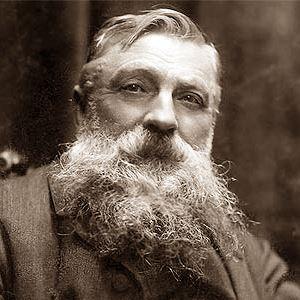
The Musée Rodin has got more booty than a pirate ship, and one might even call it’s namesake, the talented sculptor Auguste Rodin- the 19th century Sir Sculpts A Lot. Known as the father of modern sculpture and a bit of an odd duck, Auguste had a rough start to his career with most of his works being rejected, which is pretty much a right of passage as all famous artists know amiright?
You can’t claim glory until you’ve rebelled against current artistic fads!
Even though he was kind of a dick, he was considered the Messiah of Sculpture by his following of dedicated disciples (including his muse/lover/student Camille Claudel) who eventually became famous in their own rights.
What was so remarkable about Rodin was that he had the ability to make marble appear soft and natural, finding the beauty in the textured wrinkles and rolls of his subjects that gave the viewer a sense of their inner struggle. Because nothing says “God damn I’m ready to keel over and bite like the dust” like a saggy butt right?
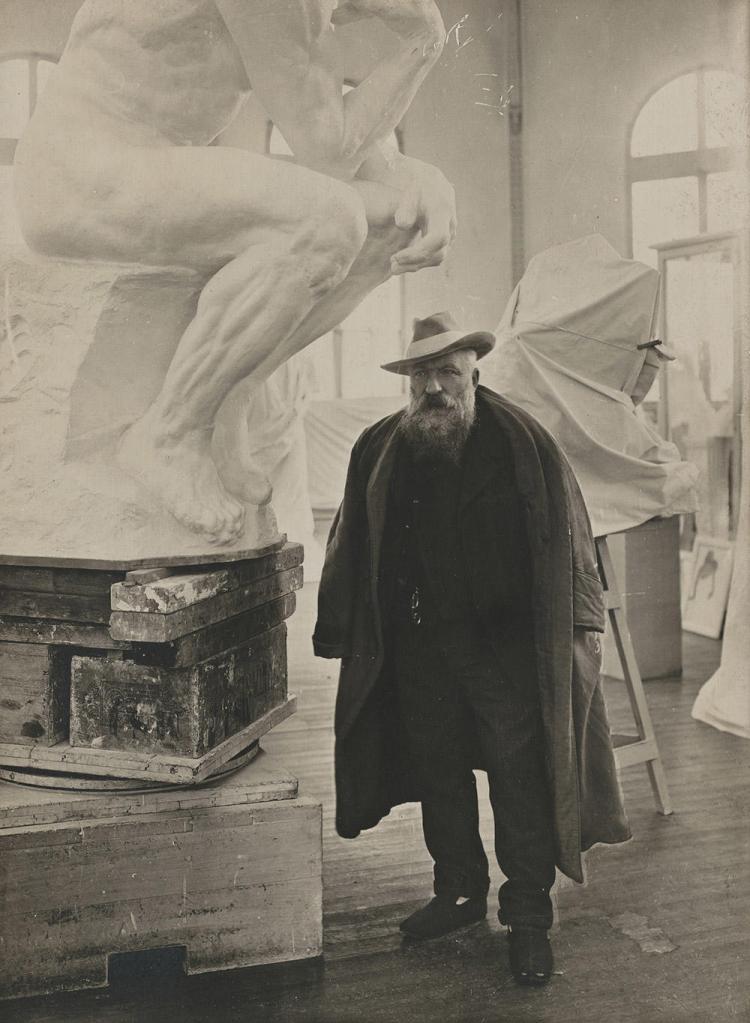
Auguste and one of his greatest sculptures, The Thinker
His fusion of classic Greek sculpture updated with modern elements became part of the realism movement that made art critics of the time clutch their pearls and question everything they knew, especially with Rodin’s more sensual, avant-guard pieces. Auguste knew not only how to make a butt, but how to make you see beyond the butt. You can judge them for yourself, but this is my personal interpretation.
THE TOP FIVE BUTTS OF THE RODIN MUSEUM
NUMBER 5Eve Rodin, 1881 I chose this butt because it reminds me of how I look when I get out of the shower and there is no towel hanging on the wall, so I have to tip toe my dripping wet ass to the closet to get a fresh one. Sure it’s not an elegant movement, but its legit. This butt belongs to Eve, and Auguste intended it to go with Adam on his famous Gates of Hell sculpture. I especially appreciated the creepy little man laughing beside Eve. He’s like that funny uncle who tells inappropriately dirty jokes he finds funnier than his audience. I’m guessing something like, “Hey security! This sculpture is broken! It’s got a crack in it!” “Can I borrow your butt? Mine has a hole in it” “What’s the difference between a brown noser and a butt kisser? Depth perception.”
NUMBER 4The Kiss Rodin, 1882 This is the world’s most beautiful ass grab during a steamy make out sesh. The hand isn’t just resting on her hip, you can actually see the indent it makes. That titillating shadow of a butt crack peeks out from the rock its perched upon (not ideal making out furniture) and the woman pulls her partner closer, a movement you can almost feel when you see how her spine is stretching. Apparently this couple is based on characters from Dante’s “Inferno” which I never read but Wikipedia tells me their sultry embrace is about to be cut short by the women’s husband. Ruh roh.
NUMBER 3The Three Shades Rodin, 1886 “Abandon Your Hope and Pants, All Ye Who Enter Here!” The only thing better than one tushy is three! Especially when they are damned to hell and eternal doors men for the gates of hell. We were meant to observe these naked sinners from above as they looked down upon us so it’s a pleasant change to check them out from the back. Auguste created them based on a scene from Dante’s “Divine Comedy” but the sculpture has reentered the limelight in recent years after inspiring Beyonce for her hit dance song “Single Ladies”. Allegedly.
NUMBER 2Iris, Messenger of the Gods Rodin, 1891 WELL SPANK ME CROSS EYED this is graphic. It’s like the Sequel to Gustave Courbet’s “Origin of the World: Flexible Yogi Position”. I feel bad for the model who posed for this, I wonder if this is what the gynecologist sees when I struggle to get my foot in those stirrup thingy’s during our annual date. Can we really consider this a butt? My 13-year-old self as yes, as evidenced by my response when my 7rd grade health teacher asked me to identify the anatomy of a highly detailed photo of a vagina.
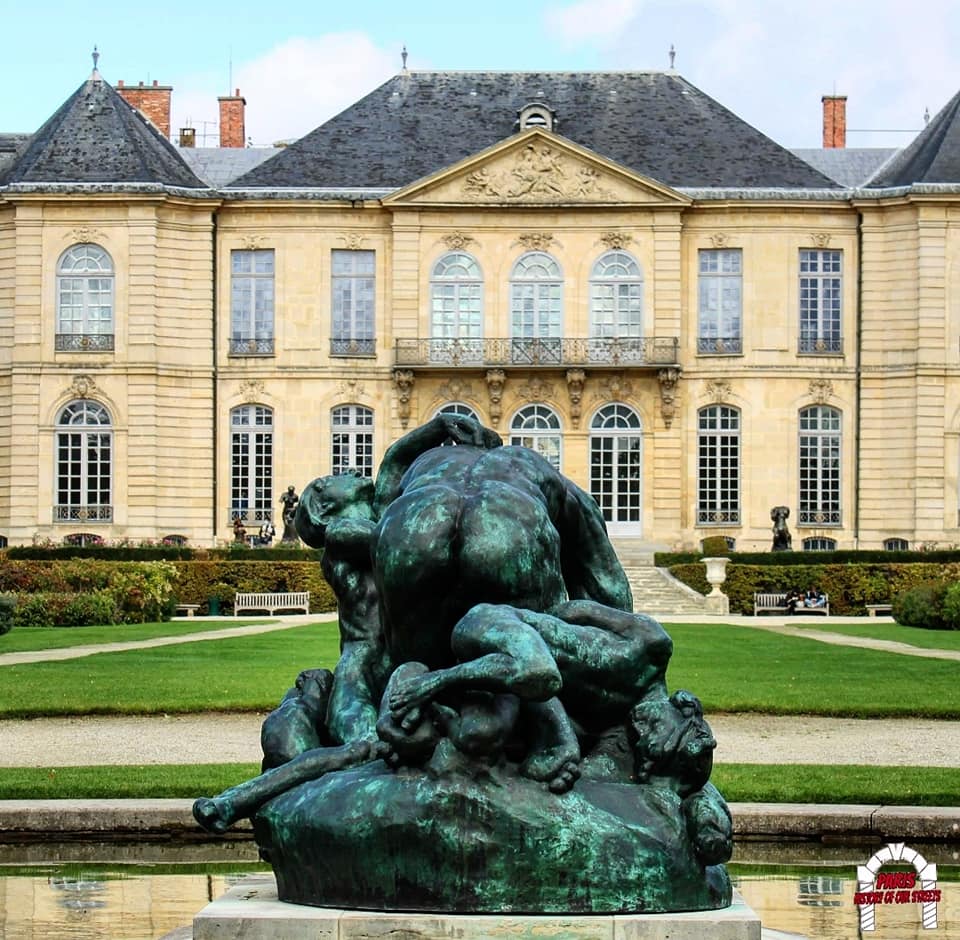
NUMBER ONEUgolino and his Sons Rodin, 1881 Let’s just acknowledge the elephant in the room. Butthole. Chocolate Starfish. Anus. It’s like a bull’s eye when your eyes pass over it, and you feel drawn within. I want to tell you this is just a dad playfully wrestling with his kids, but nope. This is a guy from Dante’s Inferno who is imprisoned with his kids and he’s so hangry that he goes all Count Canibal and eats them. As a mother, I can relate, kinda. Bon appetit!
I’ve got a little archaeology lesson for y’all today, something that I like to think of as my favorite Secret Paris Historical Detail since I learned of it in 2013 during a fieldtrip with my Histoire de l’Architecture Française class.
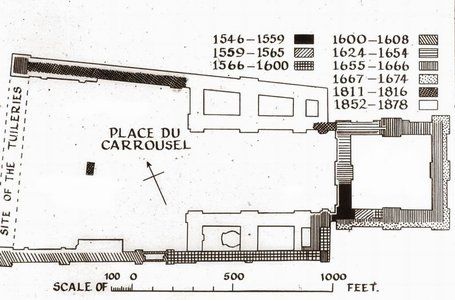
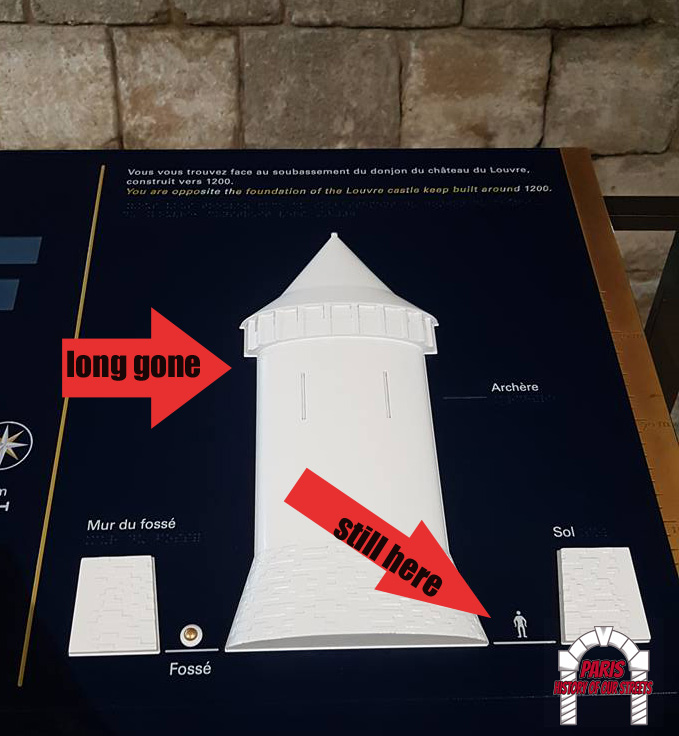
But first, a little FoUnDaTiOn! If you didn’t already know, there is an entire underground part of the museum dedicated to the foundations of the OG Louvre fortress that predates everything you see today, most of which is fairly recent dating from the 19th century.
Dating the Louvre Museum. The oldest parts are solid black and date from the 16th century. Mostly everything surrounding the pyramid is 19th century.
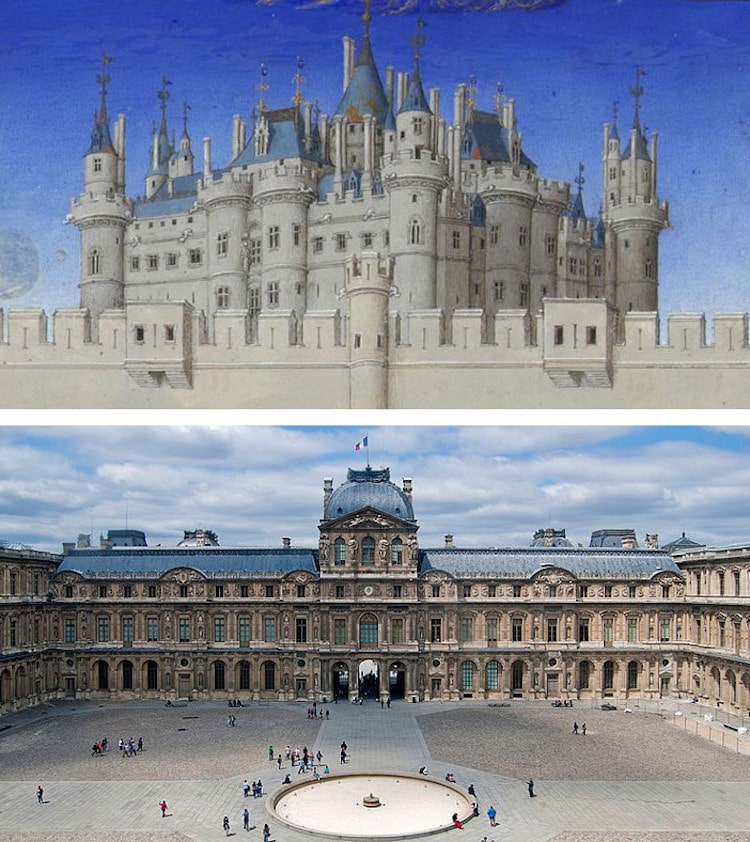
The Louvre Fortress was built by King Phillipe August II in 1190 and then destroyed during the Renaissance when King Francois I leveled it to begin creating the Louvre that we know today. The tricky thing about destroying fortresses is that they are built to withstand destruction, thus making them very difficult to erase. Fortunately for us, the foundation of the walls still exists and when you enter this part of the museum, you are actual walking in what used to be the moat. (see photo) Simply put, when the fortress was demolished, the walls were taken down and the moat filled in. No one bothered to take down the walls below the ground level. So this area, which today is found under the Cour Carré was just rebuilt upon with what we see today as the Louvre palace.
Excavation work of 1985 in the Cour Carré which uncovered the former Louvre Fortress. You can walk through this today
So my fieldtrip. Back then, I had been a pretentious little shit and I met my classmates that day thinking I had already seen everything there was to see at the Louvre, specifically in the Medieval Louvre section of the museum where we started.
The entrance to the Medieval Louvre in the Sully Section of the Museum
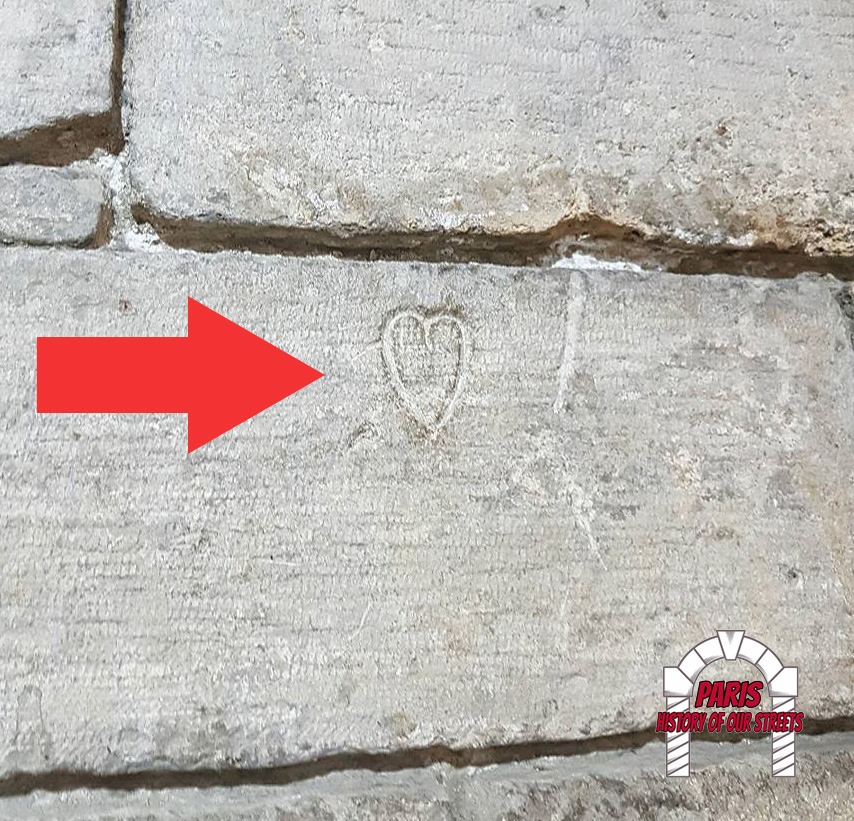
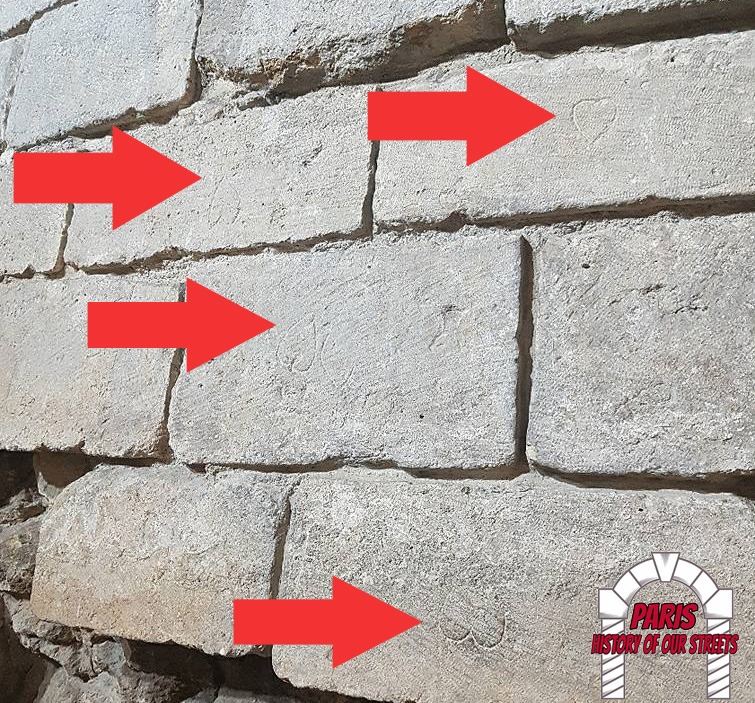
My professor herded all 15 of her students together and brought us to the first section of stone walled foundation, and asked us to tell her what we saw. It only took about 10 seconds for someone to hesitantly exclaim “Are those HEARTS?”
WELL SURE SHIT! There are hearts, like modern day cartoony Valentine’s Day hearts, carved on EVERY.SINGLE.STONE.BLOCK! My jaw dropped. I had never really thought about it, but I would have assumed the classic heart shape to be a relatively modern concept.
The hearts are everywhere but not really visible unless you are looking for them
It isn’t even the shape of a REAL heart after all. You would think something more appropriate for a 13th century shape would be more geometrical wouldn’t you? So what were they doing on 800+ year old fortress foundations? Our professor informed us that medieval stonemasons carved these hearts, and other shapes (marque de tâcheron) directly on their “canvas” for the same reason an artist signs their finished paintings.
marque de tâcheron examples
Each stonemason had a corresponding shape original to them so they couldn’t confuse the work (and bill) of one to another. Another reason was to create old fashioned publicity (I think this particular Stonemason would be very proud to see his work still admired in 2020).
As for me, whenever my foot isn’t in my mouth and I’m at the Louvre, I always take a few minutes to stop by the foundations and ask oblivious visitors (especially those who are already got that exhausted blank stare look that says they’ve already seen 453 pieces of art too many that day) to take a closer look. It never gets old to see their eyes widen in disbelief to see something as undistinguished as a derpy heart carved into each stone block making up the wall right in front of them.
You don’t see this mentioned in many tour guide books and it’s my favorite overlooked Paris detail. Of course everyone runs to see the Mona Lisa and the other Big Shots, but the Louvre Médévial trumps both of those in my opinion. It simply is a testament to the history found here, even if it ceases to exist in its original form.
Have you been to this section of the Louvre yet and seen these hearts, or did I just blow your mind?
After the great success of last year’s “Butts of the Louvre”, Paris History of our Streets is proud to present the second series, “Butts of the Tuileries”! So you think this is immature, vulgar, or in poor taste? You may be right, especially about the immature part.
But hear me out!
These statues have been admired for decades and they weren’t created by their sculptors to be appreciated only from the front. Chiseling such a delicately rounded shape in bronze or stone is an admirable skill and should be appreciated from all angles. This post is dedicated strictly to the oft forgotten and underappreciated sculptured derrières of the historic Tuileries Gardens.
Let’s take a moment and honor the diversity of these majestic booties and the talents of their creators!
Number 5Les Fils de Cain (The Sons of Cain) Paul Landowski, 1906
You know the biblical story right? Cain is the son of Adam and Eve and he had an impressive number of offspring given that human production was still somewhat of a new concept. Here he is in the middle of his sons and each figure represents various strengths. From the right is Jubal and he depicts “thought” which is ironic because he is butt naked and you can’t call thought a strength if you forget to put your own clothes on right? Tubalcain is on the left and as a blacksmith, he represents “work”, which is an unfortunate trade to be wearing assless chaps in. Why Cain is wearing this giant modest cloak while his boys are letting it all hang out; who knows?
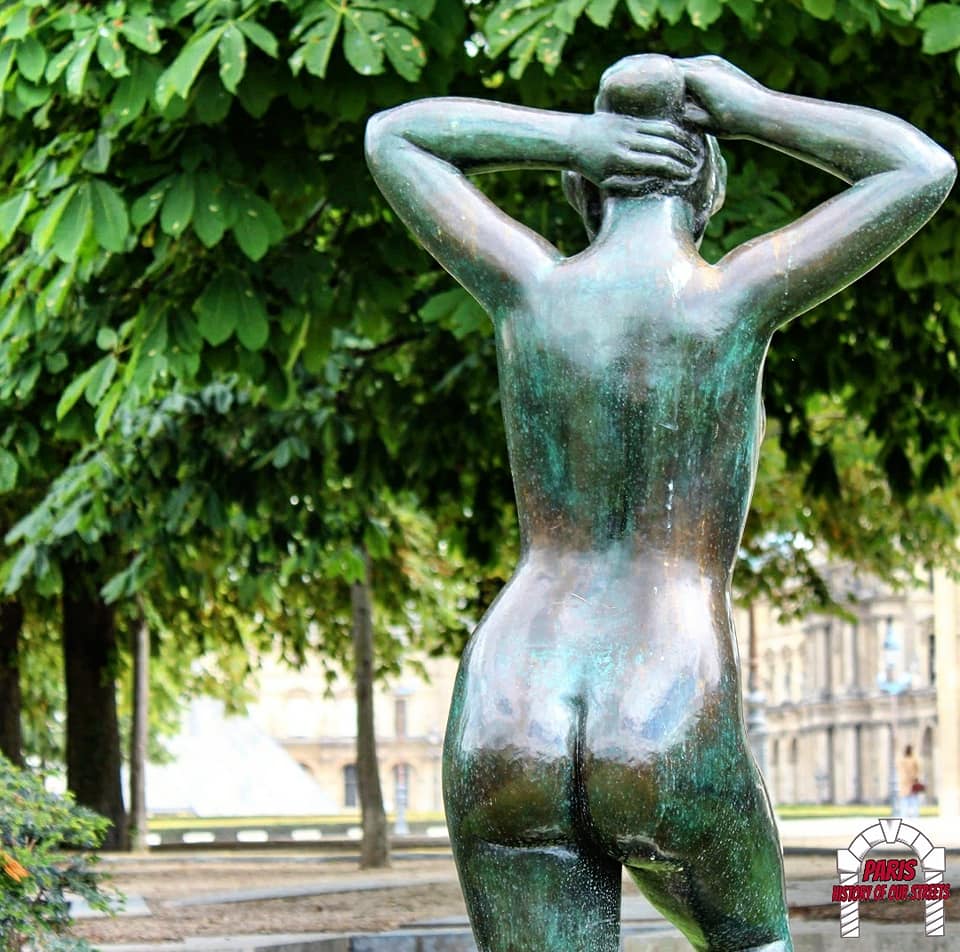
Number4La Baigneuse aux Bras Levés (The Bather with Raised Arms) Artistide Maillol, 1921
Any other ladies out there put their messy buns together in the buff? The curve of this bather’s hips against the juxtaposition of her pointy elbows is elegant and flattering. I bet she’s a cheeky lady who “accidently” lets her undergarments fall off in front of the open window as she coyly steps into her steaming bath. The eye seems to float over her, admiring her sleekness with only the brief disruption of her butt crack.
Number 3Cain Venant de Tuer son Frère Abel (Cain Just Killed his Brother Abel) Henri Vidal, 1896
Here we are back to Cain again, only this time he’s ditched his cloak and he’s wandering around son-less and broken with his head in his hand. Of course he’s in the buff. He’s probably regretting killing his bro Abel, which is kind of a big deal when you’re left with the legacy as the World’s First Murderer responsible for the First Human Death. As the third human on earth, he could have been known for so many things, First Person to Tell a Joke, First Person to Whistle, even First Person to Shart- but he’ll forever be known as the First Guy to Slay his Brother. (He also had the first incestuous relationship with his sister but we can’t hold that against him given the lack of available partners at the time) At least we can all agree that he had a damn good-looking ass. Chances are favorable that he might have had the world’s sexiest heinie at some time, there wasn’t much competition, especially if you’ve killed 25% of your potential rivals. You could bounce a stone off those gluts, then blame it for killing your brother as its projected towards his head.
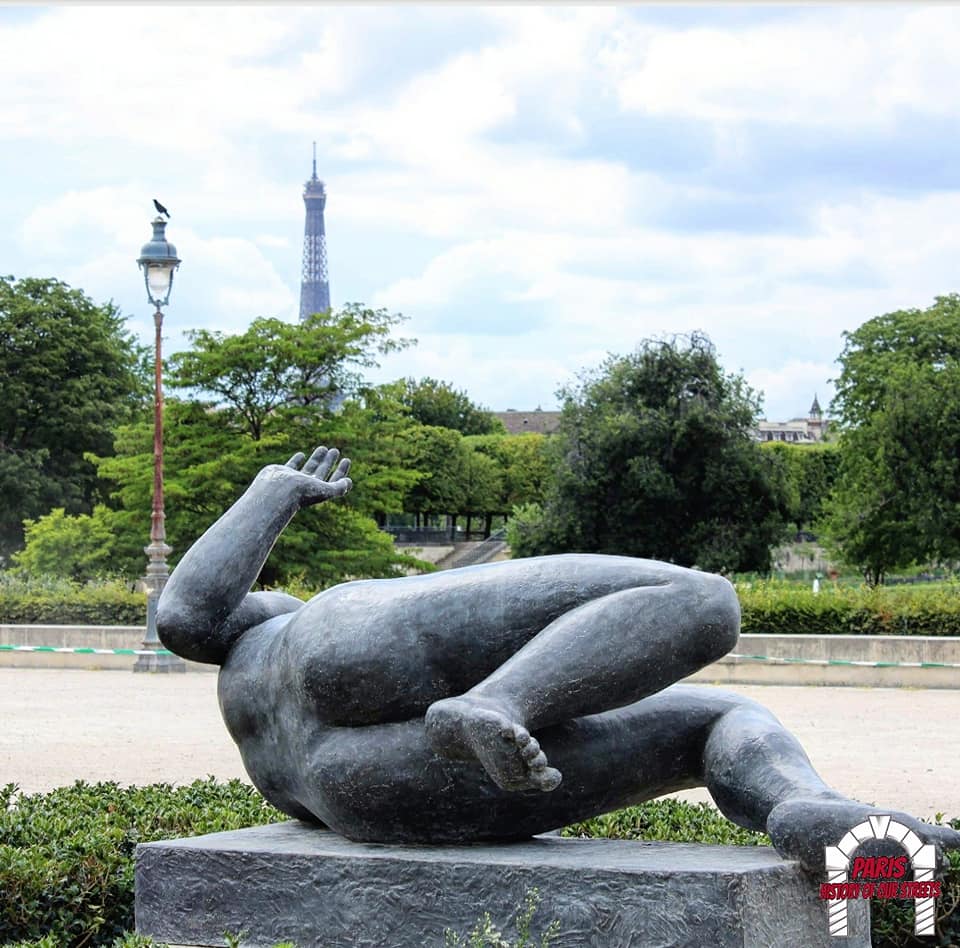
NUMBER 2Rivière Artistide Maillol, 1943
Well shit. This is embarrassing. I’ve fallen, and I’m naked. Everyone can see my butt and it’s not like I can claim to be into nude breakdancing. This is so awkward. Could you just divert your eyes to the Eiffel Tower over there while I try to gather what’s left of my dignity?
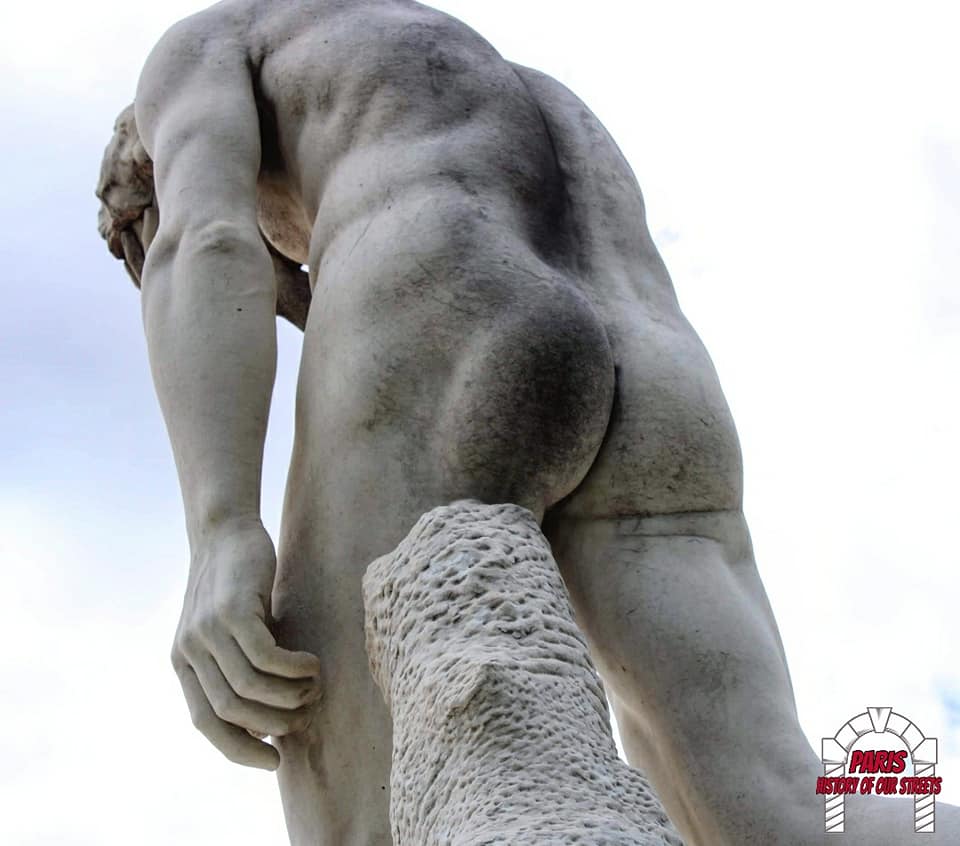
THE NUMBER ONE ASS OF THE TUILERIES GARDENS
Alexandre Combattant (Alexander in Combat), Charles Leboeuf, 1836
Let’s get right to it. Testicles. Ballocks. Deez Nutz. Chin Warmers. I want to admire those defined shoulders and the muscular triceps, but my eye just keeps coming back to naughty bits. It must be cold outside. We are one missing hand away from having the first Sculptured Fruit bowl.
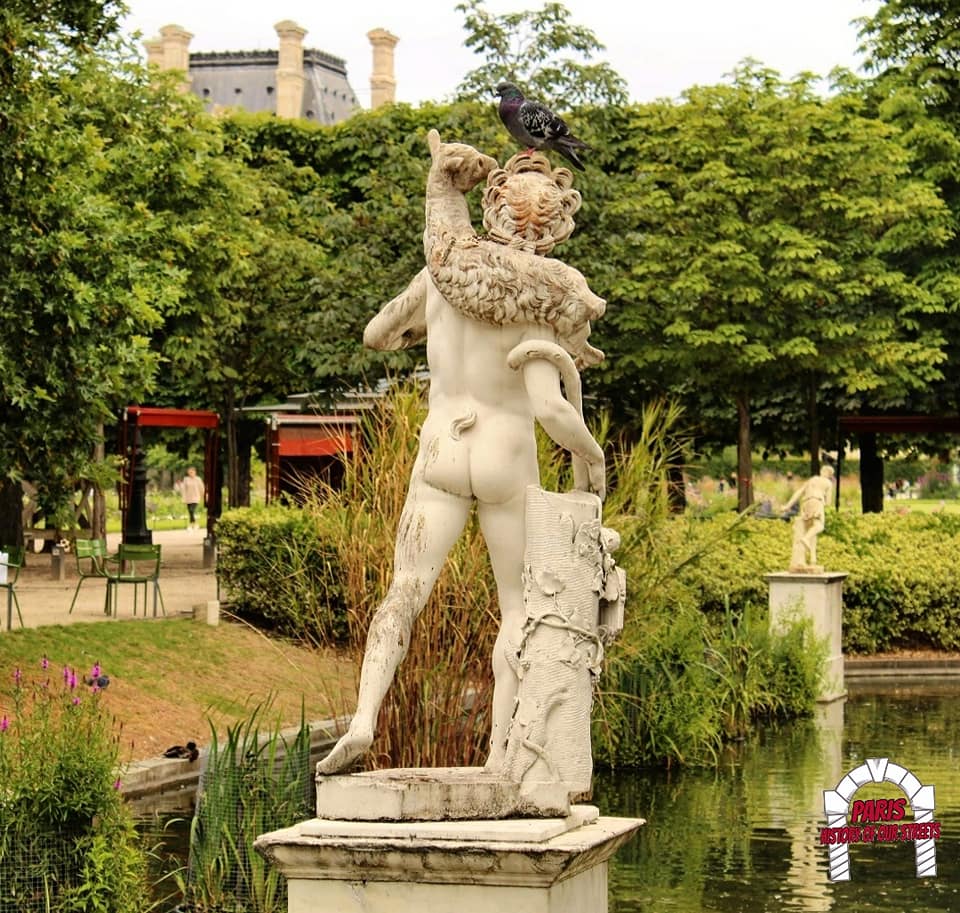
HONORABLE ASS-MENTION
Faune au Chevreau d’après l’antique Paul Le Pautre, 1698
This is a Basic Ass; the Rear of the People. It’s defined with a commendable under butt crease. And that cute little tuff! Oh my heart, I love it and want to run my fingers through it. I bet he giggles and demurely slaps your hand away saying “Oh you’re so naughty!” if you tug it. I don’t know what this guy is doing frolicking around naked with a goat wrapped around his shoulders but I dig it.

















 Paris History of our Streets