Maps, The Marais

The Maison d’Ourscamp

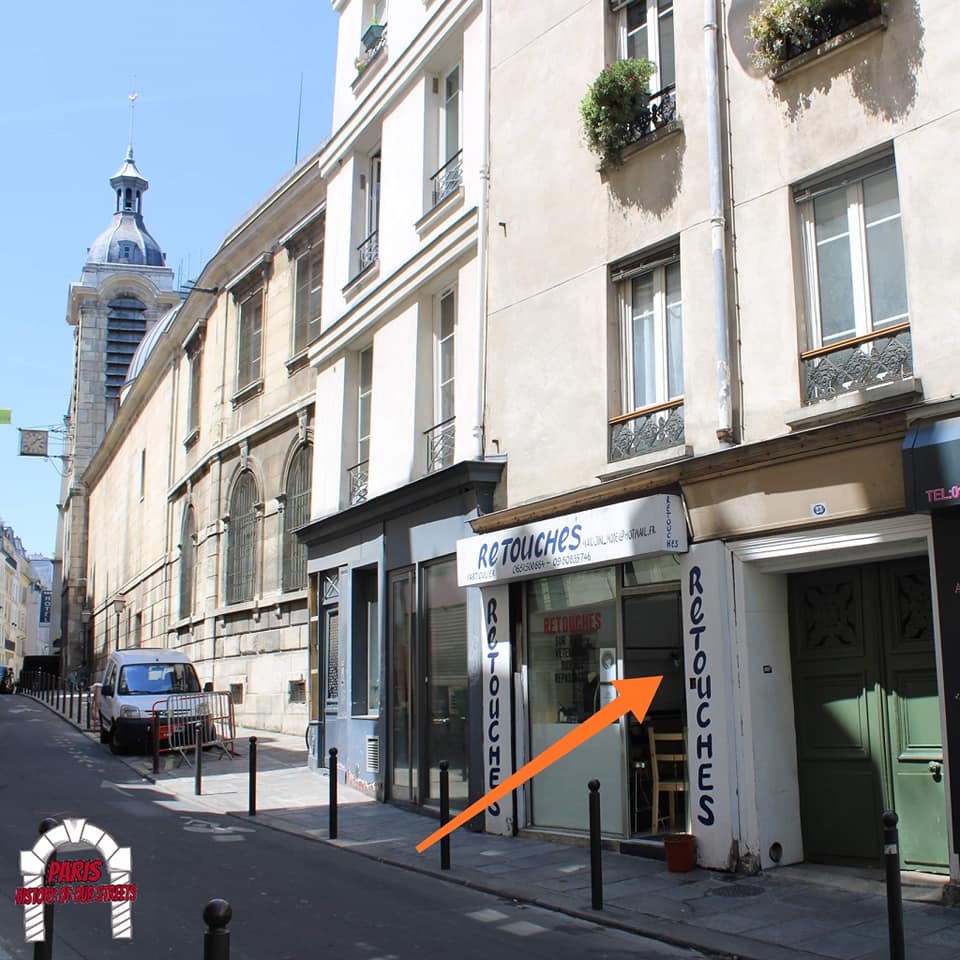
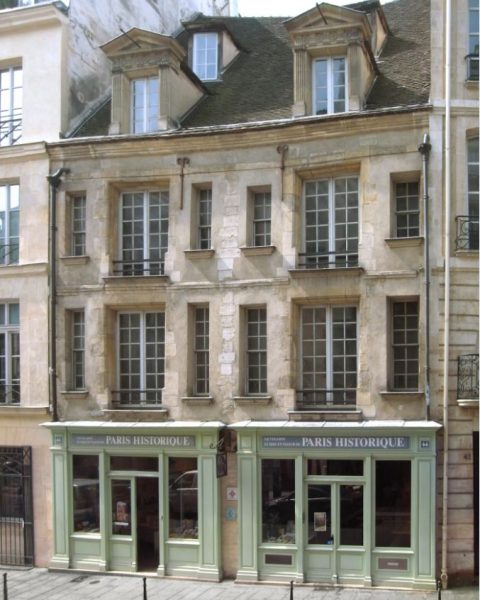
44-46, rue François Miron 75004 Paris

During an exceptionally hot Paris weekend in June 2019, I was in a sweater and hard hat, assisting in the restoration of a chilly 13th century cellar in the heart of the Marais district in Paris.

I have no business handling power tools

Taken under the bearded wing of the coolest medieval expert stone mason David Poiron, I spent all weekend in heavy-duty gloves chiseling away at limestone blocks and destroying chunks of a vaulted archway that was to be restored. I probably inhaled a whole lot of 700-year-old gravel, but being in the company of other like-minded fans of history for an entire weekend was pretty incredible.

Stone Maison Extraordinaire David

Armed with blunt and heavy tools I have no business handling, my mission that weekend consisted mostly of Bitch Work I was happy to be delegated due to my lack of stone cutting skills, like chiseling ridges in heavy blocks. These cumbersome but necessary ridges, made using iron wide toothed chisels, served to help the paint stick better to the stone it was placed against. Each of these blocks had a particular shape carved into each side; also to help the bonding agent to adhere better than being up against solid smooth stone.

And because the cellar is a historically protected site, you can’t just throw these guys in a machine to be spat out 30 seconds later perfectly shaped. Any work done here has to be done the same way it was originally done, with the same tools, materials, and methods. This is one reason why rebuilding Notre Dame cathedral is so complicated; much of the wood used to create the roof doesn’t exist anymore. The block I worked with that day will eventually be used to create a new identical rib for a damaged vault.

AND GUYS GUESS WHAT, as destiny would have it, the first stone I chose to shape already had been touched by a former cheeky stone mason who might have been my soul mate. In addition to a borderline perverse and immature sense of humor, this mysterious personage was also mathematically correct. Because this design will be fitted against an exact replica on another block and filled with glue it won’t be seen, so anyone clutching their peals can just relax.
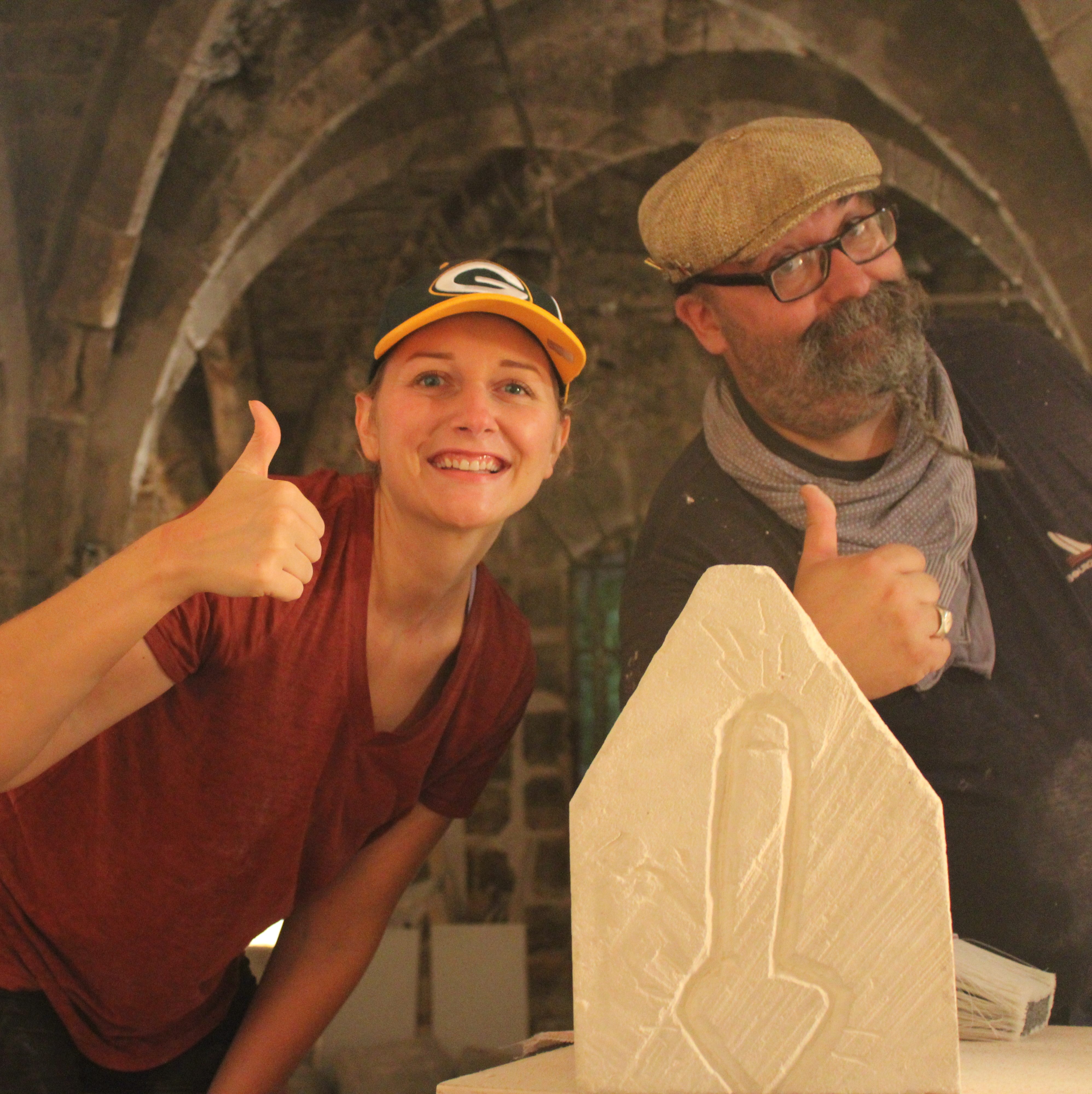
As David pointed out to me in between my sporadique giggling fits, the phallus was carved using the Golden Ratio. So what is that? Well its super fucking cool that’s what. A mix of science and evolutionary psychology, the GR is the comparison of any two aspects, often using body parts that have the same ratios, on EVERYONE, that leads us to proportion them in the ideal way.

PERFECTION

Try to follow as I explain while being as politically correct as possible. The measurements from lower nut sac to dick hole were identical to the distance between my pinky finger tip and thumb finger tip. From exterior left ball to the right ball, my index finger was an exact match. One could say deez nuts are perfect, in the eyes of God.
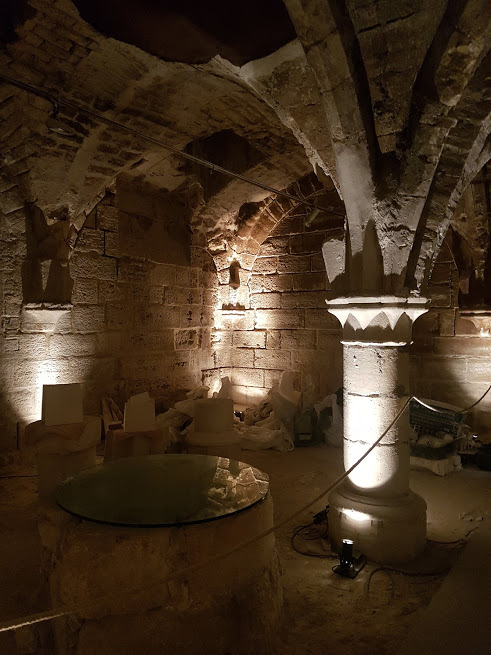
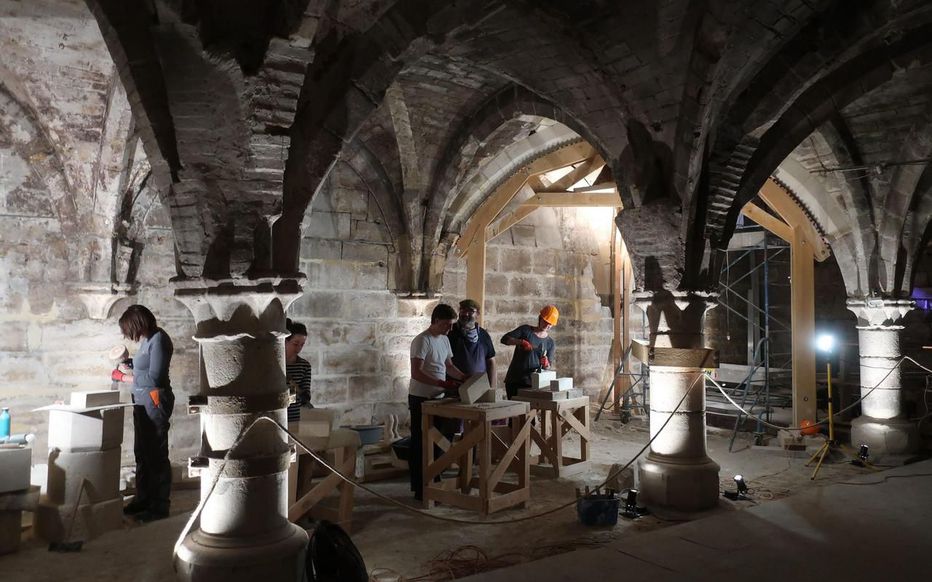
If you are in Paris, you can check out the cellar and its building for yourself at l’Association Paris Historique 44-46 rue François-Miron in the 4th arrondisement. They have been in the process of restoring this cellar since the 60’s, which was once part of a building belonging to 13th Cistercian monks before that building was demolished, and the current one put in place in the 15th century, right on top of the old one, leaving the cellar in need of some TLC but intact.

To join as a member costs only 40 euro per year and they host a ton of interesting events like historical tours (which you get a discounted rate) and discussions with historical experts. Link here Association Paris Historique – Sauvegarde et mise en valeur (paris-historique.org)
latin quarter, Maps

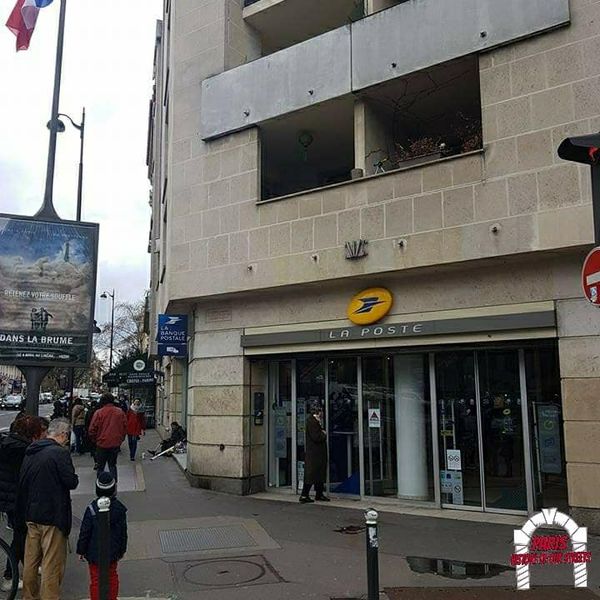
The Medieval Arch Under the Post Office

30 rue du Cardinal Limoine Paris 75005

Going to the Post Office is never a pleasant affair, and is ranked #3 Worst Things To In Paris (after going to the bank and dentist). The hours are always inconvenient, you can expect to wait in a half assed line full of annoyed Parisians murmuring “ça fait chier” (This sucks) and standard postage stamps are nearly a euro each.
However there is a historical exception to this normally unpleasant experience. In the depths of the 2nd underground level beneath this post office, you can view a stone arch that was once imbedded in the medieval fortification wall that encircled Paris 800 years ago. This 12th century stone rampart was erected to defend Paris before King Philippe Auguste took off on his 3rd Jimmy Buffet cruise. I mean religious crusade.

I did this tour two year’s ago when each first Wednesday of the month at 2:30pm, a tour guide from the Paris Historical Society came to the Post Office to take anyone who is interested into the parking garage down to the -2 level.

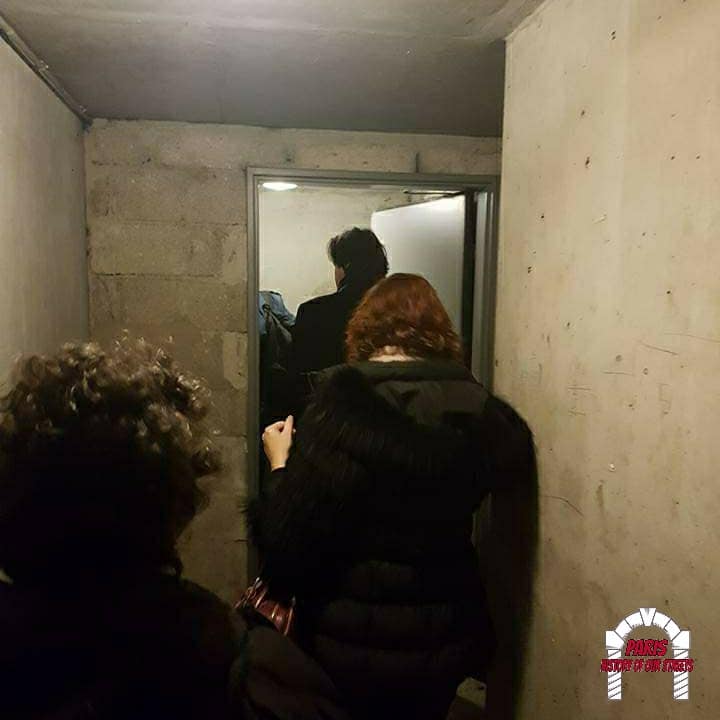
And there, behind a large metal door and in a small concrete room, sits the 800-year-old stone archway. What is it?! Where did it come from? Why is it here?! What WOULD Jimmy do??

Before the aforementioned wall was built around Paris, in this location there was only the Abbey Saint Victor and a small river called the Bièvre. This river was rerouted to create the Canal of Victorins, which provided an irrigation system to water plants and turn windmills for the residents at the Abbey. King Philippe’s wall was built right over where this river ran, so an archway was created to allow the water to pass through it. As this open archway could comprise the safety of the wall, a metal grill was inserted inside it. After 1356, a ditch was dug around the wall to further secure it against potential invaders and the canal was eliminated.

The Abbay Saint Victor in 1655, engraving by Merian

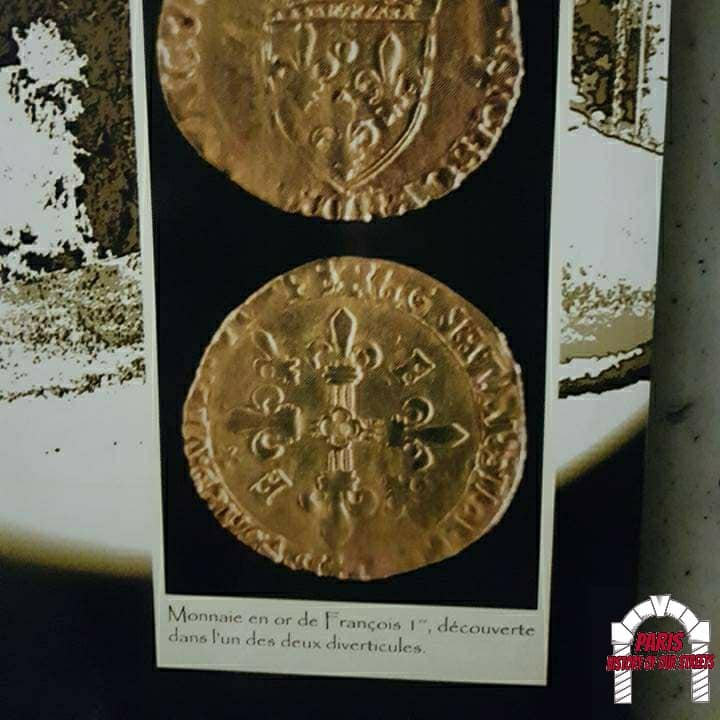
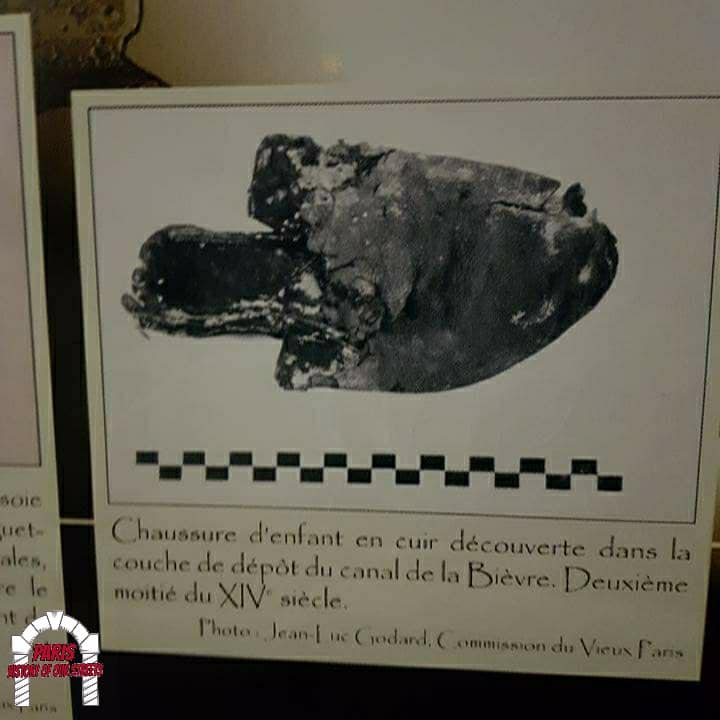
The ramparts of Philippe August were eventually demolished (kinda, sorta) and the ditch filled in; entombing this archway as Paris became larger and a new, larger fortification wall was built. Fast forward to 1989 when workers discovered the arch while constructing a new (and hideously modern) building at this location. A historic preservation company was assigned to survey the site (if I could go back to school for anything this would be it) and see what other goodies were hidden under the dirt. They found 400-year-old shoes, currency, and even plaster remains from an old sculpture shop that was located at this corner in the 19th century.

As for the archway; it was dismantled and each stone was labeled, then reconstructed Tetris style in this room in May 1991, where you can see it today; two levels below the street and not far from its original location at the wall of Philippe Auguste.

Plaque outside the post office “Wall of KIng Philipe Auguste. Here was the Entry Saint Victor built in the 13th century, rebuilt in 1568, and demolished in 1684”

There are several other locations in Paris where you can still see traces of this 800 year old wall I’ll eventually share. For now, I’ll leave you with the inspirational speech King Phillipe allegedly gave to his team of royal wall builders. “Build me something tall and strong.Make it long remain, before I go away. It’s only half past the twelfth century, but I don’t care- it’s crusade time somewhere.”

Maps, The Marais

Where Napoleon Popped His Cherry

33 rue Vauvilliers Paris 75001

Napoleon Bonapartre or Napoleon Born2Party? History’s favorite not-so-little General had a hot and steamy sex life with his first wife Josephine (look up their raunchy love letters if you want to read 18th century smut lit.) but we can thank a certain Mademoiselle Deschamps for making a man out of the scrawny 18 year old with greasy hair and thick Italian/Corsican accent.

In November 1787, teenage Napoleon came to Paris to finish military training. He must have been lonely because one evening he left his hotel on the rue du Four-Saint-Honoré and wandered around the Palais Royale neighborhood, which was the equivalent of a bourgeois red light district at the time.

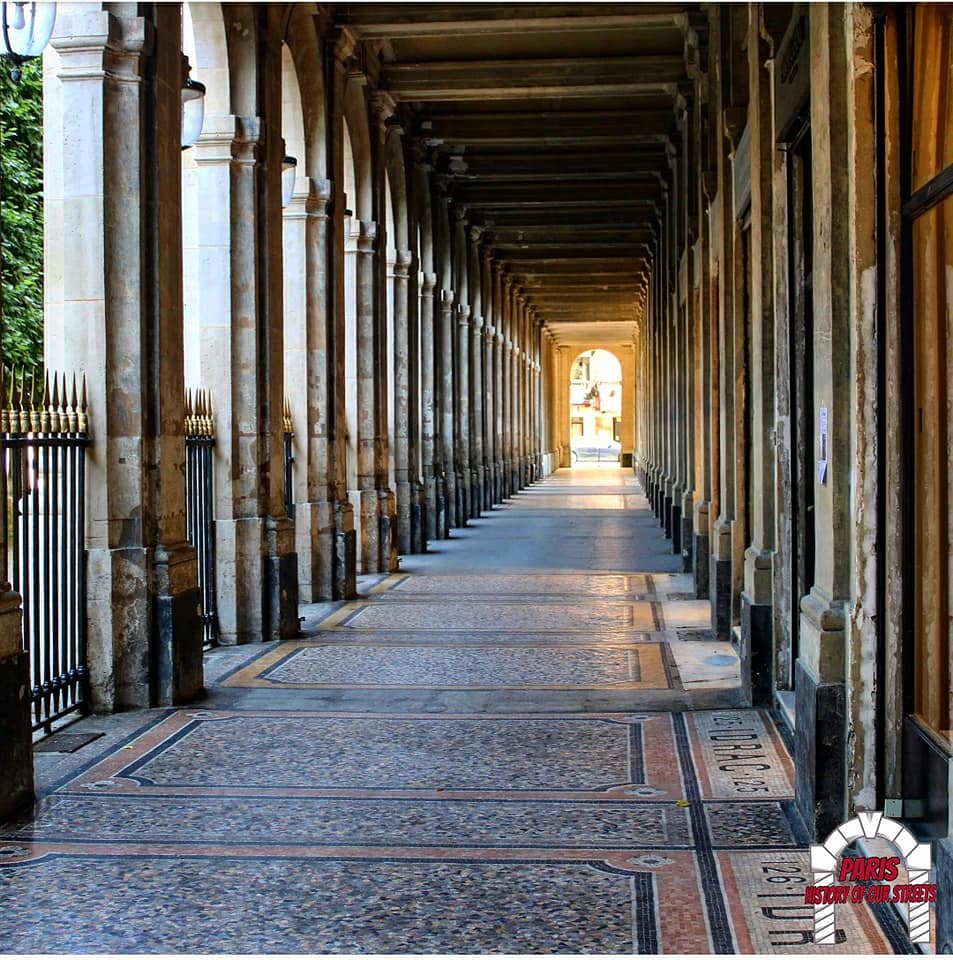
The Galleries of the Palais Royal where Napoleon once wandered…

He later would write in his journal about “The First Time”. Here is my personal translation of these events set in a 21st century dialogue.

Thursday November 22, 1787 Hotel de Cherbourg, rue du Four-Saint-Honoré: So there I was, walking around kicking rocks in the Galleries of the Palais Royale when I spot a really pathetic looking hooker. She was pale and thin and barely a teenager but her awkwardness at playing an adult was kind of a turn on. I asked her how she wasn’t freezing her ass off in that crop top and was pleased to find her a little shy but easy to talk to. We started shooting the shit, talking about her hometown of Nantes and how she found herself in this line of work (“she was taken advantage of by a soldier. Then another, who took her to Paris. Then another who she lived with for 3 years but it didn’t work out because he was two timing her with an English lady) and why she didn’t do something else (“Embroidery and babysitting ain’t gonna pay my bills. Heels and hustle baby”). She suggested we go back to my digs and I played dumb, asking her what we would do. She replied “We will warm up and then play butt games”. Now I’m normally not much of a spontaneous guy, but considering my failure to successfully seduce a woman up until this point, I figured what the hell, why not. It was now or wind up a 20 year old virgin!

Napoleon stayed at this hotel for several months and was described as shy, awkward, and a little sad. He signed his name in the register using the Italian-ized Napolione Buonaparte. According to the owner, he only left his room (3rd floor, room #9) for meals which he took at a nearby deli.

The very room where Napoleon lost his virginity

The hotel was destroyed in 1914 and the portion it was on razed to create pavillons 1&2 of the old Les Halles centralized Paris markets. Today the street is named Rue Vauvilliers and the exact placement of where Napoleon lost his V card is located in a children’s park. Napoleon didn’t leave us any further juicy details of this important life event but he did grow out of his awkwardness not long after. Only 17 years later he would declare himself Emperor of France. You can read the original diary entry transcript here. https://www.napoleon.org/…/une-rencontre-au-palais-royal/

Maps, The Louvre and Palais Royal

Here Comes Joannie! Part Two

15 rue de Richeleau 75001

*if you haven’t read part one, I insist you stop here and go back to the previous post.. For everyone else, fix yourself an Old Fashion because this is a long one.. . .

One of the big reasons I created this page was to bring attention to the endless number of significant historical landmarks that can easily be found around Paris for anyone to see. If you know where to look …

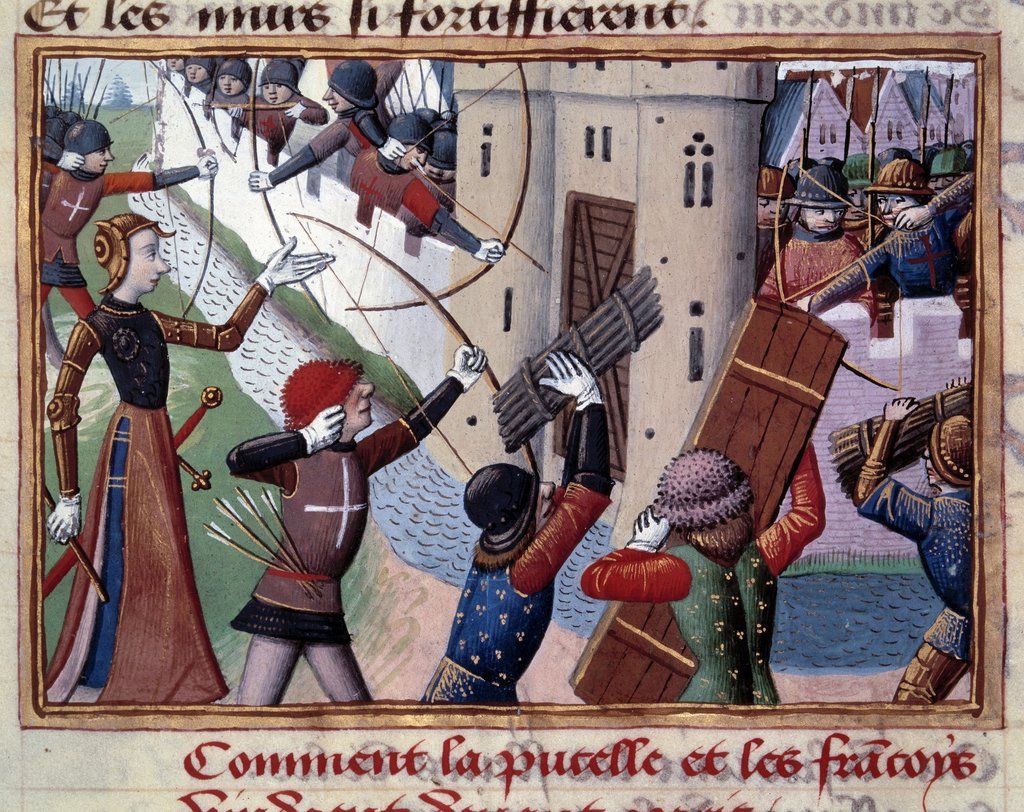
Many of these are marked with plaques that explain the significance of the site: however many more are not marked at all, or they aren’t easily accessible. These are the ones that fascinate me. After 8 years in Paris and many hours spent browsing dusty books in libraries or late nights online, anything labeled “Paris Secret/Unknown/Mysterious” catches my eye. But rarely am I surprised now adays. Until I came across an online article that caught my attention. It was titled “Mosaïque de Jeanne d’Arc blessée au 15 rue de Richelieu” (Mosaïque of Joan of Arc hurt at 15 rue de Richeleau). This article claimed that at precisely this address in the 1st arrondissement of Paris, Joan was severely injured during the battle of Paris on Thursday the 8th of September 1429.

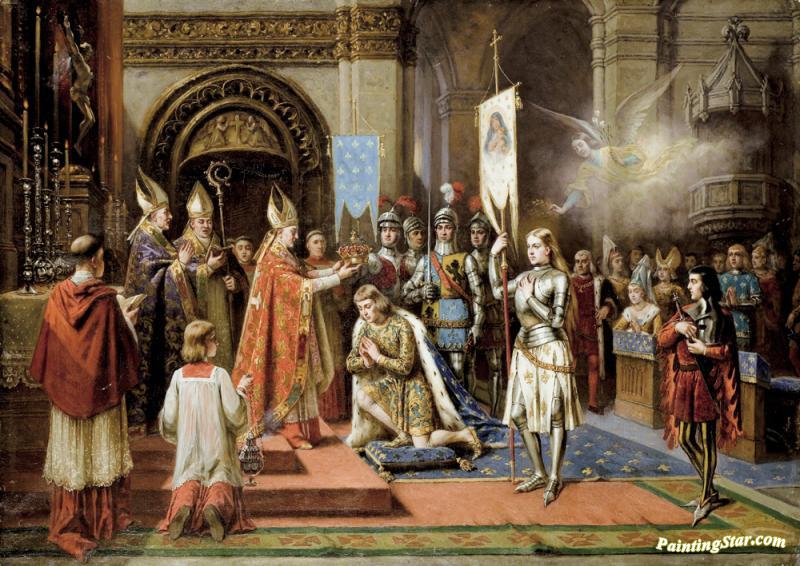
Let me explain.. After Joan did Charles VII a huge solid by crowning him at Reims (this was significant because there was some controversy over his lineage and his right to ascend the throne. His own mother threw him under the bus and claimed he was a bastard and not the legitimate son of his crazy father King Charles VI. Ouch) Joan had her sights set on liberating Paris, which had been controlled by the English for nearly 9 years.

Joan of Arc at the Coronation of Charles VII in Reims Cathedral by Władysław Bakalowicz

Unfortunately for her, King Charles (thanks to JOA) found his support for Joan weakening. Having gotten his crown and newfound support of the French people (again thanks to JOA for leading all those successful battles!) he just wasn’t motivated to hurry himself along and regain Paris under French rule. So he half-heartedly allowed Joan to take an army into Paris to see what she could do. Things were looking good as she conquered Saint Denis north of Paris and then marched her soldiers towards the western side of Paris at the Porte Saint Honoré (there was the defensive wall of Charles V circling Paris at this time, and these portes/entrance ways were heavily defended. To even have a chance at conquering Paris, Joan and her army needed to infiltrate this entryway), which was protected by a badass moat and ditches. There was even a pig market nearby, but more on that later.

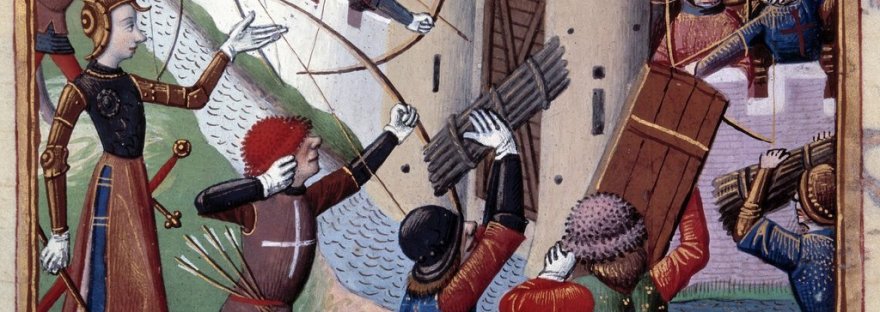
Joan and The Seige of Paris

The battle began poorly; the soldiers just couldn’t manage to get over the GOD DAMN WALL into Paris. They fought fiercely from dawn to dusk when suddenly Joan took a god damn arrow (from a fricken crossbow!) to the thigh. It brought her down but it wasn’t enough to make her give up and call it a day. She screamed for her men to continue, to get over the wall, to continue their assault- but she was forcibly carried from the field as her weary men retreated.

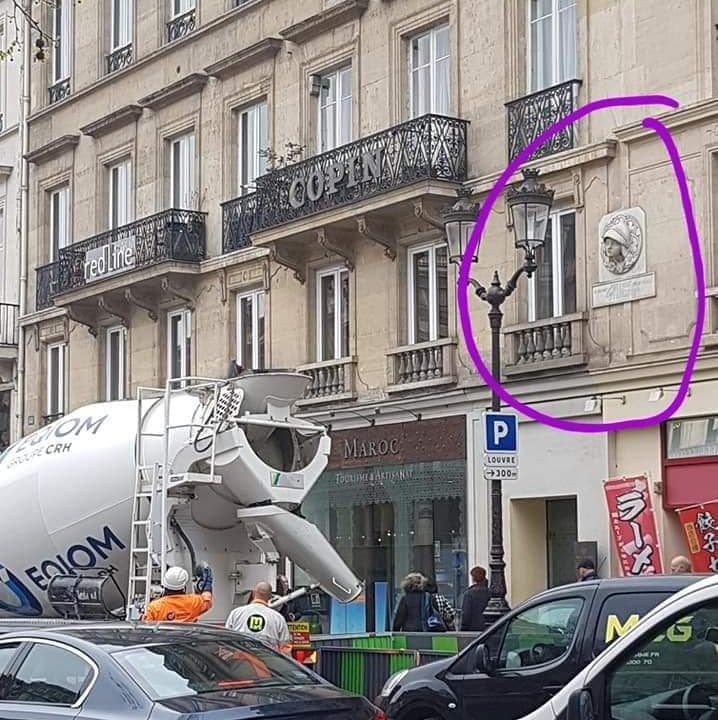
In short, Joan of Arc never actually entered Paris. And you know the rest.. Today in Paris, you can still see testimonials of the 8th of September 1429. At Place des Pyramids, just a few steps from the Louvre at 161 rue Saint Honoré, you can see the face of Joan looking down at you from above.

The inscription below her reads “Here was the Porte Saint Honoré, near to which Joan of Arc was injured in 1429”. There is another larger, grander, golden statue of Joan mounted on a horse nearby between the Louvre and the Jardin des Tuilleries.

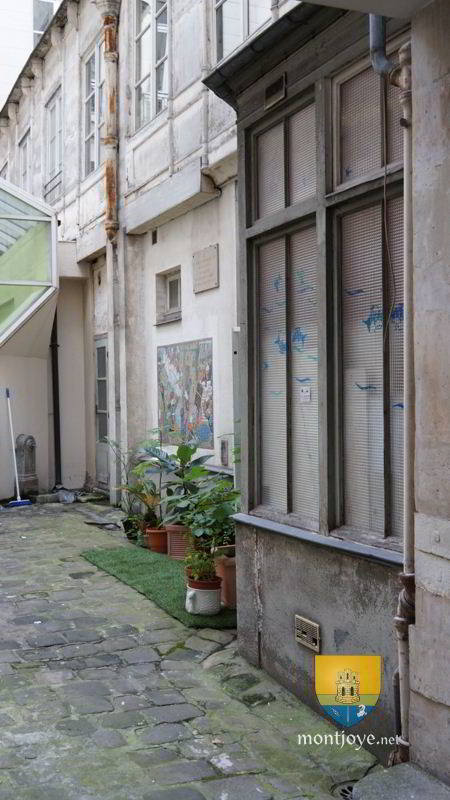
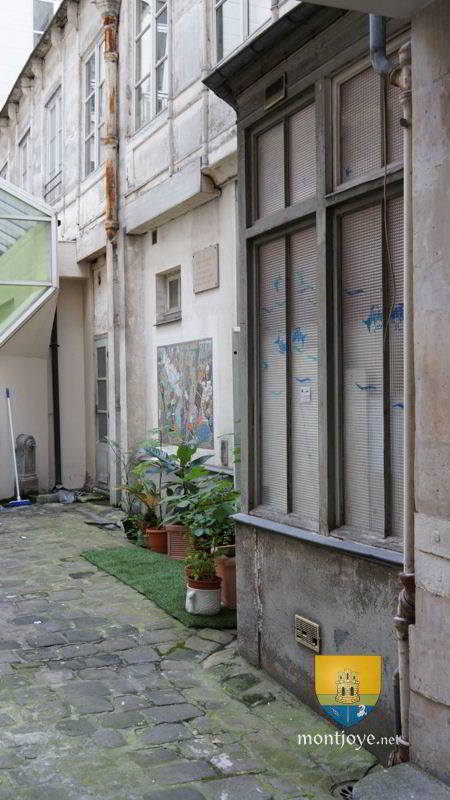
But these two markers do not show the EXACT place where Joan was injured. And that is what I was curious to see. Because according to this website, in May of 1987, students from the nearby school Jean Baptiste Poquelin and the mayor of the 1st arrondissement, inaugurated a beautiful Mosaic depicting Joan during her attempt to take Paris near the now long gone Porte Saint Honoré. This was created by the students of the school with the help of their principal and arts teacher.

The Mosaic hidden at 15 rue de Richeleau, image from Montejoye.net

Numerous historians confirmed that this was the actual exact place where Joan was injured based upon eye witness testimony that has been recorded and kept throughout the past 600 years. A significant point between several testimonials was that Joan was injured not at the porte Saint Honoré itself, but rather 100 meters or so off to the side between the pig market and a trench that was at the base of the fortified wall. Check out the pictures of the maps I have for comparison.

The Porte Saint Honoré and the defensive wall that surrounded Paris. The pig market where Joan fell is encirlced.

So off I went to go find this historically significant mosaic, which was situated in the courtyard of an apartment building according to the article. Which brought me my first challenge. GETTING IN! (You need a code to access most Paris buildings that is entered on a keypad next to the door) I waited at the door on the street for about 20 long minutes for someone to either leave or enter with the door code- so that I could get access. Finally the door opened, and I walked in, feeling exhilarated to see this mosaic, this historic moment in time, and the great article I was going to share with you. The only problem was- there was.. nothing. No mosaic! STAY TUNED AND TURNT UP FOR PART 3

Maps, Opera and Les Grands Boulevards

King Louix XIV and the Poison Scandal

23 rue Beauregard Paris 75002

Witches? Curses? Poisons, Black Masses, and Baby Sacrifice during the 17th century reign of King Louis XIV? At this time, witchcraft was considered like sooo old school 15th century and dabbling a bit in the dark arts was generally considered harmless or just nonsense for bored women. Seeking the help of a bit of black magic to concoct love potions or have a fortunes told was something you kept discreet, but no one was going to go after you with a pitchfork for it.

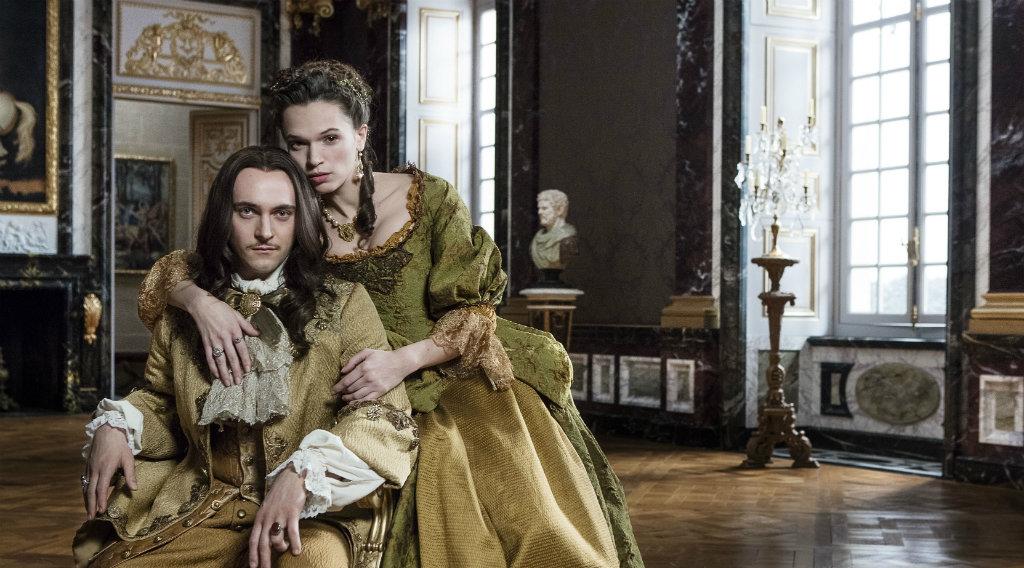
King Louis XIV and his former mistress, Madame du Montespan depicted in the Canal+ series Versailles, 2015

However things got out of control in the 1670’s when numerous nobles of the King’s court were implicated with some pretty gruesome acts of sorcery. It all started in 1670 when the Marquise of Brinvilliers was found guilty of poisoning her father and brothers so she could inherit the family fortune and live happily ever after with her lover. Confessing under the torture we fondly recognize today as waterboarding; she was burned at the stake and then beheaded.

Madame de Brinvilliers being forced to ingest water prior to being beheaded in 1676. She was convicted of poisoning several members of her family in order to get their inheritances. Image by © Stefano Bianchetti/Corbis

Around the same time, the Duchess of Orléan (sister in law to King Louis) Henriette also died suddenly under suspicious circumstances. Whispers began to turn into rumor and the police rounded up many alchemists and fortune tellers who were known to practice the dark arts. Looking for people to blame, the accused were tortured and sang like birds when names were demanded. Unfortunately for the King, this backfired because the names included many prominent members of his court, including his long-time official mistress Athénaïs, the Marquise de Montespan.

Portrait assummed to be of the Marquise de Montespan

According to testimony, she sought out the magic services of the notorious Midwife turned Occultist Catherine “Lavoisin” Deshayes. On several occasions, Montespan was said to have performed Black Masses with Lavoisin at her evil Baby Killing Poison Factory home and other secret locations.

Catherine “Lavoisin” Deshayes

Hoping to revive the King’s fading interest in her, it was claimed that during these ceremonies she would act as an alter; lying naked on a table with a bowl on her stomach, where blood from a murdered baby would be collected. This would then be secretly given to the King to consume, acting as an aphrodisiac. Allegedly.

A Black Mass

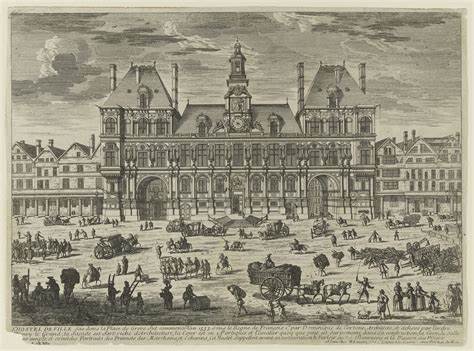
Many of the accused claimed to have spoken out falsely during torture, or gave names to avoid a worse fate. In addition, all court documents were eventually destroyed. When everything started to go B-A-N-A-N-S, the King created a special court to expedite the trial and sweep the whole scandal under a rug. Of the 400 people accused, 23 would be banished and 36 executed for witchcraft and murder. On the 22nd of February 1680 at the Place de Grève (Hotel de Ville today) Catherine Lavoisin was burned alive to the delight of a roaring public.

Place du Grève, 1670

Found guilty for practicing black magic and murder, it was said the bodies of more than 2,000 babies were buried in her garden at her home formerly located on 23 rue Beauregard, where she performed abortions and her infamous black masses.

And since nothing cools off an already compromised relationship like rumors of murder conspiracy and Baby Blood Soup, the Affaire des Poisons would mark the beginning of the end of Madame de Montespan’s reign as the King’s Mistress.