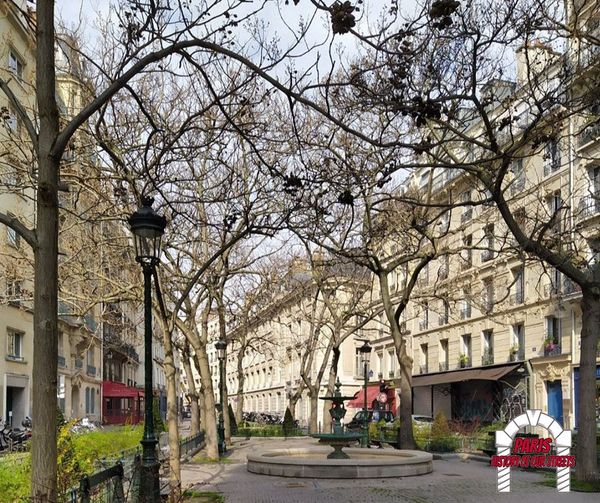
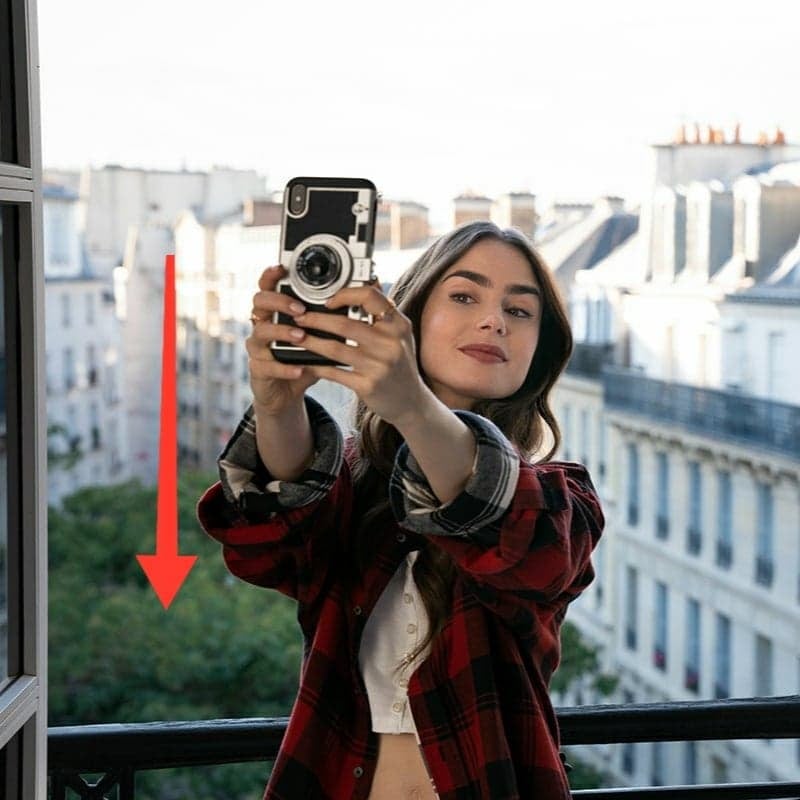
Have you heard of the new show “Emily in Paris With a View of Sinister Public Square”? Probably not, because the Netflix series left out the dark historic background of the common area directly in front of her dreamy Paris apartment.
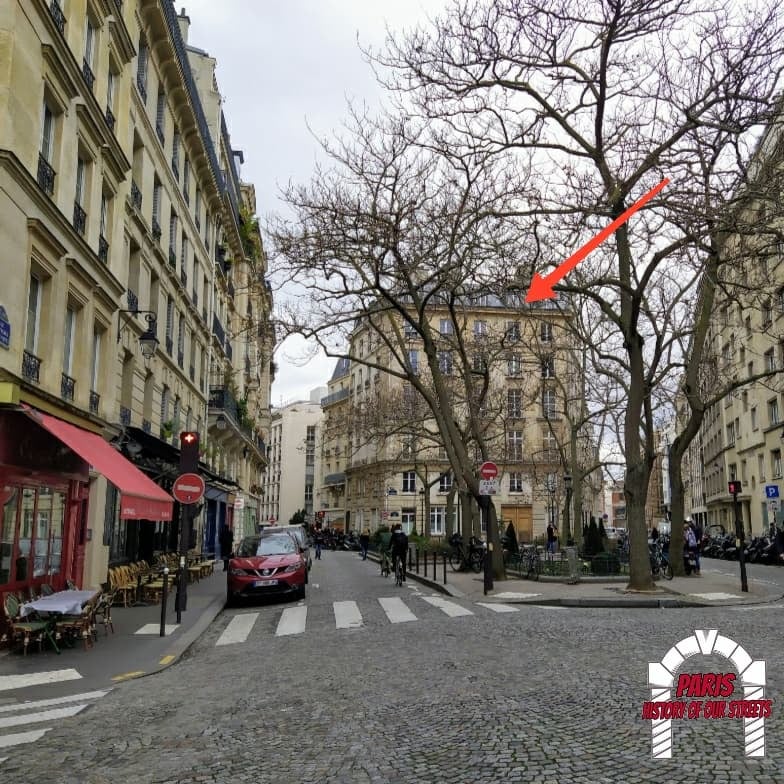
Nestled in the cleavage between the rue des Fossés Saint Jacques and rue Lhomond, the Place de l’Estrapade was once the backyard of Phillippe Auguste’s fortified wall that encircled medieval Paris. A perfect spot to read books amongst the manicured plots of flowers, relax on a bench in front of the fountain, or use as a backdrop for Emily’s quaint Paris Apartment; this little park is often overlooked when compared to the famous neighboring Jardin du Luxembourg.
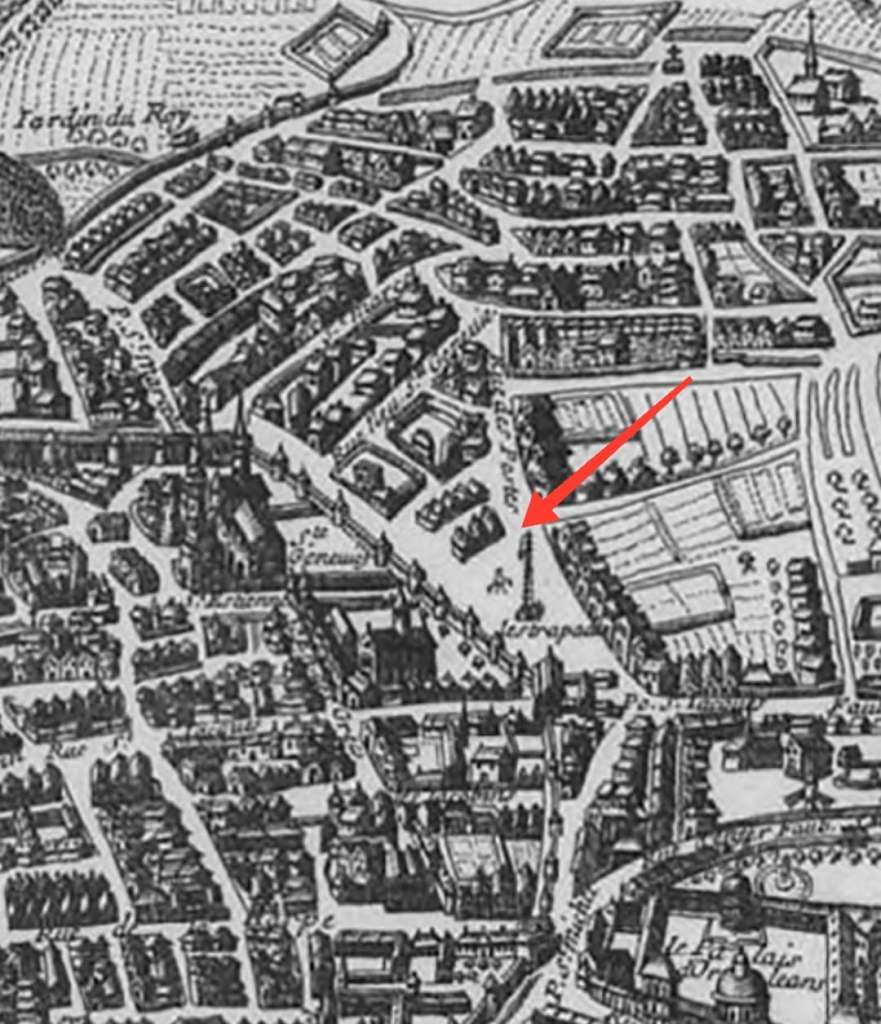
Map from 1630 indicating Place de l’Estrapade
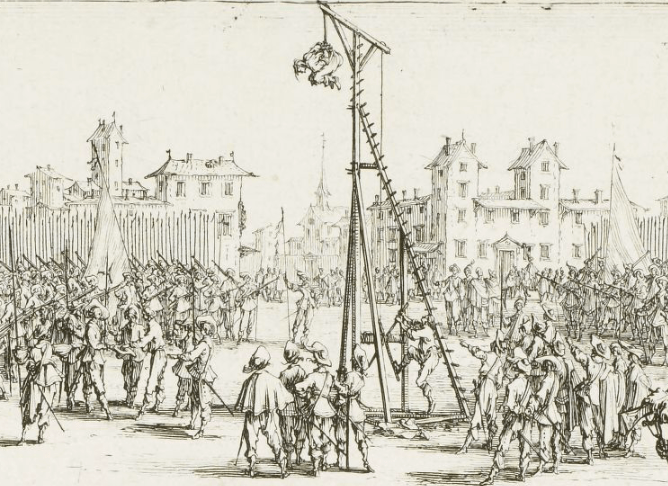
But despite the tranquility that can be easily found there, this nugget of land has a malevolent past… Take a look at the close up of Place de l’Estrapade from the 1630 Paris map made by Jean Sauvé. See that flagpole thingy? Named after the torture device known as the estrapade (or strappado), this is the site where predominately military deserters were punished for abandoning their posts.
There’s enough negativity in the word today so I’ll avoid explaining how this cruel practice was done and leave it to your imagination … JUST KIDDING! What do you think this is, another Perfectly Paris Instagram page?
Anyways, the criminal (or victim depending on where your sympathies lie you big fat Treasonous Traitor) would have his arms tied tightly behind his back with a rope, which was then attached to a pulley high off the ground. The person would be hoisted up by this rope, dangled, then abruptly dropped to a distance NOT QUITE touching the ground. Kinda like Medieval Sky Diving Gone Wrong.
Hey, no ever said torture had to be sophisticated to be effective! However, the goal was simply to reinforce the consequences of abandoning a military post by breaking a few limbs and causing lifelong disfigurement and pain rather than executing.
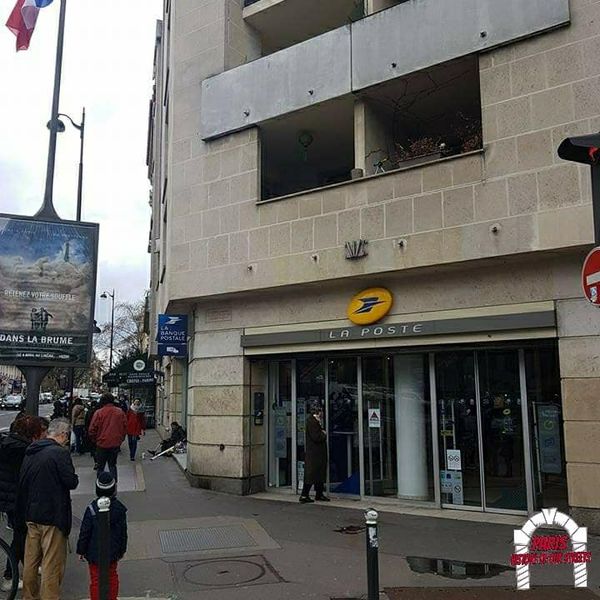
Going to the Post Office is never a pleasant affair, and is ranked #3 Worst Things To In Paris (after going to the bank and dentist). The hours are always inconvenient, you can expect to wait in a half assed line full of annoyed Parisians murmuring “ça fait chier” (This sucks) and standard postage stamps are nearly a euro each.
However there is a historical exception to this normally unpleasant experience. In the depths of the 2nd underground level beneath this post office, you can view a stone arch that was once imbedded in the medieval fortification wall that encircled Paris 800 years ago. This 12th century stone rampart was erected to defend Paris before King Philippe Auguste took off on his 3rd Jimmy Buffet cruise. I mean religious crusade.
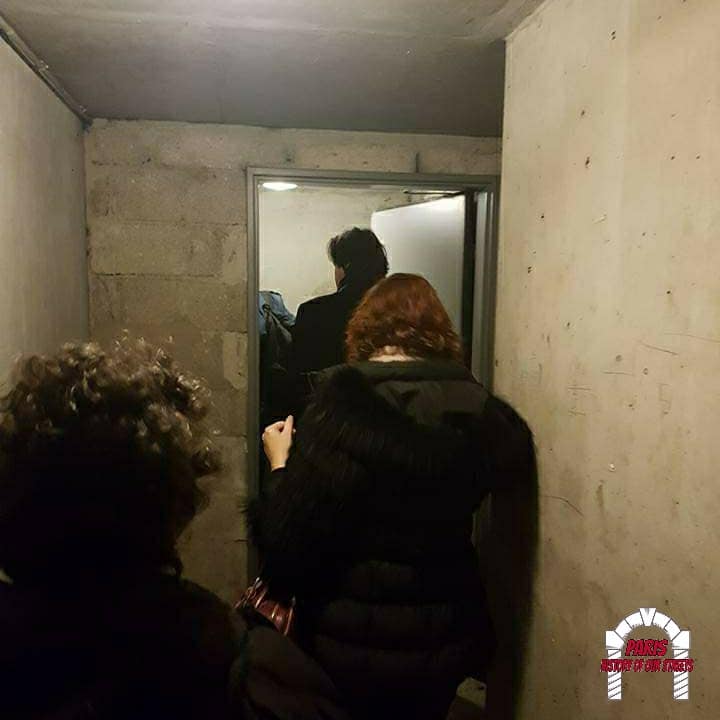
I did this tour two year’s ago when each first Wednesday of the month at 2:30pm, a tour guide from the Paris Historical Society came to the Post Office to take anyone who is interested into the parking garage down to the -2 level.
And there, behind a large metal door and in a small concrete room, sits the 800-year-old stone archway. What is it?! Where did it come from? Why is it here?! What WOULD Jimmy do??
Before the aforementioned wall was built around Paris, in this location there was only the Abbey Saint Victor and a small river called the Bièvre. This river was rerouted to create the Canal of Victorins, which provided an irrigation system to water plants and turn windmills for the residents at the Abbey. King Philippe’s wall was built right over where this river ran, so an archway was created to allow the water to pass through it. As this open archway could comprise the safety of the wall, a metal grill was inserted inside it. After 1356, a ditch was dug around the wall to further secure it against potential invaders and the canal was eliminated.
The Abbay Saint Victor in 1655, engraving by Merian
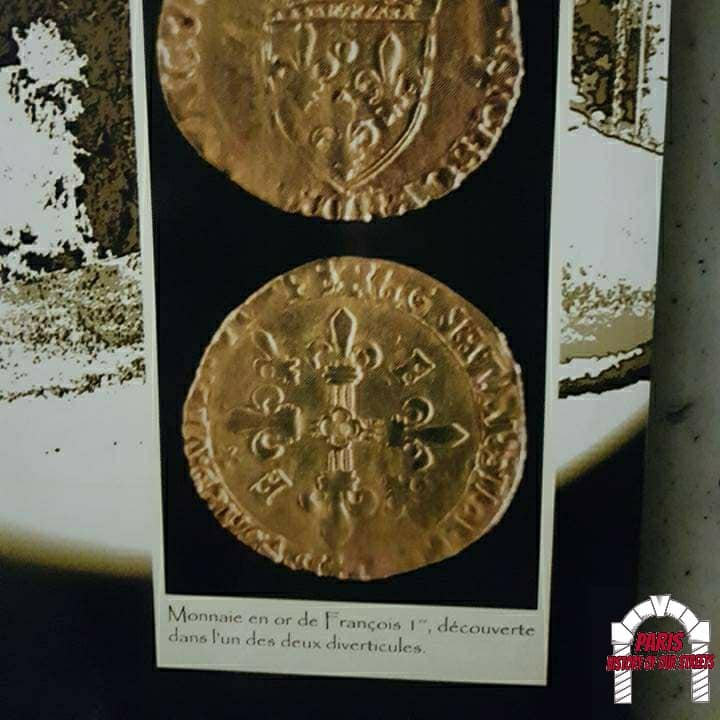
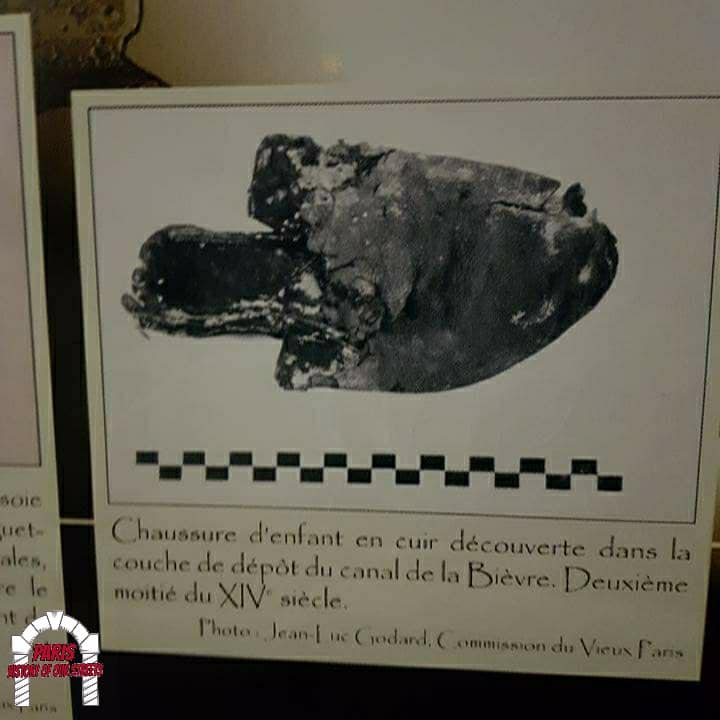
The ramparts of Philippe August were eventually demolished (kinda, sorta) and the ditch filled in; entombing this archway as Paris became larger and a new, larger fortification wall was built. Fast forward to 1989 when workers discovered the arch while constructing a new (and hideously modern) building at this location. A historic preservation company was assigned to survey the site (if I could go back to school for anything this would be it) and see what other goodies were hidden under the dirt. They found 400-year-old shoes, currency, and even plaster remains from an old sculpture shop that was located at this corner in the 19th century.
Gold coins dating from King Francois I
14th century children’s leather shoe
Putting the arch back together in 1981
As for the archway; it was dismantled and each stone was labeled, then reconstructed Tetris style in this room in May 1991, where you can see it today; two levels below the street and not far from its original location at the wall of Philippe Auguste.
Plaque outside the post office “Wall of KIng Philipe Auguste. Here was the Entry Saint Victor built in the 13th century, rebuilt in 1568, and demolished in 1684”
There are several other locations in Paris where you can still see traces of this 800 year old wall I’ll eventually share. For now, I’ll leave you with the inspirational speech King Phillipe allegedly gave to his team of royal wall builders. “Build me something tall and strong.Make it long remain, before I go away. It’s only half past the twelfth century, but I don’t care- it’s crusade time somewhere.”
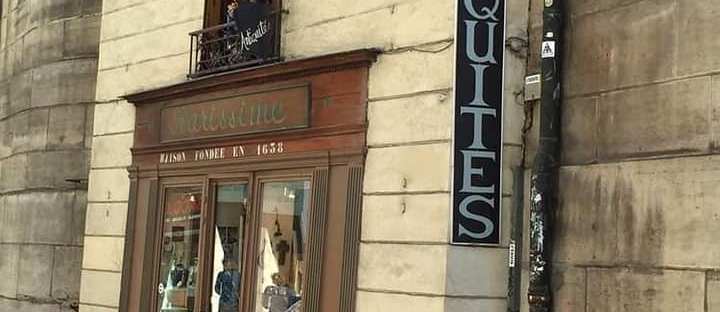
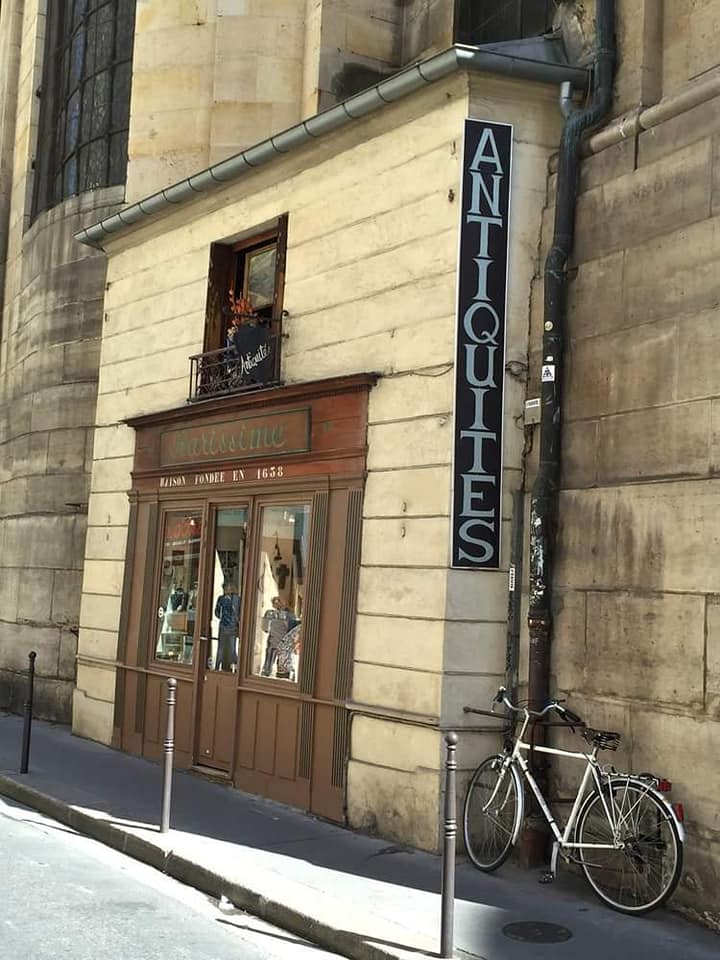
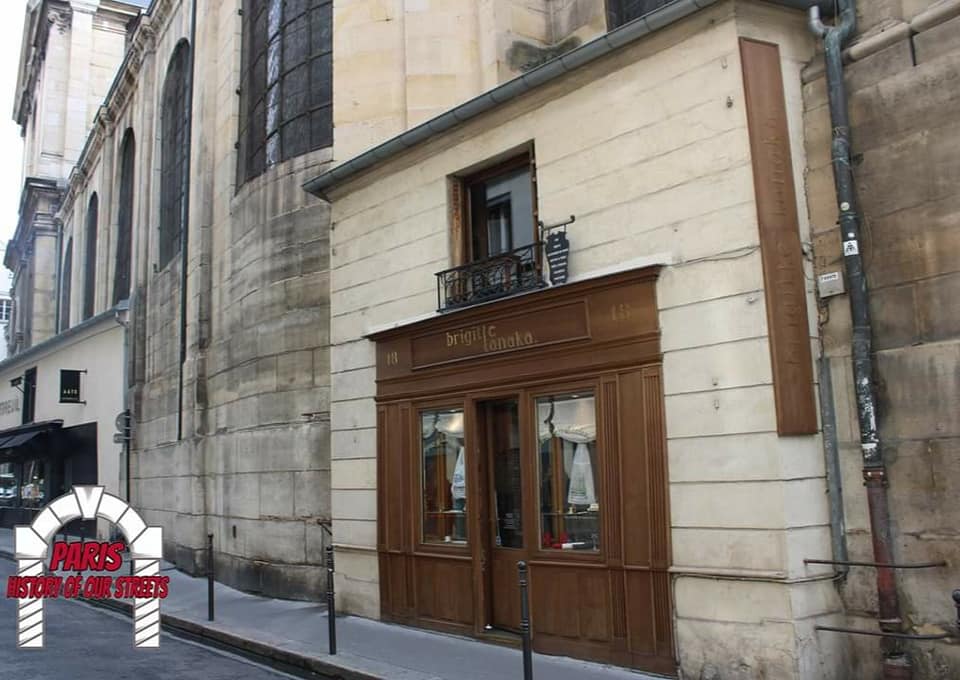
This may not be one of those juicy, significantly historical landmarks in Paris, but the history is no less dear. This miniscule former antique shop located just off the Rue Saint Honoré and nestled into a 17th century church first opened as a hair salon in 1630 (probably specializing in Sword Bowl Cuts) before succumbing to the antiques trade in 1638 (imagine antiquing in the 17th century).
The building was absorbed into the église Saint Roch when construction started up and around it in 1653. For the next 370 some years, it was business as usual in this TINY boutique, which most recently was owned by a certain Roger, who sold his eclectic collection of religious trinkets, vintage photos, and even fresh eggs.
Roger’s boutique, photos from momentsparfait.com
Lacking space (I’ve seen bigger walk-in closets) but not creativity, the 16th century stone staircase was even used as functional selling space. How I would have loved to rummage through his shop! Unfortunately, Roger closed his doors sometime around 2016 and moved back to his home town. I read about it years ago online somewhere and I could kick myself today for not going in when I first stopped by to see the staircase years ago. I think my excuse was that there were a few people already in there at the time, probably bringing the store a few people past capacity! When I researched this last year, I passed by to see what was occupying this prime real estate space and was saddened to see it replaced by yet another, one in a million-Parisian concept stores- which among other cute, but unpractical things; sells bags, specifically for your passport.
The shop in 2013
The shop today
And I have nothing against people that chose to pay a lower middle class ransom for fashionable paper bag dresses, but did they really have to erase the antiques sign and “house founded in 1638” store front? C’MON!
Napoleon Bonapartre or Napoleon Born2Party? History’s favorite not-so-little General had a hot and steamy sex life with his first wife Josephine (look up their raunchy love letters if you want to read 18th century smut lit.) but we can thank a certain Mademoiselle Deschamps for making a man out of the scrawny 18 year old with greasy hair and thick Italian/Corsican accent.
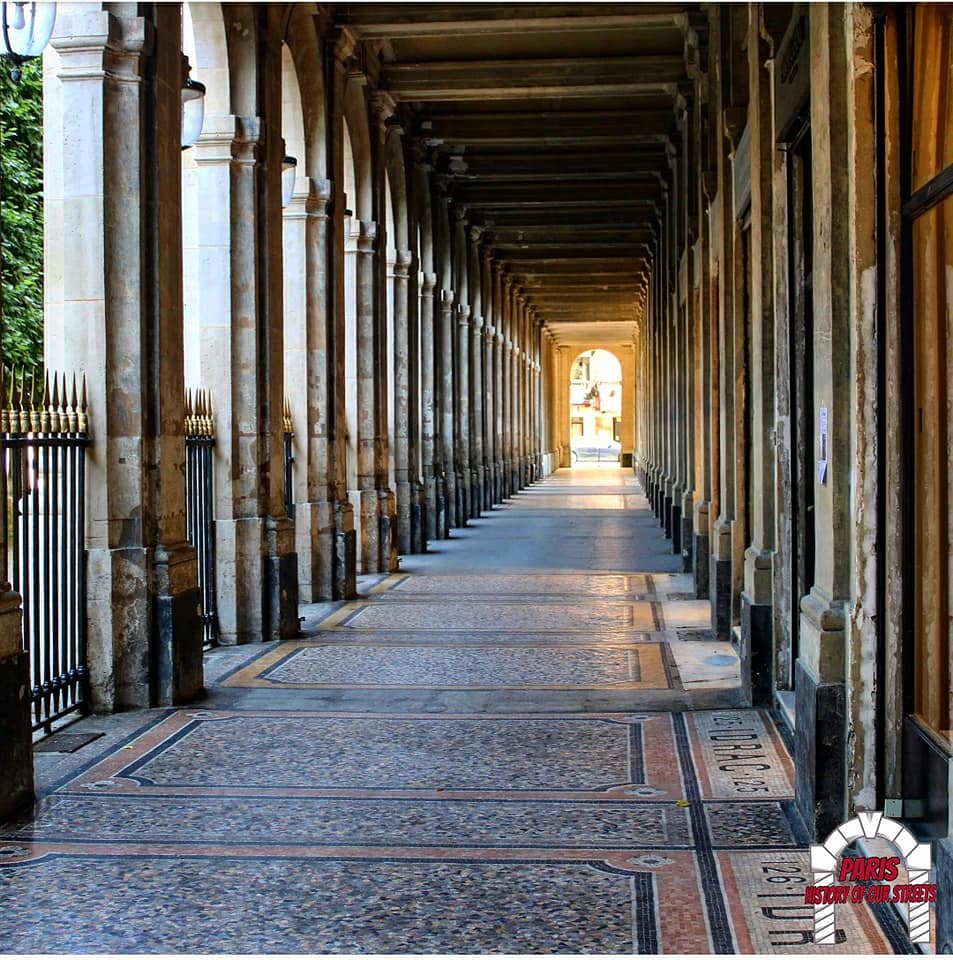
In November 1787, teenage Napoleon came to Paris to finish military training. He must have been lonely because one evening he left his hotel on the rue du Four-Saint-Honoré and wandered around the Palais Royale neighborhood, which was the equivalent of a bourgeois red light district at the time.
The Galleries of the Palais Royal where Napoleon once wandered…
He later would write in his journal about “The First Time”. Here is my personal translation of these events set in a 21st century dialogue.
Thursday November 22, 1787 Hotel de Cherbourg, rue du Four-Saint-Honoré: So there I was, walking around kicking rocks in the Galleries of the Palais Royale when I spot a really pathetic looking hooker. She was pale and thin and barely a teenager but her awkwardness at playing an adult was kind of a turn on. I asked her how she wasn’t freezing her ass off in that crop top and was pleased to find her a little shy but easy to talk to. We started shooting the shit, talking about her hometown of Nantes and how she found herself in this line of work (“she was taken advantage of by a soldier. Then another, who took her to Paris. Then another who she lived with for 3 years but it didn’t work out because he was two timing her with an English lady) and why she didn’t do something else (“Embroidery and babysitting ain’t gonna pay my bills. Heels and hustle baby”). She suggested we go back to my digs and I played dumb, asking her what we would do. She replied “We will warm up and then play butt games”. Now I’m normally not much of a spontaneous guy, but considering my failure to successfully seduce a woman up until this point, I figured what the hell, why not. It was now or wind up a 20 year old virgin!“
The location of Rue Vauvillier today
The red arrow points to the approximate location of where Napoleon’s hotel would have been before it was destroyed along with half the street to make space for pavillions 1 and 2 of a historic giant centralized outdoor market. Destroyed in the 1970’s, the market became the huge outdoor area we see today, conceiling a giant shopping complex and underground transport hub.
Napoleon stayed at this hotel for several months and was described as shy, awkward, and a little sad. He signed his name in the register using the Italian-ized Napolione Buonaparte. According to the owner, he only left his room (3rd floor, room #9) for meals which he took at a nearby deli.
The very room where Napoleon lost his virginity
The hotel was destroyed in 1914 and the portion it was on razed to create pavillons 1&2 of the old Les Halles centralized Paris markets. Today the street is named Rue Vauvilliers and the exact placement of where Napoleon lost his V card is located in a children’s park. Napoleon didn’t leave us any further juicy details of this important life event but he did grow out of his awkwardness not long after. Only 17 years later he would declare himself Emperor of France. You can read the original diary entry transcript here. https://www.napoleon.org/…/une-rencontre-au-palais-royal/
*if you haven’t read part one, I insist you stop here and go back to the previous post.. For everyone else, fix yourself an Old Fashion because this is a long one.. . .
One of the big reasons I created this page was to bring attention to the endless number of significant historical landmarks that can easily be found around Paris for anyone to see. If you know where to look …
Many of these are marked with plaques that explain the significance of the site: however many more are not marked at all, or they aren’t easily accessible. These are the ones that fascinate me. After 8 years in Paris and many hours spent browsing dusty books in libraries or late nights online, anything labeled “Paris Secret/Unknown/Mysterious” catches my eye. But rarely am I surprised now adays. Until I came across an online article that caught my attention. It was titled “Mosaïque de Jeanne d’Arc blessée au 15 rue de Richelieu” (Mosaïque of Joan of Arc hurt at 15 rue de Richeleau). This article claimed that at precisely this address in the 1st arrondissement of Paris, Joan was severely injured during the battle of Paris on Thursday the 8th of September 1429.
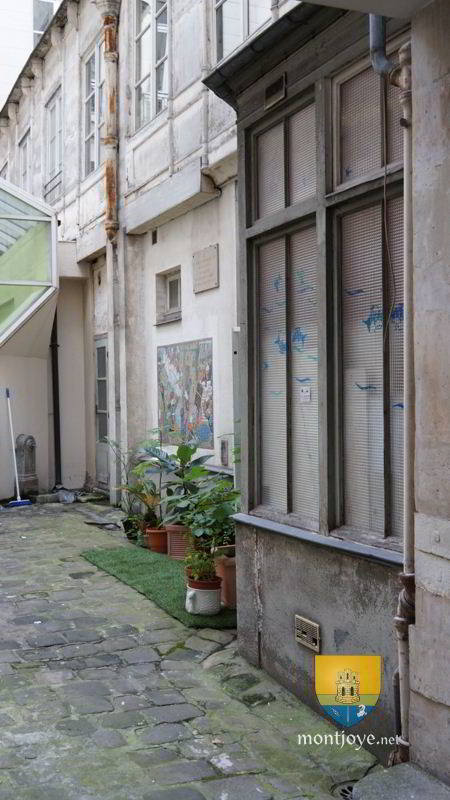
The images from Montjoye.net
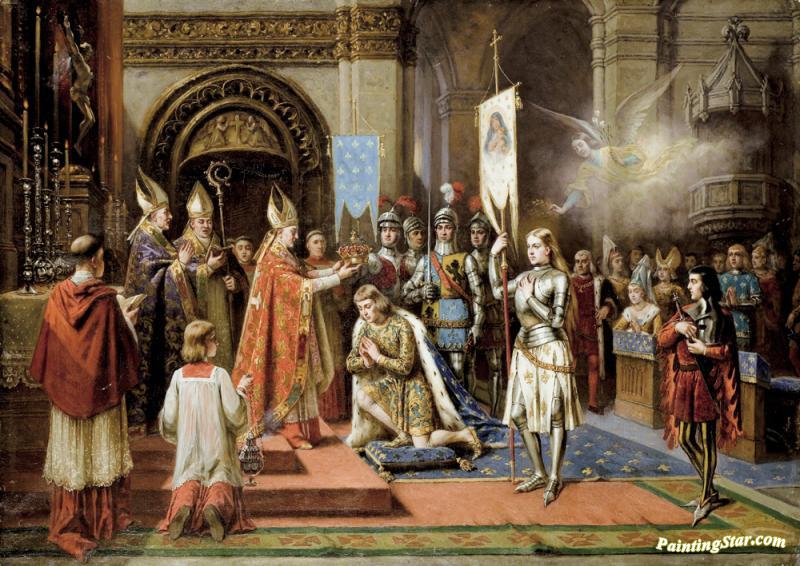
Let me explain.. After Joan did Charles VII a huge solid by crowning him at Reims (this was significant because there was some controversy over his lineage and his right to ascend the throne. His own mother threw him under the bus and claimed he was a bastard and not the legitimate son of his crazy father King Charles VI. Ouch) Joan had her sights set on liberating Paris, which had been controlled by the English for nearly 9 years.
Joan of Arc at the Coronation of Charles VII in Reims Cathedral by Władysław Bakalowicz
Unfortunately for her, King Charles (thanks to JOA) found his support for Joan weakening. Having gotten his crown and newfound support of the French people (again thanks to JOA for leading all those successful battles!) he just wasn’t motivated to hurry himself along and regain Paris under French rule. So he half-heartedly allowed Joan to take an army into Paris to see what she could do. Things were looking good as she conquered Saint Denis north of Paris and then marched her soldiers towards the western side of Paris at the Porte Saint Honoré (there was the defensive wall of Charles V circling Paris at this time, and these portes/entrance ways were heavily defended. To even have a chance at conquering Paris, Joan and her army needed to infiltrate this entryway), which was protected by a badass moat and ditches. There was even a pig market nearby, but more on that later.
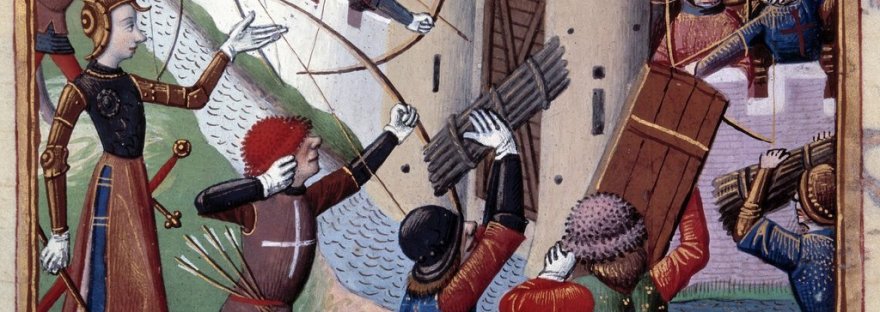
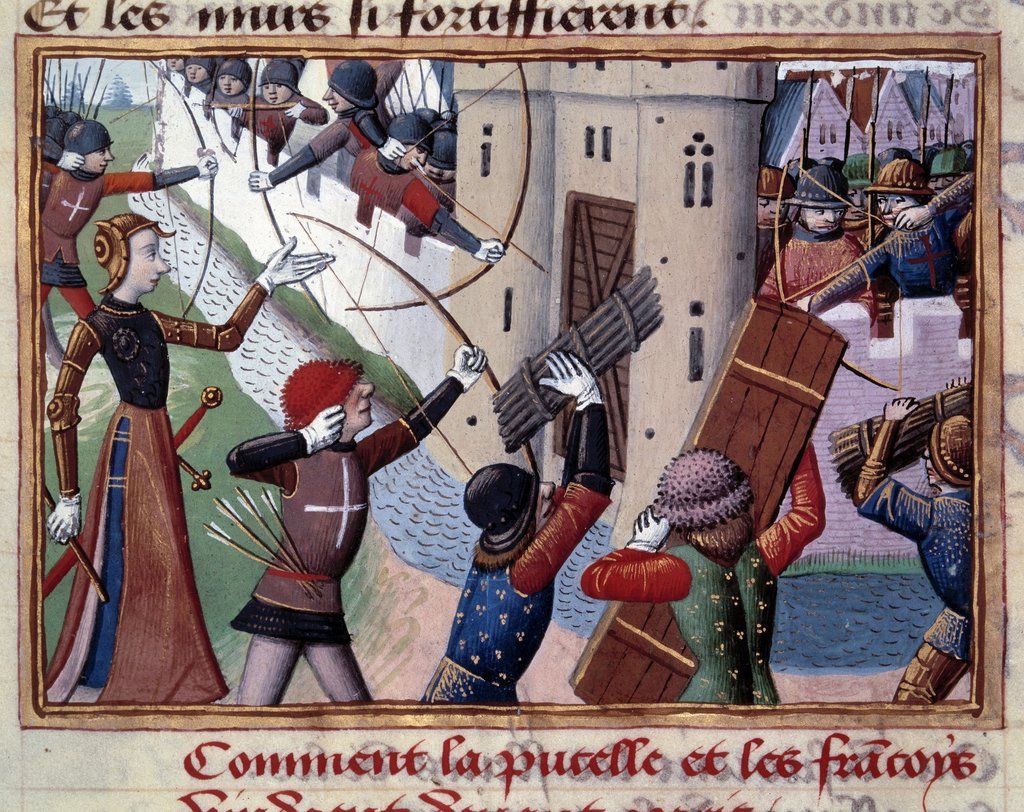
Joan and The Seige of Paris
The battle began poorly; the soldiers just couldn’t manage to get over the GOD DAMN WALL into Paris. They fought fiercely from dawn to dusk when suddenly Joan took a god damn arrow (from a fricken crossbow!) to the thigh. It brought her down but it wasn’t enough to make her give up and call it a day. She screamed for her men to continue, to get over the wall, to continue their assault- but she was forcibly carried from the field as her weary men retreated.
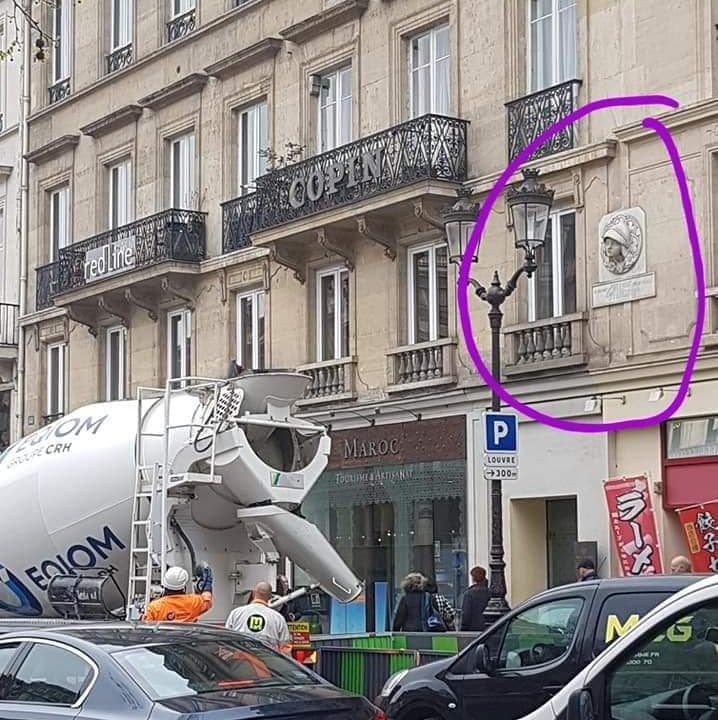
In short, Joan of Arc never actually entered Paris. And you know the rest.. Today in Paris, you can still see testimonials of the 8th of September 1429. At Place des Pyramids, just a few steps from the Louvre at 161 rue Saint Honoré, you can see the face of Joan looking down at you from above.
The inscription below her reads “Here was the Porte Saint Honoré, near to which Joan of Arc was injured in 1429”. There is another larger, grander, golden statue of Joan mounted on a horse nearby between the Louvre and the Jardin des Tuilleries.
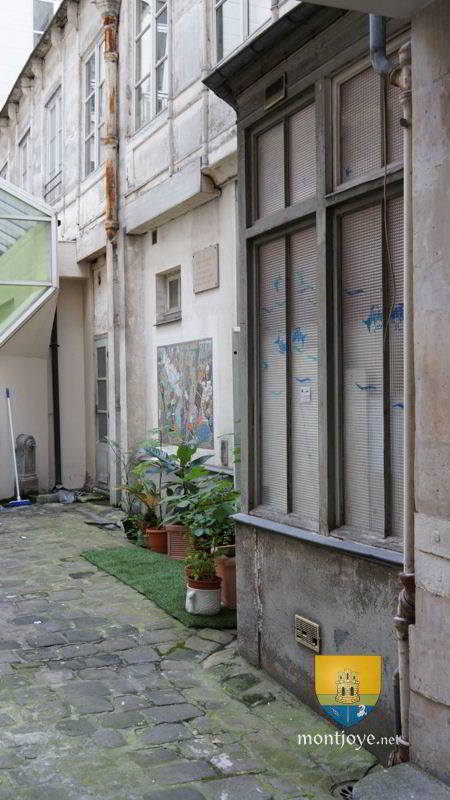
But these two markers do not show the EXACT place where Joan was injured. And that is what I was curious to see. Because according to this website, in May of 1987, students from the nearby school Jean Baptiste Poquelin and the mayor of the 1st arrondissement, inaugurated a beautiful Mosaic depicting Joan during her attempt to take Paris near the now long gone Porte Saint Honoré. This was created by the students of the school with the help of their principal and arts teacher.
The Mosaic hidden at 15 rue de Richeleau, image from Montejoye.net
Numerous historians confirmed that this was the actual exact place where Joan was injured based upon eye witness testimony that has been recorded and kept throughout the past 600 years. A significant point between several testimonials was that Joan was injured not at the porte Saint Honoré itself, but rather 100 meters or so off to the side between the pig market and a trench that was at the base of the fortified wall. Check out the pictures of the maps I have for comparison.
The Porte Saint Honoré and the defensive wall that surrounded Paris. The pig market where Joan fell is encirlced.
So off I went to go find this historically significant mosaic, which was situated in the courtyard of an apartment building according to the article. Which brought me my first challenge. GETTING IN! (You need a code to access most Paris buildings that is entered on a keypad next to the door) I waited at the door on the street for about 20 long minutes for someone to either leave or enter with the door code- so that I could get access. Finally the door opened, and I walked in, feeling exhilarated to see this mosaic, this historic moment in time, and the great article I was going to share with you. The only problem was- there was.. nothing. No mosaic! STAY TUNED AND TURNT UP FOR PART 3




















 Paris History of our Streets