latin quarter, Maps

The Catastrophy of the Archevêché Bridge

Pont de l’Archêveché Paris 75005

Buses having been circulating in Paris for a little over a hundred years and are the preferred method of transportation for Parisians who prefer to avoid the crowds and unpleasant odors from the metro. If you manage to nab a seat, the bus can be quite enjoyable, especially on lines such as 89 (latin quarter), 86 (left bank/Bastille), and 69 (Eiffel tower, Louvre) where for a 2 euro ticket you can have your own Paris tour.

An example of a current Paris bus map

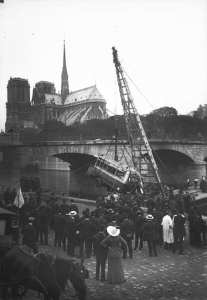
However like any method of transport, accidents do happen, and in this case, don’t necessarily involve a collision on the street. The deadliest Paris bus accident happened on the Archevêché Bridge September 27, 1911 when at about 5pm, the driver of the Line 205 bus (which ran from Jardin des Plantes to Square des Batignolles) lost control after swerving to avoid the same bus coming from the other direction, who had been stopped in the middle of the bridge to avoid running over a jay walking pedestrian.

Crashing through the metal barrier on the bridge, the bus plummeted into the Seine below, hitting the water with a force so hard witnesses described it as a cannon exploding. Carrying 27 people, the bus quickly began to sink to the horror of crowds gathering above.

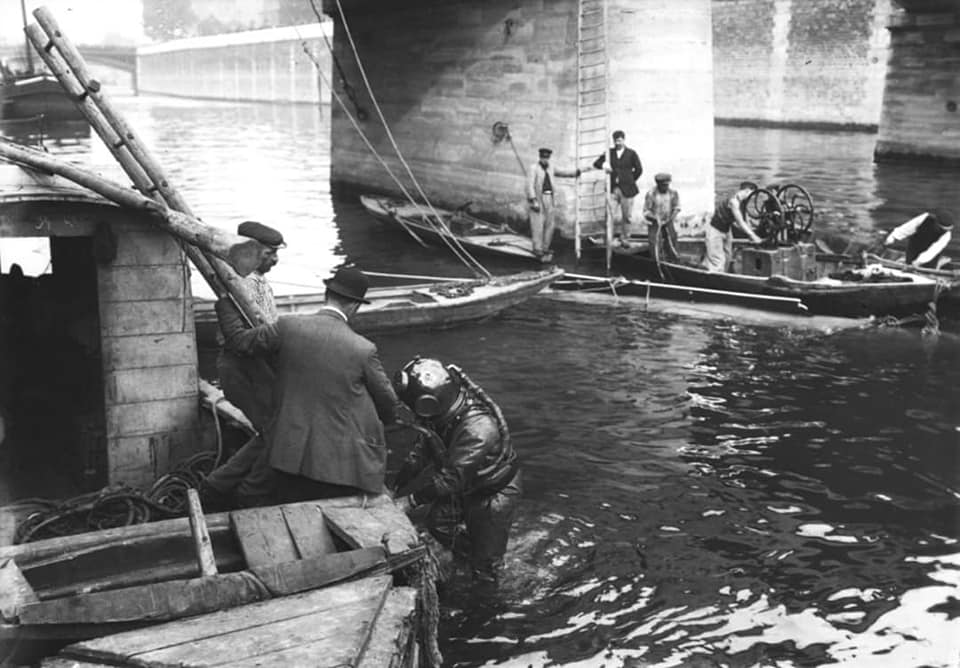
One passenger, Abbot Antoine Richard- was traveling in the first class part of the bus with two children. They were able to escape by a window and after passing the young Max et Marguerite off to a nearby boat, he went back to save four others until his limited eye sight prevented him from finding passengers still trapped in the water. Another hero was Eugène Mèneveux, who was working nearby when the accident happened. A champion swimmer, he rushed to the scene and saved a few people as well. The bus was pulled out of the water the following day. In total, there were 14 deaths including the driver (4 bodies were never recovered, likely swept away) and 9 wounded.
Maps, Opera and Les Grands Boulevards

King Louix XIV and the Poison Scandal

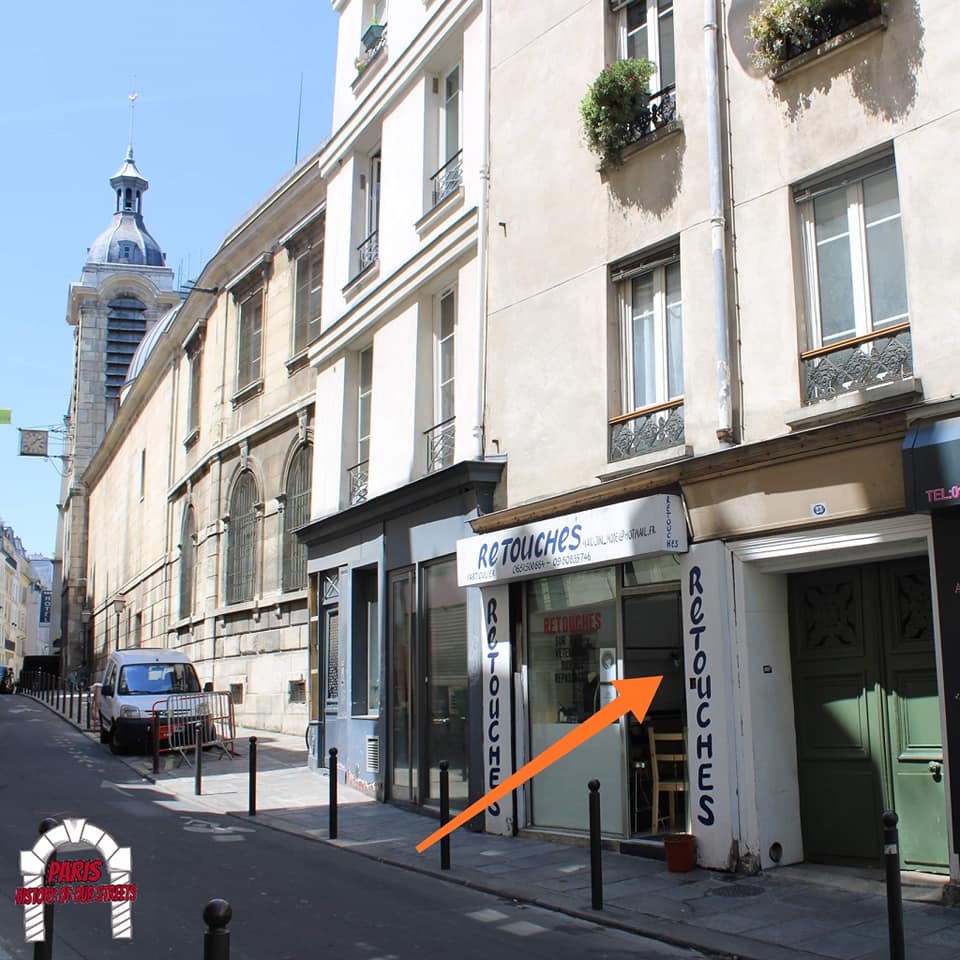
23 rue Beauregard Paris 75002

Witches? Curses? Poisons, Black Masses, and Baby Sacrifice during the 17th century reign of King Louis XIV? At this time, witchcraft was considered like sooo old school 15th century and dabbling a bit in the dark arts was generally considered harmless or just nonsense for bored women. Seeking the help of a bit of black magic to concoct love potions or have a fortunes told was something you kept discreet, but no one was going to go after you with a pitchfork for it.

King Louis XIV and his former mistress, Madame du Montespan depicted in the Canal+ series Versailles, 2015

However things got out of control in the 1670’s when numerous nobles of the King’s court were implicated with some pretty gruesome acts of sorcery. It all started in 1670 when the Marquise of Brinvilliers was found guilty of poisoning her father and brothers so she could inherit the family fortune and live happily ever after with her lover. Confessing under the torture we fondly recognize today as waterboarding; she was burned at the stake and then beheaded.

Madame de Brinvilliers being forced to ingest water prior to being beheaded in 1676. She was convicted of poisoning several members of her family in order to get their inheritances. Image by © Stefano Bianchetti/Corbis

Around the same time, the Duchess of Orléan (sister in law to King Louis) Henriette also died suddenly under suspicious circumstances. Whispers began to turn into rumor and the police rounded up many alchemists and fortune tellers who were known to practice the dark arts. Looking for people to blame, the accused were tortured and sang like birds when names were demanded. Unfortunately for the King, this backfired because the names included many prominent members of his court, including his long-time official mistress Athénaïs, the Marquise de Montespan.

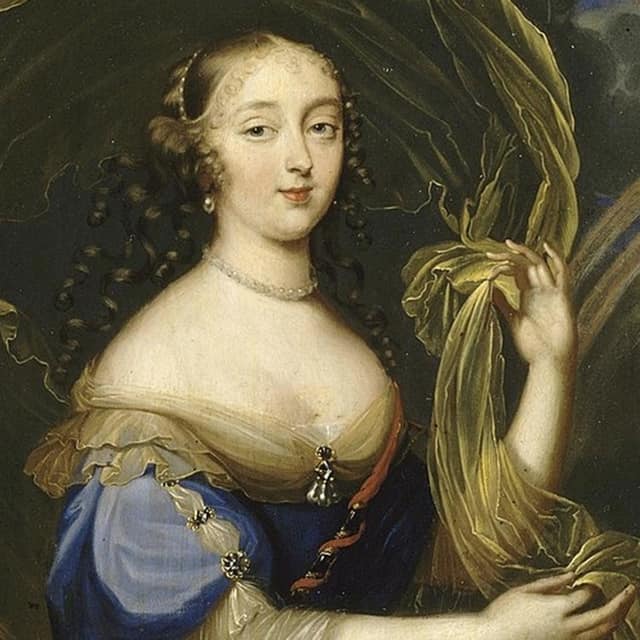
Portrait assummed to be of the Marquise de Montespan

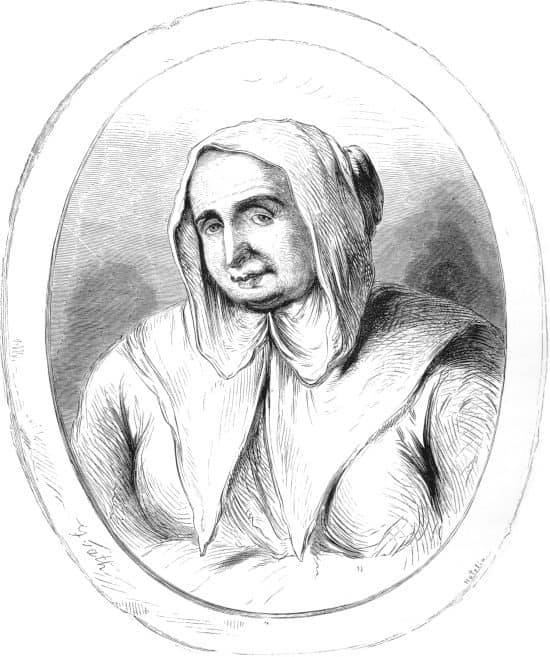
According to testimony, she sought out the magic services of the notorious Midwife turned Occultist Catherine “Lavoisin” Deshayes. On several occasions, Montespan was said to have performed Black Masses with Lavoisin at her evil Baby Killing Poison Factory home and other secret locations.

Catherine “Lavoisin” Deshayes

Hoping to revive the King’s fading interest in her, it was claimed that during these ceremonies she would act as an alter; lying naked on a table with a bowl on her stomach, where blood from a murdered baby would be collected. This would then be secretly given to the King to consume, acting as an aphrodisiac. Allegedly.

A Black Mass

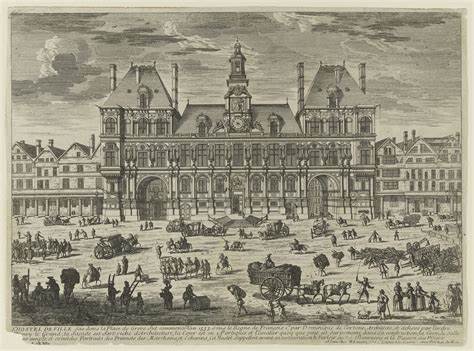
Many of the accused claimed to have spoken out falsely during torture, or gave names to avoid a worse fate. In addition, all court documents were eventually destroyed. When everything started to go B-A-N-A-N-S, the King created a special court to expedite the trial and sweep the whole scandal under a rug. Of the 400 people accused, 23 would be banished and 36 executed for witchcraft and murder. On the 22nd of February 1680 at the Place de Grève (Hotel de Ville today) Catherine Lavoisin was burned alive to the delight of a roaring public.

Place du Grève, 1670

Found guilty for practicing black magic and murder, it was said the bodies of more than 2,000 babies were buried in her garden at her home formerly located on 23 rue Beauregard, where she performed abortions and her infamous black masses.

And since nothing cools off an already compromised relationship like rumors of murder conspiracy and Baby Blood Soup, the Affaire des Poisons would mark the beginning of the end of Madame de Montespan’s reign as the King’s Mistress.

latin quarter, Maps

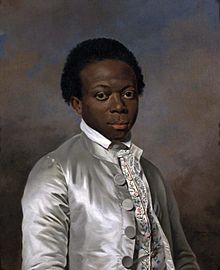
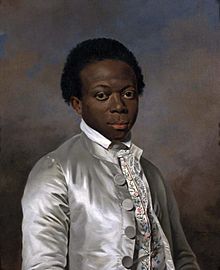
Zamour, the Beloved Slave of Madame du Barry

13 rue Maître-Albert Paris 75005

On the 7th of February 1820, the body of Louis-Benoit Zamor was found by his neighbor in his 2nd floor apartment located in the Rue Perdu (today rue Maitre Albert, right by Notre Dame).

Where Zamour lived and died

The writer Jacques Levron remarked that, “He lived in a small, sordid room, disliked by everyone. His body was thrown in a communal pit and no one came to his funeral.”

Louis-Benoit Zamor

Zamour spent much of his childhood at Versaille where he lived as the adopted son AKA human slave of Madame du Barry, famous maîtresse-en-titre to Louis XV. Born in Bangladesh around 1762, he was captured as a child by English slave traders then bought to France where he was given as a gift to the king’s favorite plaything. Jeanne Bécu, the former call girl turned Countess who gradually moved up in rank as she moved around the beds of her many lovers, until peaking with Louis XV.

Madame du Barry et le page Zamore painted by Jean-Baptiste André Gautier-Dagoty

But alas, the higher one climbs by giving sexual favors, the farther there is to fall, and du Berry found herself under the blade of the guillotine begging the executioner for “encore un petit moment!” in 1793. Seeking vindication for the years he spent serving her hot chocolate (daily, apparently at 9am) and dressing up to entertain her as a savage African (he was Indian),

Portrait of Du Barry done by  Élisabeth Vigée Le Brun, 1782

However payback is a bitch, and Zamour himself threw Du Barry under the Revolutionary Bus when he testified against her 1792. He acknowledged that even if du Berry treated him to a lavish lifestyle at the French royal court, she humiliated him and made jokes at his expense. She may have baptized and educated him, but he was little more than her human pet. Eventually, she would find herself under the guillotine blade, begging for her life. Unfortunately for Zamour, revenge must not have been so sweet because he found himself imprisoned during the Reign of Terror for several weeks when he was accused of treason as well.

Image of Madame du Barry and Zamour from the Sophia Coppola film Marie Antoinette

He miraculously survived and post-Revolution, he came to the Latin Quarter of Paris, where he was known as a bitter old man. No shit! Having received a valuable education at Versaille, he worked as a tutor but was known to physically abuse the students he worked with. Despite the legacy he was left with, I really think there is more to Zamour than what we know.

Maps, Saint Germain des Près and the Eiffel Tower

The Revolutionary Lady Assassin

Rue de l’Ecole de Médecine Paris 75006

Have you ever heard of Charlotte Corday- the murderess affectionately named The Angel of Assassination?

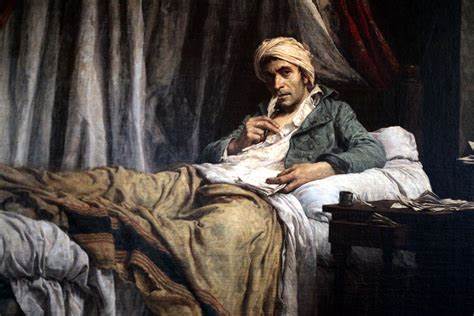
During the Reign of Terror, (the time during the French revolution when things were getting a little bananas) the radical, left wing Jacobin journalist Jean Paul Marat was using his popular newspaper L’Ami du Peuple (Friend of the People) to attack and denounce influential conservative leaders- ultimately sending anyone whose name appeared in his highly influential paper to their death with the flick of his quil.

Marat Lucien-Étienne Mélingue, 1879

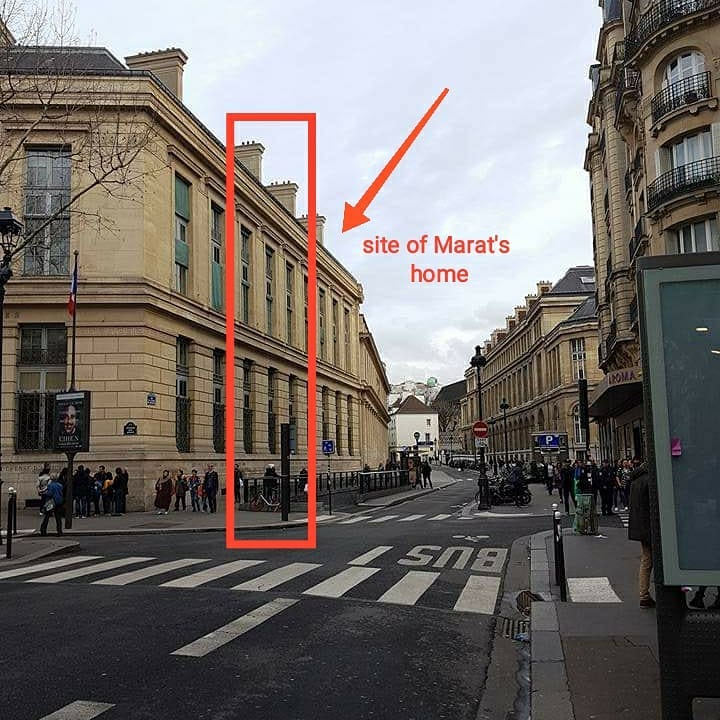
Charlotte, a young woman of 26 influenced by Girondin ideas and wanting to prevent an all out civil war, decided to take matters into her own hands and end the massacre of so many caused by the words of Marat. As they say, snitches get stitches. Or in this case, shanked by a kitchen knife while in the bath. Acting alone, she made her way into Paris from the Normandy region, bought herself a dagger, (check out the link below to see where this was) and went to see Marat himself at his residence at 30 rue des Cordeliers (present day 18 rue de l’Ecole de Médecine)

Comparison to the current view where Marat was assasinated. His building was destroyed in 1876. It is a common misconception that his apartment is the one with the turet on the corner. Photos courtesy of c.corday.free.fr

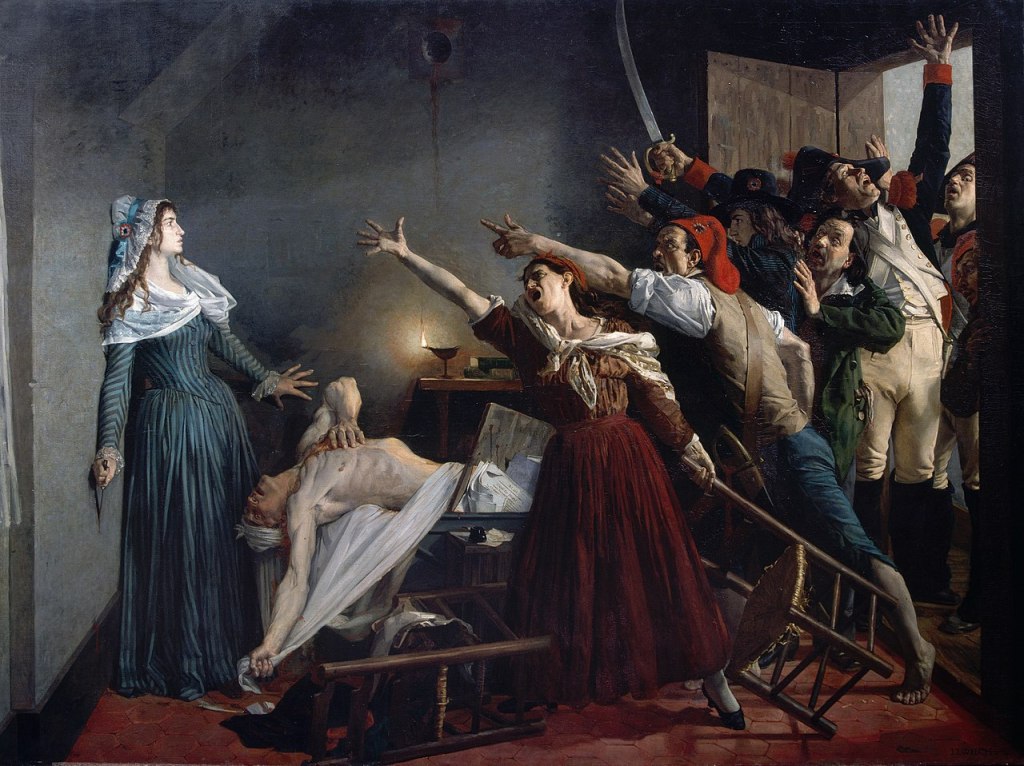
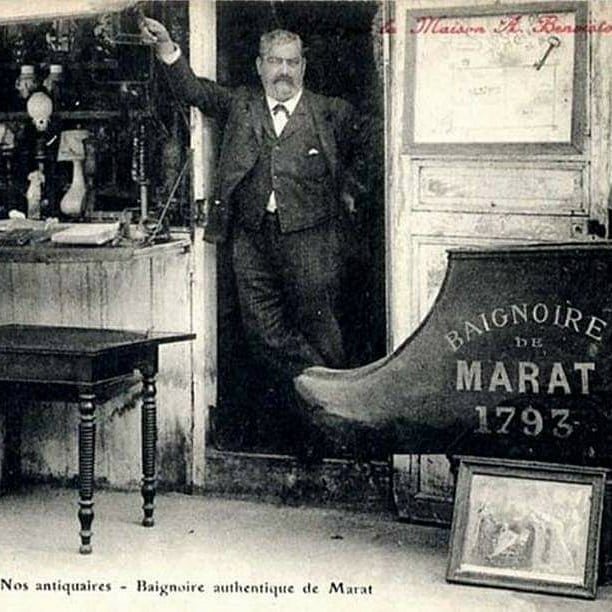
on July 13, 1793. Claiming to have insider information on an attack being led by Girondists, she was refused a few times but like any persistent AF girl with a plan, she continued to ask for entry until she got in. Now Marat had some unknown knarly debilitating skin disease and was pretty much confined to his bathtub, which was where he was seated with a glass of White Zin when Charlotte plunged her 5 inch dagger into his carotid artery, killing him nearly instantly.

“L’assassinat de Marat” The Assasination of Marat. Painted in 1880 by Jean-Joseph Weert

He was able to yell out before he died, thus attracting a crowd of neighbours and friends of Marat to seize Charlotte and take her straight to prison.

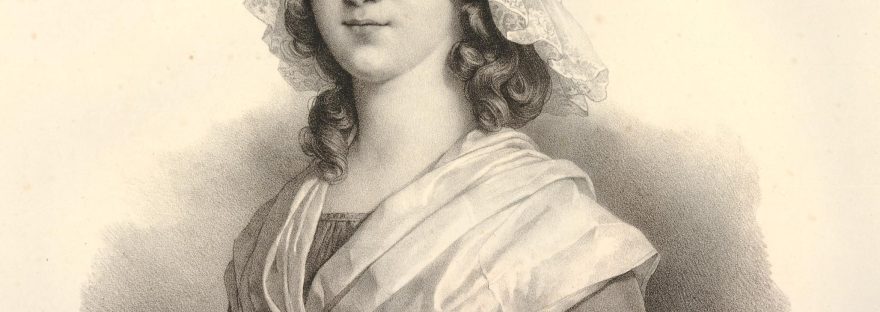
Charlotte was prepared to take one for the Girondin Team and even had a letter neatly prepared explaining why she did what she did. She went calmly to the guillotine on the 17th of July and before she was executed boldly proclaimed “I killed one man to save 100,000.” Badass. Her last request was to be painted.

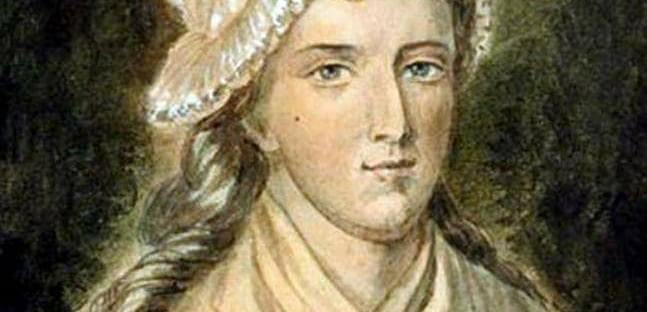
Charlotte painted by Jean-Jacques Hauer before she was executed

Charlotte’s courageous action radically changed the perceptions of women’s roles at that time when they had no voice to really make a difference. No one could believe that she had acted alone and of her own free will. Insisting a strong male lover had convinced her delicate and impressionable female mind to commit the shocking crime, her body was even examined for evidence she was not a virgin.

To their surprise; she was.

Read the post below to find out Charlotte purchased her dagger.

Maps, The Louvre and Palais Royal

18th Century Murder Weapon Boutique

177 Galerie de Valois Palais Royal Paris 75001

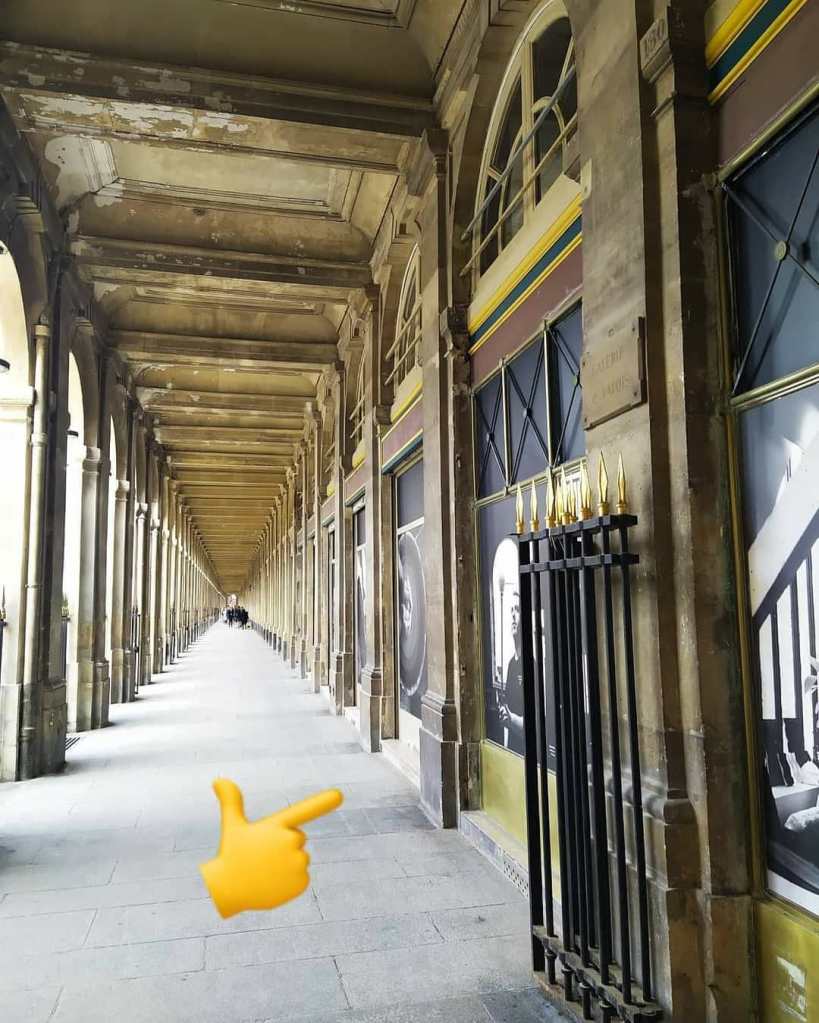
Here’s a little detail about The Martyr Murderess Charlotte Corday (you can catch up on her by reading the link below) most normal people probably wouldn’t be interested in. But I am admittedly morbid, (and you are too if you follow this page right?) so when I read that the dagger she used to murder Marat was purchased in one of the little shops surrounding the Palais Royal- of course I had to know which one!

177 Galerie de Valois today, empty

In the galleries surrounding the gardens of the Palais Royal (then known as the Palais de l’Egalité because of strong anti-royal sentiments and such) you can still see this shop where Charlotte bought her murder weapon. It was known in 1793 as a knife shop, Le Coutelier Badin.

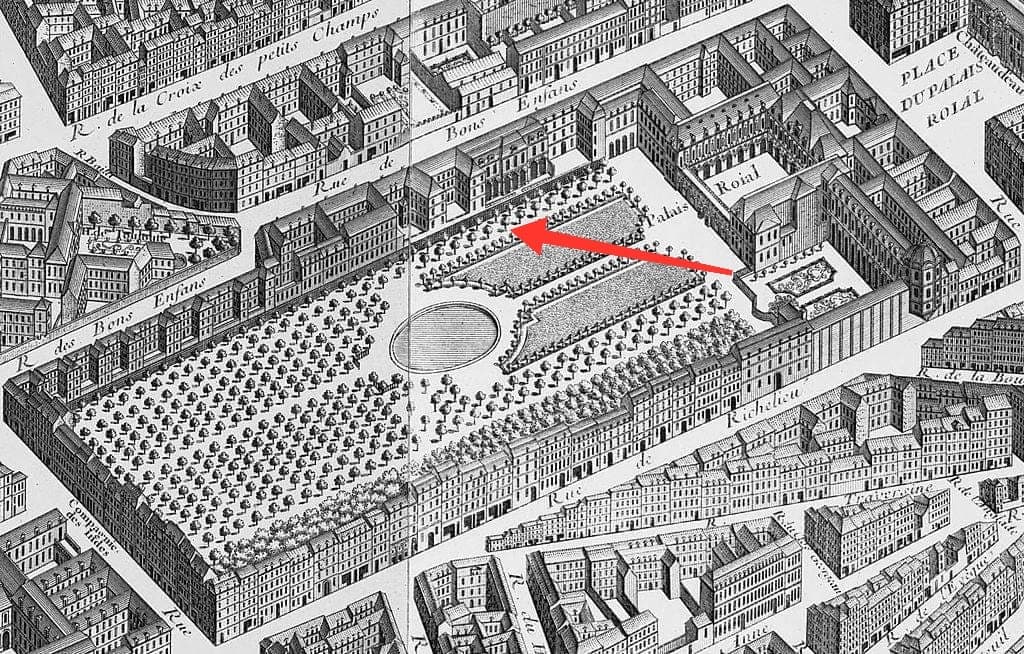
Approximate location of the shop where Charlotte purchased the dagger she would use to kill Marat. Turgot map, 1739

According to her testimony, Charlotte purchased the 15cm blade for 40 sous around 8am on July 13, 1793. She then took a carriage to Marat’s home across the river. It took her multiple tries to enter his home that day (both the guardienne of the building and Marat’s companion told her off) but on her 3rd attempt in the evening, she yelled loudly enough for Marat to hear her from his bathroom, insisting she had information for him.

Assassination of Marat, Paul Baudry 1860

And like an 18th century bath ridden Mr. Rodgers, he told her to come on in! The rest is history,.. check out the post below.