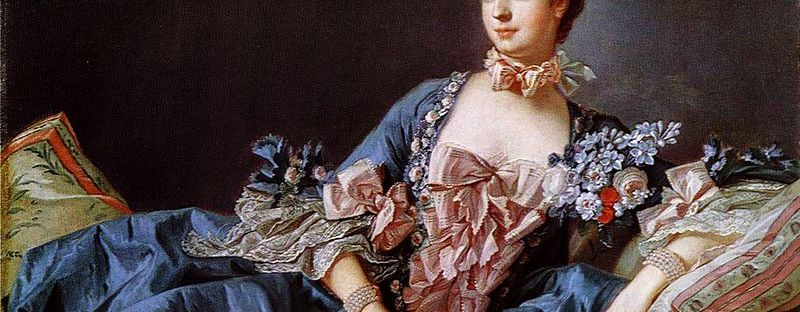
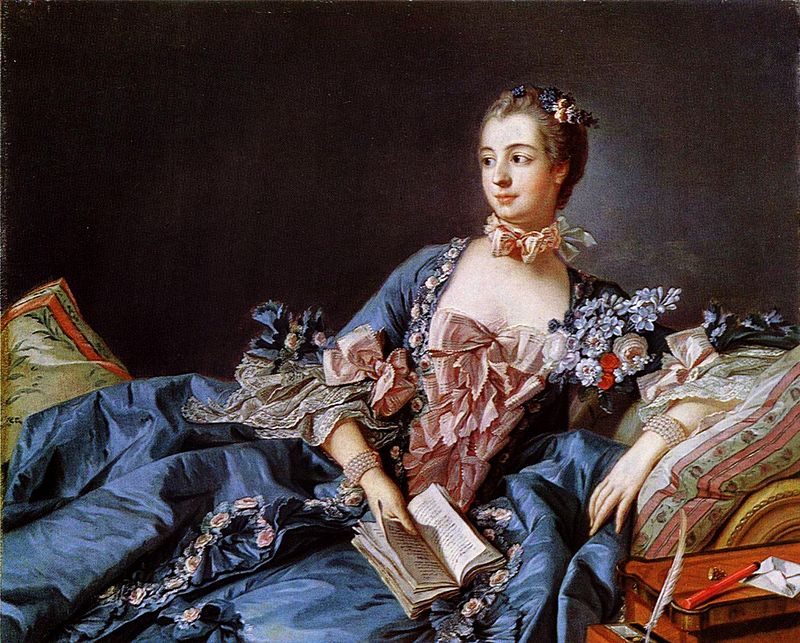
Despite her birth as a commoner, Jeanne-Antoinette Poisson effectively used her beauty and intelligence to rise through the ranks and beds of Parisian elite until she peaked with King Louis XV in 1745. Like an 18th century Melania Trump, Jeanne managed to have not only a position under a man of power (literally and figuratively) but one as an influential advisor next to him.
Madame de Pompadour by François Boucher, around 1758.
She dabbled in a bit of everything at Versailles, acting as Lady in Waiting to the Queen (AWKWARD) to unofficial Prime Minister. She was responsible for the latest trends in art and fashion during the Age of Enlightenment and was even a BFF of Voltaire. She retired from her Mistress duties after only 5 years at the age of 29, but remained a close friend and confidante to the King, even helping him select his new night time companions. The Petit Trianon, which is usually associated with Marie Antoinette, was actually initially built for her. Unfortunately, she contracted TB at the age of 42 and despite the Royal Custom that NO ONE SHALL BE ALLOWED TO KNOWINGLY DIE AT THE COURT OF VERSAILLES EXCEPT THE KING OR HIS FAMILY, Jeanne kicked the bucket in her Versailles Chateau apartments in 1764.
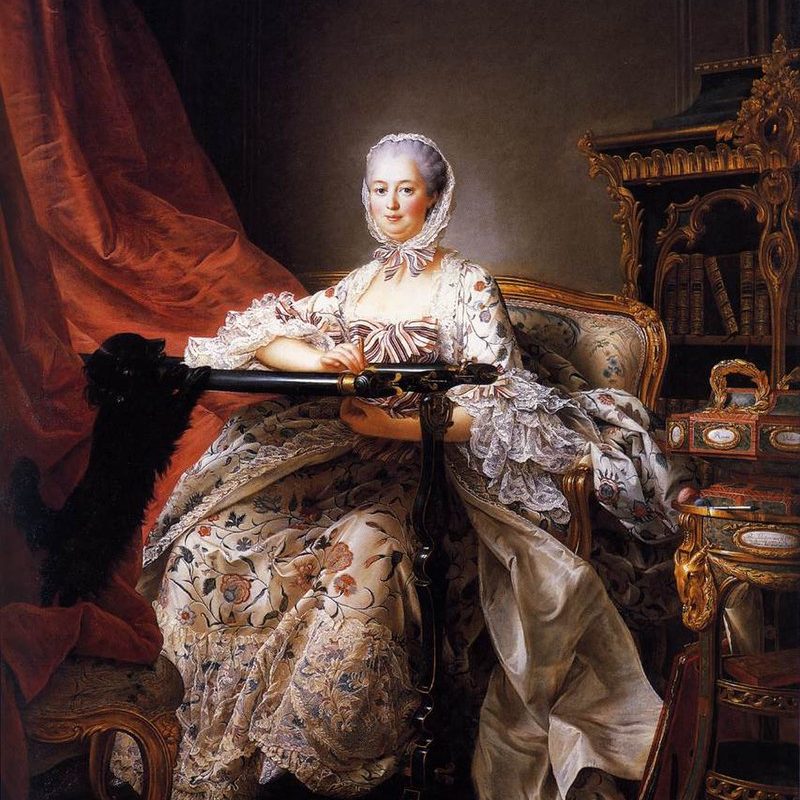
Portrait started before her death, finished after. Madame de Pompadour à son métier à broder by François-Hubert Drouais (1763-4)
What happened next is where myself, history, and Paris streets come in. Jeanne was laid to rest next to her daughter who died at age 9, in the Couvent des Capucines, today the area just north of the Place du Vendome. However when the Couvent was destroyed in 1806 to make room for today’s Rue de la Paix, her tomb in the cave was apparently never moved to the Catacombs with the rest. Legend has it she lies there today, just under the pavement of number 3.
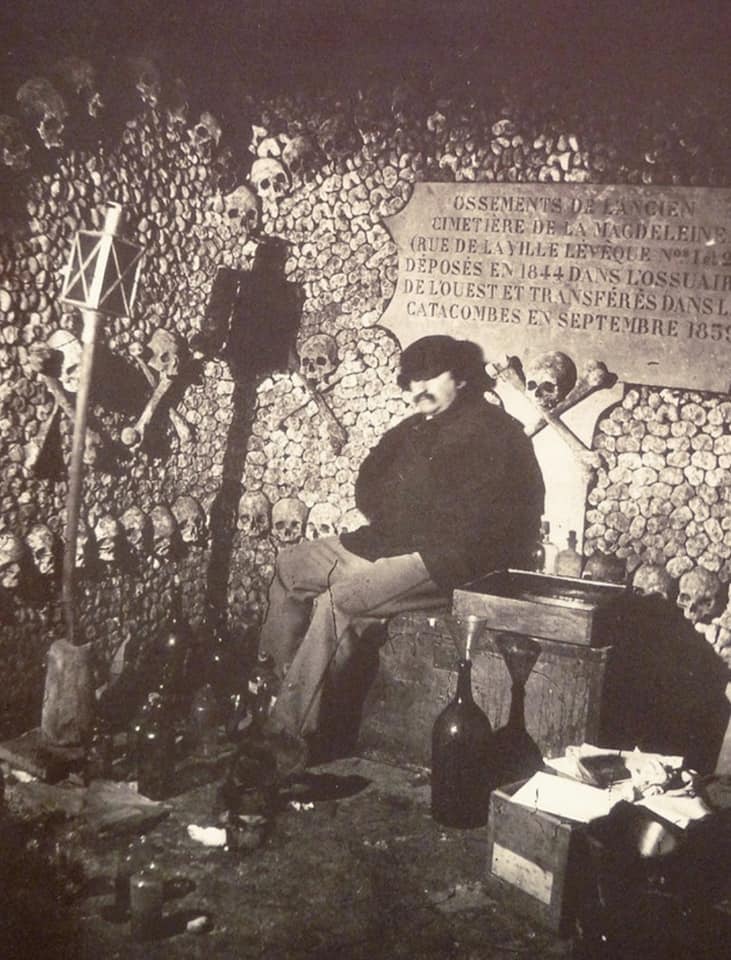
We all know and recognize the famous photographers of a picturesque old Paris like Robert Doisneau and Henri Cartier-Bresson, but have you heard of Felix Nadar? He was the pioneer of adventure photography in the mid 19th century and the first to capture the city from above in a balloon as well as underground in the 200 miles of tunnels that make up the Paris Catacombs.
Selfie of Nadar in his “office” 1861. Notice the glass bottles of chemicals at his feet
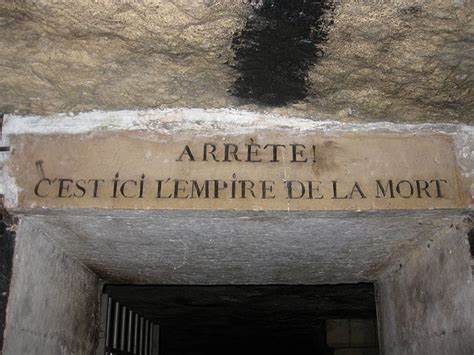
It is estimated that 6 million bodies are stacked in these former limestone quarries, (a history in itself which I’ll leave for another day) and tours have been given to curiously morbid visitors since 1810 when Louis Etienne Héricart de Thury, who was the director of the Paris Mine Inspection Service, had the idea to turn the disorganized piles of bones into artistic and aesthetically pleasing (look honey, its a heart made of human skulls!) shrines to the dead. The tunnels are illuminated by electricity today, but you can still see traces on the ceiling from when visitors were guided by torches.
“HAULT! Here is the empire of Death!” Notice the smoke trail above?
Nadar, who opened his photography studio in 1855, began by taking portraits of the Parisian elite like Victor Hugo and Charles Baudelaire, but soon became attracted to more ambitious shots after he invented a new method where he could create copies of his photos, unlike the Daguerreotype predecessor. He began taking pictures underground in the catacombs around 1861 and because there was no light, he faced his first challenge of creating it artificially using an early battery. Named after their German creator, Bunsen batteries had not yet been used below ground and Nadar needed to adapt to their bulkiness by attaching them to leads which could be run from the city down to the tunnels below.
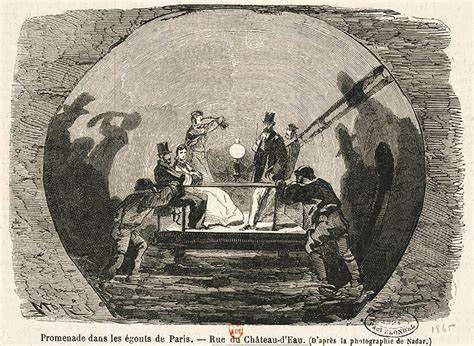
A stroll in the Paris sewers
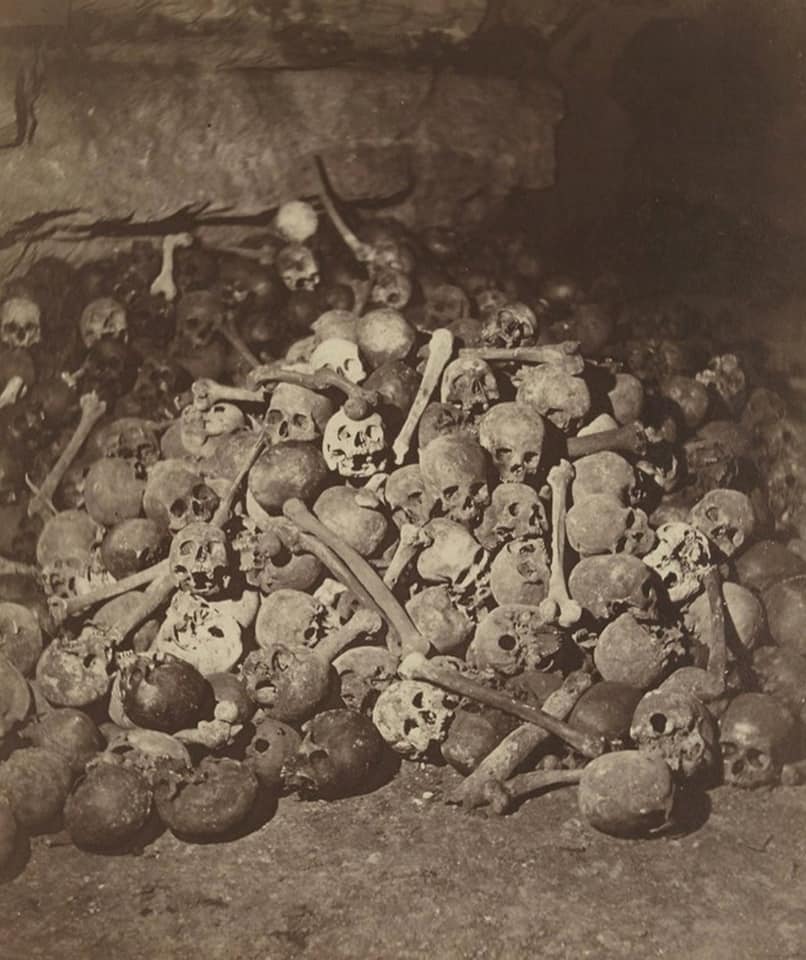
Revolutionizing this process, as well as his fearless use of equipment and chemicals in these narrow underground tunnels was a dangerous venture that seemed to thrill the ballsy young photographer. After much trial and error, (his assistants impatiently quipped that they would die down there before they could successfully get photos) he was finally able to successfully capture images of the ossuary; becoming the first to photograph some of the oldest human remains in existence.
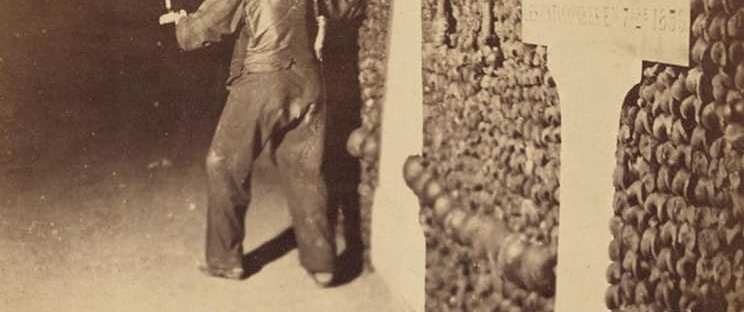
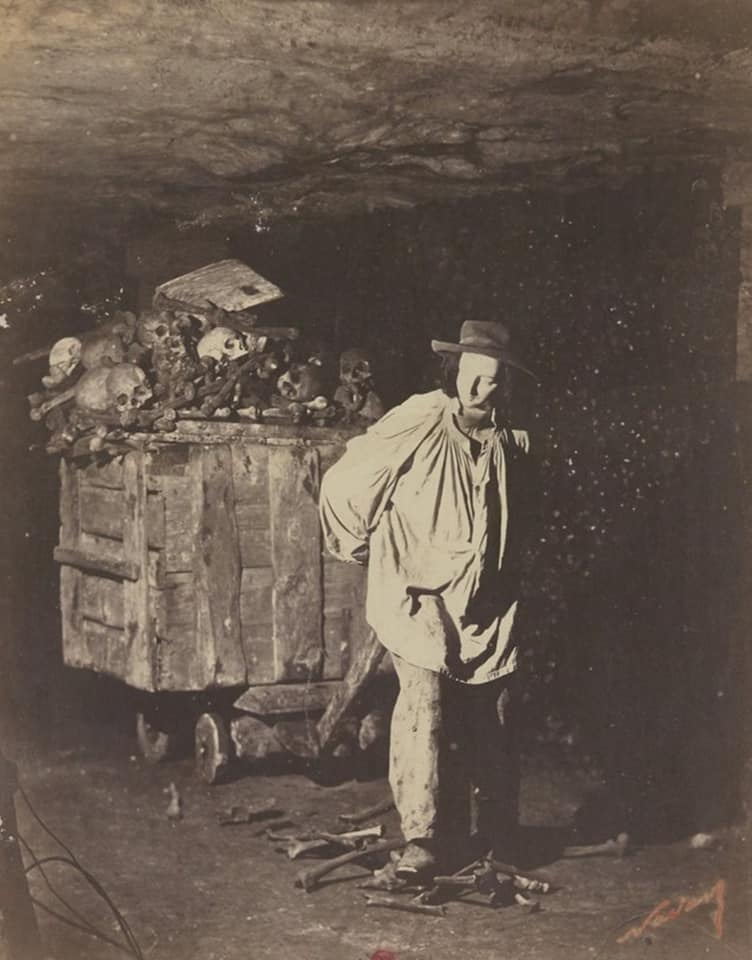
It’s interesting to note how it wasn’t just about the photos, but the experience he wanted to share in visiting such a remarkably significant place. He wrote in his memoirs “the fragment that your foot just bumped into, this debris without a name, is perhaps one of your grandfathers.” Because the picture exposure was as long as 18 minutes, he used mannequins dressed as catacomb workers to give people an idea of what it was like to visit these tunnels and a sense of their limited space.
Can you spot the mannequin?
Thanks to his efforts, the photos he took and then presented at the 1862 International Exhibition in London would be a hit; creating a boom in the popularity of the catacombs, which still exists today as one of the most popular Paris attractions (with a notoriously long queue!).
If you haven’t seen them yet, the catacombs are a unique way to see centuries of Paris history amongst the remains of those who once lived it. And if you are worried it might be too gruesome, this tourist’s review in 1810 sums it up. “I’ve seen death, it is right in front of my eyes, but my stomach is grumbling, and I’d much rather eat”.
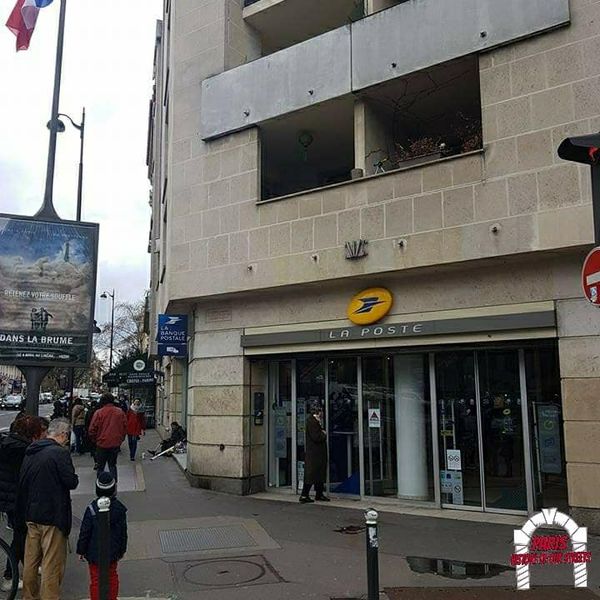
Going to the Post Office is never a pleasant affair, and is ranked #3 Worst Things To In Paris (after going to the bank and dentist). The hours are always inconvenient, you can expect to wait in a half assed line full of annoyed Parisians murmuring “ça fait chier” (This sucks) and standard postage stamps are nearly a euro each.
However there is a historical exception to this normally unpleasant experience. In the depths of the 2nd underground level beneath this post office, you can view a stone arch that was once imbedded in the medieval fortification wall that encircled Paris 800 years ago. This 12th century stone rampart was erected to defend Paris before King Philippe Auguste took off on his 3rd Jimmy Buffet cruise. I mean religious crusade.
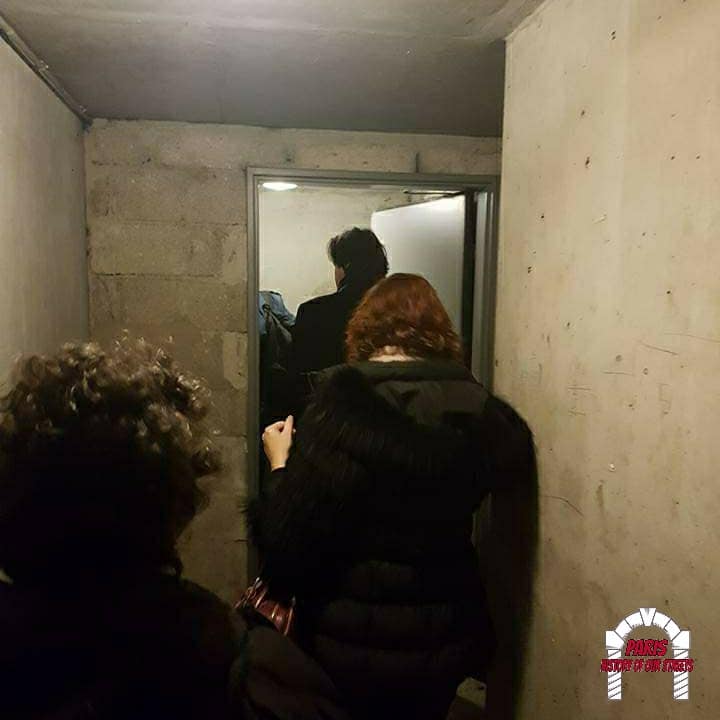
I did this tour two year’s ago when each first Wednesday of the month at 2:30pm, a tour guide from the Paris Historical Society came to the Post Office to take anyone who is interested into the parking garage down to the -2 level.
And there, behind a large metal door and in a small concrete room, sits the 800-year-old stone archway. What is it?! Where did it come from? Why is it here?! What WOULD Jimmy do??
Before the aforementioned wall was built around Paris, in this location there was only the Abbey Saint Victor and a small river called the Bièvre. This river was rerouted to create the Canal of Victorins, which provided an irrigation system to water plants and turn windmills for the residents at the Abbey. King Philippe’s wall was built right over where this river ran, so an archway was created to allow the water to pass through it. As this open archway could comprise the safety of the wall, a metal grill was inserted inside it. After 1356, a ditch was dug around the wall to further secure it against potential invaders and the canal was eliminated.
The Abbay Saint Victor in 1655, engraving by Merian
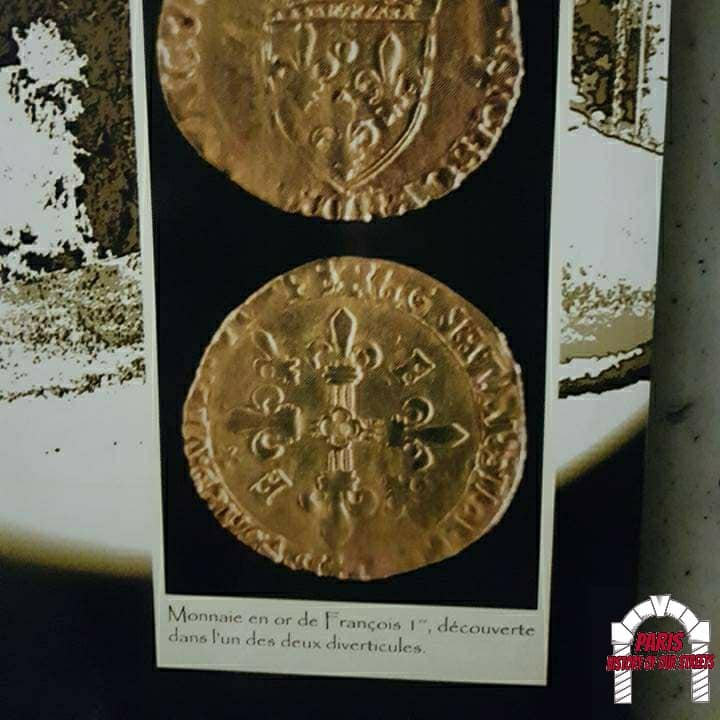
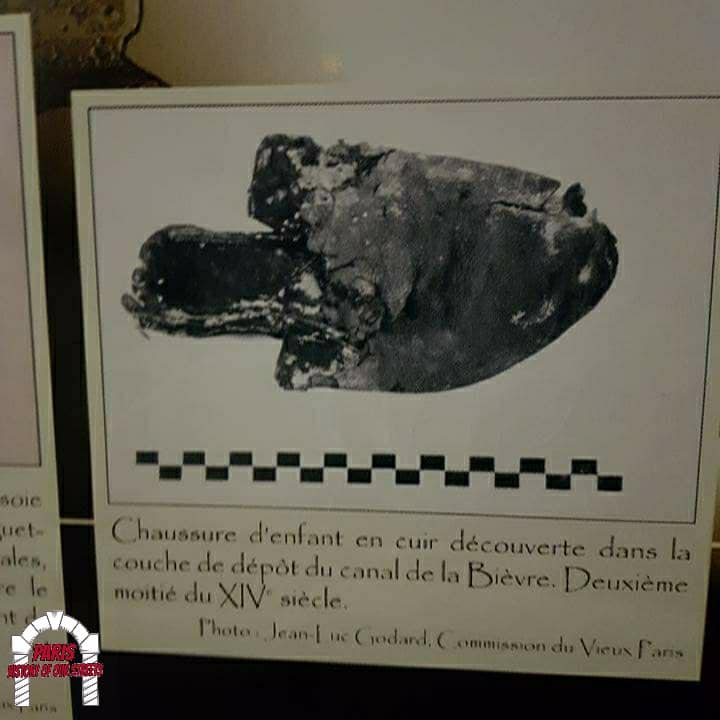
The ramparts of Philippe August were eventually demolished (kinda, sorta) and the ditch filled in; entombing this archway as Paris became larger and a new, larger fortification wall was built. Fast forward to 1989 when workers discovered the arch while constructing a new (and hideously modern) building at this location. A historic preservation company was assigned to survey the site (if I could go back to school for anything this would be it) and see what other goodies were hidden under the dirt. They found 400-year-old shoes, currency, and even plaster remains from an old sculpture shop that was located at this corner in the 19th century.
Gold coins dating from King Francois I
14th century children’s leather shoe
Putting the arch back together in 1981
As for the archway; it was dismantled and each stone was labeled, then reconstructed Tetris style in this room in May 1991, where you can see it today; two levels below the street and not far from its original location at the wall of Philippe Auguste.
Plaque outside the post office “Wall of KIng Philipe Auguste. Here was the Entry Saint Victor built in the 13th century, rebuilt in 1568, and demolished in 1684”
There are several other locations in Paris where you can still see traces of this 800 year old wall I’ll eventually share. For now, I’ll leave you with the inspirational speech King Phillipe allegedly gave to his team of royal wall builders. “Build me something tall and strong.Make it long remain, before I go away. It’s only half past the twelfth century, but I don’t care- it’s crusade time somewhere.”
*if you haven’t read part one, I insist you stop here and go back to the previous post.. For everyone else, fix yourself an Old Fashion because this is a long one.. . .
One of the big reasons I created this page was to bring attention to the endless number of significant historical landmarks that can easily be found around Paris for anyone to see. If you know where to look …
Many of these are marked with plaques that explain the significance of the site: however many more are not marked at all, or they aren’t easily accessible. These are the ones that fascinate me. After 8 years in Paris and many hours spent browsing dusty books in libraries or late nights online, anything labeled “Paris Secret/Unknown/Mysterious” catches my eye. But rarely am I surprised now adays. Until I came across an online article that caught my attention. It was titled “Mosaïque de Jeanne d’Arc blessée au 15 rue de Richelieu” (Mosaïque of Joan of Arc hurt at 15 rue de Richeleau). This article claimed that at precisely this address in the 1st arrondissement of Paris, Joan was severely injured during the battle of Paris on Thursday the 8th of September 1429.
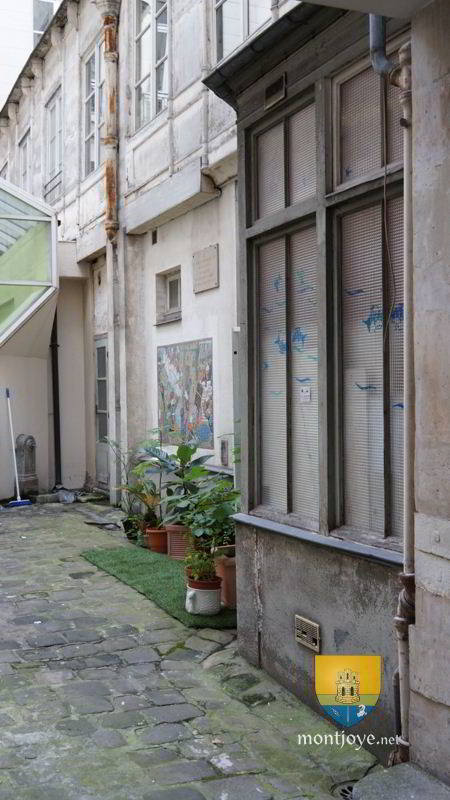
The images from Montjoye.net
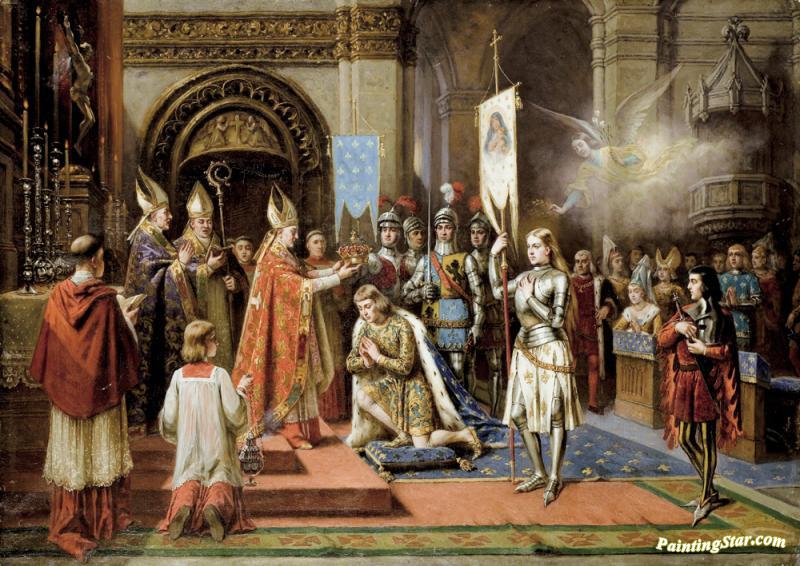
Let me explain.. After Joan did Charles VII a huge solid by crowning him at Reims (this was significant because there was some controversy over his lineage and his right to ascend the throne. His own mother threw him under the bus and claimed he was a bastard and not the legitimate son of his crazy father King Charles VI. Ouch) Joan had her sights set on liberating Paris, which had been controlled by the English for nearly 9 years.
Joan of Arc at the Coronation of Charles VII in Reims Cathedral by Władysław Bakalowicz
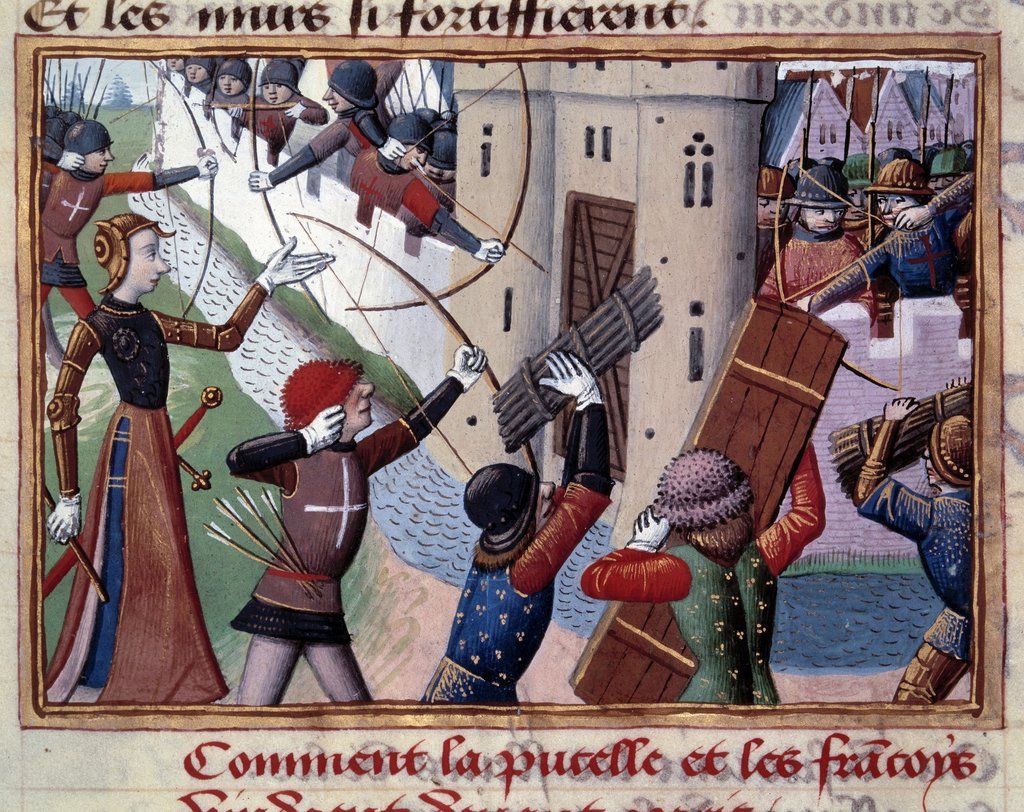
Unfortunately for her, King Charles (thanks to JOA) found his support for Joan weakening. Having gotten his crown and newfound support of the French people (again thanks to JOA for leading all those successful battles!) he just wasn’t motivated to hurry himself along and regain Paris under French rule. So he half-heartedly allowed Joan to take an army into Paris to see what she could do. Things were looking good as she conquered Saint Denis north of Paris and then marched her soldiers towards the western side of Paris at the Porte Saint Honoré (there was the defensive wall of Charles V circling Paris at this time, and these portes/entrance ways were heavily defended. To even have a chance at conquering Paris, Joan and her army needed to infiltrate this entryway), which was protected by a badass moat and ditches. There was even a pig market nearby, but more on that later.
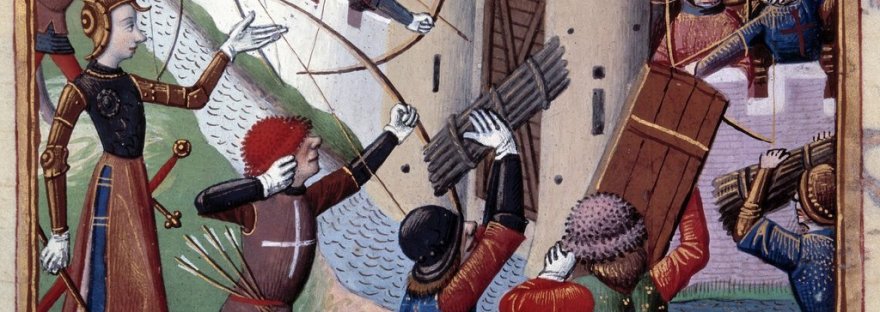
Joan and The Seige of Paris
The battle began poorly; the soldiers just couldn’t manage to get over the GOD DAMN WALL into Paris. They fought fiercely from dawn to dusk when suddenly Joan took a god damn arrow (from a fricken crossbow!) to the thigh. It brought her down but it wasn’t enough to make her give up and call it a day. She screamed for her men to continue, to get over the wall, to continue their assault- but she was forcibly carried from the field as her weary men retreated.
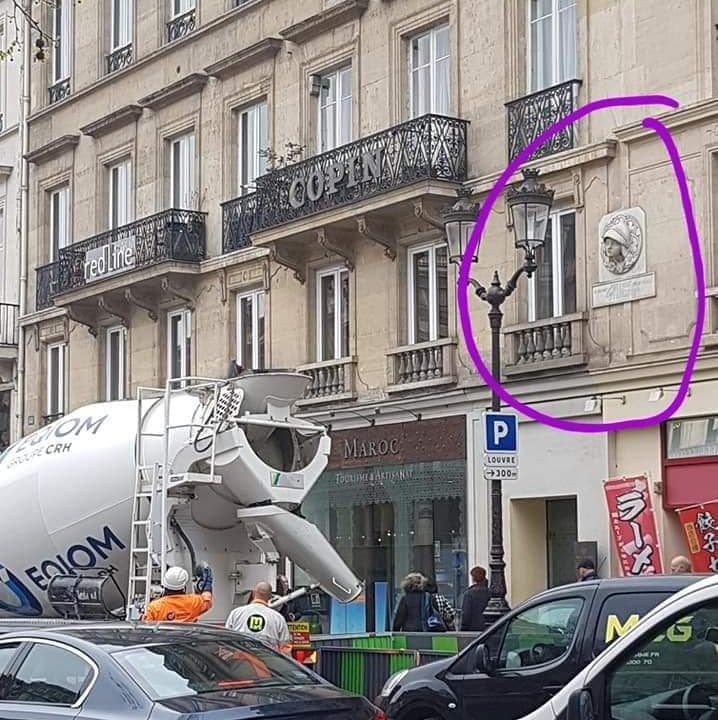
In short, Joan of Arc never actually entered Paris. And you know the rest.. Today in Paris, you can still see testimonials of the 8th of September 1429. At Place des Pyramids, just a few steps from the Louvre at 161 rue Saint Honoré, you can see the face of Joan looking down at you from above.
The inscription below her reads “Here was the Porte Saint Honoré, near to which Joan of Arc was injured in 1429”. There is another larger, grander, golden statue of Joan mounted on a horse nearby between the Louvre and the Jardin des Tuilleries.
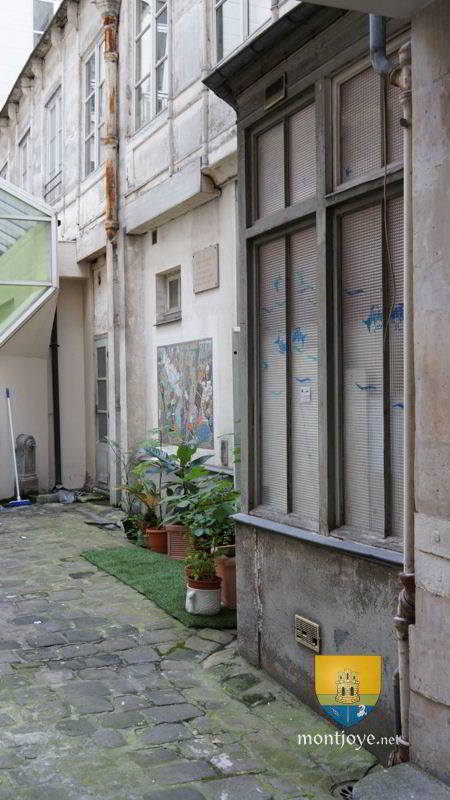
But these two markers do not show the EXACT place where Joan was injured. And that is what I was curious to see. Because according to this website, in May of 1987, students from the nearby school Jean Baptiste Poquelin and the mayor of the 1st arrondissement, inaugurated a beautiful Mosaic depicting Joan during her attempt to take Paris near the now long gone Porte Saint Honoré. This was created by the students of the school with the help of their principal and arts teacher.
The Mosaic hidden at 15 rue de Richeleau, image from Montejoye.net
Numerous historians confirmed that this was the actual exact place where Joan was injured based upon eye witness testimony that has been recorded and kept throughout the past 600 years. A significant point between several testimonials was that Joan was injured not at the porte Saint Honoré itself, but rather 100 meters or so off to the side between the pig market and a trench that was at the base of the fortified wall. Check out the pictures of the maps I have for comparison.
The Porte Saint Honoré and the defensive wall that surrounded Paris. The pig market where Joan fell is encirlced.
So off I went to go find this historically significant mosaic, which was situated in the courtyard of an apartment building according to the article. Which brought me my first challenge. GETTING IN! (You need a code to access most Paris buildings that is entered on a keypad next to the door) I waited at the door on the street for about 20 long minutes for someone to either leave or enter with the door code- so that I could get access. Finally the door opened, and I walked in, feeling exhilarated to see this mosaic, this historic moment in time, and the great article I was going to share with you. The only problem was- there was.. nothing. No mosaic! STAY TUNED AND TURNT UP FOR PART 3
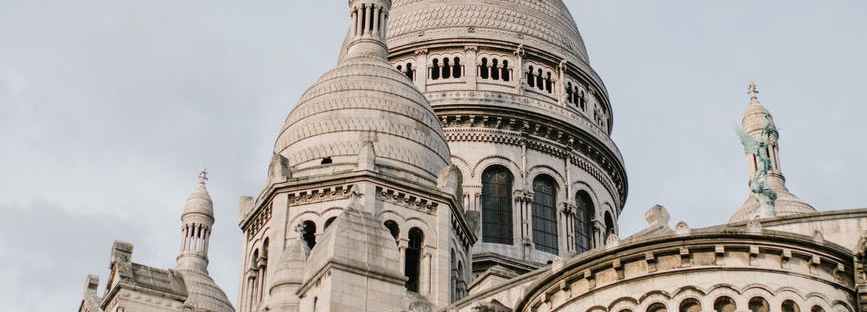
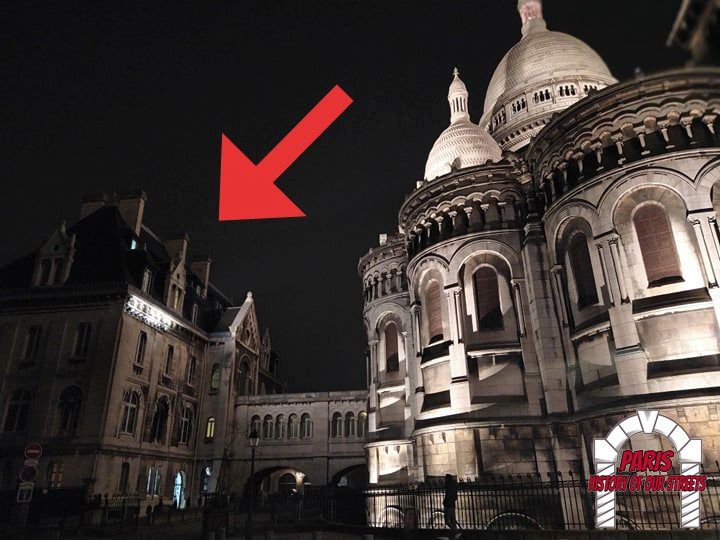
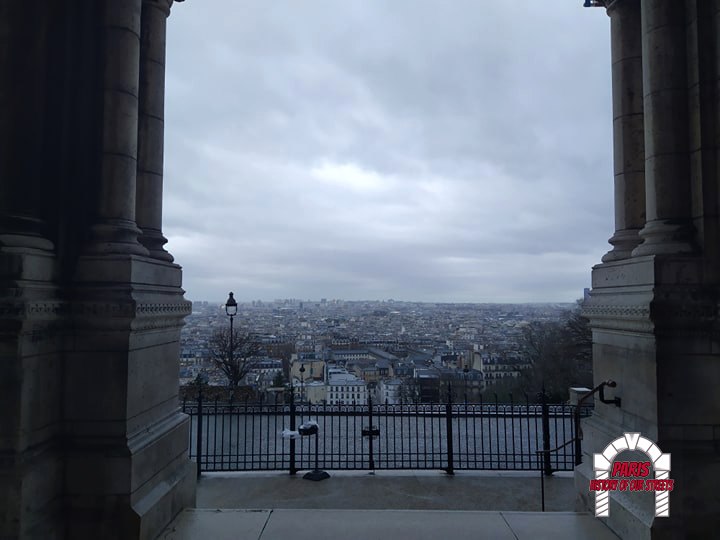
Last spring, I spent the night at the Basilica of Sacré Coeur, doing what I consider to be one of the best kept secrets of the city. Did you know this was possible? You won’t find it in any hotel guide book or on Air-Bnb, but tucked behind the massive white dome at the top of Montmartre is the Ephrem Hotel. That’s right, a spiritual one night journey in the iconic Sacre Coeur Basilica!
The Ephrem Hotel
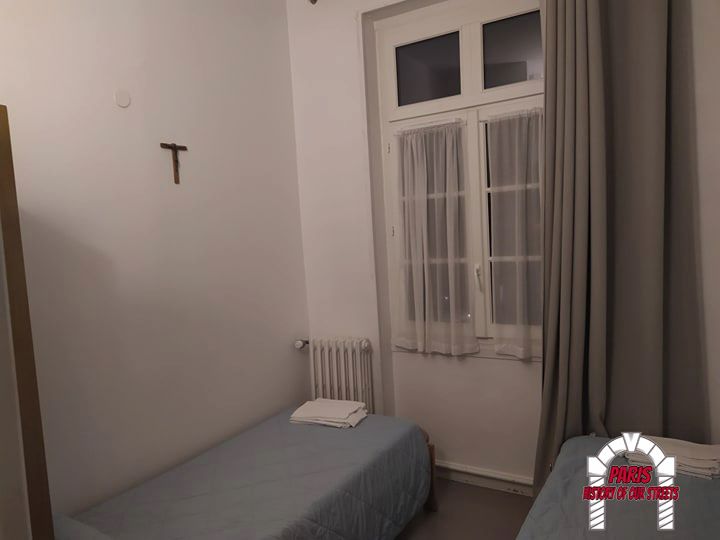
There are two room options. Team Socially Righteous or Chaste&Chatty can reserve a bed in a semi private single sex dorm for 6€. Those who prefer feeling more like an isolated silent monk can opt for a private suite for 20€. You can even request a room to share with a roommate or family if you don’t intend on breaking the 5th commandment.
I was feeling anti-social so I opted for the single room
The catch? You need to commit to being present in the Basilica for just one hour throughout the night, from 10:30pm when they kick out the general public until the reopening at 6am. There is a Compline at 9:30 (which was like a light show, the Sister who checked me in said I must see it. I had no regrets, it was stunning) followed by a mass, but this is not obligatory to attend. Why is this possible?
Because of a 135 year-old living prayer chain that since 1885, has NEVER been broken. Your participation in the Night Adoration ensures that this relay of prayer is continuous. 24 hours a day, 7 days a week, 365 days a year, pandemic or not- there is SOMEONE in this basilica keeping the Adoration chain going.
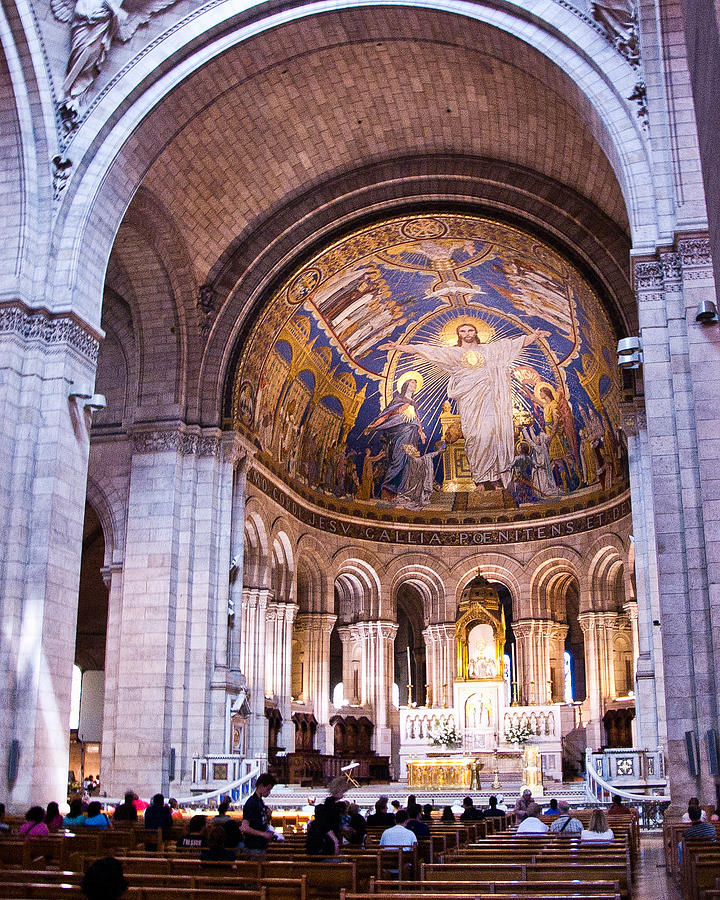
Photo of the interior by Jon Berghoff
The idea is to pray in silence, (maybe attract an apparition or two if you are feeling extra divine) but there are no rules or restrictions to interpret HOW you spend this hour. No Rosary Wielding Warrior of God will be using her holy laser beans to burn out your eyeballs if you aren’t deemed pious enough. In fact, I found the staff to be really friendly. One Sister had such an warm smile that I felt comfortable enough to ask her if she referred to God as “tu” or the more formal “vous” when she prayed. She laughed out loud at my timid question and told me she preferred the more friendly form of “you”.
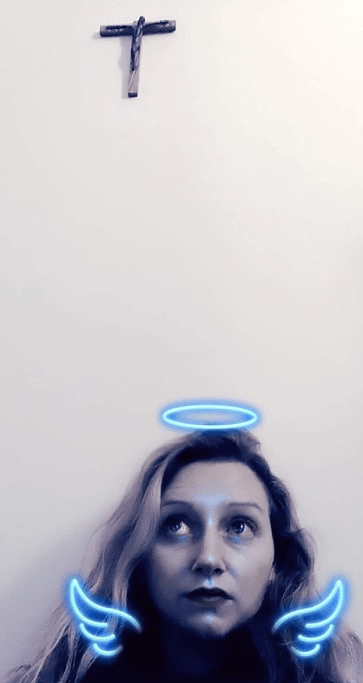
Feeling holy, will probably delete later
Whether you pray to a Catholic God or another, if you choose to meditate or reflect on yourself- that hour is what you make it to be. As long as you are silent and don’t pull a Judas by throwing Jesus under the bus or anything, you will be welcomed. Anyone can do this. Residents of Paris or visitors. Families or alone. I admit I was a bit nervous about this experience. I had visions of merciless nuns interrogating me on the bible or forcing me to wear a hair shirt and do penance for my sinful ways. But in fact, no one really seemed to care and I was really surprised at the freedom I had in the 2nd most visited monument in Paris.
Obligatory selfie before Basilica sleepover
I was one of the last to arrive before they closed the doors at 9:30 so I chose 6am-7pm as my time slot and I opted for a private room which was simple, yet surprisingly clean and cozy. Having stayed in some sketchy hostel dorms in my day (here’s looking at you Naples) I was really impressed with how spotless everything was. Cleanliness is next to Godliness amiright? I’m not an especially religious person, but that hour I spent in the darkness before dawn, accompanied only by the glow of candles and the howling wind beyond the impenetrable stone walls, was one I won’t forget. Nothing brings you closer to whatever form of spirituality you believe in then the sound of silence in such an immensely comprehensive space.
This isn’t for everyone, but if you are like me and always looking for new experiences and might be interested in spending a special and very peaceful night in this world famous Basilica, I urge you to check out the Sacré Coeur website below where you will find information on participating in the Night Adoration. Its very easy to register and you can reserve the type of room you want to sleep in 48 hours in advance.
*I apologize for lack of pictures. I admit to using the Lord’s name in Vain more than I should, but I didn’t want to be disrespectful in such a peaceful environment.
**A simple breakfast is also available too for 4€ but not an option at the moment with co-vid unfortunately.














 Paris History of our Streets