Maps, Outside Paris

The Desecration of the Basilica of Saint Denis: Part One

1 Rue de la Légion d’Honneur, 93200 Saint-Denis

You are probably all too familiar with the depravity which took place during the Reign of Terror. Public executions, bloody massacres, fear and betrayal were all common themes during daily life in the early 1790’s. But the revolutionary madness didn’t stop when King Louis XVI and his wife Queen Marie Antoinette were beheaded along with thousands of others; pissed off revolutionaries kicked the destruction of the ancient régime up a notch by desecrating the royal tombs at the Basilica of Saint Denis.

This place was the last stop for French Royals, who traditionally were laid to rest here since the 10th century, with the first being King Dagobert in 639 all the up to Louis XVIII in 1815. Under the pretext of recuperating lead from their coffins (and any precious objects from the bodies), the Convention National gave their thumbs up to ransack the royal relics and their contents beginning August 10th 1793, which was a symbolic kick to the royal balls as this was the one year anniversary from when the Tuileries Palace was taken and the monarchy officially put aside. The pillage and defilement would continue all the way through January 1794, with the worst of the damage done in October.

Painting by Hubert Robert of the Violation of the Kings’ tombs in 1793

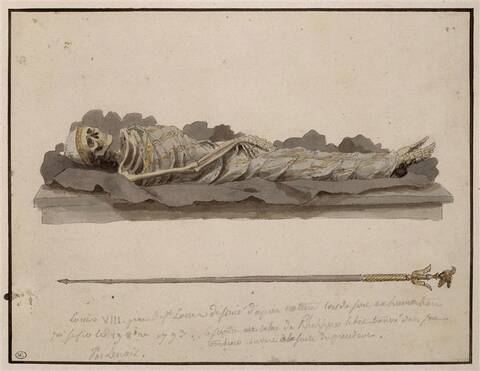
Benediction monk Dom Poirir, who lived at the basilica- and Alexandre Lenoir both wrote accounts of their experiences observing these events, including the state of the bodies when the tombs were open. If you are as morbid as I am, check out the photos below with witness descriptions (carefully translated in scholarly english by moi) for yourself.
The process was described as “Most of the bodies were decaying. A foul-smelling, thick, black vapour was released, which they desperately tried to dispel with vinegar and powder that they had taken the precaution of burning, which did not prevent the workmen from feeling unwell and feverish but without consequences”.

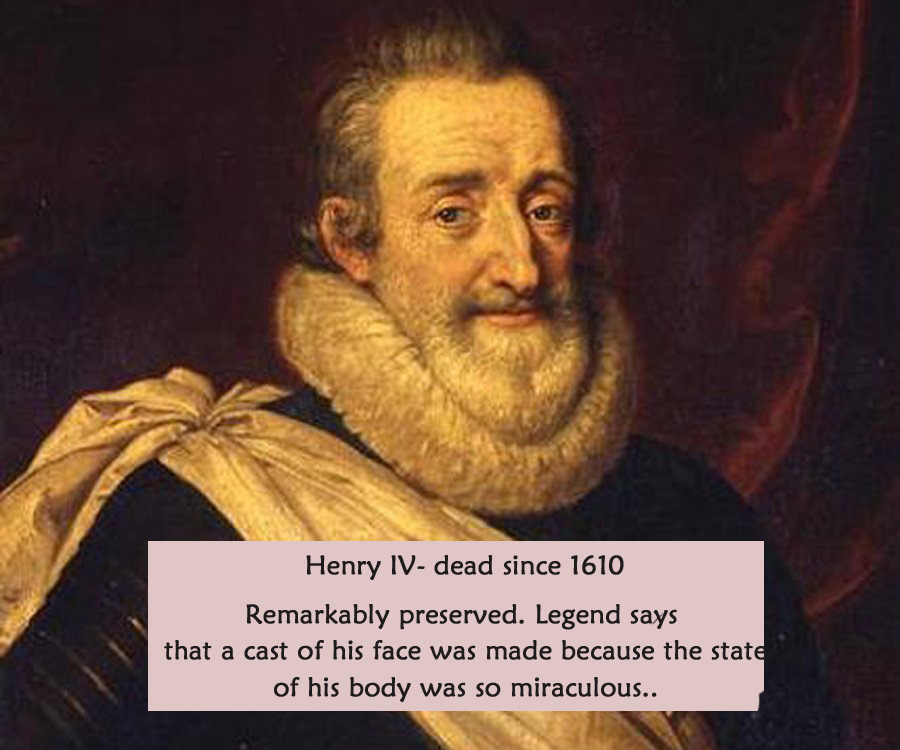
His body was thrown face down in the communal pit, just like his dad Henry.

Altogether, the embalmed bodies of 46 kings and 32 queens (along with their children and even some servants, making 170 in total) would be evicted from their final resting places. After the caskets were taken out from their marble exteriors, they were opened and all valuables within were taken (this included jewelry, golden garments, even shoe buckles) from the bodies representing 700 years of French history.

His body was described as black as ink

They were then delicately laid to rest in more modest accommodations AKA ruthlessly dumped together in two communal pits just outside the basilica (separating the Valois and Bourbon dynasties) with a layer of quick lime thrown on top for good measure.
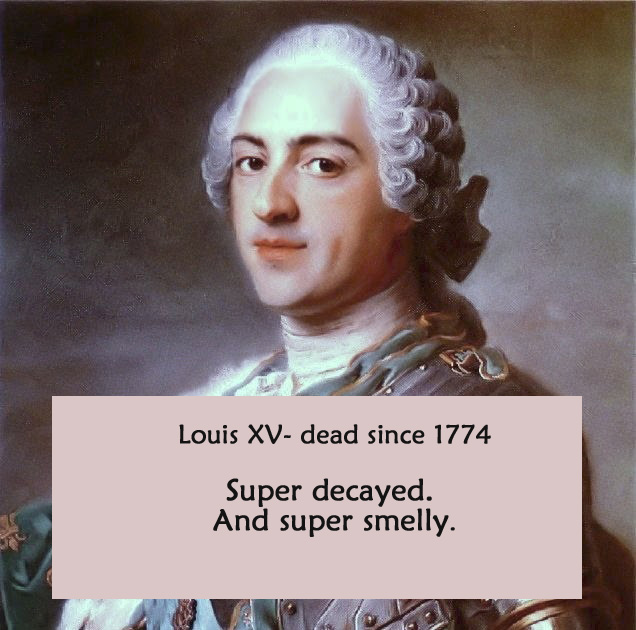
Apparently Louis XV was the only king not embalmed due to dying from smallpox. Bet the guys who opened his tomb wish they knew that before they lifted the lid…

It wasn’t until 1817 that King Louis XVIII (younger brother of Louis XVI) dutifully dug up all the remains and re-laid them to rest in an ossuary at the basilica, along with what he could gather up of his brother and sister in law Marie Antoinette, who had been tossed in an unmarked grave at the Madeleine Cemetery in Paris after they were beheaded. Today this cemetery is no longer visible, and a memorial known as the Chapelle Expiatoire has taken its place, dedicated to the memory of the royal family.

Funeral monuments of Louis and Marie Antoinette at the Saint Denis Basilica

Fortunately not everything was destroyed during the Royal Desecration Festival of 1793 and you can still visit the basilica today to see some of the funerary monuments as well as the remarkably lifelike effigies that survive today.
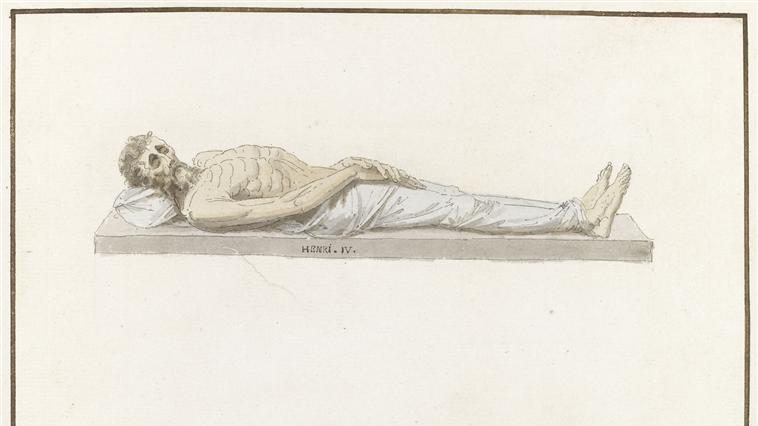
Account of the state of Louis XV’s body by Alexandre Lenoir said it was so decayed and putrid that breathing in the air was impossible and they shot off guns in the hopes that the powder and smoke would deflect the rotting odor. His body was quickly disposed of.
The body of Henry IV, Alexandre Lenoir. His tomb and body were left out for anyone to see for several days.

As for Part Two- don’t think the horror ended with the tomb raiders tossing aside their shovels, dusting off their hands, and calling it a day. Stay tuned to discover what royal remains weren’t exactly laid to rest.. Trigger warning: Its gonna get weird..

latin quarter, Maps

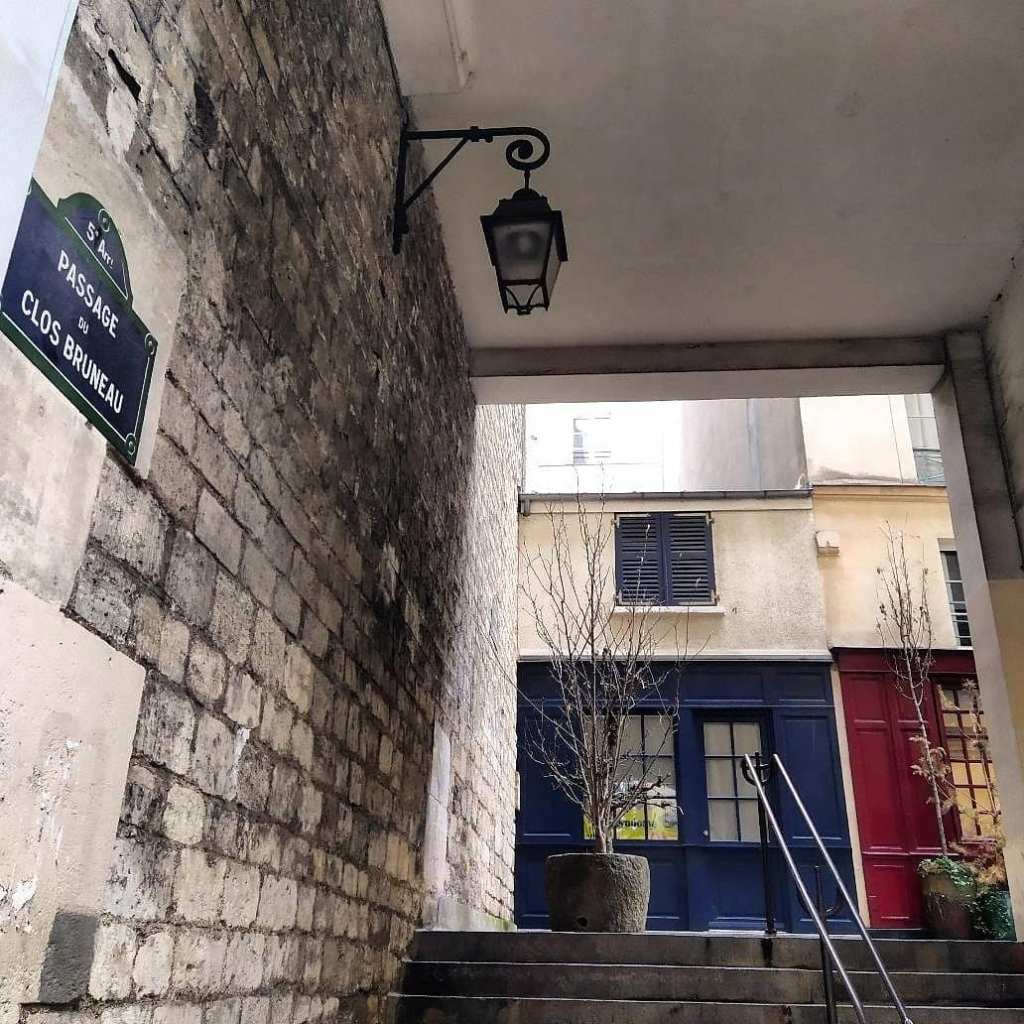
Passage du Clos Bruneau

Passage du Clos Bruneau Paris 75005

I’m going to let you in on a little secret about Paris topography. The streets you see in front of you are just the surface; there are often entire old worlds discreetly hidden behind the facades of elegant Haussmann buildings that line the streets today- especially in the older areas of Paris like the Marais or the 5th arrondissement.

Walking through an open doorway or passage like this one can often give you the impression you stepped back into time. Here on the Rue des Écoles between Rue Monge and Rue Saint Jacques there is a secluded staircase only a few steps high, marked by a sign that says Passage du Clos Bruneau.

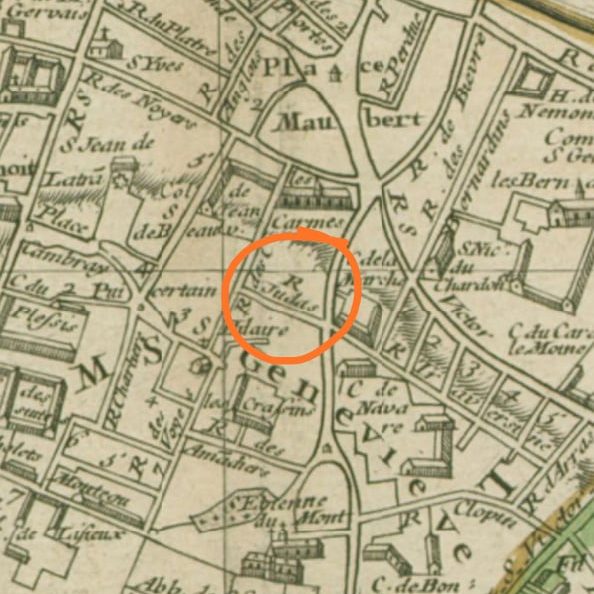
All that remains today is a short alleyway, but prior to the 12th century this was the location of a vineyard before becoming the Rue Judas in 1248, and finally the Rue du Clos Bruneau in 1838. Eventually the grapevines were replaced by books and printers to serve knowledge hungry students as more and more universities popped up in this neighborhood.

Rue Judas seen from the Delisle map dated 1716

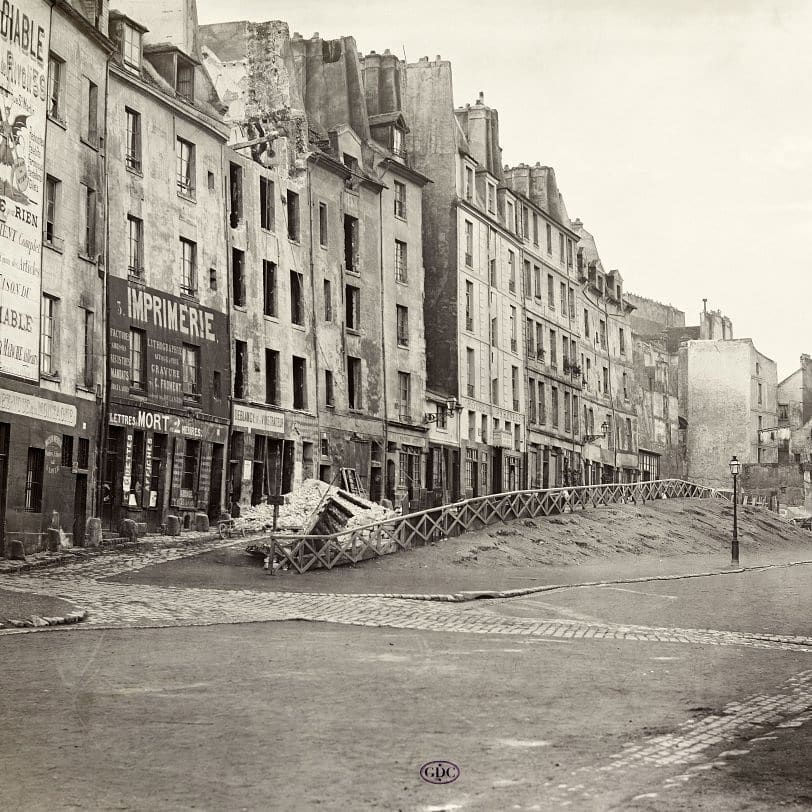
When the Latin Quarter found itself modernized in the mid-19th century, the wide and illustrious Rue des Écoles bulldozed through the narrow medieval streets that once used to run through here, erasing them and all the history they were built on.

Rue du Clos Bruneau in 1865 during construction of Rue des Ecoles, taken by Charles Marville.

The Rue du Clos Bruneau was fortunate and instead of being entirely demolished; it was just shortened and hidden behind the grand Haussmann buildings you see on the Rue des Écoles today. But not all was lost!

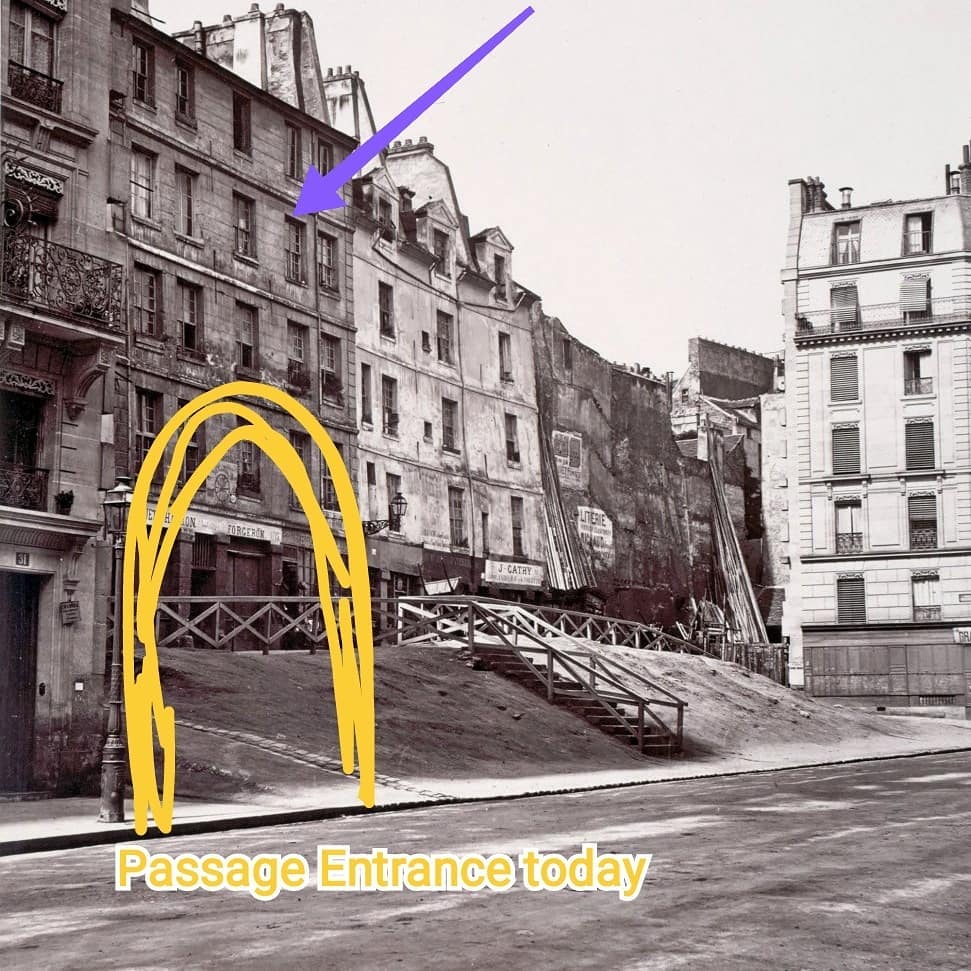
If you look at old photos taken before this area was leveled, you can still see a few surviving buildings that were spared, giving you a rare glimpse into pre-Haussmann Paris when you take this hidden passage detour. Look closely at the old photo and see if you can recognize the same buildings that remains today from the 1865 photo taken by Charles Marville. Match and compare the colored arrows.

latin quarter, Maps

Thomas Jefferson and the Moose Part 2

Recap: 1780’s France VS USA: Who is physically superior ?

So Thomas Jefferson ran in the same Paris social circles with his friennemy Buffon and one night while dining at Chez Buffon, TJ decided to challenge his ridiculous claims that America’s moldy wetlands produced degenerate people and animals with a bold rebuttal. “You think America is inferior to France eh? Well you know what wise guy, we got Mooses so big that your pitiful French excuse for a Moose is small enough to walk under our big-ass Moose!”

F. Scalberge, Jardin du Roy pour la Culture des plantes médicinales à Paris (1636) © Muséum national d’Histoire naturelle
 

Being a man of science as well as politics, Thomas knew his mouth couldn’t write a check his ass couldn’t cash, so he set out to prove himself right. However measurements or descriptions wouldn’t suffice and he wanted tangible evidence; something he could literally shove in Buffon’s face to say “THY FICTITIOUS ALLEGATIONS ARE AS RIDICULOUS AS YOUR LOW PONY TAIL BETCH”.

For over a year and despite other preoccupations like the American Revolution and his role to muster support in France; Thomas almost obsessively sought his proof. He begged hunting enthusiast friends to send him a moose with specific instructions. NEED MOOSE: MAKE IT BIG! The Governor of New Hampshire finally pulled through and a 7-10ft moose was shot and shipped to France.

Excerpt of a letter from Jefferson to John Sullivan, taken from “Mr. Jefferson and the Giant Moose” by Lee Dugatkin

When its carcass arrived months later, the moose was rotting, wearing impostor antlers, and most of its skin gone. But a BIG ASS BIGGER THAN FRANCE MOOSE it was. We don’t know too much about Buffon’s reaction to the moose after he received it with a post it stuck that read KEEP TALKING SHIT AND I’LL SEND YOU BIGFOOT; he died shortly after.

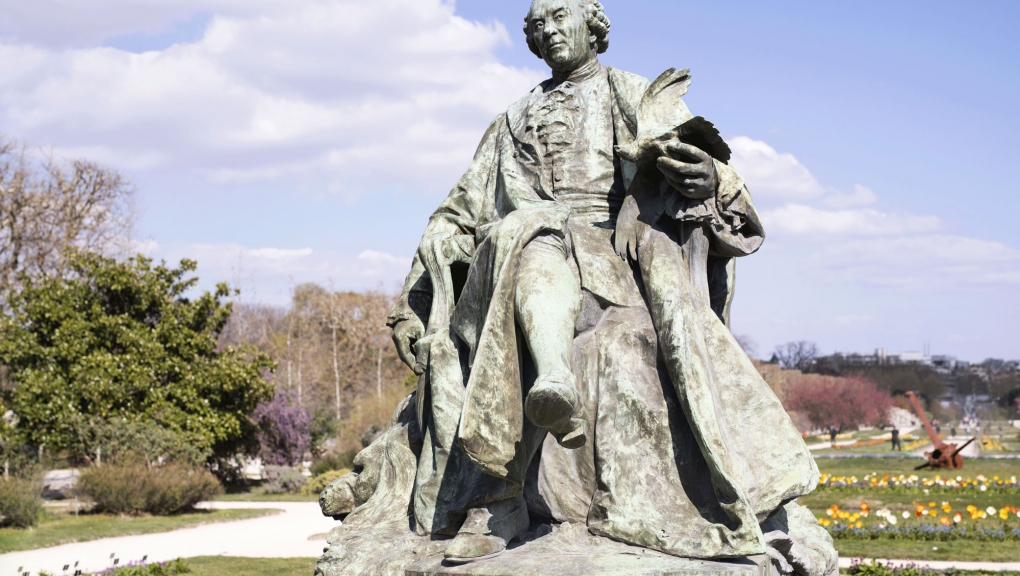
Photo of a statue of Buffon at the Jardin des Plantes taken from their website

As for the moose itself, it seems to have disappeared, probably stuffed away somewhere in the vast caves of the Museum of Natural History of Paris. It is interesting to note that 250 years later, jokes on France for their reputation of having small stature. If you think about it, the only mega-fauna France is known for are giant rats and Gerard Depardiue.

If you are interested in learning more on this wacky but true subject (I only covered the surface), check out “Thomas Jefferson and the Moose” by Lee Dugatkin, click on the image here.

Special thanks to Lee for responding to my random message and sending me a signed copy of his fascinating book!

latin quarter, Maps

Thomas Jefferson and The Moose Part 1

During the age of Enlightenment in the later half of the 18th century, America- the newly budding country full of savages, rebel colonials, and prudes- was regarded with doubt and suspicion by OG Europe.

In an obscure side note of Ridiculous History, a pre-presidency Thomas Jefferson assumed the responsibility of defending the honor of his country, to a somewhat comical degree, in one of the earliest acts of American Patriotism. While serving as American Ambassador in Paris during the mid 1780’s- he became obsessed with proving France wrong in the argument of who was.. bigger.

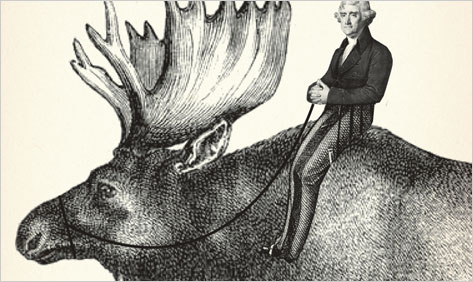
Jefferson. Moose. Buffon.

Today American may be known as the land of Super-Sized everything; food portions, houses, PEOPLE, but in the 18th century, there was a widespread belief that things in the new world were… weak, feeble, and physically inferior.

Rigobert Bonne and Guilleme Raynal’s 1780 map of North America

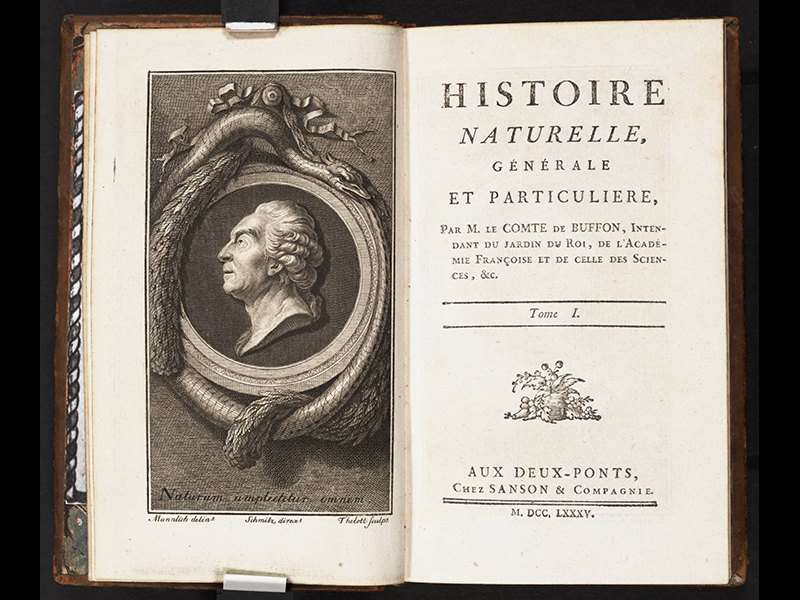
George Louis Leclerc, Compte of Buffon as well as scientist, naturalist, mathematician, and Boss Man of the king’s royal garden (today the Jardin des Plantes) wrote in his highly influential 36 volume Natural History Encyclopedia that due to its excessive swamp land and muggy climate; everything in America- from its soil, to its plants, to its animals, even the native Americas living there- were degenerate; smaller and weaker than their European counterparts.

He even went as far as to claim that those who decided to live in the New Word, would damn their future bloodlines to be as degenerate as their livestock! When Thomas Jefferson heard of this ballsy claim, he called bullshit. Trash Talking Buffon had never even BEEN to America! Jefferson knew he had to stand up for his beloved baby country but how was he to prove America was not the degenerate wasteland Buffon made it out to be from France?

SEE PART TWO FOR THE ANSWER!

Maps, Saint Germain des Près and the Eiffel Tower

The Theft of the Mona Lisa : Part One

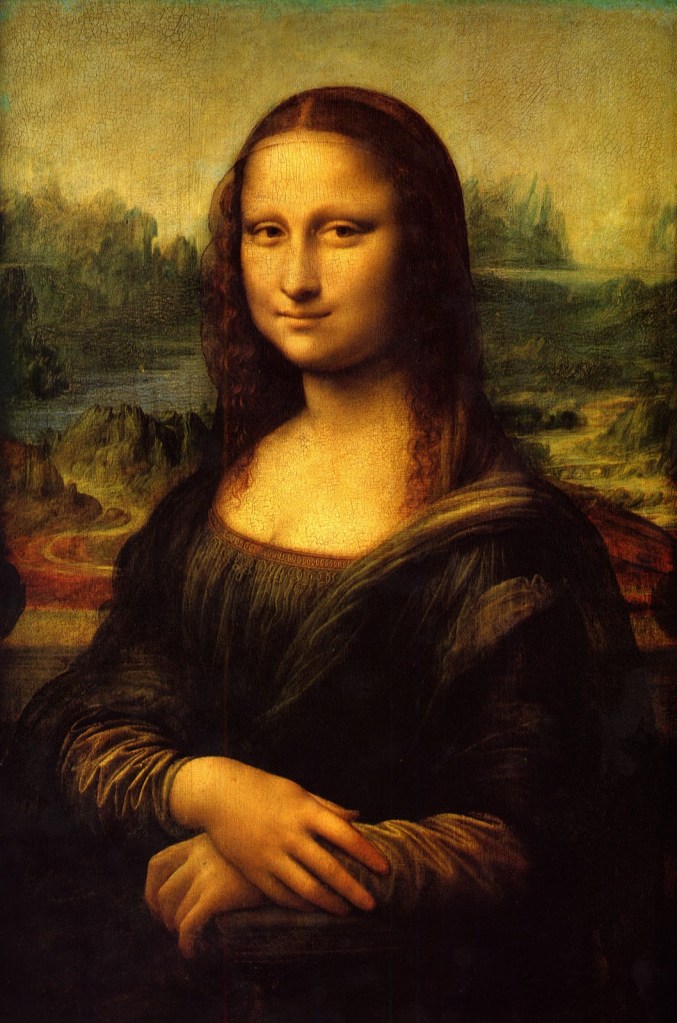
Whether you agree that she is smiling or not, there is certainly no argument that The Mona Lisa (AKA La Joconde if vous parlez Francais or La Gioconda if.. ahh, YOU-A SPEEKIE ITALIANO) is one of, if not the number one, most recognized piece of art in the world.

From her Renaissance Mastermind, Leonardo da Vinci- to her insurance value- 820 million dollars!! to her background support in Jay Z and Beyoncé’s Louvre themed music video, (because nothing says priceless Renaissance masterpiece like “poppin’, I’m poppin’, my bitches all poppin’!”) her face is as well known as Jesus Christ and Donald Trump. But have you ever wondered WHY?

If we are being honest, there isn’t anything SUPER remarkable about this painting and unless you’re into the no eyebrows look, Mona probably isn’t giving anyone a chubby. The colors don’t catch your eye like a Gustav Klimt and there isn’t much to analyse in the portrait itself like a trippy Salvador Dali. The question of “is she smiling or not?” certainly brings attention, but what else is there behind this painting? Well I’ve got answers! But first, a little background..

What is it about this painting?

There are a few discrepancies surrounding Mona’s background, but most experts agree she was painted by Leonardo Dicaprio in early 16th century Florence for Francesco del Giocondo and the portrait is of his wife Lisa. (Mona is an old school Italian way of saying Madame). Some controversy comes from the fact that no one is 100 percent certain that the picture we know as the Mona Lisa at the Louvre is the same one that Leonardo is attributed to having done in a biography written 30 some years after his death.

Leonardo DiCaprio

The Louvre released a statement in 2005 explaining, “Leonardo da Vinci was painting in 1503 the portrait of a Florentine lady by the name of Lisa del Giocondo. About this we are now certain. Unfortunately, we cannot be absolutely certain that this portrait of Lisa del Giocondo is the painting of the Louvre.” However, most experts agree this is her.

Moving along, for reasons unknown Mona was never given to her namesake and remained with Leonardo until his death in 1519, before being bequeathed to his assistant Salai. Despite his Italian Stallion heritage, Leonardo was tight with France’s King Francois I, (I imagine they were Renaissance drinking buddies) and Mona wound up in his possession in the early 1520’s.

Leonardo da Vinci on his deathbed, at Cloux in 1519, with Francois I and members of the royal household in attendance. Engraving by James Scott (c. 1809-c. 1889) after William Fisk (1796-1872)

She stayed in the French royal art collection a few hundred years and moved around to various castles before she came to the Louvre after the French Revolution in 1793. There she remained, admired but relatively unknown, until 10AM Monday August 22, 1911 when a Louvre employee happened to notice a vacant spot on the wall of the Salon Carré at the Louvre. He cried out, “Someone has stolen La Jaconde!”

Wondering what happened? Stay turned for the answer, next time, on Paris History of our Streets! (Or just look it up on google you god damn killjoy) And if you’re wondering what kind of amateur professional historian I am to mix up Leonardo DiCaprio with Leonardo da Vinci HAHA JOKES ON YOU! Just making sure you are paying attention…