Maps, The Louvre and Palais Royal

Top 5 Butts of the Louvre

I spent a few hours at the Louvre recently researching another HISTORY MYSTERY and during the 4 hours I wandered the endless corridors of the world’s most famous museum amongst the 380,000 examples of the finest art ever produced by man- bearing witness to Da Vinci, Johannes Vermeer, Eugène Delacroix, and countless other masterpieces, it occurred to me that there is a lot of nice ass to be seen here.

And in a world where far less talented backsides belonging to Kardashians and J. Los are celebrated, I think we need to be reminded of the first booties to be admired by the masses. The iconic, classical bums that have been worshiped for their composition, emotion, aesthetic qualities, and form for hundreds, maybe thousands of years.

So with no further ado, I bring you THE TOP FIVE BUTTS OF THE LOUVRE.
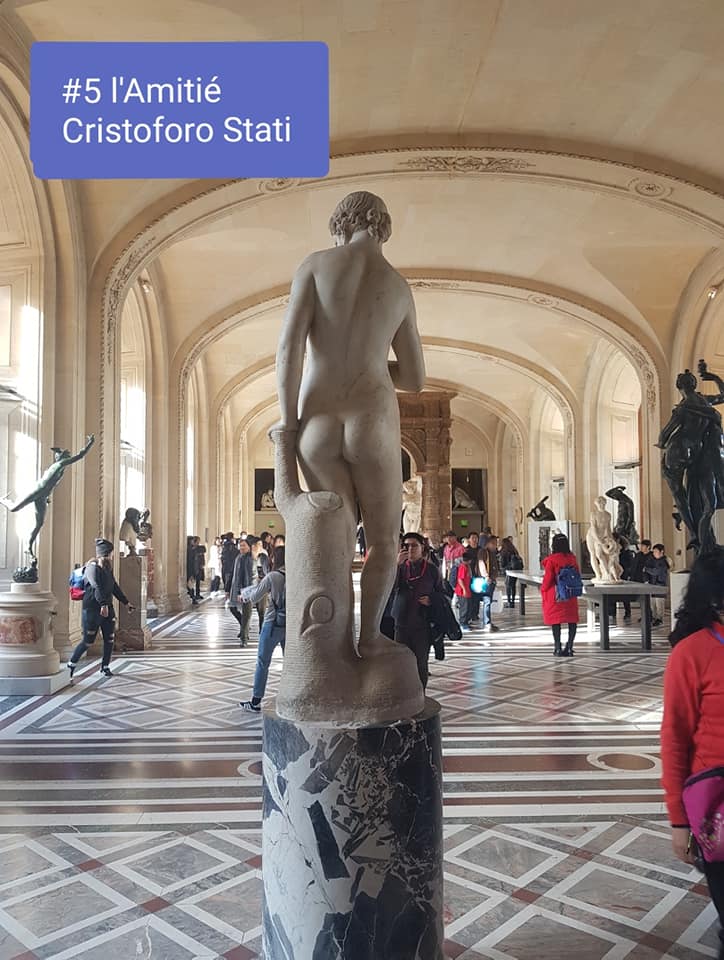
NUMBER FIVE l’Amitié

This is just a good lookin’ ass and the way the light was hitting it in the hallway, curving over the ample buttcheeks before giving way to the darkness of the sombre buttcrack was something I admired. There is a slight curve to the right hip as the weight of the model is distributed upon the vase she is leaning on. How the hell does someone chisel that in marble? This butt is the butt of the people, and I commend it for its modesty. This derrière is not trying to be something its not. And for that, it is remarkable.
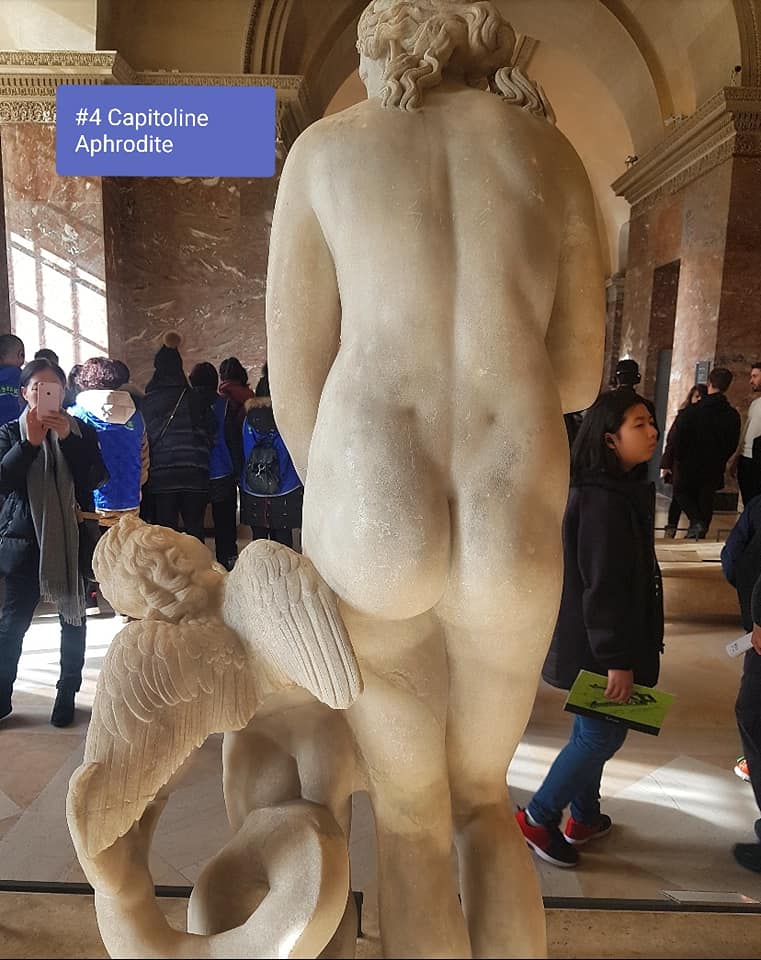
NUMBER 4 Capitoline Aphrodite

The only thing better than one butt is two butts amiright? Especially when one set belongs to a cute little arrow welding cupid. I dig the dimples and slight imperfections in this bum. It’s like Aphrodite is saying, Yeah I could lose 10lbs but I’m not in a hurry.”
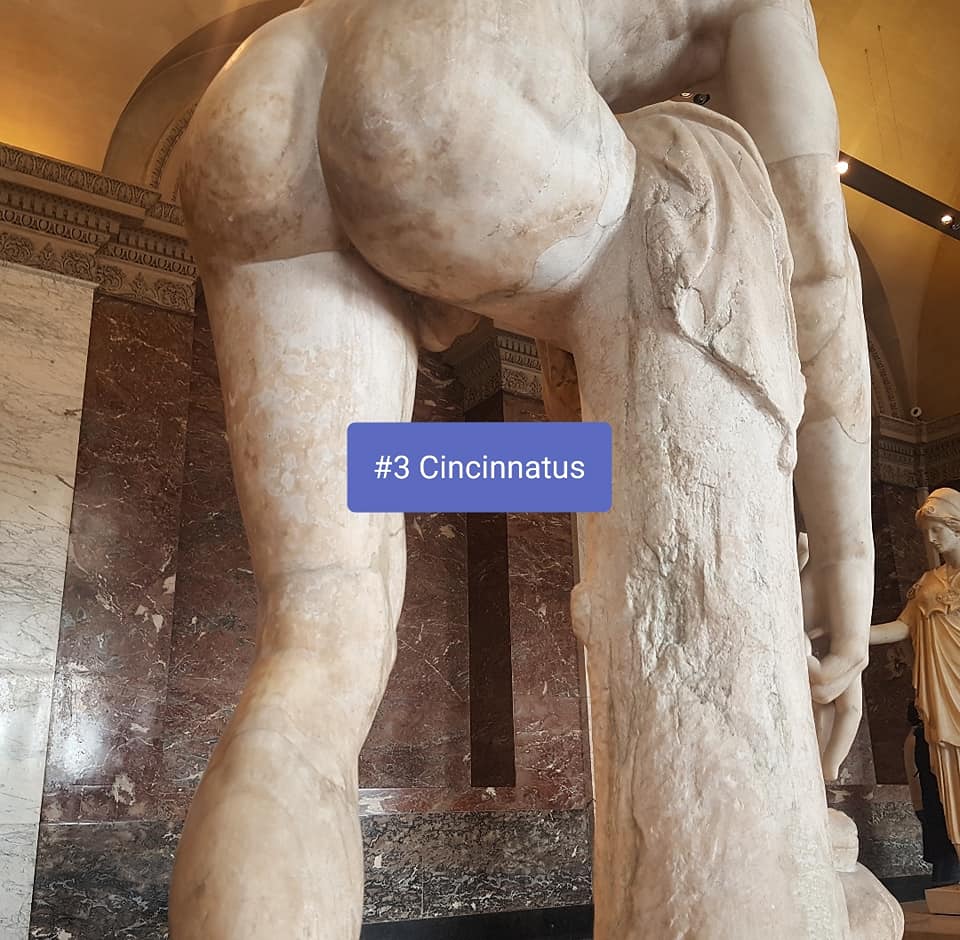
NUMBER 3 Cincinnatus

I love this cheeky butt because this guy is like, “oh well yeah of course I need to be butt naked to put my sandals on, why would anyone put their pants on first? Now would you mind diverting your eyes from my scrotum please?”
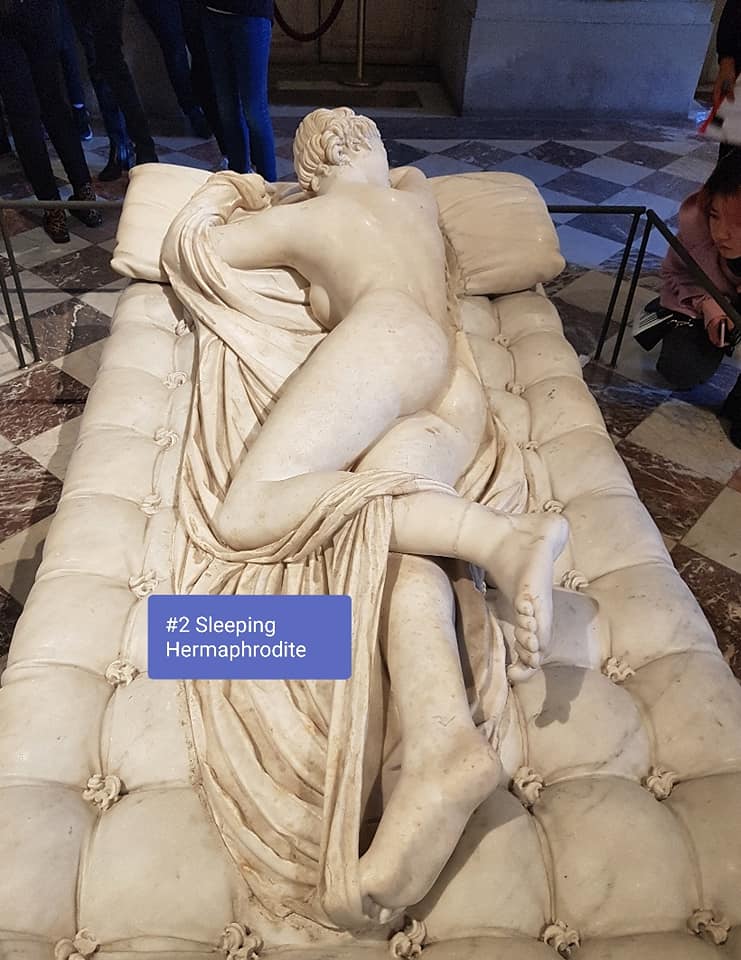
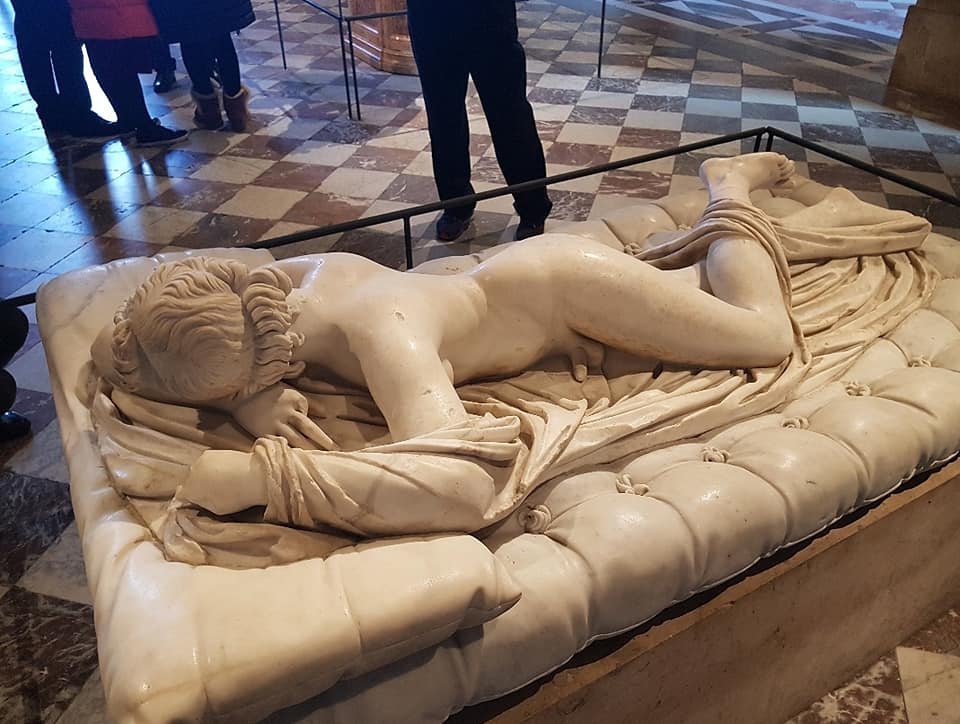
NUMBER 2 Sleeping Hermaphrodite

One of the more famous sculptures of the Louvre, this snoozing lady has a secret she is coyly concealing. From one side, its like “Oh my! this lovely nude lady’s silk sheet has fallen, exposing her plump buttcheeks and sideboob. How delicately sexy of her!” but then you make your way around and you note that “Ah no.. nope. This isn’t a lady.. that’s a definitely a dick.”

THE NUMBER ONE ASS OF THE LOUVRE
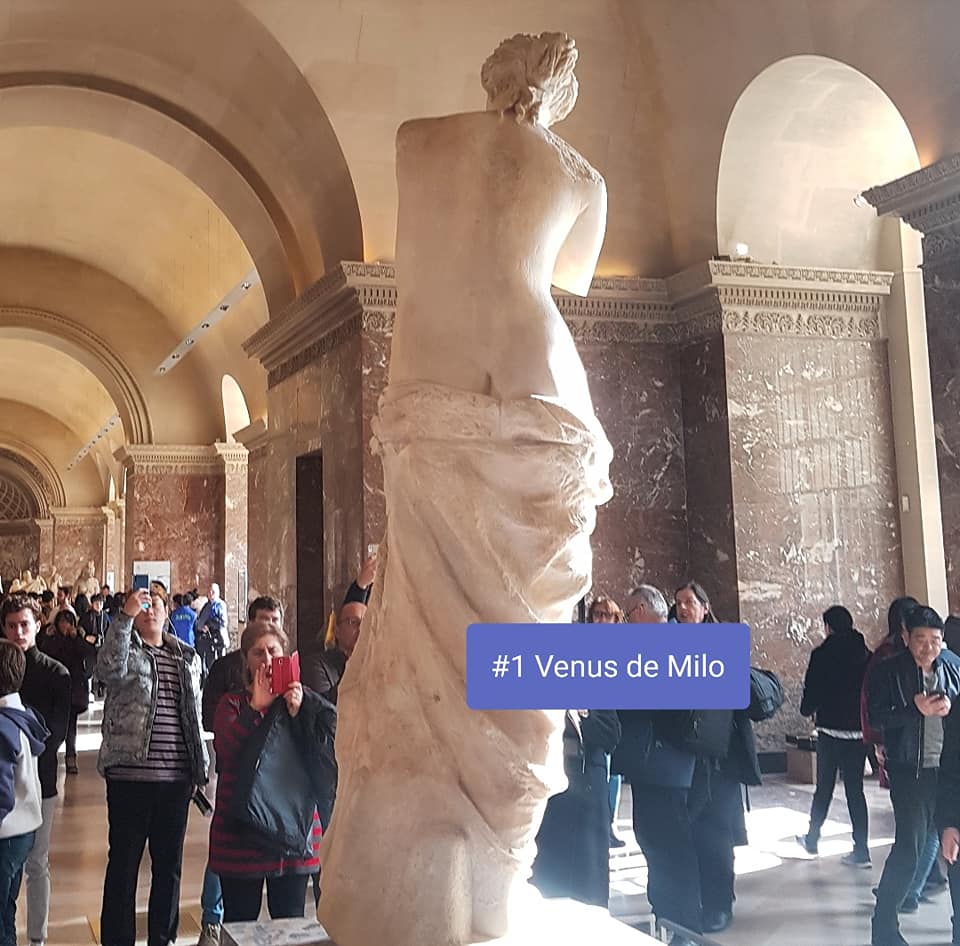
VENUS DE MILO

This honor is no surprise because this mASSterpiece depicting the Greek Goddess of Love and Beauty, is probably the most checked out ass at the Louvre on a daily basis. Tourists seem to crowd around her, admiring a 360 degree view of the most famous ancient Greek sculpture. No matter that her arms are missing, that demure half-exposed buttcrack makes up for missing limbs. Created around 200 BC, and rediscovered on the island of Milos in 1820, Venu’s bum has been admired for nearly 2000 years. During WWII, this fine Grecian ass was hid at the Château de Valençay to prevent these cheeks from falling into Nazi hands.

The Louvre has been open since 1793 and is the most visited museum in the world (over 10 million people came in 2018). so I can proudly say that I am one of two people to create a ranking of asses on display here. KIND OF A BIG DEAL IMO

Maps, The Marais

The Lurid Death of Lamballe

2 rue Roi de Sicile, Paris 75004

This is a gruesome one folks, so if you are triggered by Jeffery Dahmer-esque murder and gore, I suggest you refrain from continuing…

You still with me? Ok, thats morbid, but glad you’re following! We all know Parisians can get a little feisty during the heat of the moment, and this has never been more true than during the French Revolution. If you think the history of the 40,000ish victims of the guillotine is dark, wait until you hear about the death of Queen Marie Antoinette’s BFF, the Princess of Lamballe, Marie-Louise Thérèse.

The Princess painted by Antoine-François Callet in 1776

Described as delicate and sweet, also bit dim-witted; she first befriended Marie Antoinette in 1770, and eventually became head of the Queen’s household staff. When the Revolution began, MA’s other close friend, the Duchesse de Polignac, took off running like a little bitch- but the Princess remained steadfast by Marie Antoinette’s side until August of 1792 when she was forced by revolutionaries to leave the Queen at the Temple Prison.

The Temple Prison, where Marie Antoinette stayed before being seperated from her family and friends and sent to the Conciergerie

Brought to the nearby Force Prison, which was known for its cruelty and less than desirable conditions, the frail and frightened Princess was put on trial in a makeshift courtroom on the 3rd of September. When asked if she was guilty of committing treasonous crimes against her country (by being loyal to the royals) she denied any wrongdoing. When the court then demanded she swear fealty to liberty and egality, as well as pledge hatred towards the royal family: she boldly proclaimed,

“Readily to the former; but I cannot to the latter: it is not in my heart. I have nothing more to say; it is indifferent to me if I die a little earlier or later; I have made the sacrifice of my life.”

Princess Marie Thérèse Louise of Savoy
The Trial of Princess Lamballe

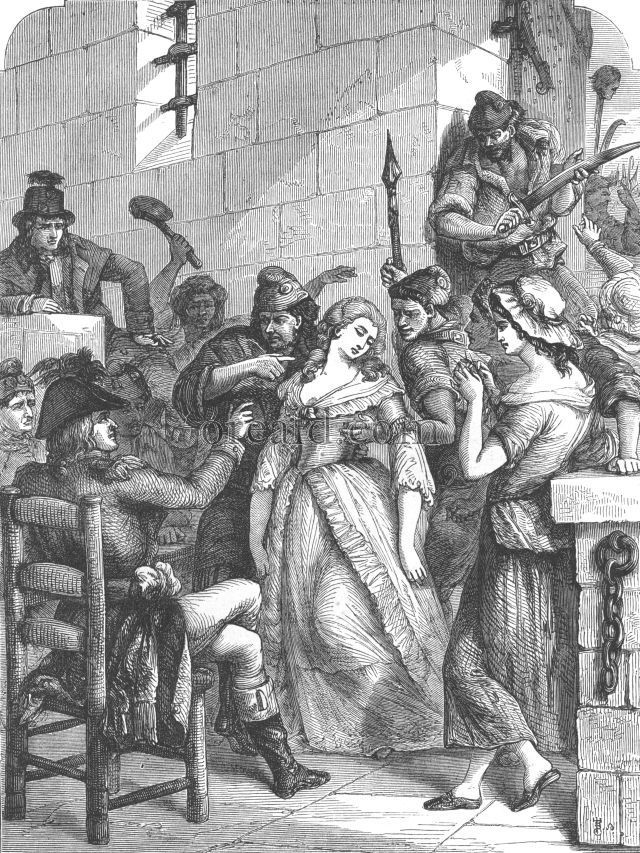
Judgments were made as either “Vive la nation!” in which the prisoner was freed, or “Take the prisoner away!” which was, well… immediate death by the mob waiting in the courtyard of the prison. Unlike several other members of the royal staff who were freed, an example was to be made of the Princess of Lamballe, and upon the words “Take Madame Away!”, her fate was sealed. What happened next is not exactly known.

The Princess of Lamballe at the Force Prison the day of her death, drawn by Gabriel

The 42 year old Princess was dragged into the courtyard, and witness accounts described her as raped, tortured, disemboweled, and beaten to death. Some went as far as to say her body was mutilated, her pubic hair sliced off and worn by one savage individual as a mustache, and her breasts bit off by ravenous teeth. Others say she was given an immediate blow to the head that made her unconscious, or perhaps it was a blade through her heart.

La mort de la Princesse de Lamballe, Maxime Faivre, 1908

What we do know for certain, is that at some point her head was cut off, stuck on a pike, and paraded through the Paris streets to the Temple Prison where the Queen was held. The mob wanted the Queen to kiss the lips of her dear friend, and rumored lesbian lover. The Queen did not see this horrific scene, but when she asked her jailers what the commotion was about, they replied “they are trying to get in to show you the head of the Princess of Lamballe”. The Queen allegedly fainted.

The mod on their way to the Temple Prison to take Lamballe to her Queen

The stories around her death are numerous, and horrific to say the least. Was her head really brought to a hairdresser to be styled during its route to the Queen? Did someone really cut off locks of her hair to sell them? Was a secret message written by Lamballe to the Queen hours before her death really hidden in her hair? There doesn’t seem to be much certainty. Even her body was never officially accounted for. Did she die a martre? Or as an overprivileged member of the royal court? I think we all can agree, that as far as friendships with royals go, the higher up you are, the further you have to fall…

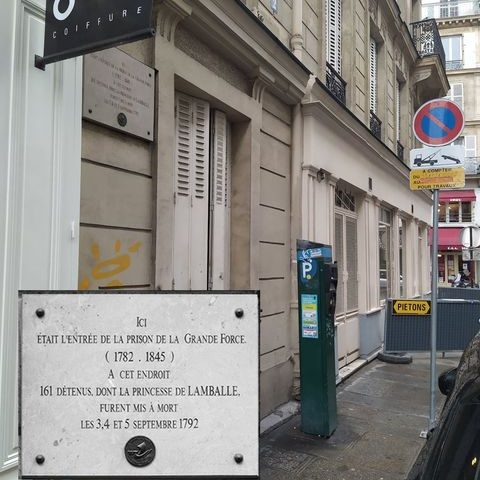
The plaque reads “Here was the entry to the Force Prison (1782-1845), in this place 161 people were detained, and where the Princess of Lamballe was put to death during September 3-5 1792
Maps, The Marais

Medieval Graffiti

11 Place des Vosges 75004

Today I’m taking you to the Marais and the picturesque Place des Vosges. The oldest square in Paris, this picturesque park was built in the early 1600’s by my favorite king, Henry IV on the site of an old palace.

The Hotel des Tournelles (in the center towards the left) in 1550 at where Places des Vosges is today

Originally known as the Place Royale, this is where all the big shots of French aristocracy lived and gathered; duels used to be fought in the park and the engagement party of Louis XIII and Anna of Austria was held here. This is also where King Henry II got a fatal woodchip in his eye after a joust gone wrong in 1559.

1709

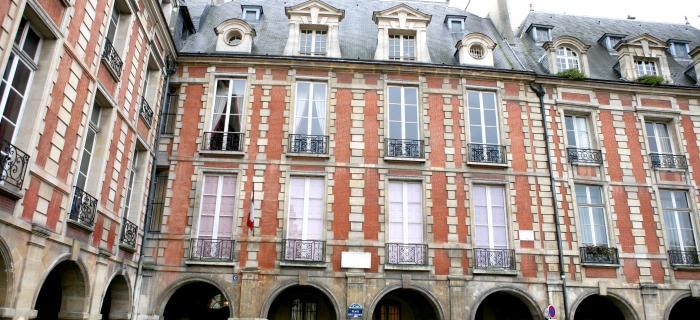
What is remarkable about the square are the original 36 luxurious residences that surround it, all built around 1610 and constructed with the same brick exteriors (or facades if you want to be fancy). The ground floor is one giant square covered arcade with arched ceilings and if you are lucky, you can come to listen to opera singers belt out acoustically magic arm hair raising tunes in exchange for your pocket change.

Place des Vosges isn’t a regular on most tourists’ bucket lists, but if you are a 3rd or 4th time PahRee visitor, this park is a MUST, preferably during summer when park guards are feeling generous and let you picnic on the grass. (For most Paris parks, grass is meant to be admired, not sat on 🙄)

Place des Vosges is loaded with history. Victor Hugo (author of The Hunchback of Notre Dame and Les Miserables) lived at number 6 from 1832 to 1848; it is now a museum that is worth an hour or two of your time. Madame de Sévigné (if you don’t know about this witty 17th century LEGEND, don’t fret- I’ll be introducing her eventually) was born at number 1, and many other Parisian elite have always called Place des Vosges home.

Victor Hugo’s digs, now a museum

From an architectural and historical point of view, despite the insanely high worth of the homes here, Place des Vosges is slowly destroying itself in the lap of luxury. Because few can afford to live here, many buildings are vacant and not being taken care of. Just like Toy Story’s Woody and Buzz Lightyear, abandoned homes want to be lived in. Without heat, ventilation, and a load of other things that happen behind our walls, these buildings are slowly decaying.

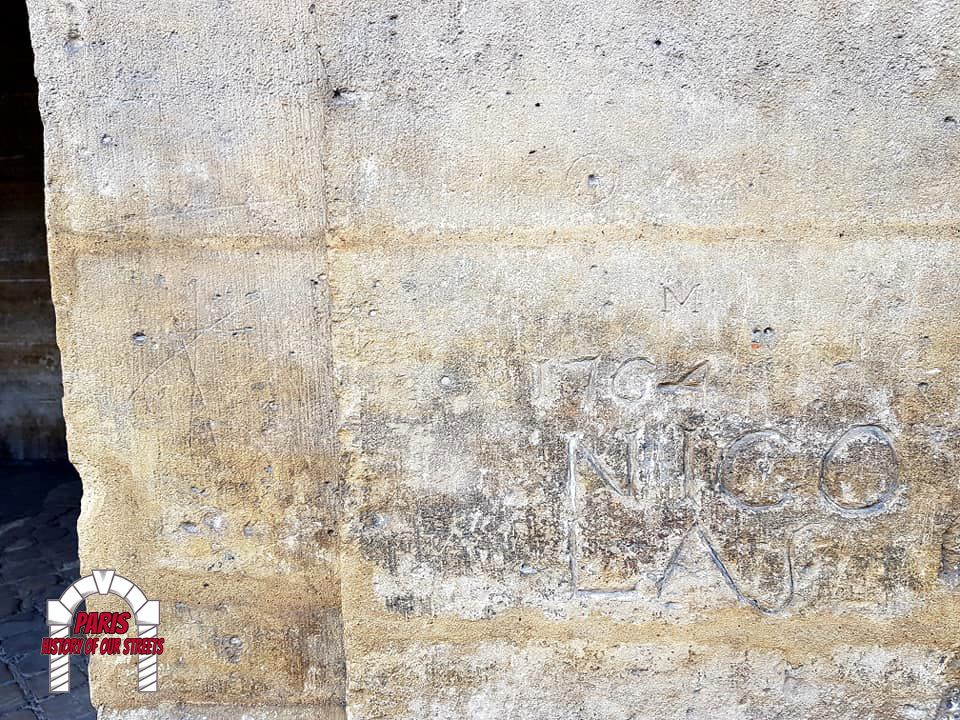
Anyways, to my historical gem! There isn’t much background to give here, but on a stone pillar at number 11, you can find the oldest verified graffiti in Paris. Sure there is probably older graffiti, Paris is over 2,000 years old, but nothing earlier that can be dated or given ownership.

Carved by Nicolas Restif, it simply reads Hit Up Nicolas for a Good Ti… err I mean 1764 NICOLAS. (Not sure how he accomplished this, I can’t write this well with a pen and paper, can’t imagine carving this in stone) Nicolas was a Burgundy born writer and printer who was known to go for late nights to think and clear his head.

Like an 18th century Banksy, Nicolas became known as the Le Griffon (the scratcher or scribbler) because he had a habit of tagging various buildings with his name and the year during his midnight strolls. This is the only one that survives today.

latin quarter, Maps

The Last Open Air Family Cryptes

The Garden of Saint-Séverin Paris 75005

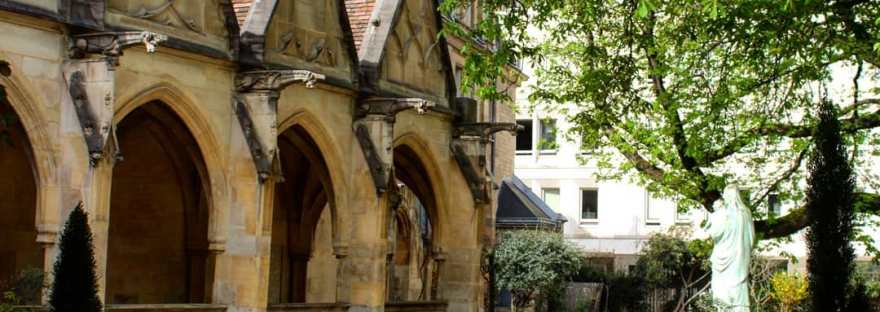
Despite being smack in the middle of the busiest part of the city, you wouldn’t know this secret oasis exists unless you spot it from the Rue des Prêtres Saint-Séverin, and even then, its been closed to the public for a few years.

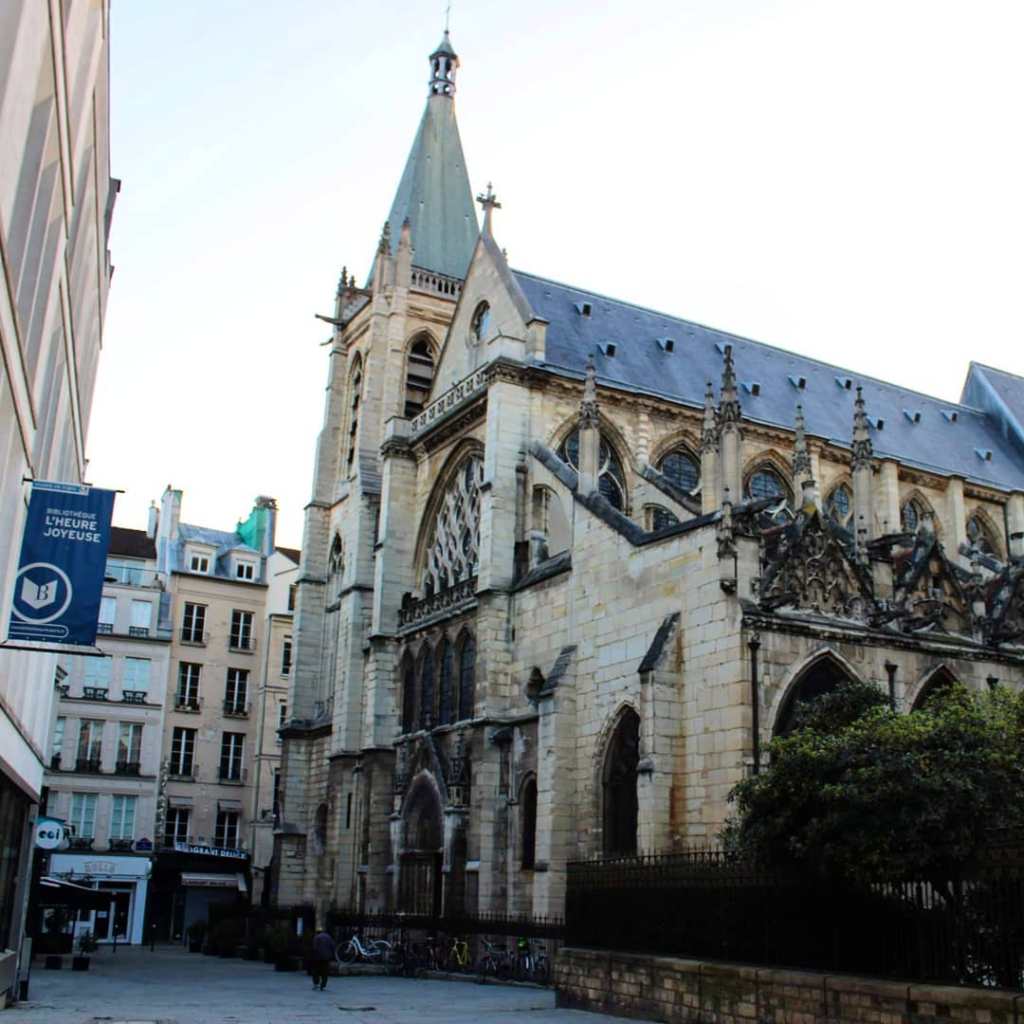
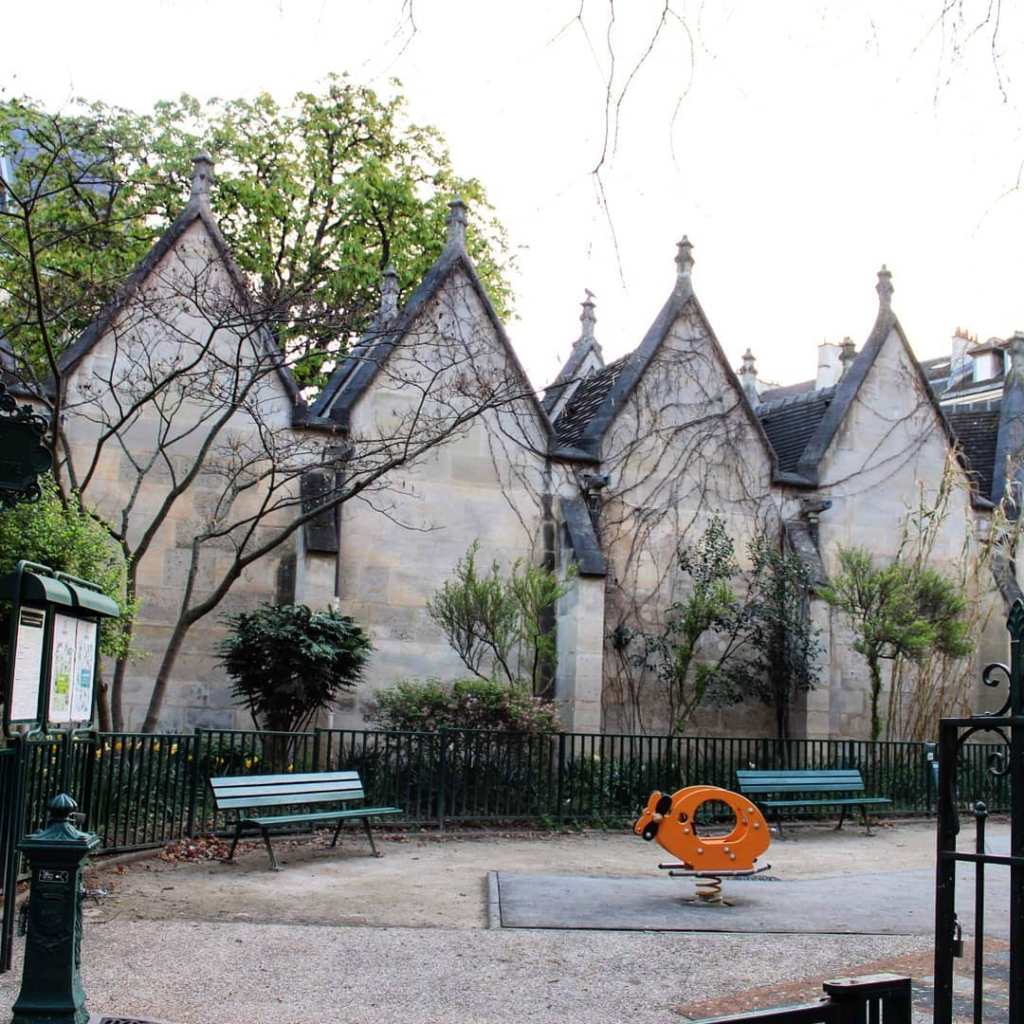
The 15th century Saint Séverin Church, can you spot the garden?

What’s remarkable about this tranquil garden is its gruesome past, which is a lovely contrast to the hoards of Starbucks sipping tourists who walk right past it unaware. From 1250 up until 1674, this garden was actually the final resting place for local Parisians. But this wasn’t your modern landscaped and marble chiseled tombstone decorated with seasonal shrubbery. Oh no, true to medieval form, this was a gruesome cemetery.

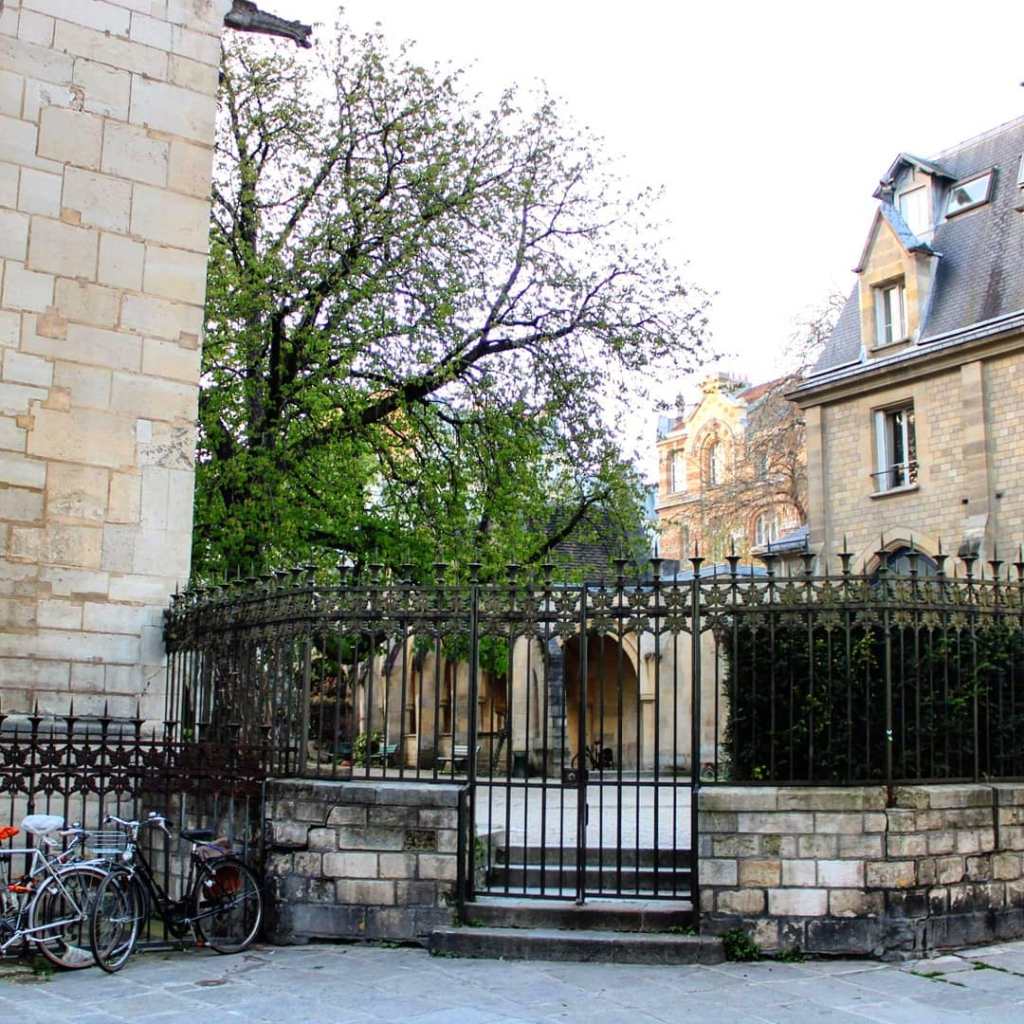
The LOCKED entrance of the garden, only open for religious celebrations and BBQ’s

There were two ways you could be interred here.

  1. Simply tossed in the mass common grave with every Tomas, Dagobert, and Godwin
  2. If you were lucky and came from a notable family, your body would be interred within a “charnier” (Latin for Carnalis, or ‘of the flesh’) and left to rot in style piled on top of your ancestors until only your bones remained.
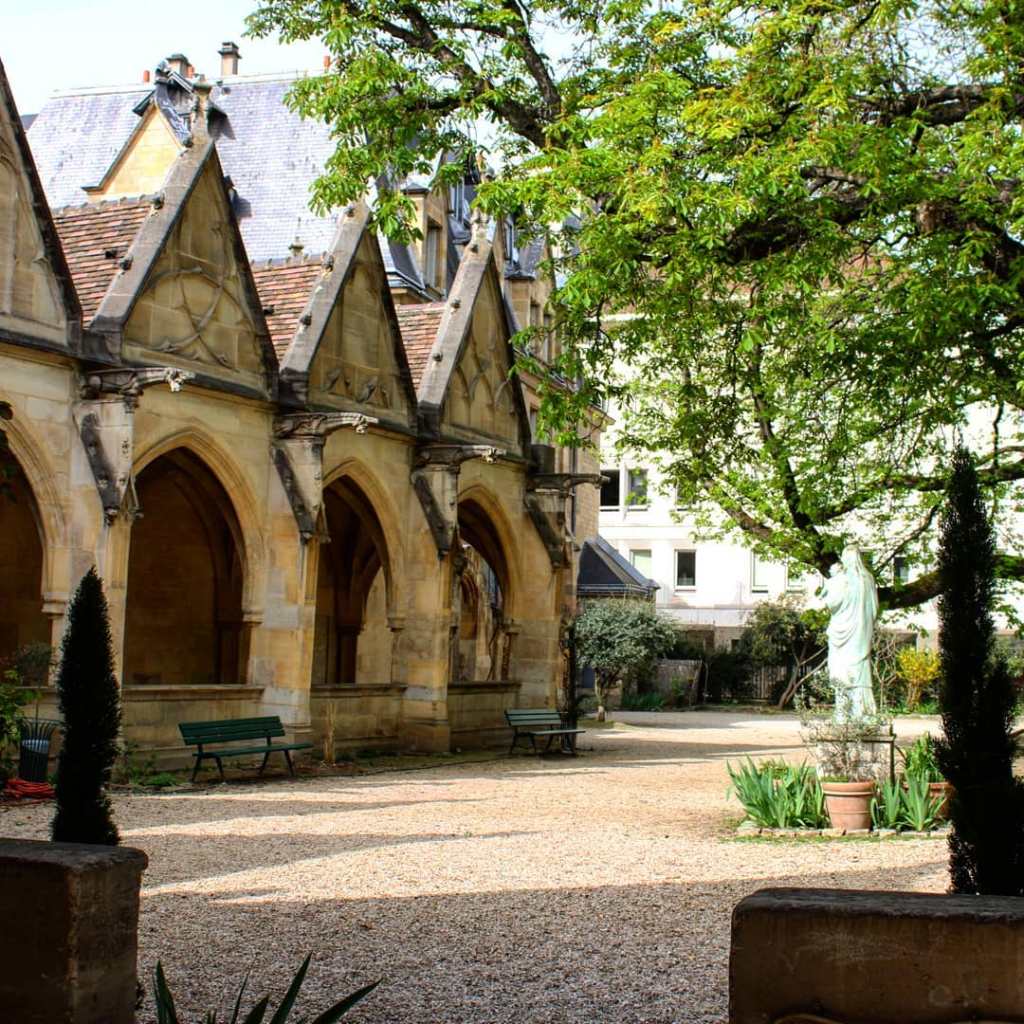
View of the Charnel Houses from the locked gate on the Rue Saint Jacques
A view from the back of the Charnel Houses, a questionable backdrop for this playground

The word Charnier comes from the Latin word Carnalis, or “of the flesh”. Which is approrpiate considering it was a lot more modest to decompose within the cozy confines of a dozy open air mausoleum than in a mass pit with all the other village plebes.

View of Saint Séverin from 18th century Turgot map with arrow indicating the Charnel Houses

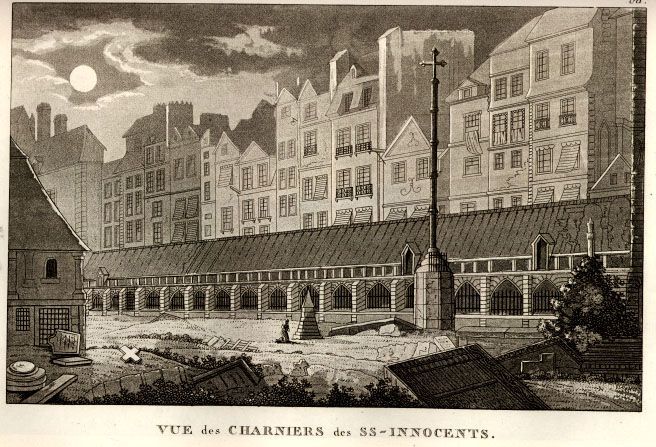
And right here within this garden are the only remaining original Charnel Houses in all of Paris, outfitted with benches instead of generations of decaying bodies. The most famous Charniers were those of the Cimetière des Innocents, an urban necropolis which became so overfilled with the dead that in 1780 a few surrounding basements began to cave in from the pressure of centuries of human remains.

Vue of the Innocents Cemetery

This event would be the catalyst which created the infamous Paris Catacombs when the question of “Well where the heck can we store millions of skeletal remains so they don’t become a serious public health issue?” was answered with “Yo let’s stack them up like Human Jenga pieces in abandoned underground quarry tunnels! IT’S A BINGO!”

The Catacombs of Paris.
Bones from the Innocents Cemetery put here in July 1809

The charniers of Saint Sèverin date from 1430 and originally surrounded this park until their professional retirement in 1674. A few were destroyed and tweeked over the years but the remaining were restored in 1940.

Check out Part 2 to learn how I managed to get past the locked gate in the middle of the night to see the Charniers up close!

latin quarter, Maps

The Treasure of the Rue Mouffetard

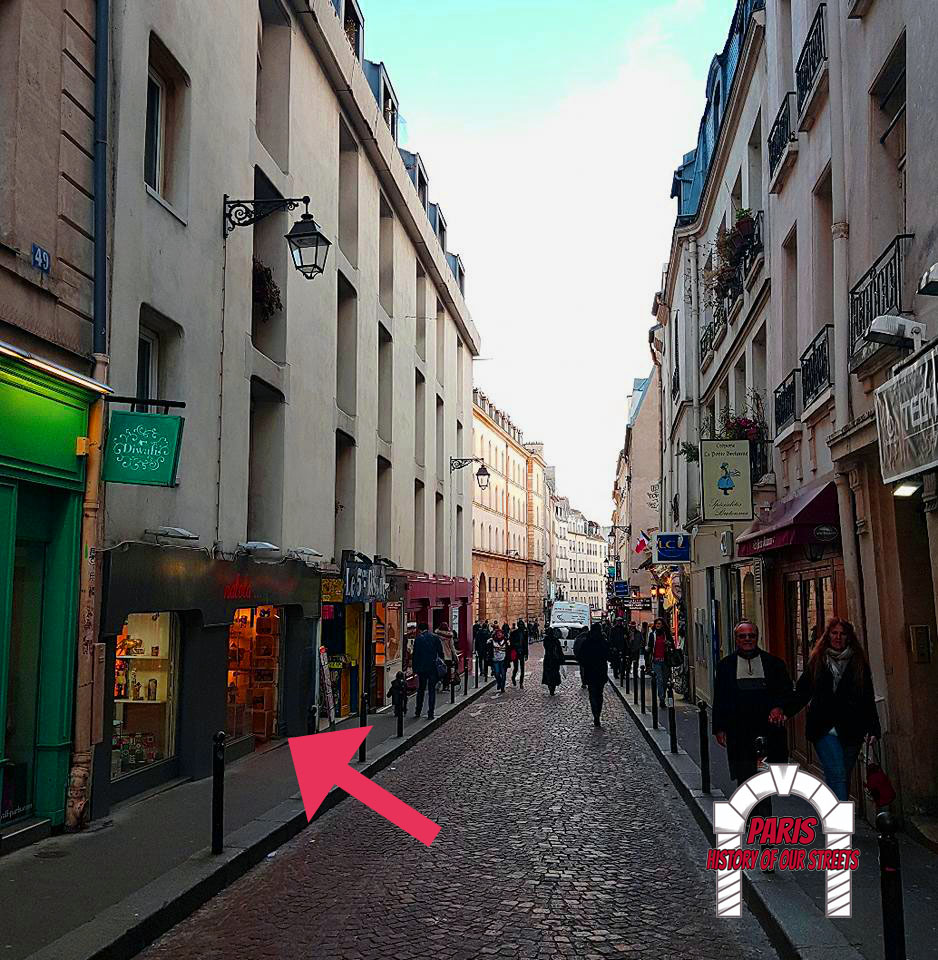
53 rue Mouffetard 75005 Paris

In honor of Saint Patrick’s Day, today I’ll be sharing the true story of a REAL pot of gold, found on the infamous Rue Mouffetard, the beloved street that still manages to retain a touch of authentic Parisian charm.

If you take a look around the area near the interaction of the Rue Pot du Pot de Fer, you will see a souvenir shop, and a vegan Pastry shop, and an E-cigarette Boutique. Hello 2021!! Right where you see a hideously modern building, an old AF apartment building dating to before the 16th century used to stand.

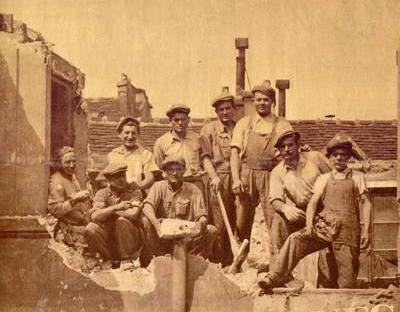
In May of 1938, as it was in the process of being demolished, a treasure was discovered amongst the rubble.. The Treasure of the Rue Mouffetard! When I saw this book title in 2018, I was pretty stunned. I mean, I’m an amateur historian and this is MY street, how have I never heard of this treasure?!

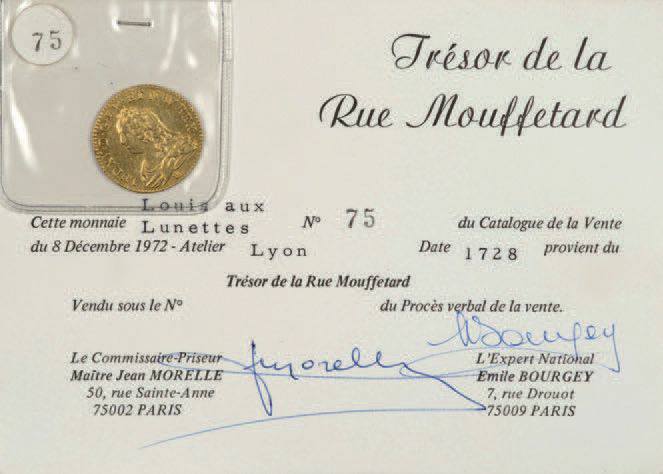
Wrapped neatly in paper detailing the last will and testament of Louis Nivelle dated 16 November, 1756- were 3,556 pieces of gold coins, depicting King Louis XV from the early 1700’s. The demo crew, not exactly familiar with what they had discovered, pocketed what they believed to be old copper coins, and went on with their business. Except for one guy, who took his coins to a jeweler out of curiosity, only to discover the true value of what sat in his pocket.

Hidden treasures

Well the city of Paris was notified, and lucky for them, because about that building that was demolished? Well it was under their ownership! Unfortunately for the construction crew, their “copper” coins were confiscated from their homes and from the neighboring cafés where they were traded for espressos, and even from a candy machine at the metro Robespierre.

So what was all this money doing stashed away? Mr. Nivelle lived a pretty cush life; he was a respected citizen and worked as a secretary for the Big Man King Louis XV himself. But he held dangerous religious beliefs for the time, and also had a bit of a double life. When he died unexpectedly in October of 1757, he must have hidden his fortune at his 2nd “secret” residence on the Rue Mouffetard so well, that his daughter, to whom the will was addressed- never found it.

But the story gets even crazier.. 200 years later when it is rediscovered, the problem of ownership for this hoard of 3,500 gold coins, each worth about $10,000 in 1938 ($174,000 today)- needed to be dealt with and it took the city 11 years to decide.

They eventually gave back a portion to the construction workers, a portion to themselves (this is tax friendly France of course!), AND the descendants of Louis Neville…They found 83!