latin quarter, Maps

Thomas Jefferson and The Moose Part 1

During the age of Enlightenment in the later half of the 18th century, America- the newly budding country full of savages, rebel colonials, and prudes- was regarded with doubt and suspicion by OG Europe.

In an obscure side note of Ridiculous History, a pre-presidency Thomas Jefferson assumed the responsibility of defending the honor of his country, to a somewhat comical degree, in one of the earliest acts of American Patriotism. While serving as American Ambassador in Paris during the mid 1780’s- he became obsessed with proving France wrong in the argument of who was.. bigger.

Jefferson. Moose. Buffon.

Today American may be known as the land of Super-Sized everything; food portions, houses, PEOPLE, but in the 18th century, there was a widespread belief that things in the new world were… weak, feeble, and physically inferior.

Rigobert Bonne and Guilleme Raynal’s 1780 map of North America

George Louis Leclerc, Compte of Buffon as well as scientist, naturalist, mathematician, and Boss Man of the king’s royal garden (today the Jardin des Plantes) wrote in his highly influential 36 volume Natural History Encyclopedia that due to its excessive swamp land and muggy climate; everything in America- from its soil, to its plants, to its animals, even the native Americas living there- were degenerate; smaller and weaker than their European counterparts.
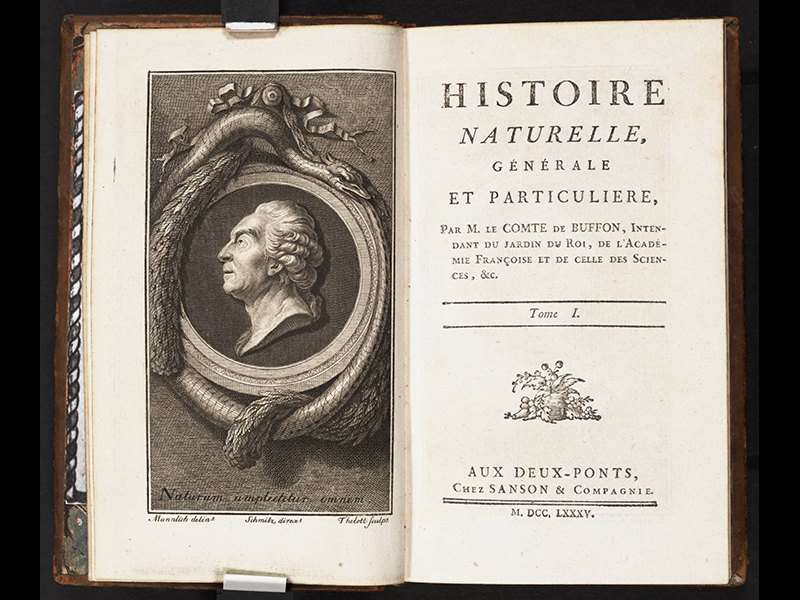
He even went as far as to claim that those who decided to live in the New Word, would damn their future bloodlines to be as degenerate as their livestock! When Thomas Jefferson heard of this ballsy claim, he called bullshit. Trash Talking Buffon had never even BEEN to America! Jefferson knew he had to stand up for his beloved baby country but how was he to prove America was not the degenerate wasteland Buffon made it out to be from France?

SEE PART TWO FOR THE ANSWER!

latin quarter, Maps

The Last Wooden Staircase

8 rue Boutebrie Paris 75005

The Rue Boutebrie has been around since the 13th century and began as Rue Erembourg de Brie, after a noble who lived there. There are two very interesting and old things on this street that make this girl giddy with glee.

1. If you’re an Original Gansta Paris History of our Streets faithful follower, you already know that the house at number 6 is OLD AS DIRT (not even the owner of the restaurant on the ground level knew the building’s age) because it has the signature gabled roof/maison à pignon that can only mean it was constructed before the 17th century. (These kinds of buildings with roofs facing the street were forbidden to be built after 1667 when King Louis XIV deemed them a fire risk. There are only about 20 or so of these old sexy beasts still in this area of Paris)

2. Thanks to the nice guy at Grains Nobles, I was able to breech the locked entryway at number 8 to take a peek at the historic treasure waiting in the hallway. Like a medieval prostitute with a bad case of the clap, this staircase has been AROUND.

Just a typical entranceway to a 16th century building right? WRONG!

This wooden sculpted masterpiece has been in this building since the late 16th century and was classified a historic monument in 1925. It is in incredible condition- it appears to have been resurfaced recently because I find it hard to believe anything this smooth and shiny could be 400+ years old.

I walked it up to the 5th floor hoping I could run into one of the apartment owners (whom I would automatically befriend because who doesn’t love a girl only 3 years past her prime with a passion for history and nice long legs? They would then invite me into their 16th century home where we would share a café and count the inevitable cockroaches who skitter past that undoubtedly live in their walls) but alas, no one was home.

Side Note: Gonnorhea was referred to as the clap before it was even Gonnorhea; described in medevial times as a clapping burning sensation during urination.

latin quarter, Maps, The Louvre and Palais Royal

Here Comes Joannie! Part Four

DISCLAIMER : This is the finale of a 4 post series! Don’t be a tete de cul, (butthead) if you haven’t read parts 1-3, don’t read any further! Here’s a handy link to them below..

Here Comes Joannie! Part One

Learn about this badass farmgirl turned warrior feminist led by God in the first part of this series.

Here Comes Joannie! Part Two

Discover the secret courtyard that marks the exact location where Joan of Arc was injured during the Siege of Paris

RECAP: I’ve just found the contact for the man incharge of the Joan of Arc Association and he’s asked me to send him an email detailing why I want to see the mosiac. I write up a lengthy explaination and he responds within a day. It turns out the mosaic was moved after renovations at the school (it would have been destroyed otherwise, Yikes!) to the entryway at 8 rue Vavin in the 6th, the building that is currently the headquarters for “The Rights for the Ancient Religious Combatants” and a friend to the JOA Association.

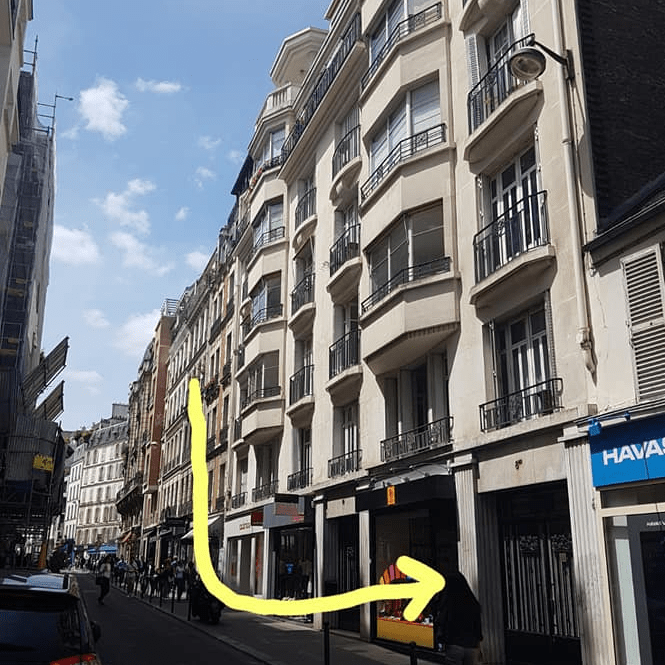
Surprisingly, Pierre senses my desperation and gives me the code for the door so I can visit the mosaic when I want. (I like Pierre a lot already. I bet he would be a good partner in crime to solve HISTORY MYSTERIES) He sends me attachments of the JOA Association activities and I’m impressed. They meet several times a year to walk the same route JOA took when she was here in 1429. The mosaic was also recently blessed by a priest. So I go to 8 bis rue Vavin and I’m nervously sweating. What’s the next step if it’s not here? I’ve had enough of waiting outside doors for nothing damnit!

Please excuse my shitty arrow

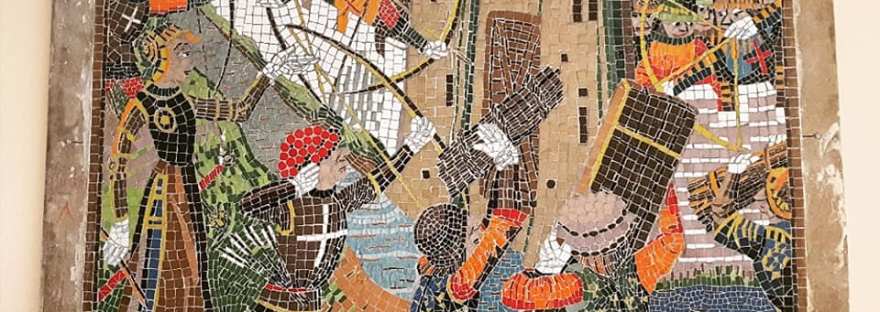
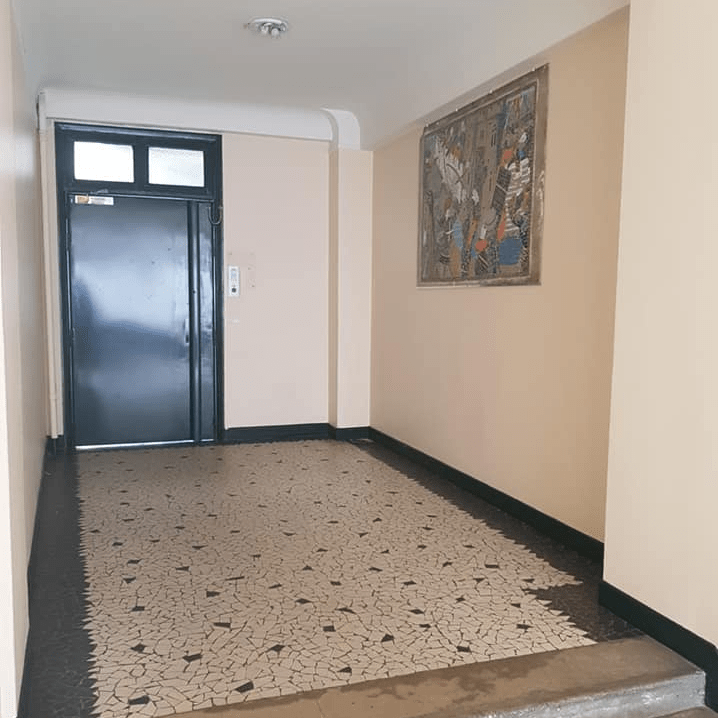
I enter the code Pierre gave me and the door effortlessly opens. And there it is. The mosaic of Joan of Arc. I found it. I SOLVED A PARIS HISTORY MYSTERY THAT NO ONE EVEN KNEW EXISTED.

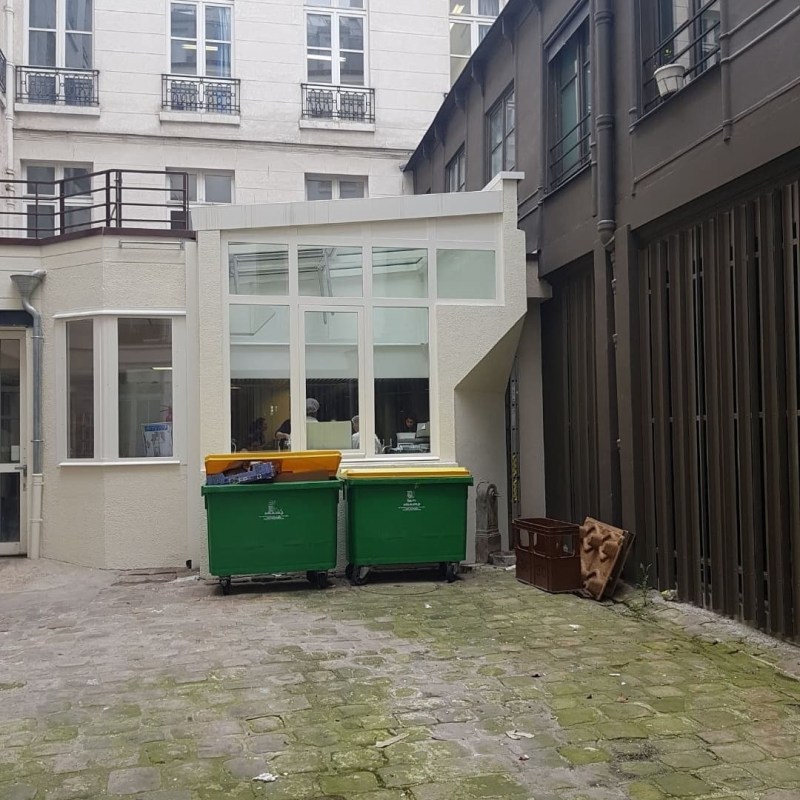
What I saw when I walked in

The ironic thing was that after all these trips to the 1st arrondissement waiting outside that door, harassing people living there, and pissing off a high school door guard- the mosaic was literally like 600 meters from my apartment the whole time. I let myself study it awhile before I took pictures. I got close to it, I touched it. I briefly humped it. It was bigger than I imagined. I looked at Joan and I tried to picture myself in her boots, standing before Paris, wanting so badly to take it back from the English. Motivated by God yet surrounded by death, how did she find the strength?

Joan and I

I was disappointed to see she was in a dress (one of the reasons she was executed was for cross dressing. At her trial shd explained that she wore male clothing so that she could wear armor to fight and also to deter men from attempting to rape her) but then again, the mosaic is based upon the medieval manuscripts of Martial d’Auvergne written in 1484 entitled “Vigiles du Roi Charles VII”.

I took a few pictures and I turned around to leave. I looked back one more time at Joan. I found her and I felt lighter. No angels appeared at my shoulder to fist pump me, but I had the impression they were smiling at me from above.

latin quarter, Maps

The Gruesome Truth of Emily’s Paris Apartment Location

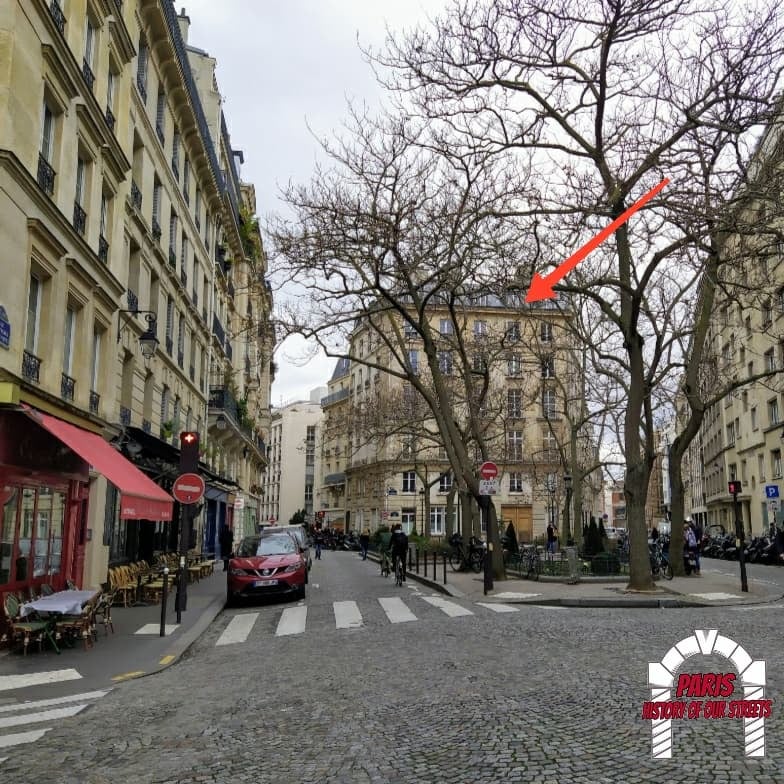
Place de l’Estrapade Paris 75005

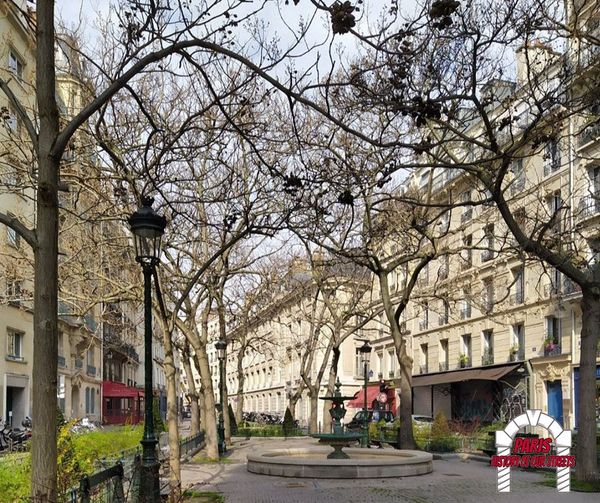
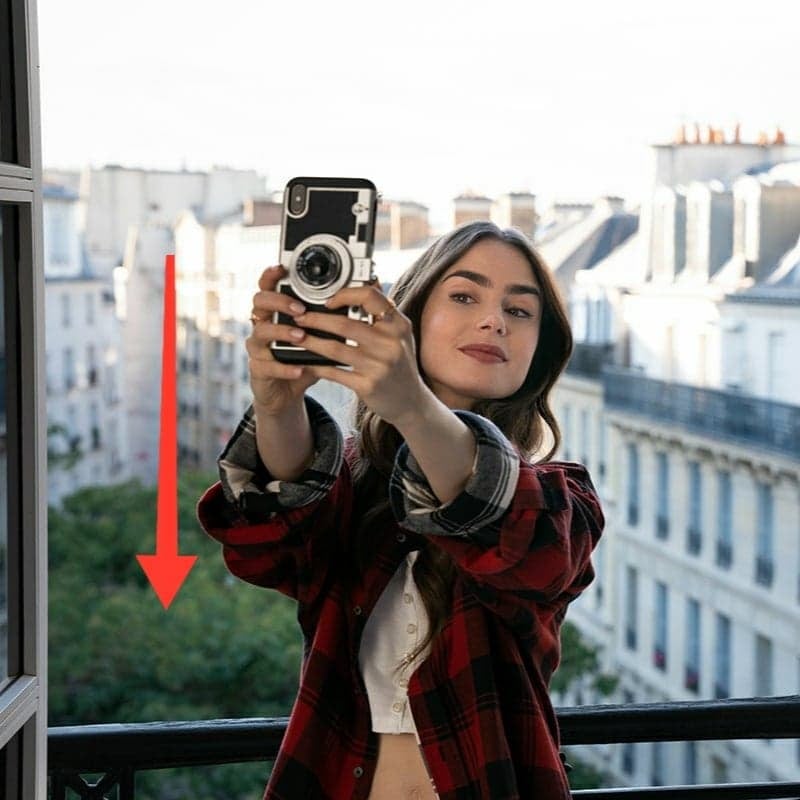
Have you heard of the new show “Emily in Paris With a View of Sinister Public Square”? Probably not, because the Netflix series left out the dark historic background of the common area directly in front of her dreamy Paris apartment.

Nestled in the cleavage between the rue des Fossés Saint Jacques and rue Lhomond, the Place de l’Estrapade was once the backyard of Phillippe Auguste’s fortified wall that encircled medieval Paris. A perfect spot to read books amongst the manicured plots of flowers, relax on a bench in front of the fountain, or use as a backdrop for Emily’s quaint Paris Apartment; this little park is often overlooked when compared to the famous neighboring Jardin du Luxembourg.

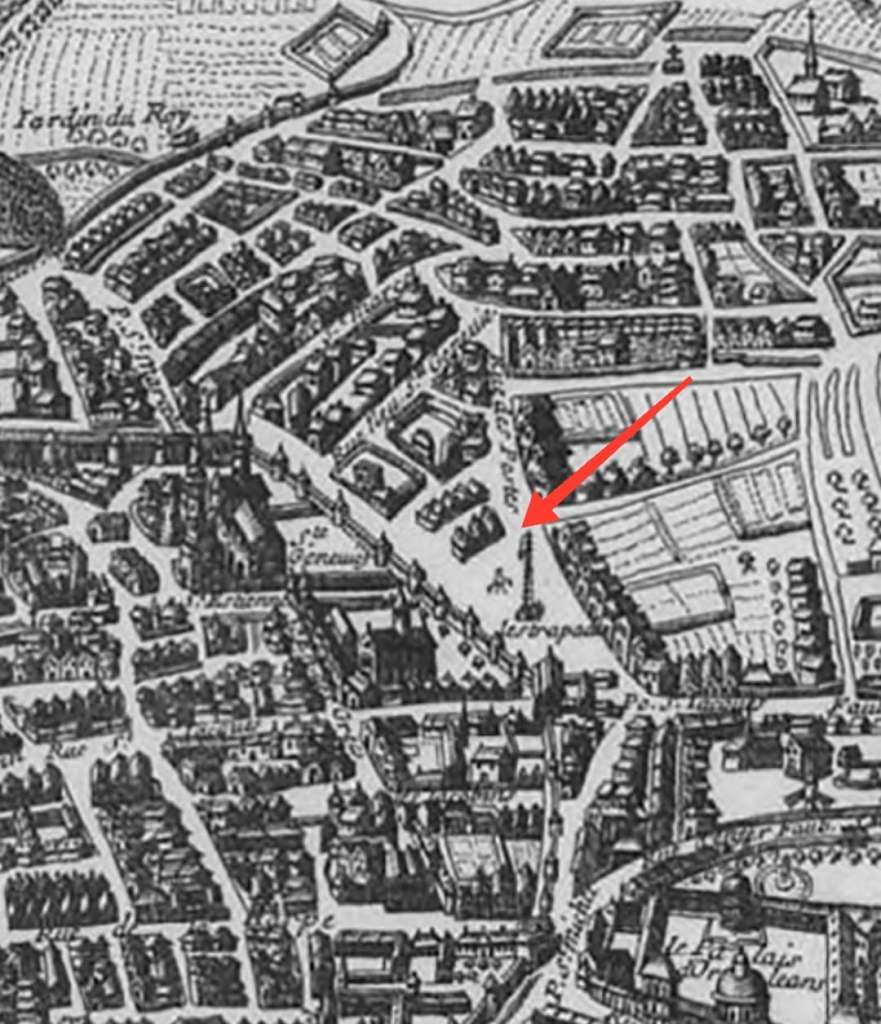
Map from 1630 indicating Place de l’Estrapade

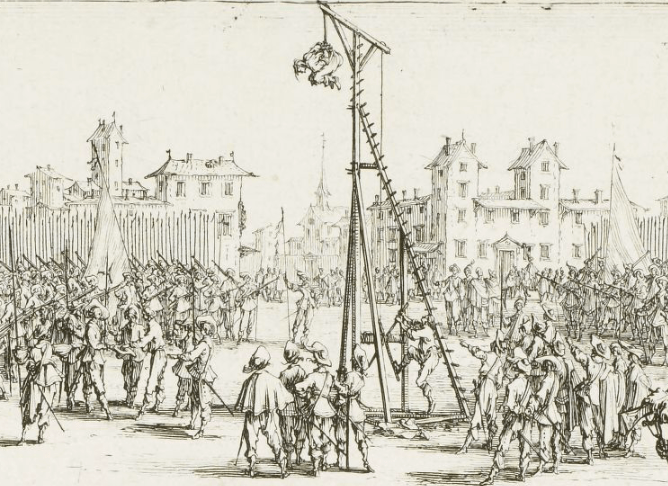
But despite the tranquility that can be easily found there, this nugget of land has a malevolent past… Take a look at the close up of Place de l’Estrapade from the 1630 Paris map made by Jean Sauvé. See that flagpole thingy? Named after the torture device known as the estrapade (or strappado), this is the site where predominately military deserters were punished for abandoning their posts.

There’s enough negativity in the word today so I’ll avoid explaining how this cruel practice was done and leave it to your imagination … JUST KIDDING! What do you think this is, another Perfectly Paris Instagram page?

Anyways, the criminal (or victim depending on where your sympathies lie you big fat Treasonous Traitor) would have his arms tied tightly behind his back with a rope, which was then attached to a pulley high off the ground. The person would be hoisted up by this rope, dangled, then abruptly dropped to a distance NOT QUITE touching the ground. Kinda like Medieval Sky Diving Gone Wrong.

Hey, no ever said torture had to be sophisticated to be effective! However, the goal was simply to reinforce the consequences of abandoning a military post by breaking a few limbs and causing lifelong disfigurement and pain rather than executing.

latin quarter, Maps

The Medieval Arch Under the Post Office

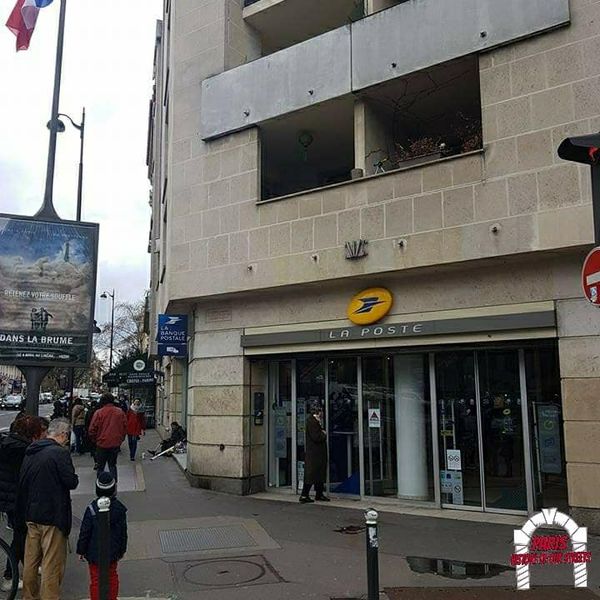
30 rue du Cardinal Limoine Paris 75005

Going to the Post Office is never a pleasant affair, and is ranked #3 Worst Things To In Paris (after going to the bank and dentist). The hours are always inconvenient, you can expect to wait in a half assed line full of annoyed Parisians murmuring “ça fait chier” (This sucks) and standard postage stamps are nearly a euro each.

However there is a historical exception to this normally unpleasant experience. In the depths of the 2nd underground level beneath this post office, you can view a stone arch that was once imbedded in the medieval fortification wall that encircled Paris 800 years ago. This 12th century stone rampart was erected to defend Paris before King Philippe Auguste took off on his 3rd Jimmy Buffet cruise. I mean religious crusade.

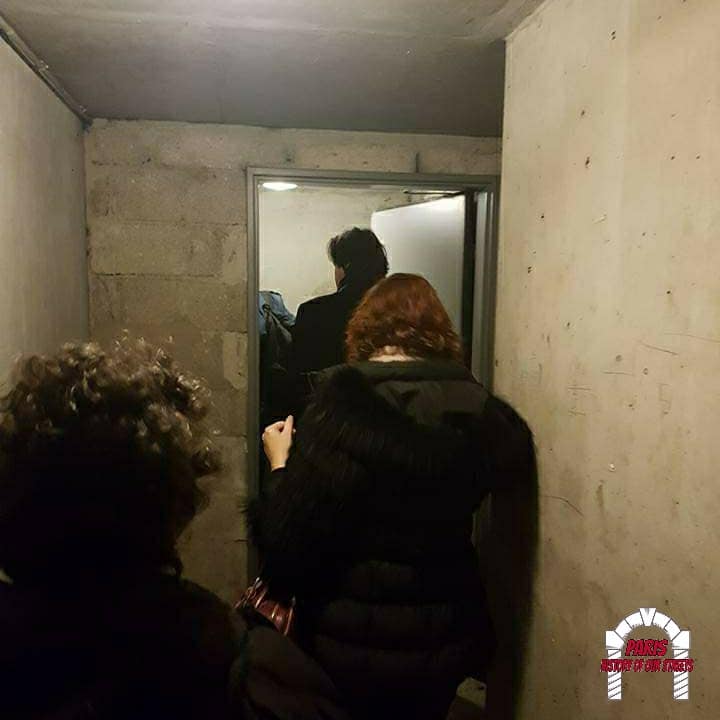
I did this tour two year’s ago when each first Wednesday of the month at 2:30pm, a tour guide from the Paris Historical Society came to the Post Office to take anyone who is interested into the parking garage down to the -2 level.

And there, behind a large metal door and in a small concrete room, sits the 800-year-old stone archway. What is it?! Where did it come from? Why is it here?! What WOULD Jimmy do??

Before the aforementioned wall was built around Paris, in this location there was only the Abbey Saint Victor and a small river called the Bièvre. This river was rerouted to create the Canal of Victorins, which provided an irrigation system to water plants and turn windmills for the residents at the Abbey. King Philippe’s wall was built right over where this river ran, so an archway was created to allow the water to pass through it. As this open archway could comprise the safety of the wall, a metal grill was inserted inside it. After 1356, a ditch was dug around the wall to further secure it against potential invaders and the canal was eliminated.

The Abbay Saint Victor in 1655, engraving by Merian

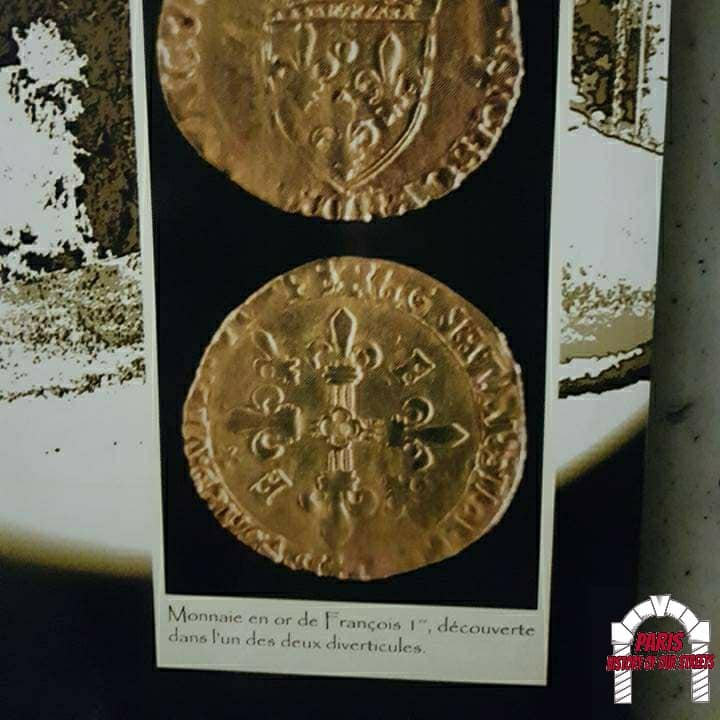
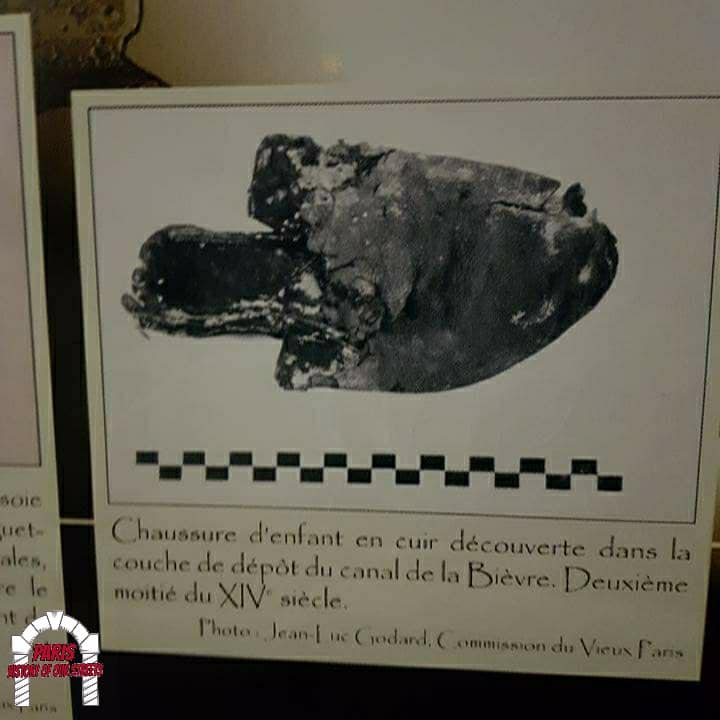
The ramparts of Philippe August were eventually demolished (kinda, sorta) and the ditch filled in; entombing this archway as Paris became larger and a new, larger fortification wall was built. Fast forward to 1989 when workers discovered the arch while constructing a new (and hideously modern) building at this location. A historic preservation company was assigned to survey the site (if I could go back to school for anything this would be it) and see what other goodies were hidden under the dirt. They found 400-year-old shoes, currency, and even plaster remains from an old sculpture shop that was located at this corner in the 19th century.

As for the archway; it was dismantled and each stone was labeled, then reconstructed Tetris style in this room in May 1991, where you can see it today; two levels below the street and not far from its original location at the wall of Philippe Auguste.

Plaque outside the post office “Wall of KIng Philipe Auguste. Here was the Entry Saint Victor built in the 13th century, rebuilt in 1568, and demolished in 1684”

There are several other locations in Paris where you can still see traces of this 800 year old wall I’ll eventually share. For now, I’ll leave you with the inspirational speech King Phillipe allegedly gave to his team of royal wall builders. “Build me something tall and strong.Make it long remain, before I go away. It’s only half past the twelfth century, but I don’t care- it’s crusade time somewhere.”