Blog, Save Money, Not Memories

Wallace Drinking Fountains

YES YOU CAN DRINK WATER FROM THE FAUCET IN PARIS.

Now that we got that out of the way… its true that Paris can take a toll on your pocket book. But that doesn’t mean you have to pay for the most important element to sustaining human life. DRINKING WATER! For over a decade, the city of Paris has fought against plastic waste by making more than 1, 200 free water distribution locations throughout the city. You can find the interactive map here. http://www.eaudeparis.fr/nc/carte-des-fontaines/

However having access to clean and free drinking water is a relatively recent development. Only about 150 years ago, water was not easy to come by until one British man made water more accessible than ever to Parisians. Have you ever noticed these emerald gems steadily delivering a stream of cold water during a flanny little stroll in Paris?
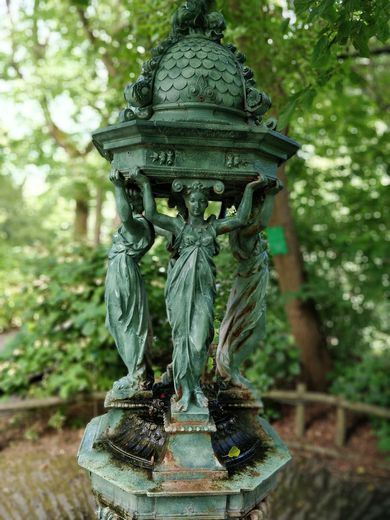
Known as the Wallace Fountains, these guys (or four buff ladies if I’m being anatomically correct) are the creation of British philanthropist Sir Richard Wallace during the 1870’s.

Paris during this time was a disaster. The Franco-Prussian war had just ended leaving Parisians to pick up the pieces and rebuild their glorious city. This wasn’t easy to do because after surviving the Prussian’s siege of Paris, much of the population was sick and starving. (So hungry that Parisians slaughtered anything they could get their hands on to eat- including domestic and zoo animals, even rats!)

Franco-Prussian War 1870-1871: Dog and cat meat butcher in Paris, 1871

To make matters worse, many aqueducts that brought water to the city were damaged during the siege, making clean water expensive and hard to obtain.

But thanks to a certain British fellow with a large heart (and even larger wallet to finance their construction) 50 of these fountains were placed around Paris to provide fresh water for anyone who wanted it.

Sir Wallace

There were a few rules when it come to building a Wallace fountain.

  • They were to be made of cast iron and they had to be painted dark green to blend in with nearby parks and tree lined boulevards. Today you can find them in a variety of colors.
  • They had to be tall enough to seen from a distance, yet not impede on the views around it.
  • They needed to be placed in a practical manner (often at the point where intersections meet) that was accessible for everyone.

If you look closely at a fountain, you see four caryatids (an architectural column which takes the form of a standing female figure) each representing kindness, simplicity, charity and sobriety. (Sobriety because there were many alcoholics during this era when alcohol was cheaper and easier to find than clean drinking water. Oddly enough, in most cafes a glass of wine is cheaper than a bottle of water!)

The distance between each caryatid was calculated so horses couldn’t stick their heads inside but you could still get your hand in with a cup to fill up whatever you needed to. Two metal cups were hung at each fountain until 1952 when they were removed for hygienic reasons.

Baby heads don’t fit between the caryatids either, much to the dismay of my daughter

Today there are about 120 Wallace fountains throughout Paris and you can see that they are appreciated by everyone from the ultra chic with their Eco friendly BPA free glass bottles, to the homeless refilling a former bottle of wine, and to the sweaty city joggers after a long run.

So next time you see one of these historic works of art- pay homage to Sir Richard Wallace and take a drink!

Blog, Save Money, Not Memories

A Millennial’s Guide to Cheap Paris

A Millennial’s Guide to Cheap Paris

Paris may be a permanent chart-topping fixture on rankings of “World’s Most Expensive Cities”, but that doesn’t mean Penny Pinchers will be limited to self-catered picnics in the Luxembourg Gardens or free street performances. While discounts are often generous with the under 28 student crowd, affordable experiences for the rest of us bordering middle age and beyond are harder to come by. Here’s a list of four thrifty ideas to make the most of Paris dining, culture, and nightlife without sacrificing a memorable event for a tight budget.

  1. Fine Dining If there is one thing I’ve learned after eight years in Paris, it’s that typical French cuisine isn’t always synonymous with pricy Michelin starred establishments and you can eat very well in France for very little. Initially known for attracting the working class with simple, yet hearty meals in convivial and unpretentious settings, the historic Bouillon style restaurant has been making a contemporary comeback in recent years amongst locals and tourists alike. With a three-course meal including wine for about 25 euro a person, you can indulge in classic French cuisine without feeling too guilty when the check comes. Don’t be surprised if you bump elbows with your table neighbors or when the snappy waiter scribbles your order directly on the tablecloth; a traditional Bouillon experience will feel more like a theatrical performance than a relaxing meal! Thanks to the 120-year-old Belle Epoque décor, my favorite is the Bouillon Chartier, but those with more modern tastes will enjoy the popular Bouillon Pigalle.

Bouillon Chartier 7 rue du Fauboug Montmartre, 75009 Paris

Photo from Bouillon Chartier

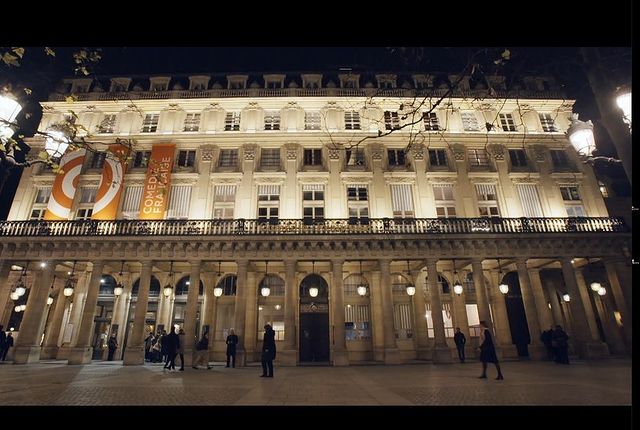
2. Theater A respected aspect of French culture is La Vie Bohème, or Bohemian lifestyle; which is all about embracing life and the arts through frugal and simple living. Fortunately you don’t need to sell your own amateur art to buy tickets to the theater because even an impoverished poet can get an aristocratic red velvet chair to see a Molière performance.  About 30 minutes before every show at the 18th century Comédie Française, the Petit Bureau ticket counter opens up and sells last minute seats for 5 euro each. Make sure you come early; the line can get long especially with popular shows.

Comédie Francaise Place Colette 75001 Paris

Image from the Comédie Francaise

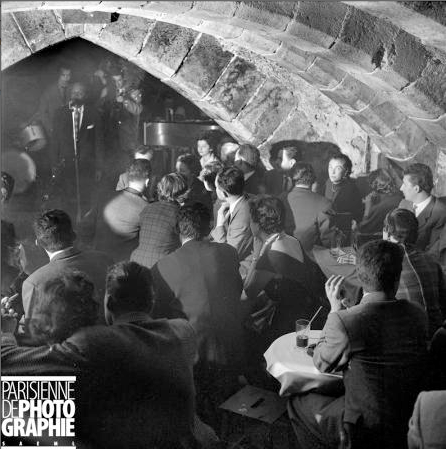
3. Entertainment You don’t need to pay VIP prices to enjoy an evening show followed by a Parisian soirée. Instead of paying hundreds for Moulin Rouge tickets, why not combine two classic nightlife experiences; a cabaret show and late-night clubbing- at what I consider to be Paris’s best kept secret, Aux Trois Mailletz. Skip the restaurant upstairs and head down to the 13th century cellar where Jazz Royalty like Ella Fitzgerald and Louis Armstrong once performed. For a cover charge that wouldn’t get you past the Coat Check at Lido, you can spend hours in the intimate presence of up-and-coming musicians as they belt out a variety of modern and classic hits until dawn. The best part? They hop up and dance on the tables you are seated at! If you’re lucky, they might even pull you up there with them.

Aux Trois Mailletz 56 rue Galande 75005 Paris

4. Museums While Ernest Hemingway claimed in his iconic Paris memoir “A Moveable Feast” that hunger was good discipline and an empty stomach heighted one’s appreciation for art; I strongly discourage any intentional fasting while visiting Paris museums, even if you are as broke as Papa Hem was in 1920’s Paris. Museums are always free for anyone under 26, but thanks to a long-standing initiative that allows free entry for everyone on the first Sunday of each month; you won’t have to fight the urge to eat Monet’s Water Lilies because you sacrificed breakfast to pay for a Musée de l’Orangerie ticket.

Photo from Musée de l’Orangerie