latin quarter, Maps

Thomas Jefferson and the Moose Part 2

Recap: 1780’s France VS USA: Who is physically superior ?

So Thomas Jefferson ran in the same Paris social circles with his friennemy Buffon and one night while dining at Chez Buffon, TJ decided to challenge his ridiculous claims that America’s moldy wetlands produced degenerate people and animals with a bold rebuttal. “You think America is inferior to France eh? Well you know what wise guy, we got Mooses so big that your pitiful French excuse for a Moose is small enough to walk under our big-ass Moose!”

F. Scalberge, Jardin du Roy pour la Culture des plantes médicinales à Paris (1636) © Muséum national d’Histoire naturelle
 

Being a man of science as well as politics, Thomas knew his mouth couldn’t write a check his ass couldn’t cash, so he set out to prove himself right. However measurements or descriptions wouldn’t suffice and he wanted tangible evidence; something he could literally shove in Buffon’s face to say “THY FICTITIOUS ALLEGATIONS ARE AS RIDICULOUS AS YOUR LOW PONY TAIL BETCH”.
For over a year and despite other preoccupations like the American Revolution and his role to muster support in France; Thomas almost obsessively sought his proof. He begged hunting enthusiast friends to send him a moose with specific instructions. NEED MOOSE: MAKE IT BIG! The Governor of New Hampshire finally pulled through and a 7-10ft moose was shot and shipped to France.

Excerpt of a letter from Jefferson to John Sullivan, taken from “Mr. Jefferson and the Giant Moose” by Lee Dugatkin

When its carcass arrived months later, the moose was rotting, wearing impostor antlers, and most of its skin gone. But a BIG ASS BIGGER THAN FRANCE MOOSE it was. We don’t know too much about Buffon’s reaction to the moose after he received it with a post it stuck that read KEEP TALKING SHIT AND I’LL SEND YOU BIGFOOT; he died shortly after.

Photo of a statue of Buffon at the Jardin des Plantes taken from their website

As for the moose itself, it seems to have disappeared, probably stuffed away somewhere in the vast caves of the Museum of Natural History of Paris. It is interesting to note that 250 years later, jokes on France for their reputation of having small stature. If you think about it, the only mega-fauna France is known for are giant rats and Gerard Depardiue.

If you are interested in learning more on this wacky but true subject (I only covered the surface), check out “Thomas Jefferson and the Moose” by Lee Dugatkin, click on the image here.

Special thanks to Lee for responding to my random message and sending me a signed copy of his fascinating book!

latin quarter, Maps

Thomas Jefferson and The Moose Part 1

During the age of Enlightenment in the later half of the 18th century, America- the newly budding country full of savages, rebel colonials, and prudes- was regarded with doubt and suspicion by OG Europe.

In an obscure side note of Ridiculous History, a pre-presidency Thomas Jefferson assumed the responsibility of defending the honor of his country, to a somewhat comical degree, in one of the earliest acts of American Patriotism. While serving as American Ambassador in Paris during the mid 1780’s- he became obsessed with proving France wrong in the argument of who was.. bigger.

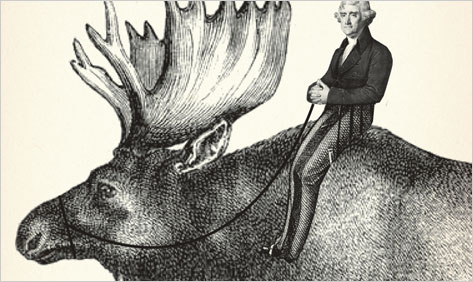
Jefferson. Moose. Buffon.

Today American may be known as the land of Super-Sized everything; food portions, houses, PEOPLE, but in the 18th century, there was a widespread belief that things in the new world were… weak, feeble, and physically inferior.

Rigobert Bonne and Guilleme Raynal’s 1780 map of North America

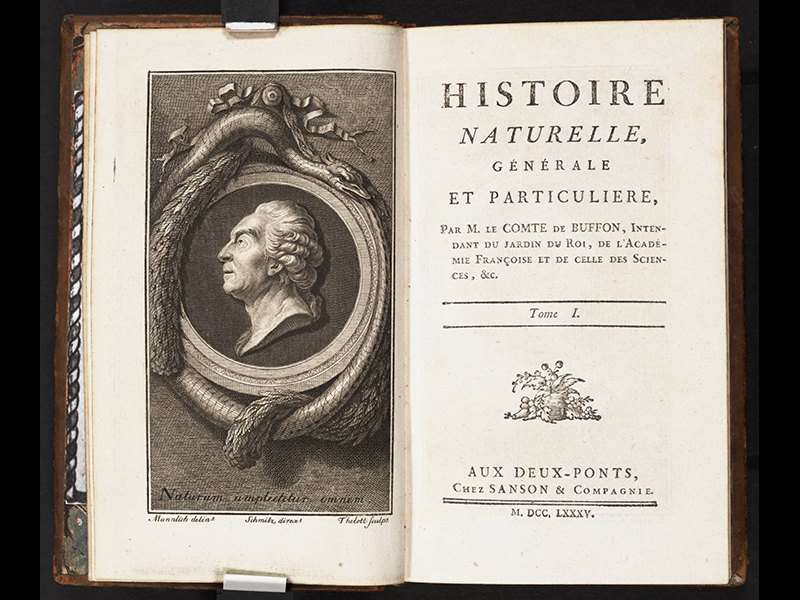
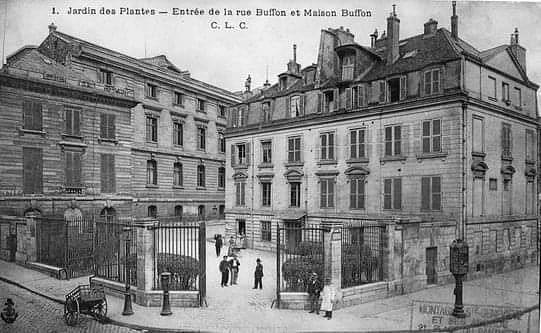
George Louis Leclerc, Compte of Buffon as well as scientist, naturalist, mathematician, and Boss Man of the king’s royal garden (today the Jardin des Plantes) wrote in his highly influential 36 volume Natural History Encyclopedia that due to its excessive swamp land and muggy climate; everything in America- from its soil, to its plants, to its animals, even the native Americas living there- were degenerate; smaller and weaker than their European counterparts.

He even went as far as to claim that those who decided to live in the New Word, would damn their future bloodlines to be as degenerate as their livestock! When Thomas Jefferson heard of this ballsy claim, he called bullshit. Trash Talking Buffon had never even BEEN to America! Jefferson knew he had to stand up for his beloved baby country but how was he to prove America was not the degenerate wasteland Buffon made it out to be from France?

SEE PART TWO FOR THE ANSWER!

Maps, Saint Germain des Près and the Eiffel Tower

The Theft of the Mona Lisa : Part One

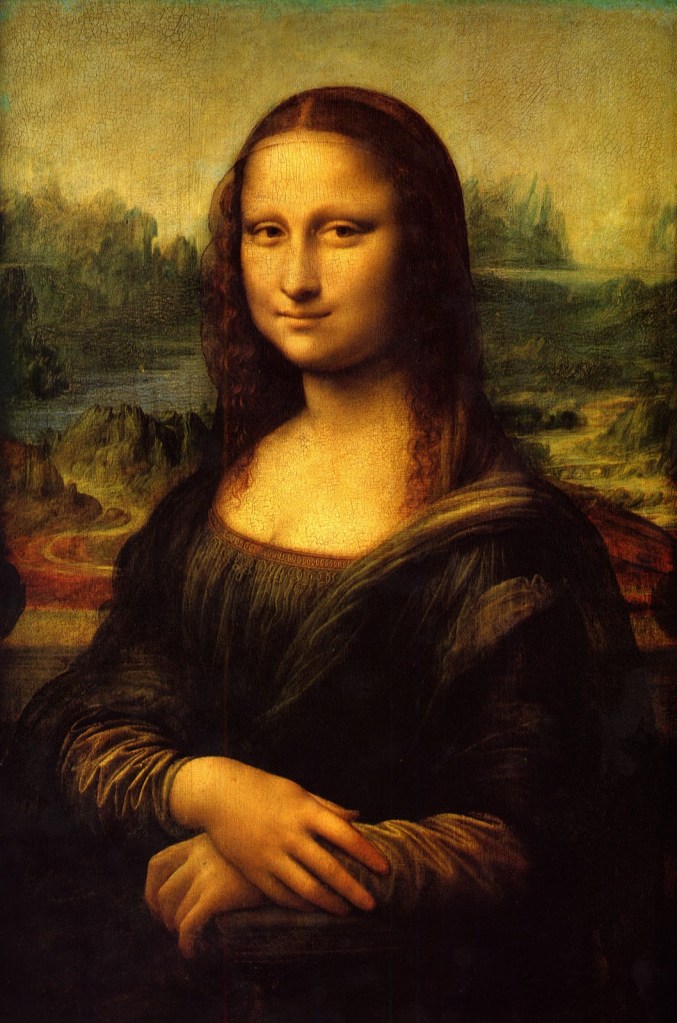
Whether you agree that she is smiling or not, there is certainly no argument that The Mona Lisa (AKA La Joconde if vous parlez Francais or La Gioconda if.. ahh, YOU-A SPEEKIE ITALIANO) is one of, if not the number one, most recognized piece of art in the world.

From her Renaissance Mastermind, Leonardo da Vinci- to her insurance value- 820 million dollars!! to her background support in Jay Z and Beyoncé’s Louvre themed music video, (because nothing says priceless Renaissance masterpiece like “poppin’, I’m poppin’, my bitches all poppin’!”) her face is as well known as Jesus Christ and Donald Trump. But have you ever wondered WHY?

If we are being honest, there isn’t anything SUPER remarkable about this painting and unless you’re into the no eyebrows look, Mona probably isn’t giving anyone a chubby. The colors don’t catch your eye like a Gustav Klimt and there isn’t much to analyse in the portrait itself like a trippy Salvador Dali. The question of “is she smiling or not?” certainly brings attention, but what else is there behind this painting? Well I’ve got answers! But first, a little background..

What is it about this painting?

There are a few discrepancies surrounding Mona’s background, but most experts agree she was painted by Leonardo Dicaprio in early 16th century Florence for Francesco del Giocondo and the portrait is of his wife Lisa. (Mona is an old school Italian way of saying Madame). Some controversy comes from the fact that no one is 100 percent certain that the picture we know as the Mona Lisa at the Louvre is the same one that Leonardo is attributed to having done in a biography written 30 some years after his death.

Leonardo DiCaprio

The Louvre released a statement in 2005 explaining, “Leonardo da Vinci was painting in 1503 the portrait of a Florentine lady by the name of Lisa del Giocondo. About this we are now certain. Unfortunately, we cannot be absolutely certain that this portrait of Lisa del Giocondo is the painting of the Louvre.” However, most experts agree this is her.

Moving along, for reasons unknown Mona was never given to her namesake and remained with Leonardo until his death in 1519, before being bequeathed to his assistant Salai. Despite his Italian Stallion heritage, Leonardo was tight with France’s King Francois I, (I imagine they were Renaissance drinking buddies) and Mona wound up in his possession in the early 1520’s.

Leonardo da Vinci on his deathbed, at Cloux in 1519, with Francois I and members of the royal household in attendance. Engraving by James Scott (c. 1809-c. 1889) after William Fisk (1796-1872)

She stayed in the French royal art collection a few hundred years and moved around to various castles before she came to the Louvre after the French Revolution in 1793. There she remained, admired but relatively unknown, until 10AM Monday August 22, 1911 when a Louvre employee happened to notice a vacant spot on the wall of the Salon Carré at the Louvre. He cried out, “Someone has stolen La Jaconde!”

Wondering what happened? Stay turned for the answer, next time, on Paris History of our Streets! (Or just look it up on google you god damn killjoy) And if you’re wondering what kind of amateur professional historian I am to mix up Leonardo DiCaprio with Leonardo da Vinci HAHA JOKES ON YOU! Just making sure you are paying attention…

Maps, Opera and Les Grands Boulevards

The Final Resting Place of Madame de Pompadour

3 rue de la Paix 75002 Paris

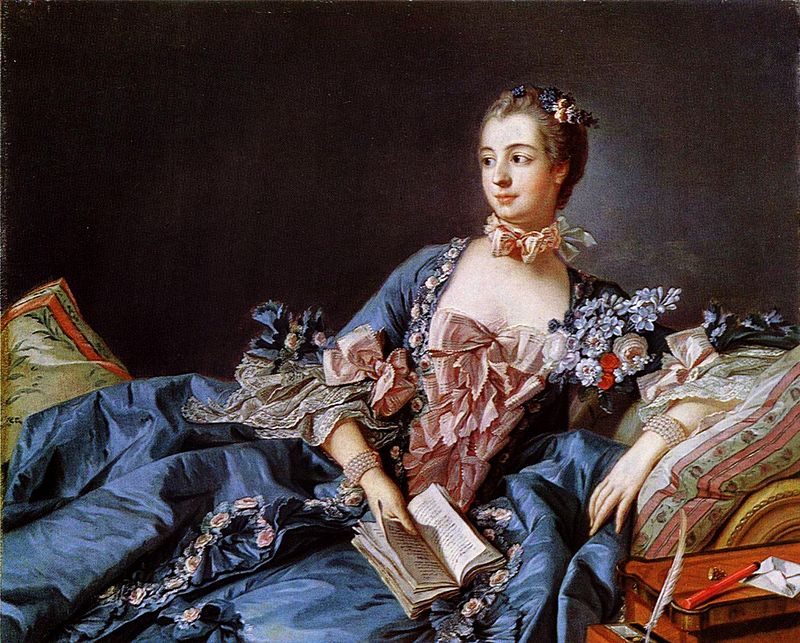
Despite her birth as a commoner, Jeanne-Antoinette Poisson effectively used her beauty and intelligence to rise through the ranks and beds of Parisian elite until she peaked with King Louis XV in 1745. Like an 18th century Melania Trump, Jeanne managed to have not only a position under a man of power (literally and figuratively) but one as an influential advisor next to him.

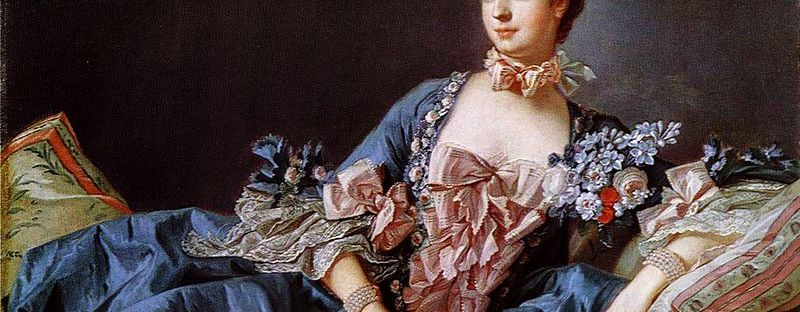
Madame de Pompadour
by François Boucher, around 1758.

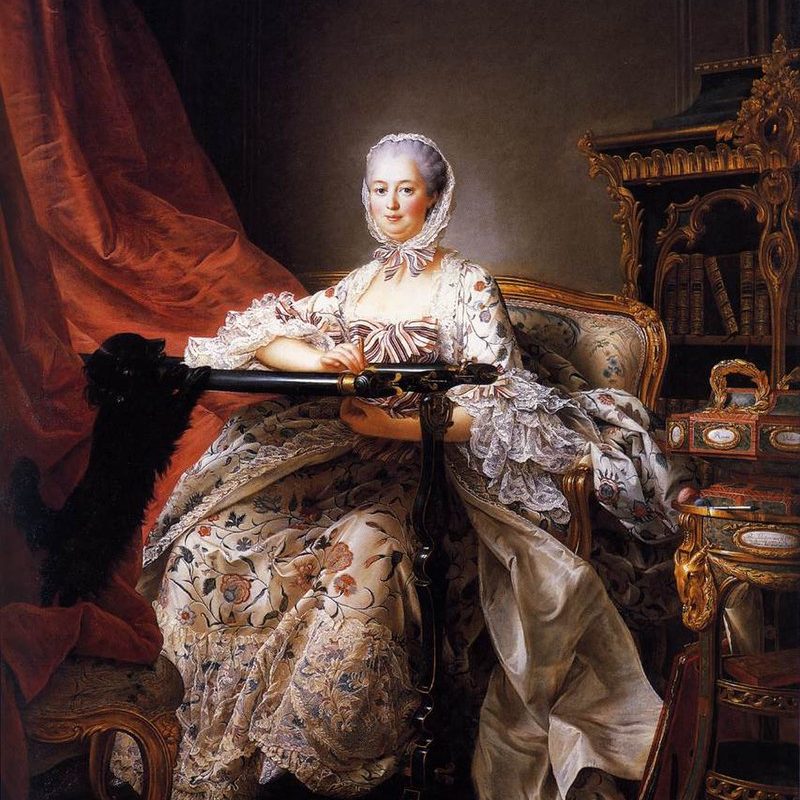
She dabbled in a bit of everything at Versailles, acting as Lady in Waiting to the Queen (AWKWARD) to unofficial Prime Minister. She was responsible for the latest trends in art and fashion during the Age of Enlightenment and was even a BFF of Voltaire. She retired from her Mistress duties after only 5 years at the age of 29, but remained a close friend and confidante to the King, even helping him select his new night time companions. The Petit Trianon, which is usually associated with Marie Antoinette, was actually initially built for her. Unfortunately, she contracted TB at the age of 42 and despite the Royal Custom that NO ONE SHALL BE ALLOWED TO KNOWINGLY DIE AT THE COURT OF VERSAILLES EXCEPT THE KING OR HIS FAMILY, Jeanne kicked the bucket in her Versailles Chateau apartments in 1764.

Portrait started before her death, finished after. Madame de Pompadour à son métier à broder by  François-Hubert Drouais (1763-4)

What happened next is where myself, history, and Paris streets come in. Jeanne was laid to rest next to her daughter who died at age 9, in the Couvent des Capucines, today the area just north of the Place du Vendome. However when the Couvent was destroyed in 1806 to make room for today’s Rue de la Paix, her tomb in the cave was apparently never moved to the Catacombs with the rest. Legend has it she lies there today, just under the pavement of number 3.

Maps, Opera and Les Grands Boulevards

Bazar de la Charité Disaster: Part Four

23 rue Jean Goujon Paris 75008

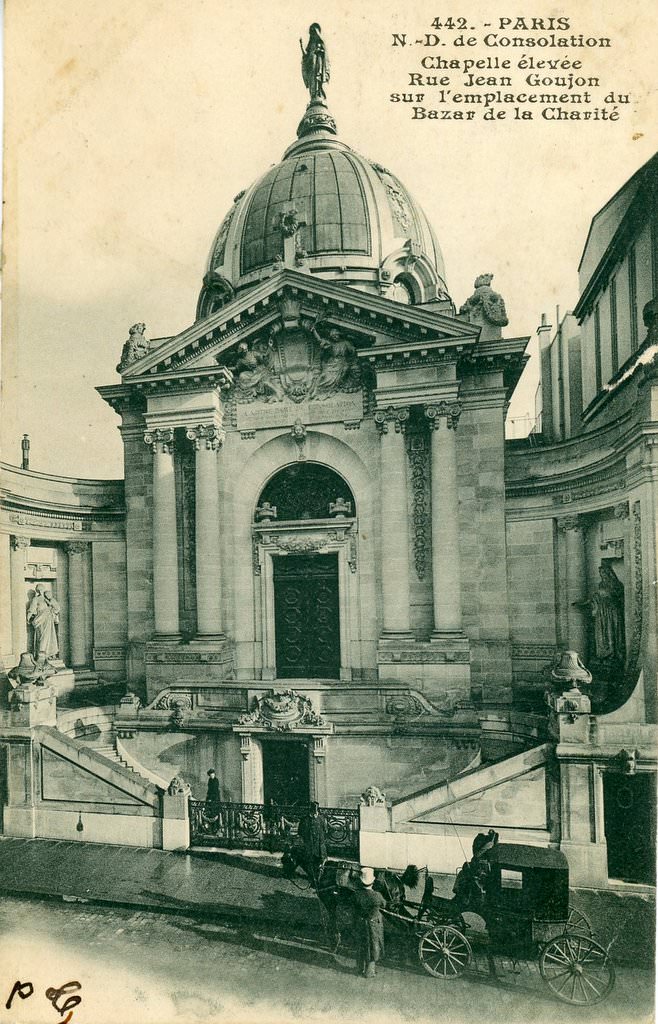
Exactly one year after the fire, the first stone of the memorial chapel, Notre Dame de Consolation- was laid where the bazaar had been located. The Neo-Baroque edifice was designed by Albert Guilbert and took about three years to complete. Today it still stands, between the Seine River and Champs Elysées, and a stone’s throw from the fashionable Avenue Montaigne.

Above the entrance sit two statues symbolizing charity and faith with the date of the fire and inscription “Don’t be as sad as those with no hope”. Inside the chapel is a gorgeous nef which sits under a majestically painted cupola ceiling that depicts the holy spirit as well as the likenesses of several well-known victims of the fire.

The interior and view of the cupola

Surrounding the nef is a Way of the Cross, which lists the names of all who died at this site and several funeral urns. Four years after the devastating fire, ten family members of victims created the Association of the Memorial of the Bazar de la Charité, which still exists today. There is a memorial service here each year on May 4th, and a monthly conference visit, which I was able to join in December 2019. I was delighted to see the President of the Association, Madame Nelly Du Cray- was leading the tour, which was pretty special because she herself is the Great Great Granddaughter of a victim.

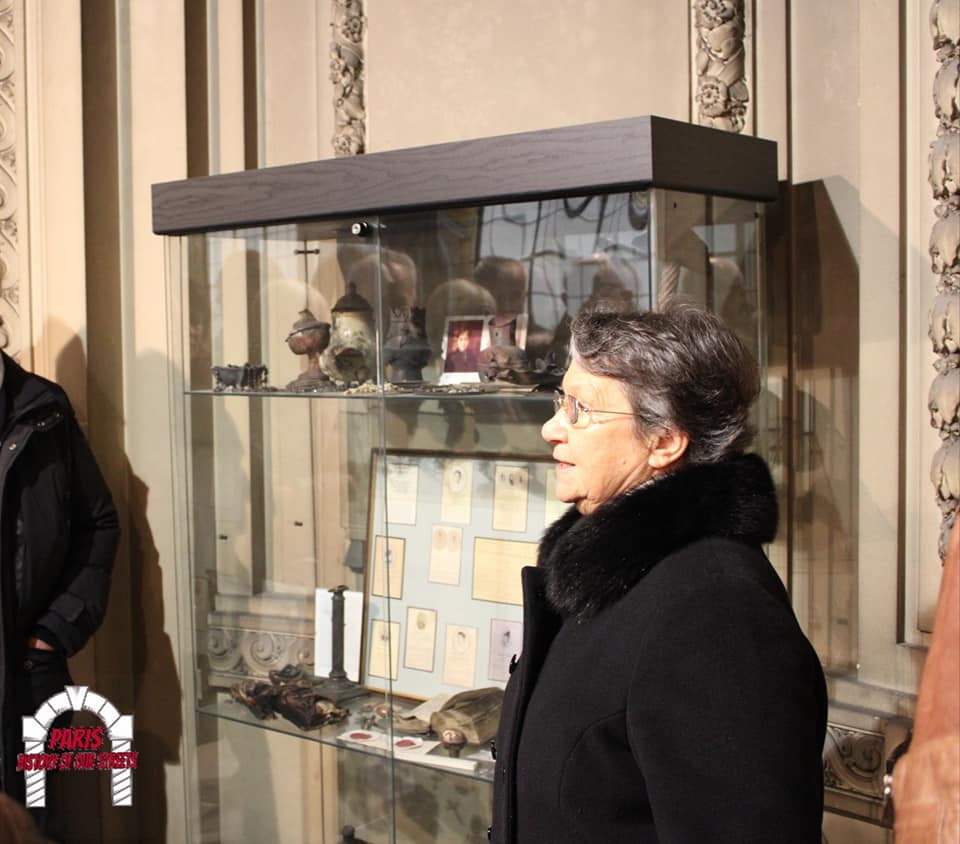
Madame Du Cray, descendant of a fire victim and president of the Association du Memorial de Bazar de la Charité. Here she is in front of the glass case that holds a few objects found after the fire

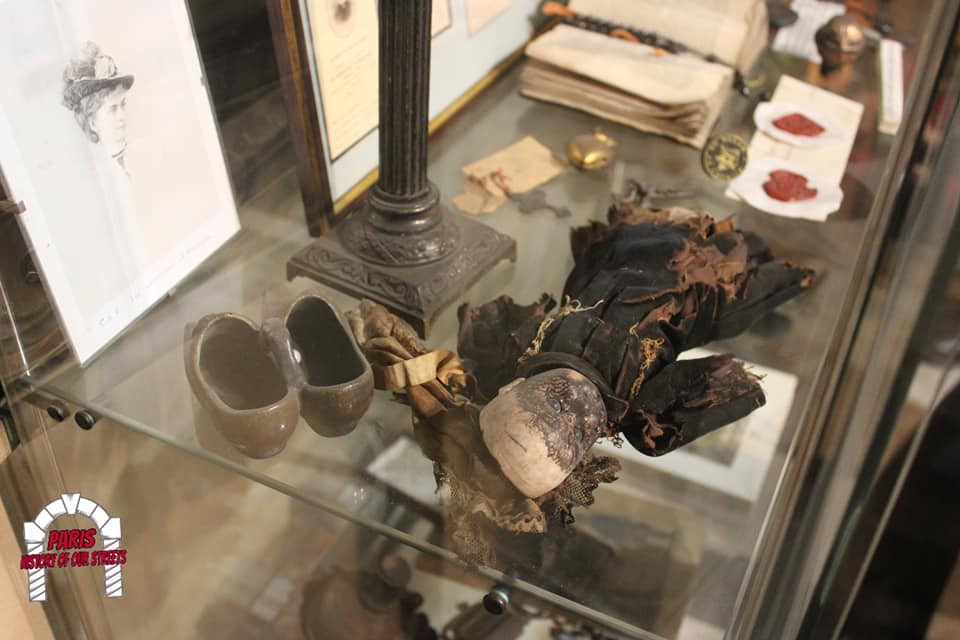
There were only about fifteen other people present, which made the 3hr long tour wonderfully intimate. Although many artifacts were sold off right after the fire as macabre souvenirs (an unclaimed bracelet that still held bits of charred human flesh was one item of popular interest), a few are preserved in a glass case. The objects were mostly made of metal, but they had been deformed due to the high intensity of the heat. Among them were a few heartbreaking items, like delicate dolls (which may have been for sale at the charité or more disturbingly, a much loved toy for a little girl who didn’t survive) and a watch, which curiously was stopped at 4:30. Apparently this was used to determine the start of the fire from between 4:20 and 4:25.

The remains of objects found after the fire

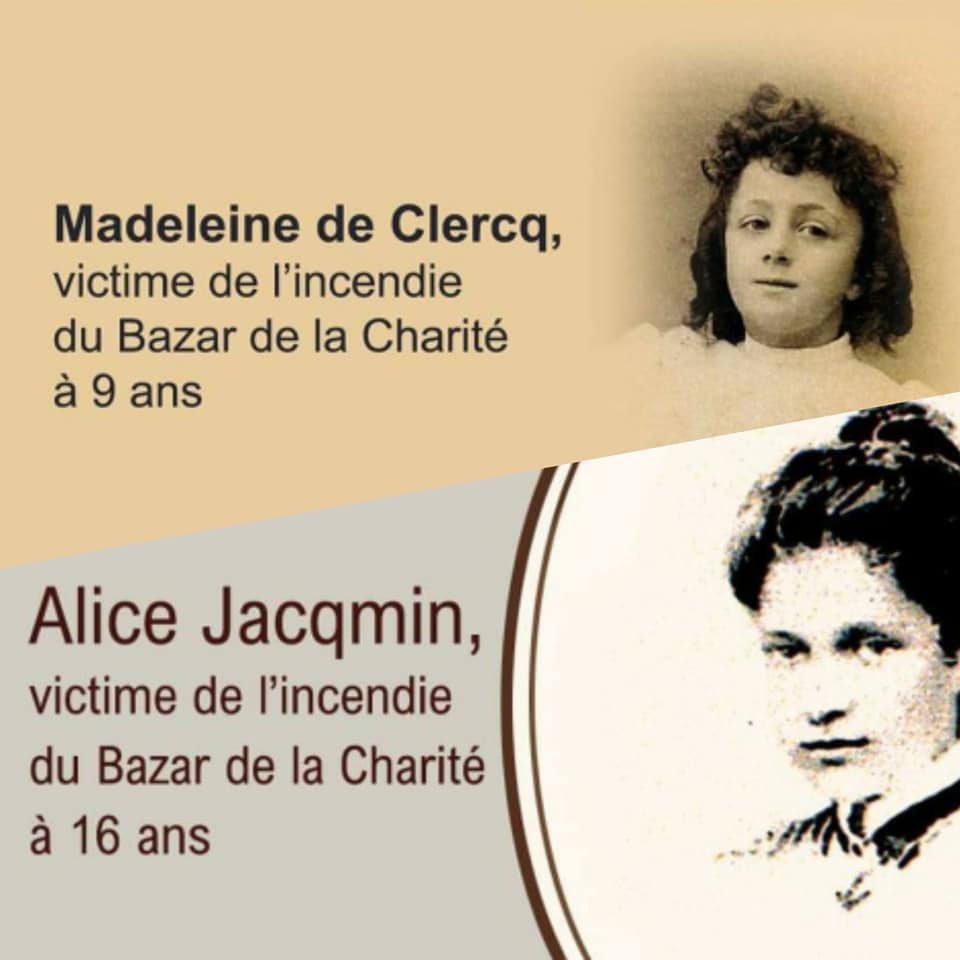
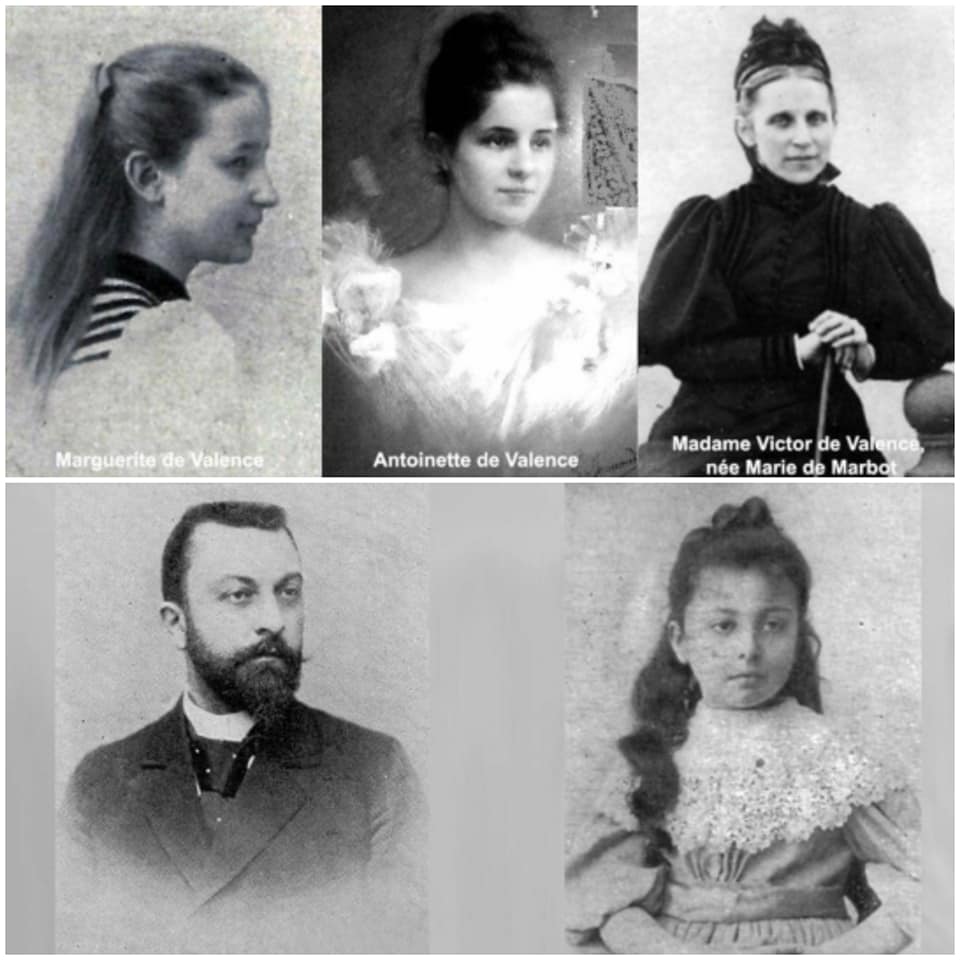
Madame Du Cray knows the story of each of the 125 victims and her precision on some of their details was extraordinary. You can read about a few by looking at the photos below, taken from the facebook page of the Association.

Top: Madeleine de Clercq, 9 years old. Came to the bazaar with a great aunt, her cousin, and her little brother. She became serperated in the chaos and died from being trampled on.
Below: Alice Jacmin, 16 years old. Daughter of the Inspecter of the East Railroad, she came with her mother and grandmother to help venders. She became seperated from them when her mother fell. Her mother and grandmother managed to find the exit and escaped. Her mother was on fire, but doused with water upon leaving the building, and was taken home with severe injuries. Alice’s body was identified the next day.

Above: Marie de Marbot and her daughters Antoinette (18) and Marguerite (16). When the fire started, all three ran towards a window but their mother fell, and told them to save themselves. The girls escaped but Marguerite died from a severe head wound the next day, and Antoinette died 10 days later.
Below: Dr; Henri Feulard and his daughter Germaine (10). Henri came to the bazar with his wife who was a vender, and daughter. He was able to escape with his wife, but in the frenzy they realized Germaine was not with them. Henri went back in, and on the way saved two nuns who begged for help. He did eventually find his daughter, but witnesses saw them both die when a part of the ceiling fell upon them. His body was later identified by his work keys, his daughter by her bracelet. The wife was especially devastated, she had lost already lost two young children unexpectedly before the fire. Now her entire family was gone.

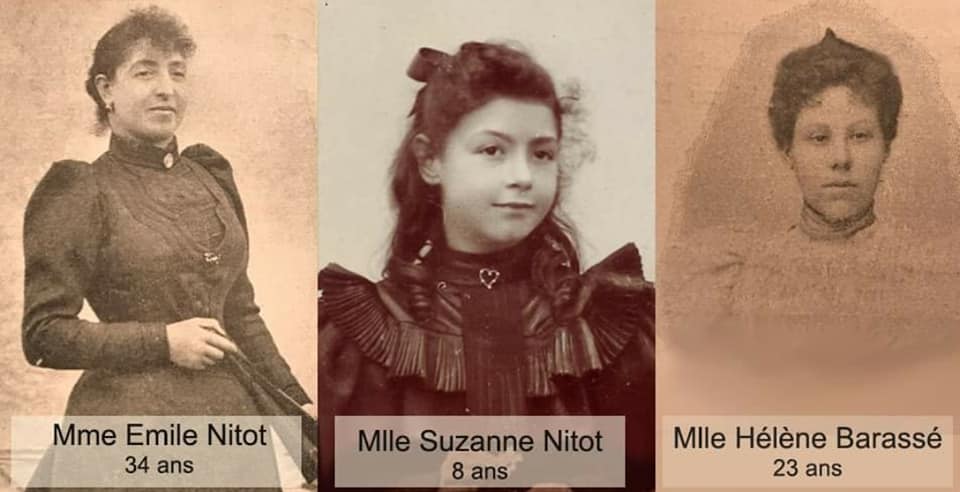
Madame Emile Nitot came to the bazaar as a vender with her daughter Suzanne (8yrs old) and her friend Helen (23yrs old). When the fire started they were close to the exit, and Emile escaped by being pushed out with the crowd, but went back for her daughter. All three perished.

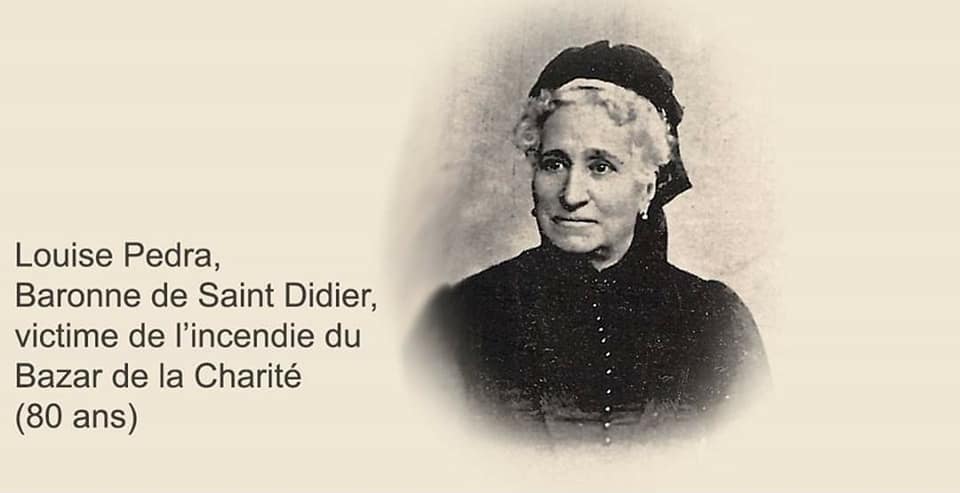
At 80 years old, Louise was the oldest victim. She came to the Bazar with her chambermaid Elodie Van Biervliet (20) to assist with selling. When the fire broke out, Elodie refused to abandon her, and together they made it to the back enclosed terrain. They died waiting to escape through the window of the Hotel du Palais. Louise dedicated her whole life to charity, particularily orphans.

Countess Christian de Malezieu came to the Bazaar with her four young children to help her mother in law selling. After the initial blessing at 15h, she left with her three youngest children, leaving her oldest, Suzanne (7) with her mother in law. When she heard of the fire, she came back for Suzanne and desperately found a way inside, where she died. In a cruel twist of fate, an unknown woman had escaped the fire with Suzanne, by wrapping the little girl in her dress. Suzanne was able to give the woman her address, and she was brought home safely.

One remarkable tale that made an impression on me was that of a young girl, who was found hours after the fire ended on the roof of a building directly next to the fire. Severely traumatized, she couldn’t recall anything of the fire, or how she arrived on the roof next door.

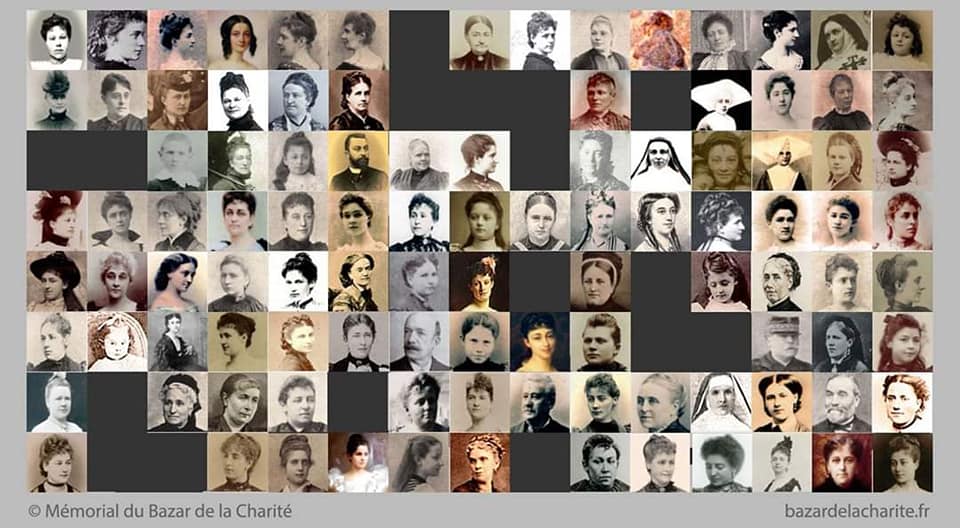
Images of the victims. Notice the blank spaces where images have never been found or were never provided. The Association still receives new information from time to time from descendants that they archive.

I spoke with some of the other visitors during the tour and several of them were descendants as well, a few having just found discovered distant ancestors from genealogy websites.I’ve attached a link below for a really interesting video on the fire with more in-depth explanations and a witness description of the fire from a survivor made in the 1950’s (its only in French but you can watch with subtitles) that I highly recommend. If you are interested in participating in a conference, you can sign up on the association’s website below.

http://bazardelacharite.fr/index.php