Blog, Save Money, Not Memories

Wallace Drinking Fountains

YES YOU CAN DRINK WATER FROM THE FAUCET IN PARIS.

Now that we got that out of the way… its true that Paris can take a toll on your pocket book. But that doesn’t mean you have to pay for the most important element to sustaining human life. DRINKING WATER! For over a decade, the city of Paris has fought against plastic waste by making more than 1, 200 free water distribution locations throughout the city. You can find the interactive map here. http://www.eaudeparis.fr/nc/carte-des-fontaines/

However having access to clean and free drinking water is a relatively recent development. Only about 150 years ago, water was not easy to come by until one British man made water more accessible than ever to Parisians. Have you ever noticed these emerald gems steadily delivering a stream of cold water during a flanny little stroll in Paris?
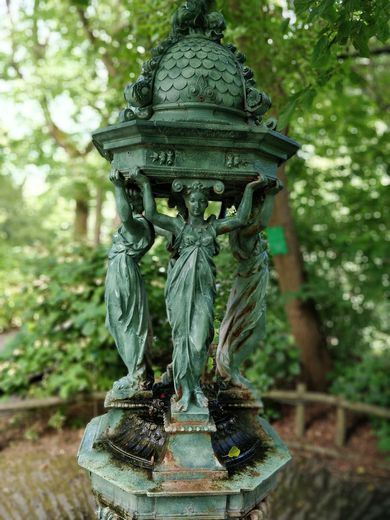
Known as the Wallace Fountains, these guys (or four buff ladies if I’m being anatomically correct) are the creation of British philanthropist Sir Richard Wallace during the 1870’s.

Paris during this time was a disaster. The Franco-Prussian war had just ended leaving Parisians to pick up the pieces and rebuild their glorious city. This wasn’t easy to do because after surviving the Prussian’s siege of Paris, much of the population was sick and starving. (So hungry that Parisians slaughtered anything they could get their hands on to eat- including domestic and zoo animals, even rats!)

Franco-Prussian War 1870-1871: Dog and cat meat butcher in Paris, 1871

To make matters worse, many aqueducts that brought water to the city were damaged during the siege, making clean water expensive and hard to obtain.

But thanks to a certain British fellow with a large heart (and even larger wallet to finance their construction) 50 of these fountains were placed around Paris to provide fresh water for anyone who wanted it.

Sir Wallace

There were a few rules when it come to building a Wallace fountain.

  • They were to be made of cast iron and they had to be painted dark green to blend in with nearby parks and tree lined boulevards. Today you can find them in a variety of colors.
  • They had to be tall enough to seen from a distance, yet not impede on the views around it.
  • They needed to be placed in a practical manner (often at the point where intersections meet) that was accessible for everyone.

If you look closely at a fountain, you see four caryatids (an architectural column which takes the form of a standing female figure) each representing kindness, simplicity, charity and sobriety. (Sobriety because there were many alcoholics during this era when alcohol was cheaper and easier to find than clean drinking water. Oddly enough, in most cafes a glass of wine is cheaper than a bottle of water!)

The distance between each caryatid was calculated so horses couldn’t stick their heads inside but you could still get your hand in with a cup to fill up whatever you needed to. Two metal cups were hung at each fountain until 1952 when they were removed for hygienic reasons.

Baby heads don’t fit between the caryatids either, much to the dismay of my daughter

Today there are about 120 Wallace fountains throughout Paris and you can see that they are appreciated by everyone from the ultra chic with their Eco friendly BPA free glass bottles, to the homeless refilling a former bottle of wine, and to the sweaty city joggers after a long run.

So next time you see one of these historic works of art- pay homage to Sir Richard Wallace and take a drink!
Maps, The Marais

“Hey There’s a Cannonball in My Wall!”

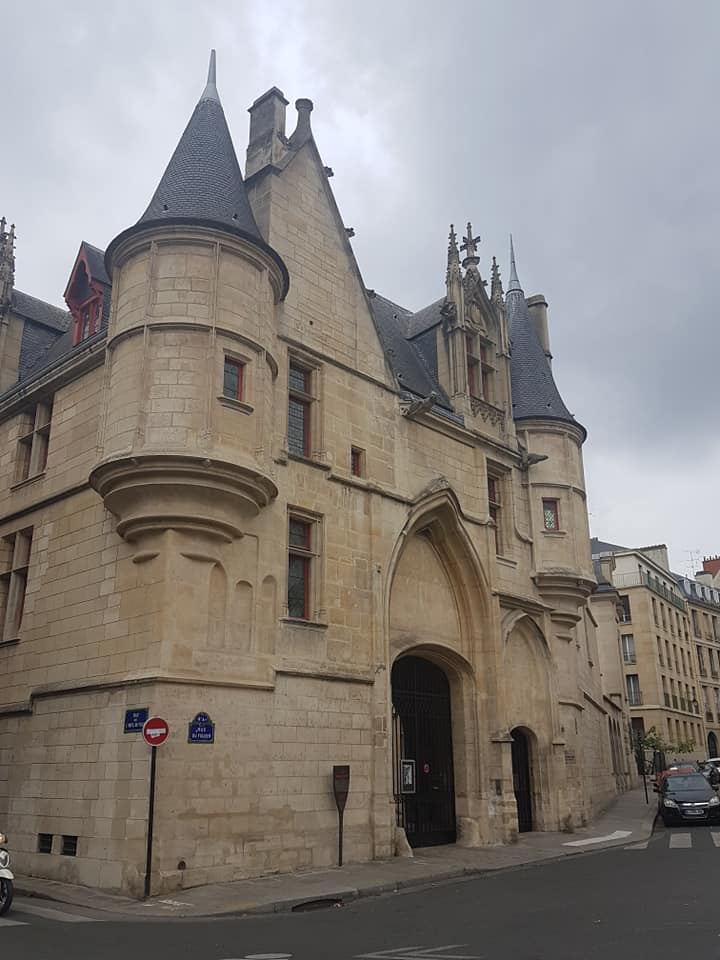
Hotel de Sens – 1 rue de Figuier Paris 75004

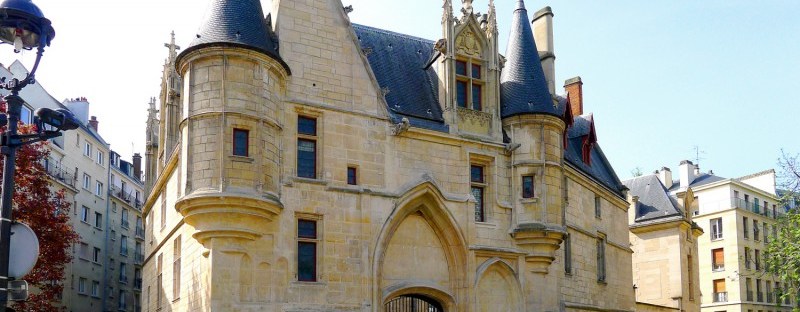
The Marais district of Paris is a goldmine of old buildings and history. The Hotel de Sens, which is situated next to the Seine- has the honor of being one of the oldest original gangstas of flamboyant Gothic Paris architecture still standing.

Before it came to be known as the LGBF/Jewish quarter of Paris, this area was home to French royalty and the medieval palace of Saint Pol, which was eventually demolished when the Louvre became the official digs of Kings.

Map of the Marais in 1450. You can spot the original Hotel de Sens a bit to the left of the green circle indicating the Hotel Saint Pol

The Hotel de Sens we know today was built from 1475 to 1519 by Tristian de Salazar as the residence for the Archbishop of Sens. Now, what the hell is an archbishop you ask? There’s a lot of boring religious vocabulary to sort through to understand this, but to dumb it down for my special readers, here’s a little summary I’d like to call RELIGIOUS CATHOLIC HIERARCHY VOCAB MADE EASY – to start with, we got the head honcho- THE POPE, elected by God and the College of Cardinals. Now the title of POPE is just a fancy way of saying the Bishop of Rome, who controls all the other bishops/archbishops thus leading the Catholic Church. (You still with me?) So since the 2nd century, in the Roman Catholic church; each geographical area is divided into a diocese/archdiocese, which is controlled by either an Archbishop or Bishop. An Archbishop has an Archdiocese of importance, where a Bishop simply controls your regular Joe Shmoe diocese. This is just the basics, there’s obviously more finer details but I don’t want to bore you to death.

1841 and 1914
photo from Paris Marais https://www.parismarais.com/fr/arts-et-culture/histoire-des-monuments-du-marais

ANYWAYS, back to 16th century France- Paris wasn’t a big enough hotshot in the Catholic community to be its own Archdiocese, so it was under the jurisdiction of Sens; which is a quaint city about 100km south-west of Paris. The Archbishop of Sens had his main digs in Paris until 1622 when Paris took over the Archdiocese reigns, thus reducing the power of the Archbishop of Sens who eventually handed over ownership of the hotel to the new Archbishop of Paris Jean-Francois de Gondi, who preferred to reign over Paris elsewhere.

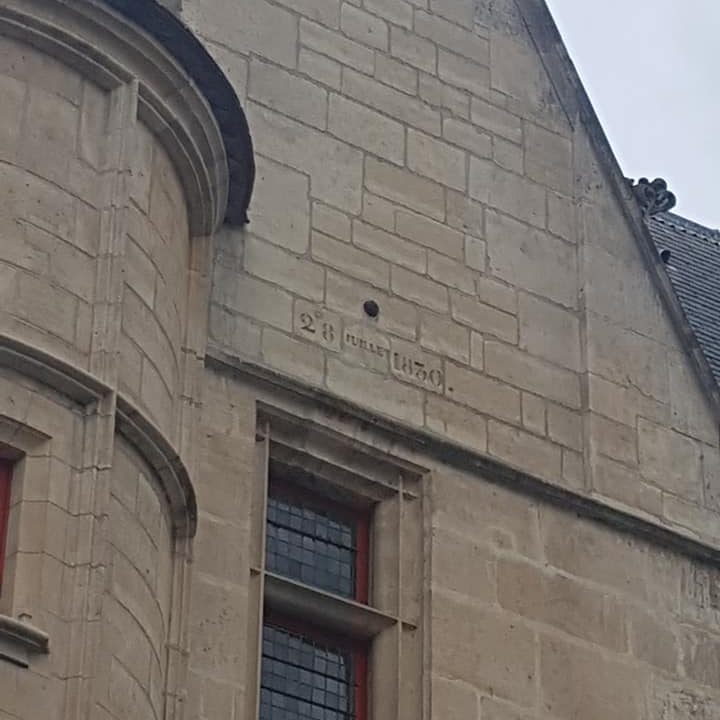
The Hotel was then rented to wealthy nobles before it became national property in 1790 at the start of the French Revolution. One remarkable thing to take note of is the rather unremarkable cannonball embedded into the façade of the hotel.

I admit my cannonball knowledge is subpar at best, but this guy seems a little.. small?

This is from the July Revolution of 1830 AKA the 2nd less carnal but still pretty bloody French Revolution where the people overthrew the government and King Charles X. They besieged the neighborhood area of the Hotel de Ville and shot cannonballs into the old royal part of the city. How one of these iron ballz found itself embedded here, I don’t know- but it was gracefully preserved, maybe to remind Parisians that it ain’t cool to attempt to destroy your own history.

The Hotel de Sens stubbornly remained standing throughout the 19th century and was home to various factories, including one that fabricated jam. It was declared a national historical monument in 1862 and eventually bought by the city of Paris in 1911, who financed restorations in the 1930’s. Today, the Hotel de Sens houses the Forney Library, a research library dedicated to decorative and graphic arts.

Rear view © Pline
latin quarter, Maps

Royal Mistress Un-Finishing School

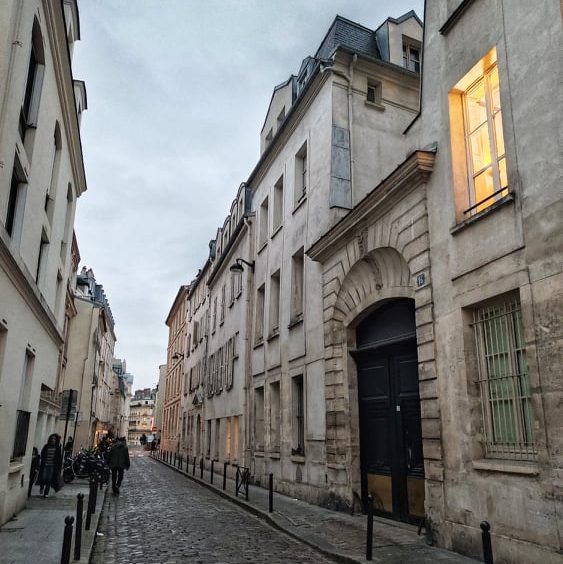
16 rue Tournefort Paris 75005

You know what I freaking love about Paris history? How limitless it is. Recently I discovered I live in the same area where a teen pre-royal mistress spent a few years in boarding school.

I’ve been in the 5th arrondissement 6 out of my 8 years here and I’m still discovering new historically significant locations like this one at 16 Rue Tournefort, a street that I use almost daily. Running laterally to the Rue Mouffetard, this quiet rue is Quaint AF with its cobblestone pavement and 16th/17th century buildings. But what is behind these doors is even better..

A secret garden oasis that dates back to the 17th century.

Rue Tournefort, not a modern building in site!

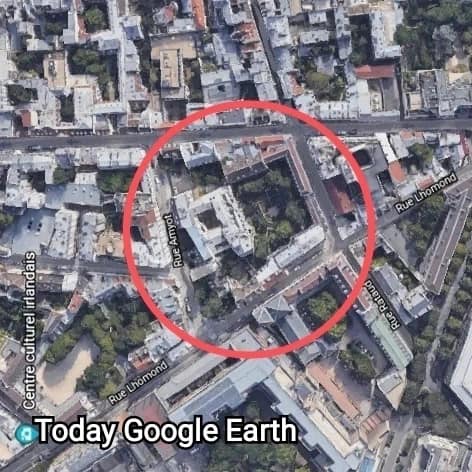
See the maps below to compare how little this area has changed in 300 years. 

La communauté des Filles de Sainte-Aure was founded by a priest in 1637 to “rehabilitate promiscuous young girls by offering them an education and putting them on a righteous path to God”. They would move to this hotel particulier in 1707 where the program to put working girls on the “straight and narrow” would grow until they were replaced with more respectable young ladies. 

This whole area encompassing the current Rue Tournefort/Rue Amyot/Rue Lhomond/Rue Pot de Fer in the 5th arrondissement would eventually welcome a few different convents dedicated to the upbringing of young society ladies. 

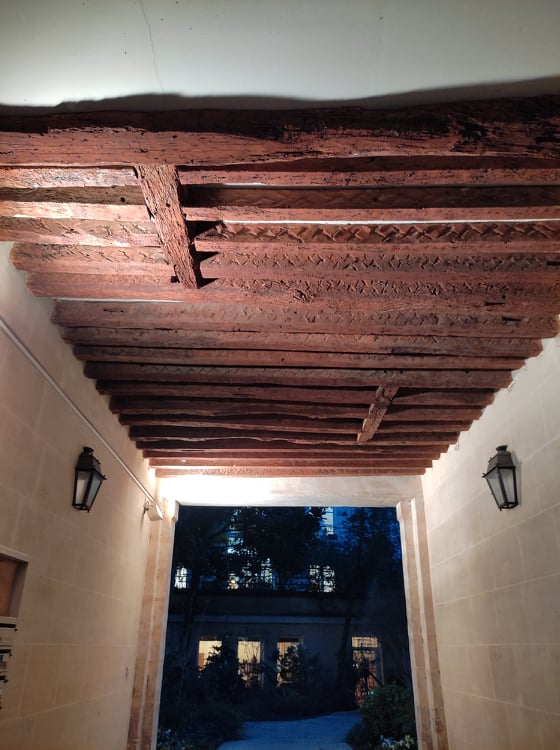
If you can get inside the door, you’ll see a beautiful wood beamed entry

However if its true that Good Pious Girls go to Heaven, you could say that Bad Girls go Everywhere Else. Even into the beds of Kings!
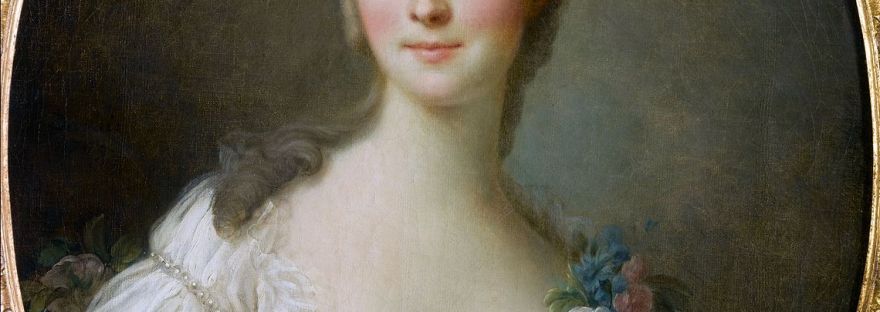
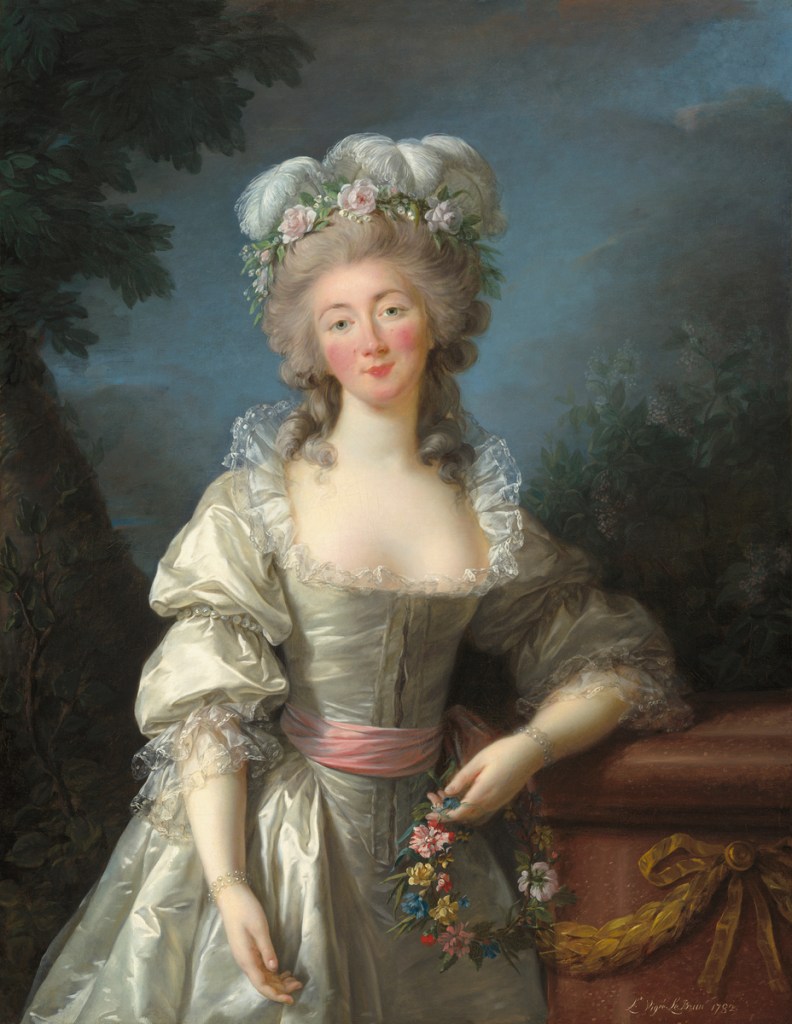
Not every Sainte Aure pupil would graduate with honors; a certain Jeanne Bécu would be expelled in 1758 after spending nine years here. Eventually she would go on to become the mistress of King Louis XV and later be known as Madame du Barry.

Madame du Barry in 1782, painted by Élisabeth Louise Vigée Le Brun
Madame du Barry portrayed by Asia Artengo in the Marie Antoinette film

The school was sacked during the French Revolution but later returned to its religious roots at the start of the 19th century. The old chapel and a basilica that was built in the 1930’s would be destroyed in 1976 (Gallo-roman era wells were discovered there at this time) after the government gave up the rights to take care of it. The remaining buildings were modified into apartments in the 1980’s. 

Sure everyone wants the quintessential Paris balcony for the views, but if you are smart you know that a terrace is peanuts compared to your own semi-private garden oasis like this one here hidden from street view. Most Parisian buildings have some sort of small communal outdoor space, but having a backyard with a 300 year old history is worth more than a tiny balcony in my opinion!

ile de la cité, Maps

La Rue Neuve Notre Dame

When tourists go to see Notre Dame Cathedral it’s likely they miss a few sneaky details.. (for good reason, right? HEY KIDS LOOK UP ITS NOTRE DAME!) hidden right below their feet! If you were to be in front of ND prior to 1870, it would have appeared very different from what you see today.

Photo by Max Avans on Pexels.com

For starters, the parvis AKA the huge open area where everyone gathers to take pictures or wait in a massively winding line back when the cathedral was accessible before the BFF (Big Fucking Fire) DID NOT EXIST. You could never really see ND until you were right up against it because the area in front of ND was a Medieval Real Estate Hot Commodity.

Turgot Map from 1739. Notice La Rue Neuve N.D. in the center, then the Parvis N.D. Do you see the lack of public space?

Back in the day of our medieval forefathers, panoramic city views were a privilege, not a right. Besides, who has time to complain about lack of open public space when everyone was too preoccupied with managing typical day to day concerns; like STDs, figuring out what time it was, and how to seek revenge on your asshole landlord when you lived in a constant state of poverty and poor health. Good times!

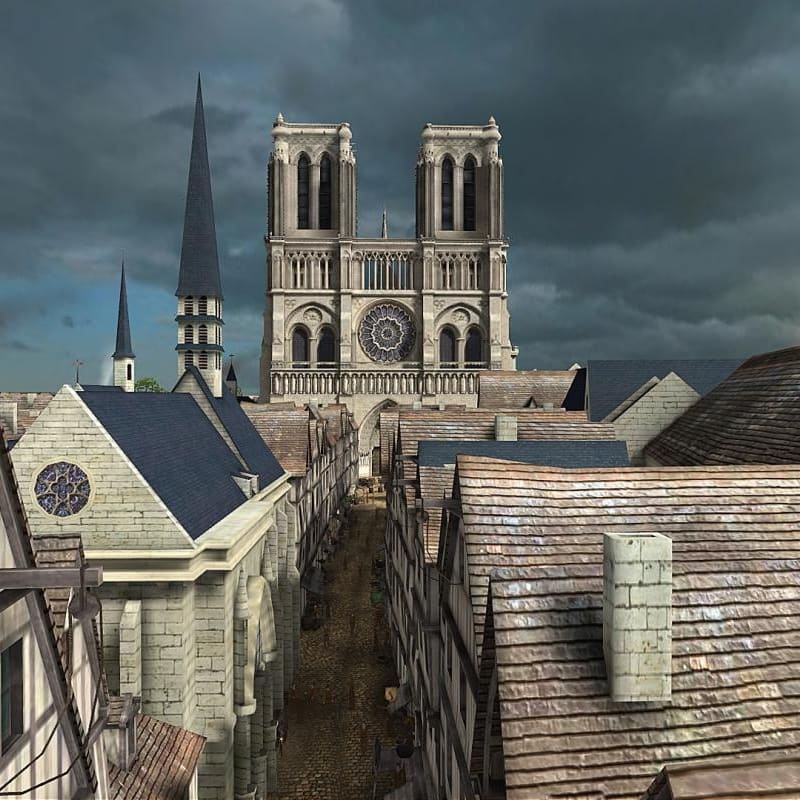
How Notre Dame would have appeared from the La Rue Neuve Notre Dame. Computerized Image from Muséosphere – Mairie de Paris.

Like the Champs Elysees or Boulevard Saint Germain des Prés today, the Rue Neuve Notre Dame was the main drag here in medieval Paris, dominating the landscape around the cathedral from the time it was built in about 1136 until city planner Haussmann leveled this area in the 19th century. Another long-standing building, the Hospital of Found Children (or Lost Children if you are a cup half empty kind of person) was eliminated with it, thus creating the open space we see today.

Another view from a painting by Edward Gaertner 1826

However, you can still see traces of this former street in the cobblestones below, where the location of the Rue is highlighted with a different stone as well as a discreet marker. I absolutely love to point this out to tourists with their necks angled up. Their delight to look beneath their feet at this hidden in plain sight detail tickles me every time.

Compare these two images of the Rue Neuve Notre Dame

AND THERE’S MORE! You can even view the foundations of the 28 buildings that once lined this street below in my favorite Paris museum you probably never knew, the Crypte Archéologique. (click text for link, or see my post about this hidden gem of a museum in the link below)

Did you know about this detail or are you learning of it for the first time? Please comment below!

Blog, Dear Diary...

Fall 2021 Update

Well here we are on the brink of winter amid worsening pandemic concerns, but life ultimately continues to go on. Summer tan lines are mostly faded and its already dark by 4:30 but I can confidently say this fall has been the swiftest one yet. I’ve done so many incredible things that I had been waiting all confinement to experience. Here are a few I’ll share!

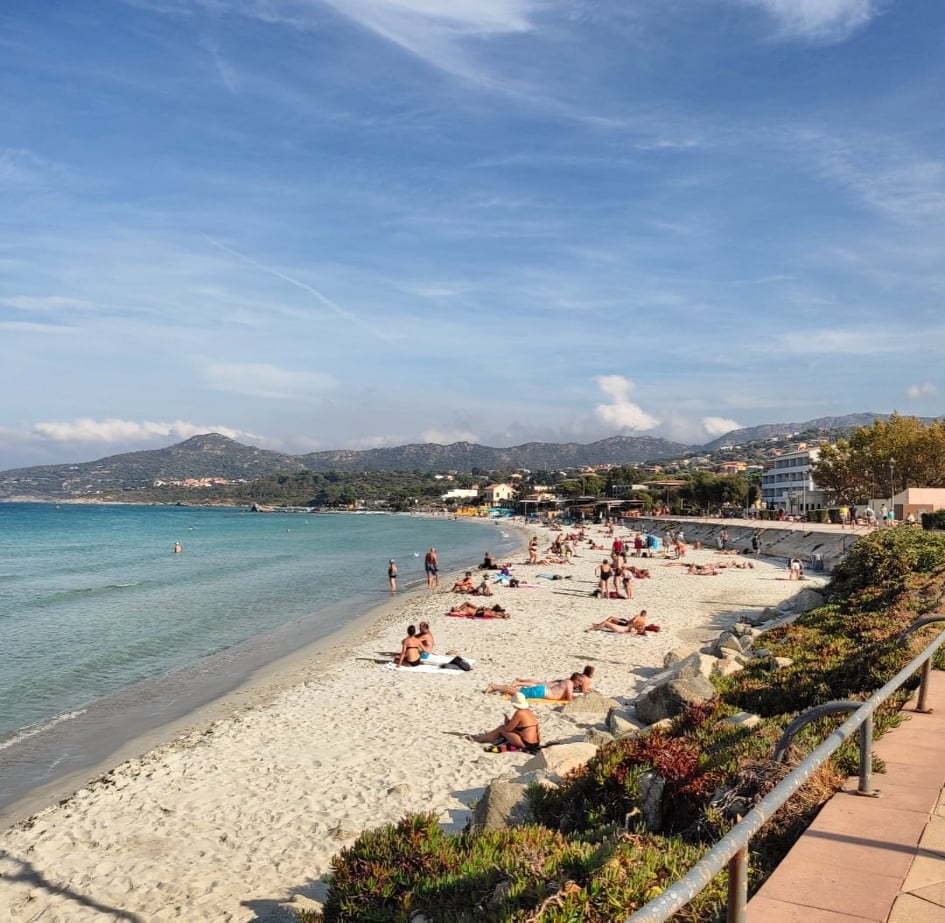
Traveling to Corsica

Prior to this four day vacation with friends, I probably wouldn’t have been able to point out this small island to the south of France on a map and other than knowing this is where Napoleon was born, I wouldn’t have been able to say much about it either. If I had to describe Corsica in one phrase, it would be “Holy Shit, this landscape looks like a fucking painting its so gorgeous” which is more or less what I said several times a day. Why don’t more people vacation to Corsica? We didn’t get to explore the whole island, but if you don’t mind driving on winding roads through indescribably colossal mountains where a goat could suddenly appear around a reckless barrier free curve, this place is for you.

Medieval themed parties at Les Caves Saint Sabin

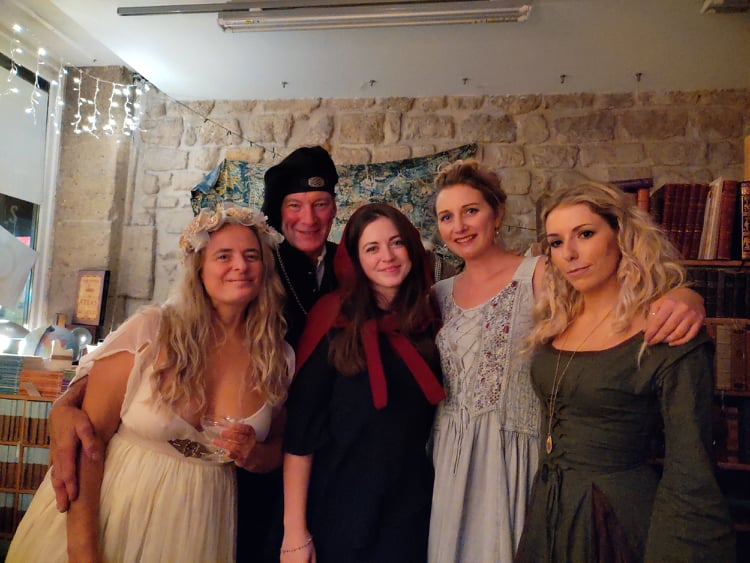
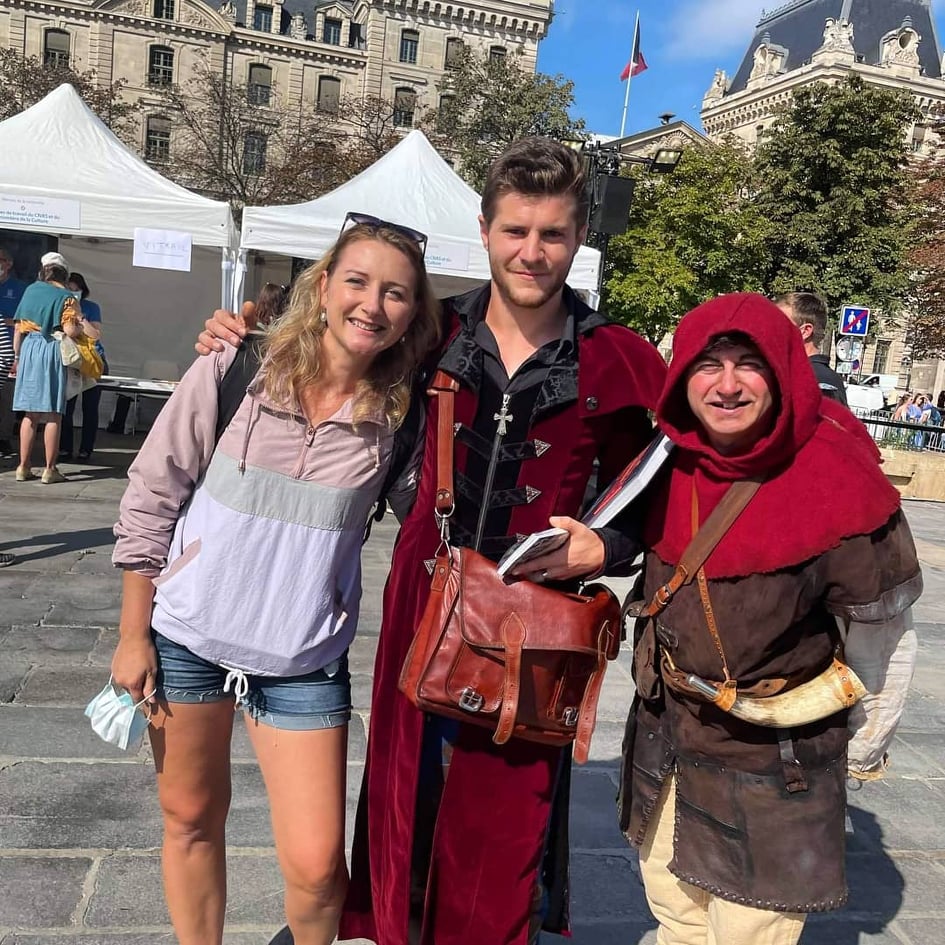
One of the greatest things to happen to me despite co-vid was the new friends I made in spite of it. They have become such dear friends I can’t believe I existed here in Paris for six years without them. One of our activities to replace other pre-covid pastimes was learning dances ranging from medieval to 19th century. I discovered I have a soft spot for the more fun and carefree dances like the Branle Cassandre and La Bourrée d’Avignon. (Click on text for links to videos) Which is great because in Paris there is an regular event with like minded individuals who get together on a monthly basis to party like its 1492 in a medieval cave bar. I waited all confinement to experience my first Taverne Médiévale (click for link) and at the end of September all my dreams came true. Dressing up as a historically inaccurate peasant to drink mead and dance for hours might have been one of the most memorable nights of my life.

Les Caves Saint Sabin (click text for link)
50 rue Saint Sabin Paris 75011
The only negative is that it gets quite humid in the caves!
My crew

La Coupole Parties

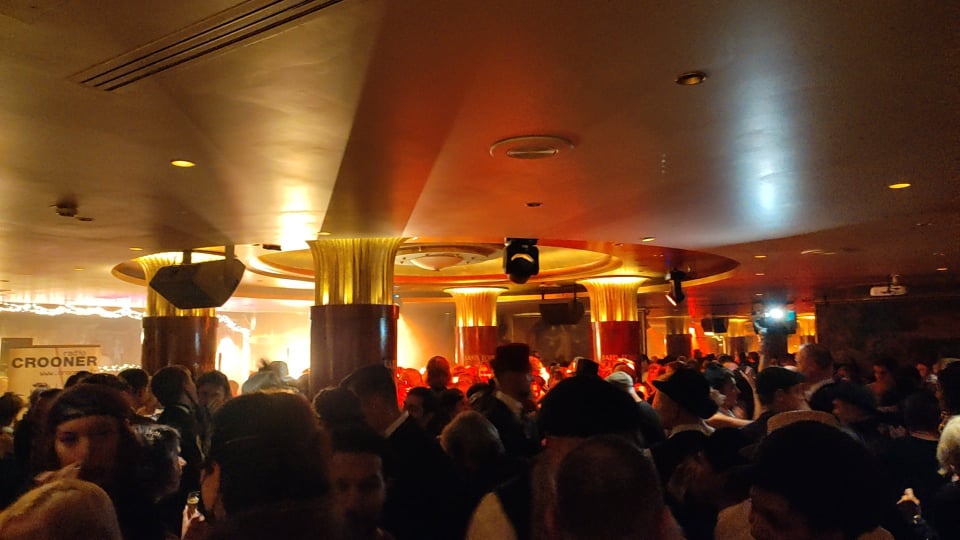
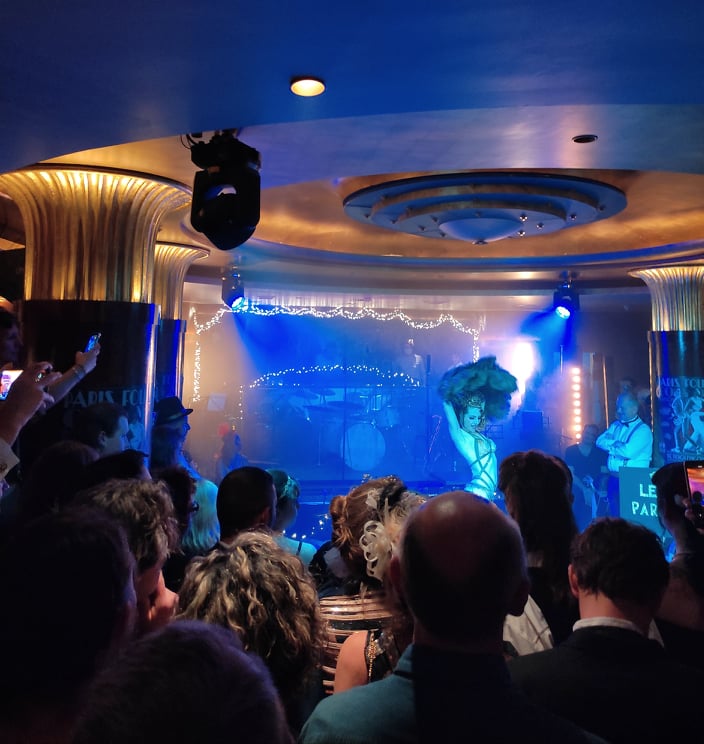
Have you ever wanted to experience Paris during the roaring 20’s? It turns out you don’t need a time machine or to watch “Midnight in Paris” for the 8th time to live it! Below the renowned Coupole restaurant is a nightclub that hosts regular themed parties thanks to an organizer known as La Baronne de Paname . (click text for link to her facebook page) Like The Great Gatsby on steroids, these champagne fueled parties offer live music (usually jazz) with frequent cabaret and burlesque mini performances. Each one is themed to honor a particular person from Les Années Folles and costumes range from basic Halloween Flapper to extravagant black tie glamour.

La Coupole (click text for link)
102 Boulevard du Montmarnasse Paris 75014 

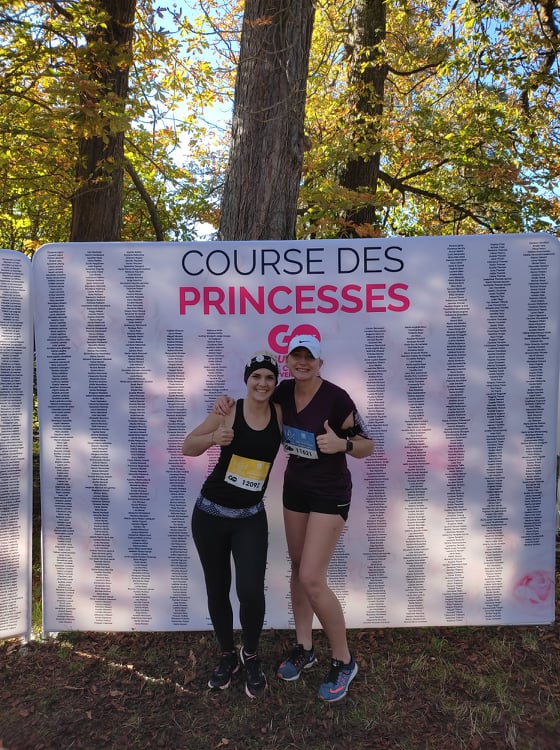
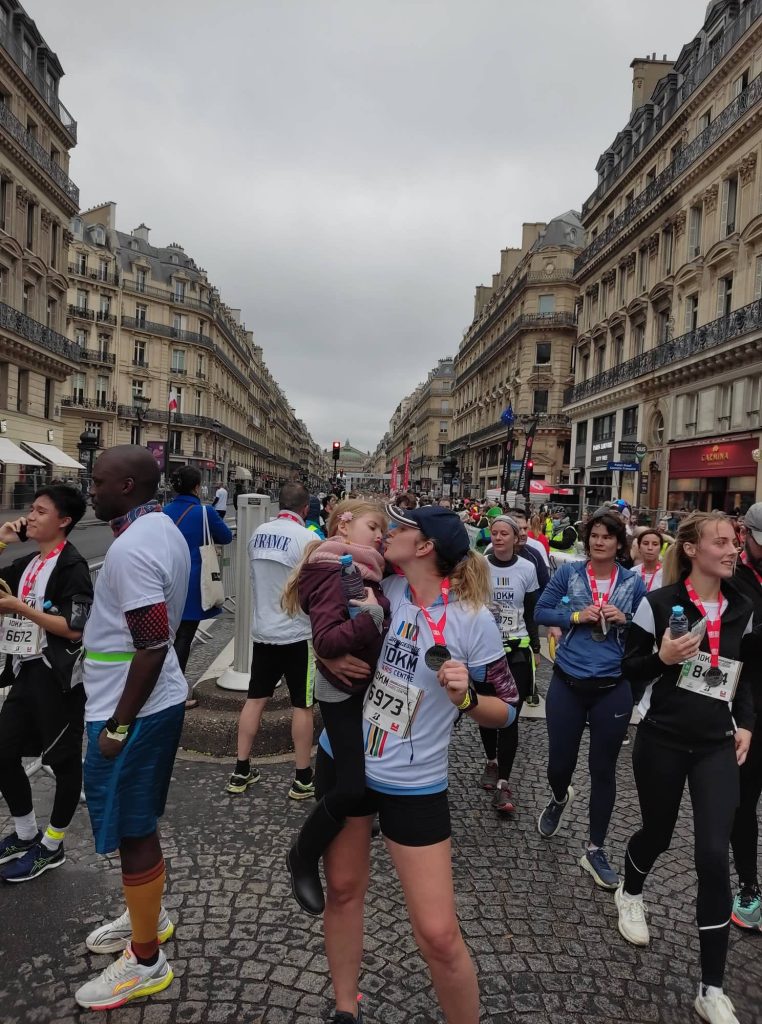
The 8km Course des Princesses at Versailles and the 10km Paris Centre

I like to run and I like history, so why not participate in races that are held in the gardens of Versailles or in the heart of Paris themselves! Can’t say I’ll be winning any medals anytime soon, but at least I feel less guilty about all the beer I drink!

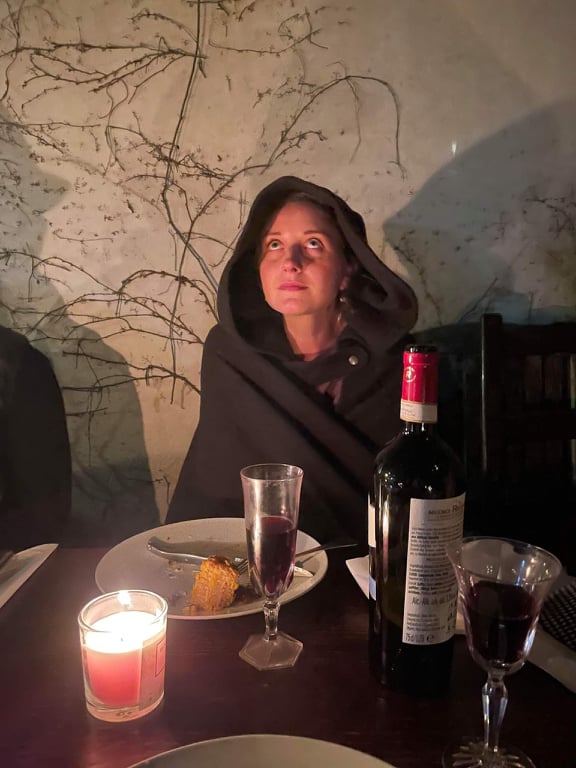
And here are a few random photos including outdoor dinner parties (a cape makes all the difference), hanging out with my daughter and partner, my Halloween costume (IYKYK) and other odds and ends.