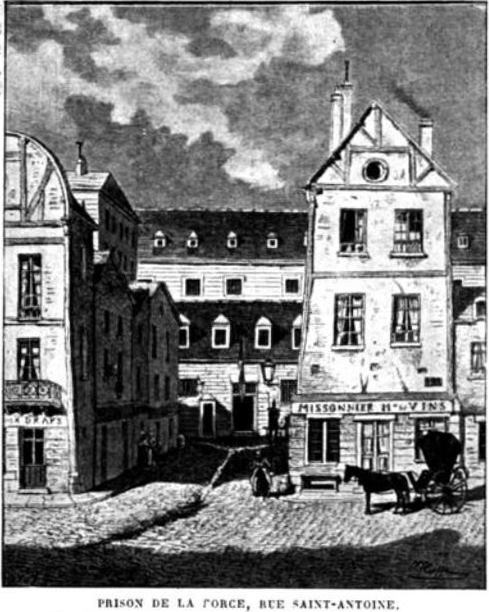
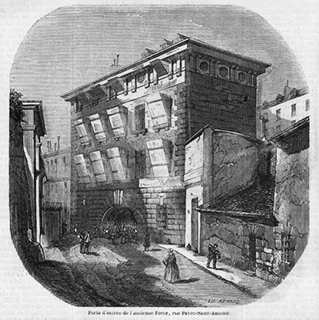
I think we can all safely say that finding one’s self in a medieval prison would not be ideal (unless you were one of the 7 lucky released inhabitants of the Bastille prison on the 14th of July 1789) but the Force prison was truly the exception for its level of disease and decay. The 18th century prison was described by Victor Hugo as being so rotted that “the ceilings had to be covered in wood so that falling stones would not kill prisoners in their beds” (Les Miserables). Charles Dickens depicted the Force as “a gloomy prison, dark and filthy, and with a horrible smell” (A Tale of Two Cities).
Originally a 16th century palace King Louis IX’s brother, the building would be converted to become a model prison where criminals went to be rehabilitated, (by the order of Louis XVI himself in 1780). The prison was separated in two parts; The Petite Force for women, and the Grand Force for men.
However, when the Revolution came along in 1789, the prison quickly became overpopulated and conditions went downhill faster than a fart in the wind. In early September 1792; 408 prisoners were examined for crimes against France. About 169 of them would be executed, including the savagely murdered Princess of Lamballe- BFF of Marie Antoinette, which you can read about in the attached post below if you have the stomach for it.
The Force prison was destroyed in 1845, and only a single wall of the Petite Force remains, just next to the History of Paris library (Hotel Lamoignon).
1910 Atget
The prison itself occupied the space that Is today between Rue du Roi Sicile, Rue Pavée, and Rue Malheur (see the blue line in the photo, this street did not exist at the time of the prison).
This area of Paris is one of my favorites because there is loads of history here that is often overlooked by the tourists who don’t venture past the 5th arrondissement. The neighborhood is known as Les Gobelins and is named after the royal tapestry factory that has existed here since the early 17th century when ornate rugs decorated walls as well as floors. I’ll be honest, I’ve done the museum a few times and I found it to be boring and not very big, but they do interesting expositions from time to time. What really interests me here is the buildings and area behind the museum facade, which are normally off limits to the public.
The Manufacture des Gobelins
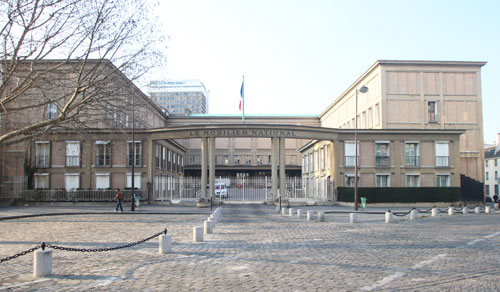
The Rue Berbier du Metz is also directly behind the Manufacture des Gobelins and is named after the guy formerly in charge of the Mobilier Nationale which also borders the street. This place is France’s equivalent of your grandpa’s shed, where you toss furniture you can’t bear to part with in the hopes that someday you’ll reupholster Aunt Fanny’s velvet sofa but let’s be honest probably not.
Mobilier National – warehouse for important home furnishings
Prior to 1935, this street was the ruelle des Gobelins (not to be confused with the nearby rue or avenue des Gobelins) and it dates back to the 16th century. It’s wild to compare it on various maps and see how it hasn’t changed shape through the centuries.
1672 Rochefort Map1820 GirardMapGoogle Earth TodayThe Rue Berbier du Metz is the slighty curved street just to the left of the Manufacture des Gobelins
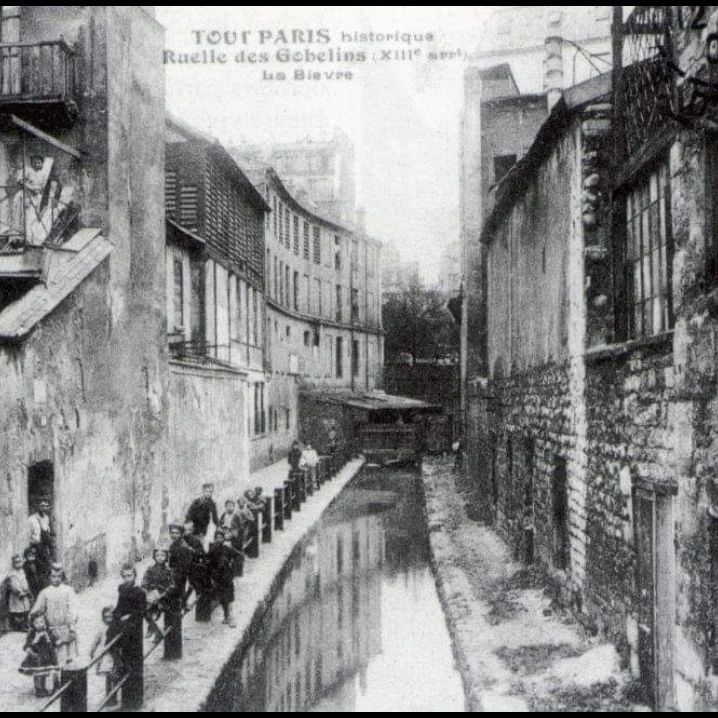
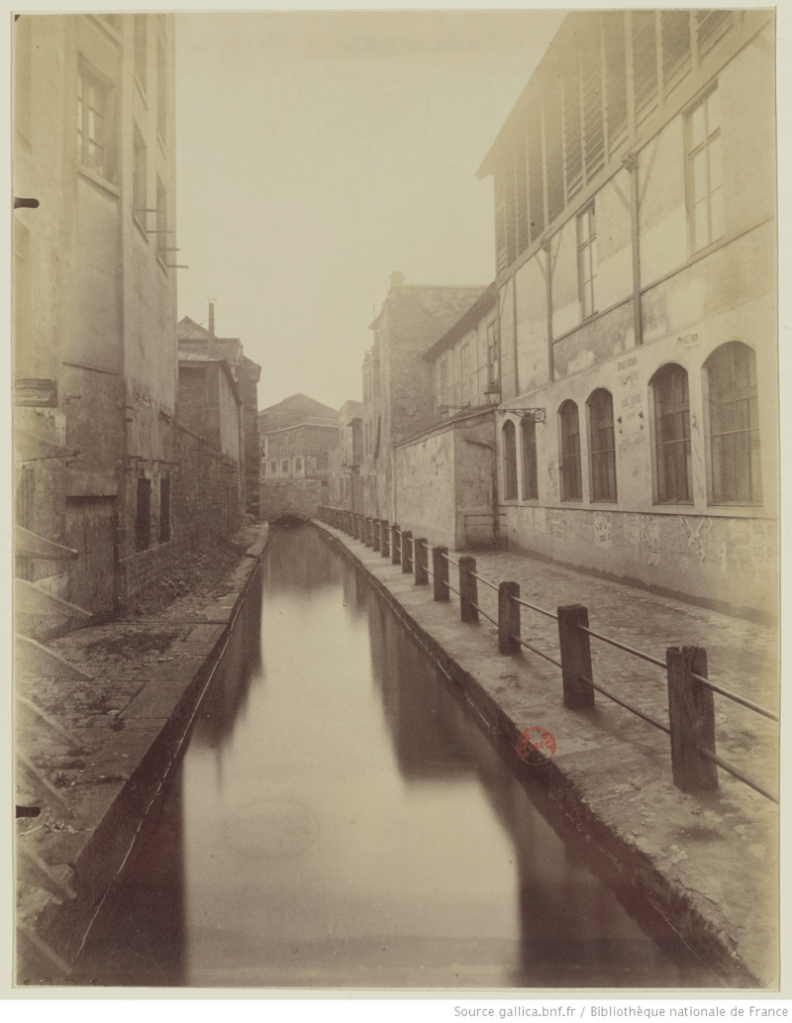
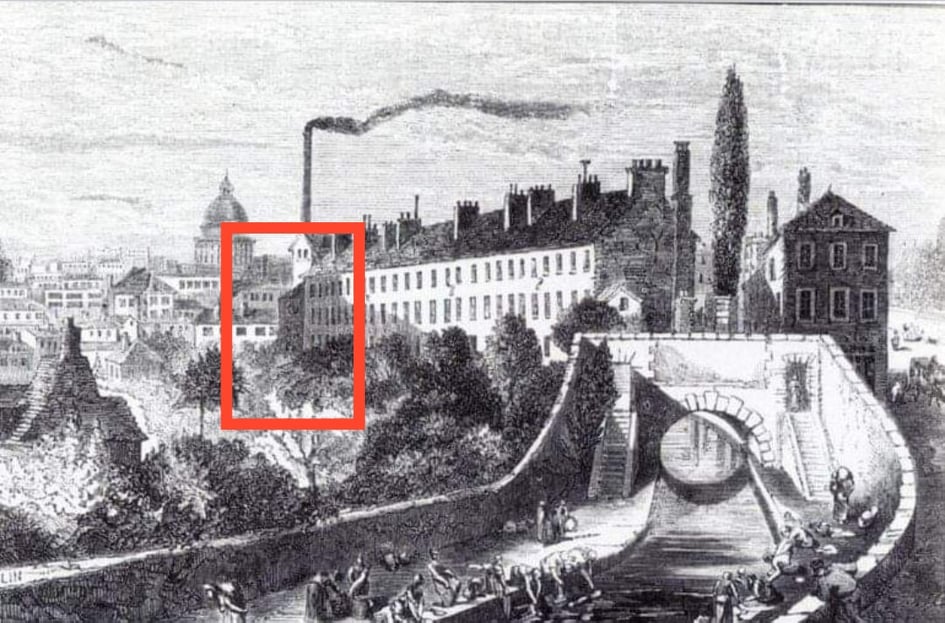
When I first moved to Paris eight years ago, I lived nearby and was intrigued to learn this street was one of the stinkiest in Paris since it once had a river flowing down the middle of it that was more septic tank than quaint canal.
The waters of the Bievre attracted unsavory blue collar trades like fabric dyers and tanners (if you aren’t familiar with how leather is made, look it up) who flourished in this area.
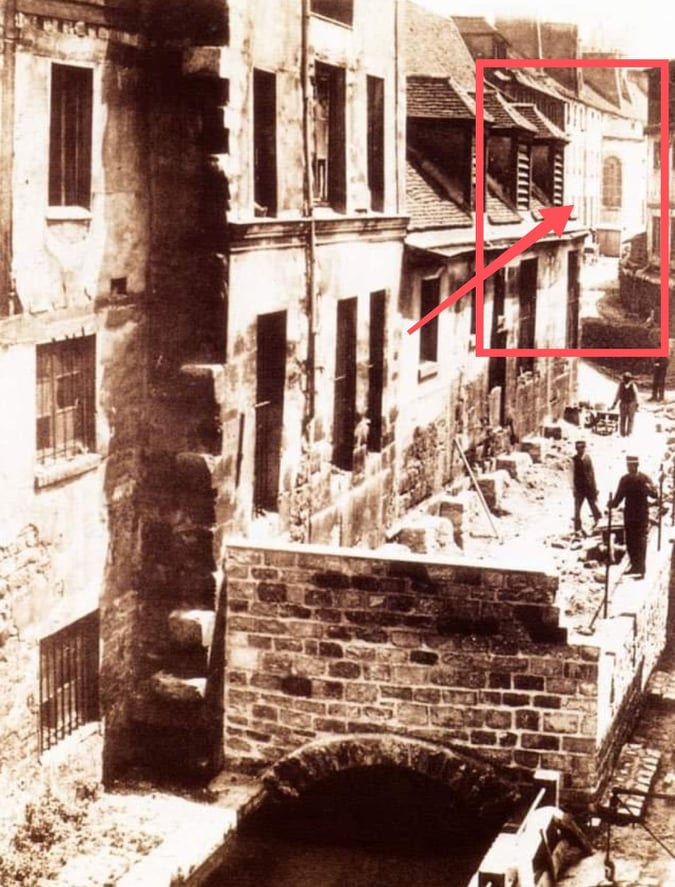
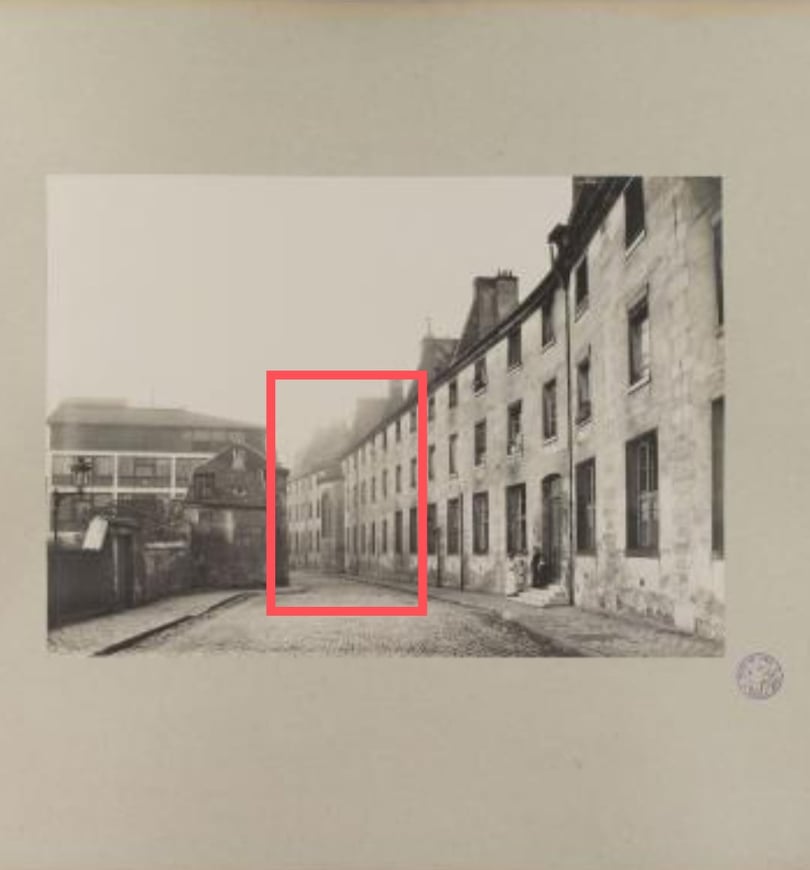
Obviously this river STANK and was a cesspool for all kinds of nasty shiz so they basically kicked some dirt over it in 1912 and hid it away beneath the cobblestone lining the street today. I always wondered how a river could just be buried and I discovered a few old photos that show the process.
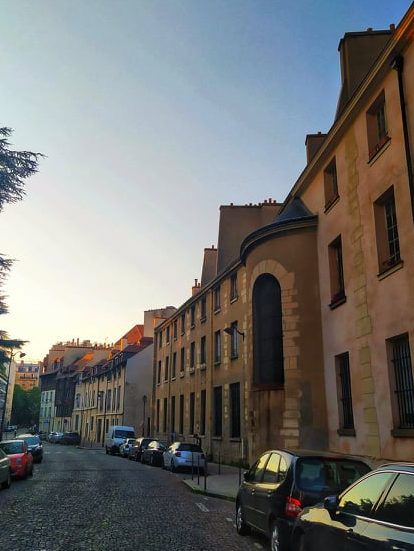
I highlighted the Saint Louis Chapel (built in 1723 for the Gobelins Factory, a classified historic monument) for reference.
Today the Bievre is mostly out of sight, out of mind, SURE, but there is a local association that wants to restore the mighty Bievre to its old glory, minus the odors and mutant pizza eating turtles that undoubtedly currently inhabit it.
A Mostly Accurate Guide of Overlooked and Irrelevant Details for First Time Visitors
From a small town in Midwest ‘Merica to Franceland, when I first arrived in Paris 9 years ago I was prepared for the notorious cultural differences I would inevitably encounter. I knew to tip only small change, eat with a fork and knife SIMULTANEOUSLY, not go out in public in anything that could be considered pajamas, and greet people with two intimate kisses on each cheek, etc. But what surprised me the most were the small details that no one really bothers to tell you about because they aren’t significantly important- despite how peculiar they seem to someone with humble origins who never had a passport until age 18.
What surprised you the most about your trip to Paris? Please share below in the comments!
YES, EAT THE ENTIRE PIZZA
You might not be aware of this, but cuisine in France is no longer known exclusively for classics such as snails and macarons. I’ve eaten some of the best Italian food in my life in here, like the delicious pizzas from the popular chain Big Momma that rolled in like a big sexy meatball a few years ago. Pizza in Europe is like the adult sized equivalent to those cute personal pan pizzas you got by scamming Pizza Hut every month when you claimed to have read a book with your parents at night. ITS ALL YOURS! Yes its huge and you might not finish it, but as long as you’ve given up your fat American constant snacking habits you should be able to demolish an entire pizza while maintaining your dignity that you would have lost otherwise by trying to share a pizza. Warning:Don’t be surprised if the pizza arrives uncut. Use your damn fork and knife you unsophisticated sloth.
The Pizza Slingin’ Big Momma Team is comprised of 100% authentic Italian Stallions, make sure you check out their tossing skills !
MONTH AND DATE FORMAT
Even after eight years this one still throws me off. In France the day and the month are swapped, so February 01, 2022 is written as 01/02/2022. Also, days and months are not capitalized.
DOCTOR VISIT STRIP TEASE
I had a physical exam with a gynecologist a few months after I arrived to Paris in 2013 and was horrified to discover that topless sunbathing and Moulin Rouge Cabaret dancers are not the French limit to public nudity; they get undressed in front of their doctor without shame too. Don’t bother looking around for a curtained corner or waiting for the doctor to step out, in socialized publicly funded health care, modesty is a luxury- not a right. No doctor has the patience for you to discreetly disrobe at your convenience, so put on your big boy/girl pants, and then immediately take them off. I’ve learned my lesson and avoid skinny jeans when I visit my doctor least he witness me struggle to remove them with only the aid of an unstable plastic chair back to hold onto. Warning: If you get a pap smear done, don’t be surprised if the doctor hands you back the tube of your cervical juice to send off to the lab yourself. Hey, at least its free!
PAPER DIMENSIONS
Nothing is sacred, not even the size of sheet paper. A standard paper in France is A4 so slightly thinner and taller compared to the wider American Letter size. Of course this means nothing until you find yourself trying to stuff your Wisconsin birth certificate in a French sized plastic sleeve, much like how you stuff yourself in your jeans after living in France and gorging on baguettes at every meal.
THE SHITTER
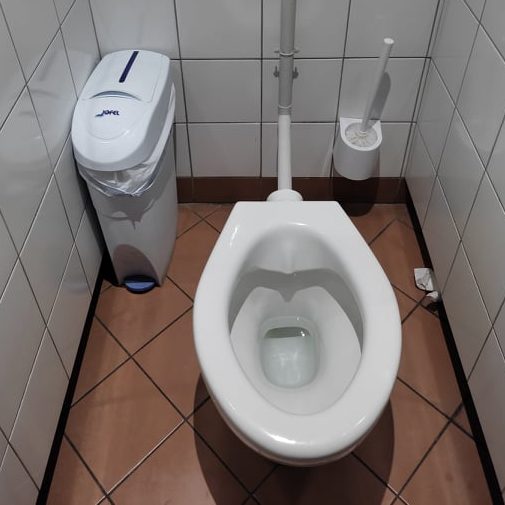
You are having lunch at a Parisian café and need to use the les toilettes (never ask to use the salle de bain, the server will wonder why you want to take a bath) however when you arrive at the bottom of the stairs in the basement, you discover there is a urinal and a door. You think to yourself, “am I in the men’s bathroom?” Nope, you are in the right place. Lack of space and installing a toilet in a cave dating from antiquity means most restrooms are minuscule and unisex. Don’t be surprised if you are forced to pass behind a man taking a piss as you head to the toilet door, this is France and French Men are comfortable peeing anywhere in the presence of anyone. PLOT TWIST If there is no toilet seat, SQUAT!
Typical toilet with no toilet seat
MCDONALDS SERVES BEER
Before all you perfectly assimilated American Expats that have renounced classic nostalgic culinary delights like Oreos and Hamburger Helper come after me for even entertaining the suggestion that your compatriots need a reason to step into fast food purgatory of French McDo, can we all just unite over the fact that at least you can get a beer with your value meal? Can’t we find peace and solidarity in that? Also, because of stricter food safety laws, French McDonalds is just better.
Better, but also more expensive
BEING OVERLY FRIENDLY
The French aren’t mean, you are just too nice. It’s true! Americans are super duper friendly to everyone, and you can always differentiate an American person from a French one because the American is just awkwardly smiling and showing off his impeccably straight white teeth and the French person is intently staring at nothing muttering to himself as he takes a drag from his cigarette. That being said, let’s not confuse friendliness with politeness. You must always say Bonjour anytime you greet anyone. A smile with eye contact won’t cut it, neither will saying excuse me. If you learn just one french word, this is it, and it will make or break your experience just about anywhere. I see this a lot in bars for some reason. Americans walk up to the bar and say “I’ll take a pint of beer please!” and don’t even realize the faux pas they are committing by not greeting the bartender with a bonjour first. I have a strong belief that the “Rude French Waiter” stereotype was created because too many smiling Americans got butt hurt after their hearty HELLOs! were met with a grunt and a frown from offended servers. Saying Bonjour isn’t just a polite greeting, its a way of asking permission to start an interaction and its probably the most important rule for foreigners visiting France.
American
French
PUSH THE BUTTON
To enter or leave most Parisian buildings, you’ll need to push a button. On the outside of the door in the street, you’ll enter a code on a device called a DIGICODE that unlocks the door. To go back out, you’ll usually have to find a button or switch labeled PORTE. I calculated the number of buttons I press every day on average between building entrances and exits, elevators, buses, and even my bank- it came to 22.
APARTMENT AND BANK CATCH 22
Renting an apartment is by far the most complicated hurdle to accomplish in Paris. Laws that favor tenant’s rights mean owners are extremely cautionary to who they rent to. Lack of apartment availability (thanks AirBnB) and affordable prices mean your dream of living in Picture Perfect Paris will be a nightmare to accomplish. If you can get around the standard pain in the ass requirements (like making 3x whatever the rent is, having a French job with a long term contract, and a French guarantor to back you up), good luck with the Catch 22 of not being able to open a French bank account without an address, and not being able to rent an apartment and obtain an address, without a bank account.
SMALL TALK
It doesn’t really exist, especially not between strangers. If you get on a crowded metro during rush hour, you’ll be surprised by how quiet it is. The French don’t really interact with each other unless they have a reason to where Americans like to chat with anyone just for the hell of it, especially if you are in close proximity, like in an elevator. Other than saying BONJOUR, you aren’t expected to do anything else. So if some little old lady is standing underneath you with her head in your armpit because the Line 13 metro is packed asses to ankles at 6pm; don’t expect her to make small talk just because her head hairs are intertwined with your underarm ones.
DON’T TALK TO ME
ACCIDENTAL CHARITABLE DONATIONS
You are first time Paris tourist living your own Emily in Paris experience as you promenade along the iconic Boulevard Saint Germain, pausing briefly to admire boutique windows and raising your nose to inhale the odor of freshly baked croissant when FLKJOEZINOPEIZFO!!!! you’ve tripped over something and look down to see an overturned flimsy plastic cup in the middle of the sidewalk with the aftermath of a copper and gold money tsunami spilled before you. What the hell? A person who appears to be homeless starts to yell at you for knocking over their donation cup, and you are compelled to not only help them pick up the change, but contribute to it for the trouble. By all means, add to it and fight to end poverty, but don’t feel like the world’s biggest jerk for falling for the same trick hundreds of other unsuspecting, distracted tourists do each day.
PAPER OR PLASTIC
If you visit a local grocery store chain like Monoprix or Franprix, don’t expect anyone to bag your groceries. Think of it like Aldi (which exists here too), you are responsible for putting your own shit in your own bag Peasant. Yes the cashier will sit there and do nothing to help you, even if they have finished scanning. However, don’t let your nice American natural tendencies shake you up here. Take your time to load up your haul, the slower the better. You waited in line, now it is your turn to shine and bask in the glory of having earned it. PLOT TWISTif you arrive at the checkout with some lovely pesticide free apples and are scowled by the cashier, it’s probably because you forgot to weight them. Disguise your embarrassment with a sigh that says “well fine, its not like I am in a hurry anyways” and go retrieve the sticker from the digital scale located in some vague corner near the produce section. Also, be prepared to pay for a bag if you don’t have one.
French Pronunciation Tip- if it ends in an X you don’t pronounce it. Monoprix (the French equivalent to a poor man’s Target) like “mono-prie”
PRIORITE A DROIT
France has this asinine driving law no one seems to be able to make sense of that will keep you on your toes (and your foot on the brake) called Priority to the Right. What this means is that unless otherwise marked, anything coming at you from the right (cars, trucks, bikers, electric scooters, hover boards, motorbikes, horse cops) has the right of way to cut in front of you. Apparently this is done to control traffic, but I secretly think its just for population control. And here you thought driving in France was easy because they are on the same side of the road, ha!
The Yellow Car will just whip out from the right because THEY CAN
ALWAYS STAND TO THE RIGHT
To avoid being mowed down by grumpy Parisians in a hurry, always stand to the right of the escalator if you aren’t actively moving. This is especially true in the metro.
COMMON VOCABULARY AND PRONUNCIATION
When referring to furniture, Armoire is a synonym for No Closet
Je suis chaude is not “I”m hot”, its “I’m horny”
Ce n’est pas possible may be translated to “It’s impossible” but it really means “try harder”
“J’ai envie de toi” is not “I’m envious of you” its “I’m horny for you”
The city of Reims (Champagne capital!) is pronounced RHANSE
When referring to an apartment location, walk up is synonym to No Elevator
Je suis excité is not “I’m excited!” its “I’m horny”
ODD FOOD SHAPES
Sometimes the grapes and radishes are oblong.
Why does no one talk about this?
DON’T BRING YOUR AMERICAN HAIR STYLING DEVICES
Even if you have an adapter or a transformer, DON’T DO IT. Electricity is a finicky bitch here so unless you want to break your blow dryer, blow a fuse in your 300 year old apartment, or melt your CHI straightener, don’t risk it.
READ BETWEEN THE LINES
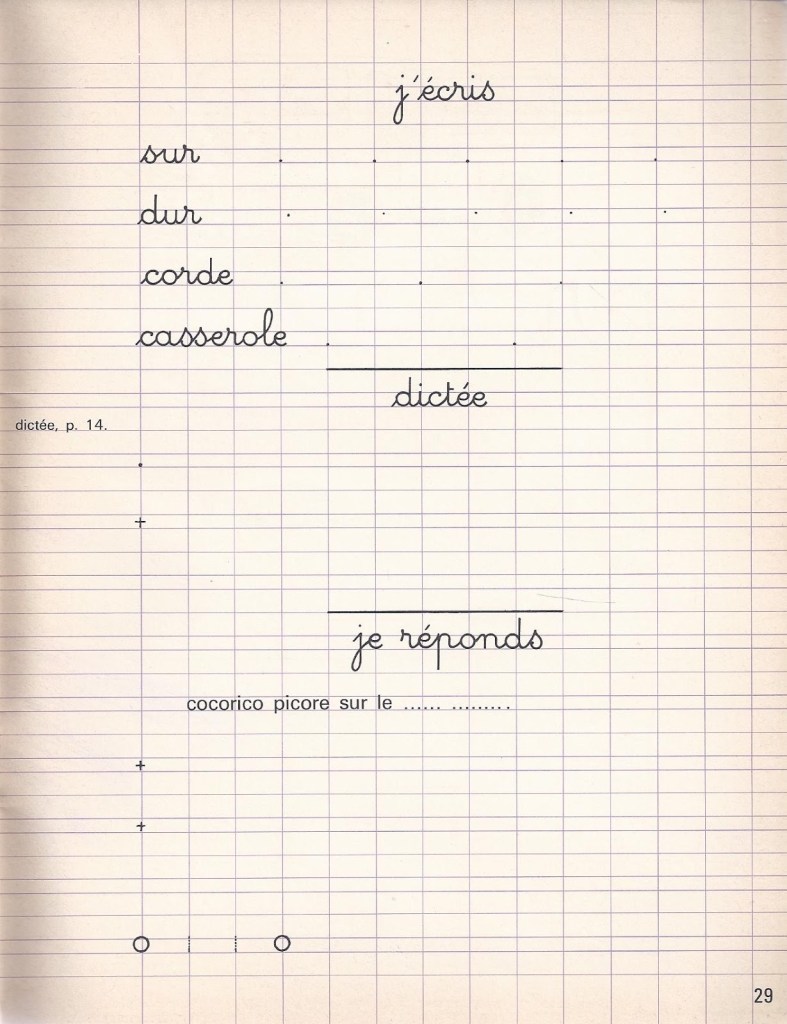
You don’t appreciate the clean spacing between the lines of a wide ruled notebook until you buy a traditional French cahier and are horrified to discover its full of tiny boxes and varying uneven lines.
Typical American wide lined notebook paper
One example of how notebook paper is lined in France
Lack of Garbage Disposals
There are none. NONE. I don’t have an explanation for this.
Air Conditioning Disease
Many tourists visit Paris in summer expecting to stroll along Paris boulevards with an ice cold beverage and breezy summer apparel. What they find is that ice cubs are almost as non-existent as garbage disposals and proper air conditioned buildings are rare. Why? In general, the French strongly believe that the recirculated air from AC units will make you sick and they will prefer to suffer and possibly die from heat stroke rather than subject themselves to the glorious chilly air currents when its 100 degrees outside.
I find that the AC vs NO AC debate with French is one of the most interesting cultural perspectives
Light Beer
If you are visiting France and have an urge to pound through a 30 pack of Natty Light, you’re out of luck. Bud Light, Busch Light, Miller Light, and any other low calorie beer that makes your butt leak – LIGHT isn’t available in beer form in France. Your closest option will be to ask for a blonde like 1664 or Kronenbourg. If you value your masculinity, always order a pint.
Toilet Privacy
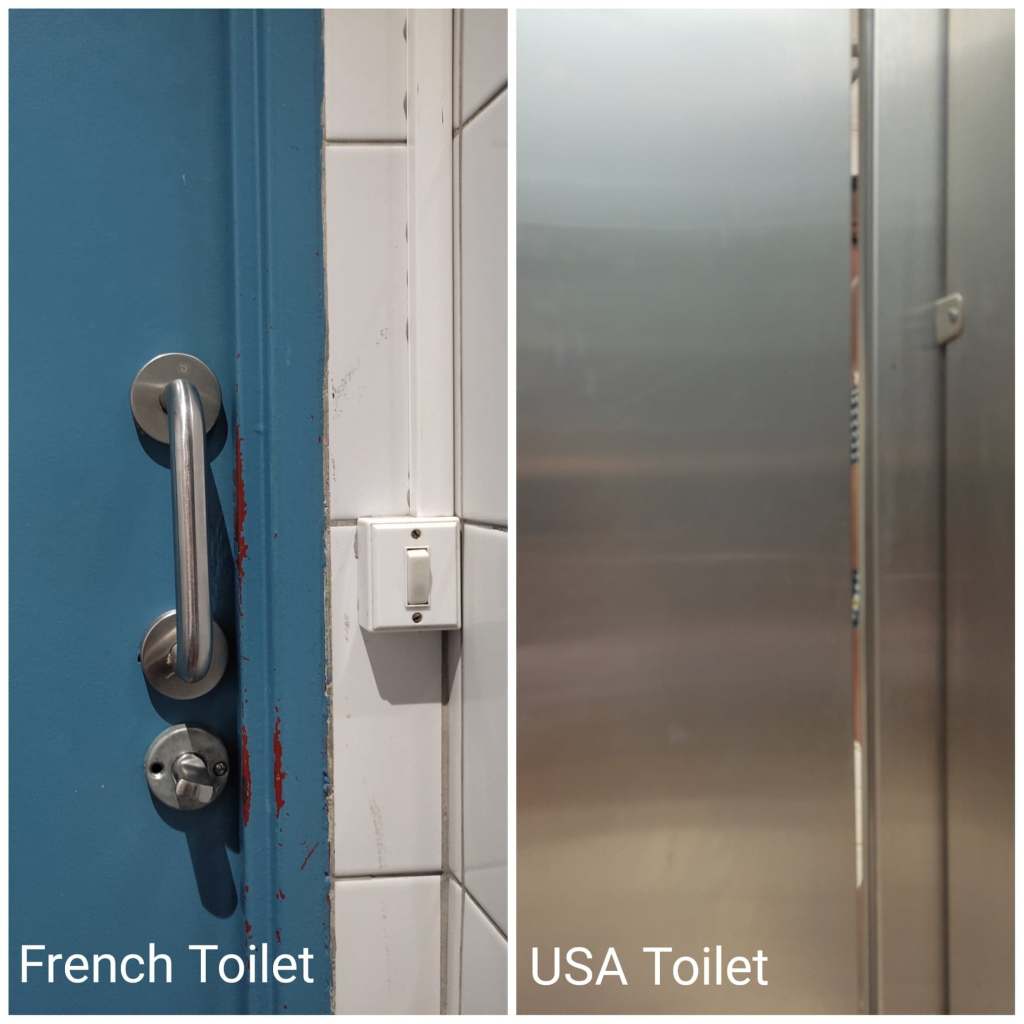
Toilets in France are like individual rooms compared to the more social typical American toilet stalls with their half inch opening between the frame and door. The Good? No echoing poop splash to reveal your defecation status in France! The Bad? No one to play battle shits with or to pass you toilet paper if your dispenser is empty.
The Holy Trinity
As a culture, the French believe in three remedies 99 percent effective in resolving all problems. If bleach, mild painkillers, and orgasms can’t fix your problem, it was never a problem to begin with.
L’eau de Javel
Dolipram
Sex
The Holy Trinity
No Dressing
Forget guns and freedom of speech; you know what makes America great? We have a million salad dressing choices. Ranch, French, Thousand Island, Cesear, the list goes on and on. You can even dictate WHERE you want your glob of Honey Mustard to go other than directly on the lettuce. Forget these forsaken liberties when you come to France- you have no say in the matter. You get whatever vinigrette comes with your greens, usually an oil based mix of vinegar and mustard. God help you if you ask for it on the side.
My go to salad is from Chez Gladines
Lack of Swingers
Get your mind outta the gutter, I don’t mean THOSE swingers. I’m referring to the swings you typically find at parks where children are required to pump their legs to gain momentum before gleefully soaring in the air and landing knee first on a pile of woodchips. However, like garbage disposals and root beer, finding a real swing in Paris is rare. Sure, the French have their own version of a swing, le balançoire– which is similar to how you would imagine a French version of the series Friends. The One Where Phoebe would be constantly chain smoking and participating in strikes that have nothing to do with her and despite graduating from the elite Sciences-Po Ross finds himself at the Pole Emploi fighting with civil servents every week. French Swings go through the motions, but lack authenticity- namely physical exertion since you basically just sit in a cage while being pushed back and forth by your parents. Oh, and did I mention you have to PAY for this privilege?
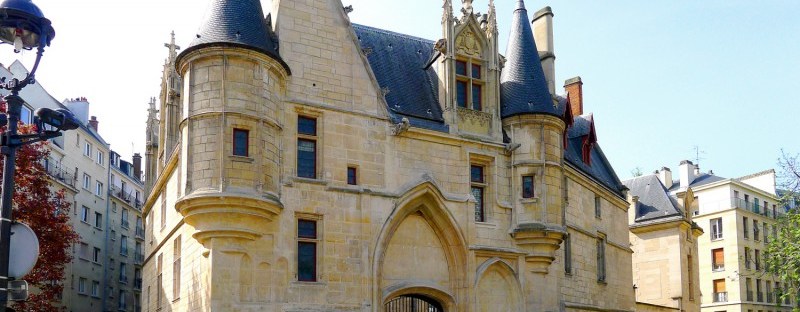
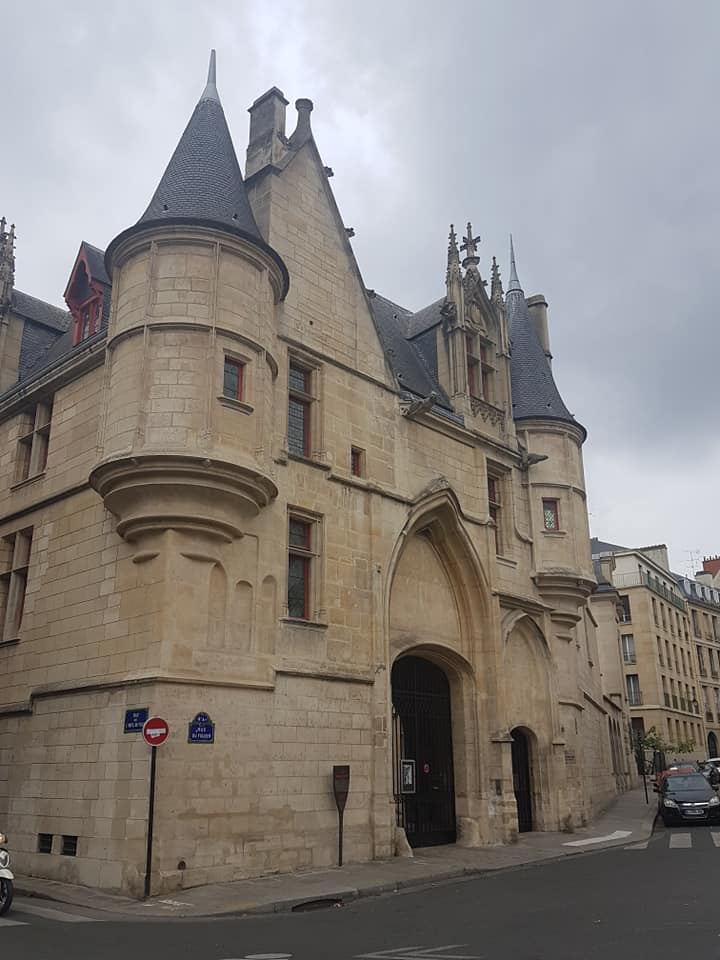
The Marais district of Paris is a goldmine of old buildings and history. The Hotel de Sens, which is situated next to the Seine- has the honor of being one of the oldest original gangstas of flamboyant Gothic Paris architecture still standing.
Before it came to be known as the LGBF/Jewish quarter of Paris, this area was home to French royalty and the medieval palace of Saint Pol, which was eventually demolished when the Louvre became the official digs of Kings.
Map of the Marais in 1450. You can spot the original Hotel de Sens a bit to the left of the green circle indicating the Hotel Saint Pol
The Hotel de Sens we know today was built from 1475 to 1519 by Tristian de Salazar as the residence for the Archbishop of Sens. Now, what the hell is an archbishop you ask? There’s a lot of boring religious vocabulary to sort through to understand this, but to dumb it down for my special readers, here’s a little summary I’d like to call RELIGIOUS CATHOLIC HIERARCHY VOCAB MADE EASY – to start with, we got the head honcho- THE POPE, elected by God and the College of Cardinals. Now the title of POPE is just a fancy way of saying the Bishop of Rome, who controls all the other bishops/archbishops thus leading the Catholic Church. (You still with me?) So since the 2nd century, in the Roman Catholic church; each geographical area is divided into a diocese/archdiocese, which is controlled by either an Archbishop or Bishop. An Archbishop has an Archdiocese of importance, where a Bishop simply controls your regular Joe Shmoe diocese. This is just the basics, there’s obviously more finer details but I don’t want to bore you to death.
ANYWAYS, back to 16th century France- Paris wasn’t a big enough hotshot in the Catholic community to be its own Archdiocese, so it was under the jurisdiction of Sens; which is a quaint city about 100km south-west of Paris. The Archbishop of Sens had his main digs in Paris until 1622 when Paris took over the Archdiocese reigns, thus reducing the power of the Archbishop of Sens who eventually handed over ownership of the hotel to the new Archbishop of Paris Jean-Francois de Gondi, who preferred to reign over Paris elsewhere.
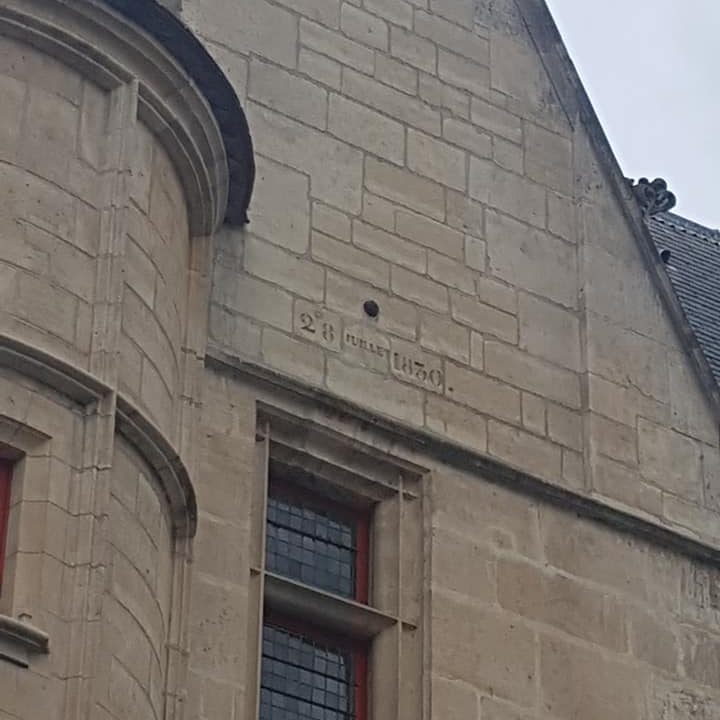
The Hotel was then rented to wealthy nobles before it became national property in 1790 at the start of the French Revolution. One remarkable thing to take note of is the rather unremarkable cannonball embedded into the façade of the hotel.
I admit my cannonball knowledge is subpar at best, but this guy seems a little.. small?
This is from the July Revolution of 1830 AKA the 2nd less carnal but still pretty bloody French Revolution where the people overthrew the government and King Charles X. They besieged the neighborhood area of the Hotel de Ville and shot cannonballs into the old royal part of the city. How one of these iron ballz found itself embedded here, I don’t know- but it was gracefully preserved, maybe to remind Parisians that it ain’t cool to attempt to destroy your own history.
Inner courtyard
The Hotel de Sens stubbornly remained standing throughout the 19th century and was home to various factories, including one that fabricated jam. It was declared a national historical monument in 1862 and eventually bought by the city of Paris in 1911, who financed restorations in the 1930’s. Today, the Hotel de Sens houses the Forney Library, a research library dedicated to decorative and graphic arts.
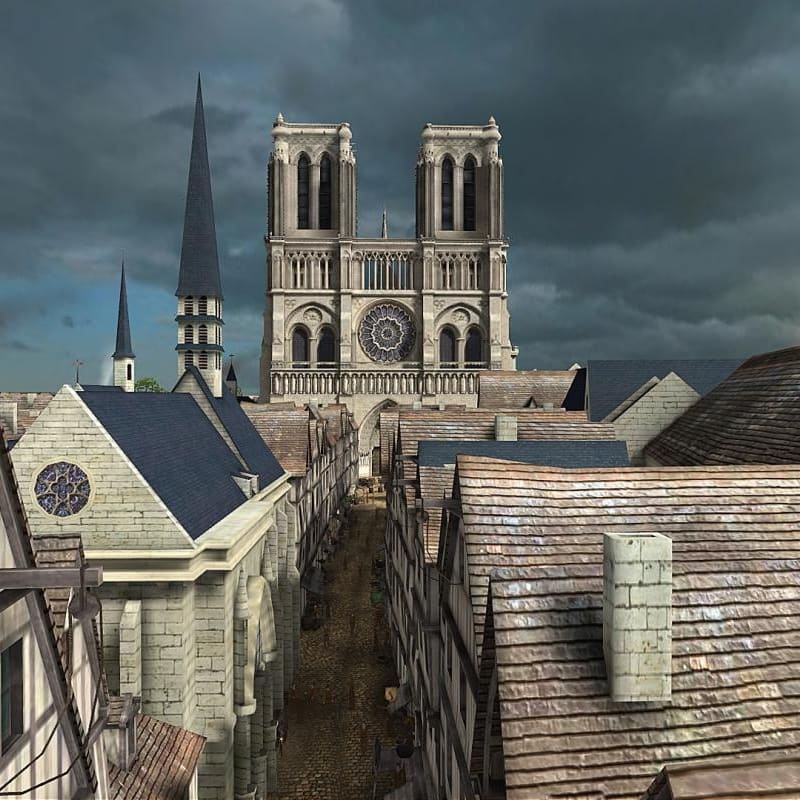
When tourists go to see Notre Dame Cathedral it’s likely they miss a few sneaky details.. (for good reason, right? HEY KIDS LOOK UP ITS NOTRE DAME!) hidden right below their feet! If you were to be in front of ND prior to 1870, it would have appeared very different from what you see today.
For starters, the parvis AKA the huge open area where everyone gathers to take pictures or wait in a massively winding line back when the cathedral was accessible before the BFF (Big Fucking Fire)DID NOT EXIST. You could never really see ND until you were right up against it because the area in front of ND was a Medieval Real Estate Hot Commodity.
Turgot Map from 1739. Notice La Rue Neuve N.D. in the center, then the Parvis N.D. Do you see the lack of public space?
Back in the day of our medieval forefathers, panoramic city views were a privilege, not a right. Besides, who has time to complain about lack of open public space when everyone was too preoccupied with managing typical day to day concerns; like STDs, figuring out what time it was, and how to seek revenge on your asshole landlord when you lived in a constant state of poverty and poor health. Good times!
How Notre Dame would have appeared from the La Rue Neuve Notre Dame.Computerized Image from Muséosphere – Mairie de Paris.
Like the Champs Elysees or Boulevard Saint Germain des Prés today, the Rue Neuve Notre Dame was the main drag here in medieval Paris, dominating the landscape around the cathedral from the time it was built in about 1136 until city planner Haussmann leveled this area in the 19th century. Another long-standing building, the Hospital of Found Children (or Lost Children if you are a cup half empty kind of person) was eliminated with it, thus creating the open space we see today.
Another view from a painting by Edward Gaertner 1826
However, you can still see traces of this former street in the cobblestones below, where the location of the Rue is highlighted with a different stone as well as a discreet marker. I absolutely love to point this out to tourists with their necks angled up. Their delight to look beneath their feet at this hidden in plain sight detail tickles me every time.
Compare these two images of the Rue Neuve Notre Dame
AND THERE’S MORE! You can even view the foundations of the 28 buildings that once lined this street below in my favorite Paris museum you probably never knew, the Crypte Archéologique. (click text for link, or see my post about this hidden gem of a museum in the link below)
,
Did you know about this detail or are you learning of it for the first time? Please comment below!
































 Paris History of our Streets