
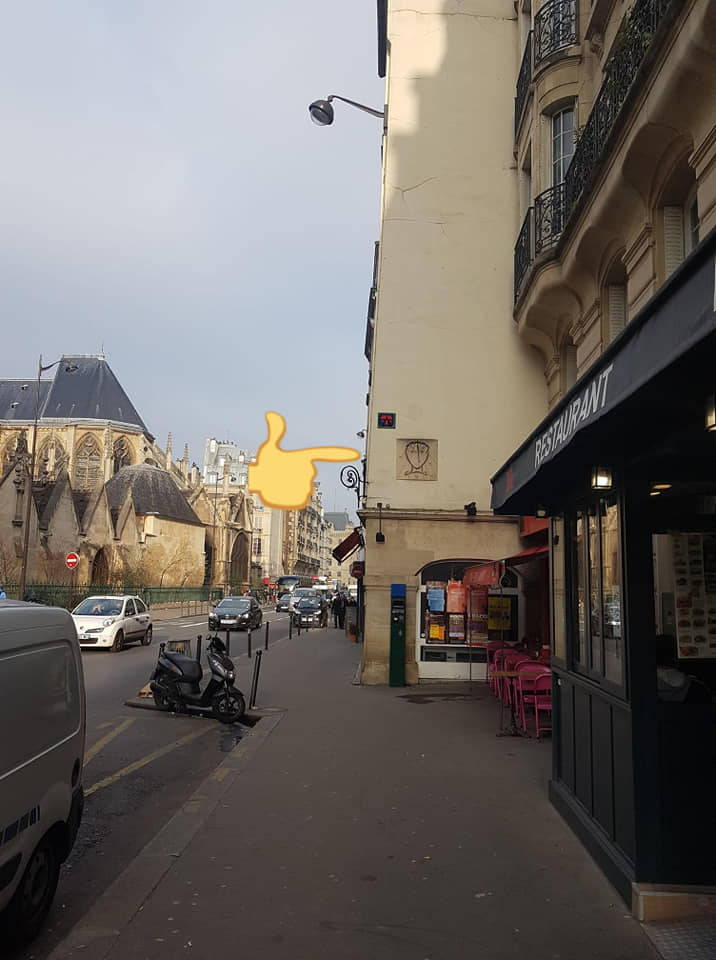
27, 29, and 31 rue Galande Paris 75005

These maisons à pignon (gabled houses) are some of the oldest buildings in the city of Paris. They date back to the 15th century guys, that blows my mind! So why don’t we see more of them?
Because they are old as dirt, and about as flammable as a hot fart! We can thank 19th century Paris Urban Planning Transformer Eugene Haussmann for leveling medieval streets just like this that once existed all over Paris. Rue Galande was thankfully preserved.
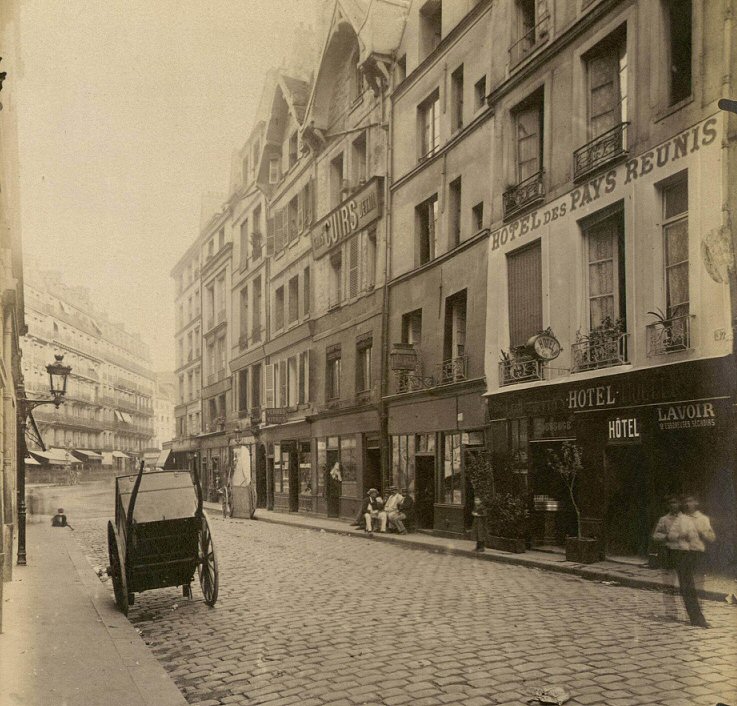
If you were to travel back in time to Paris circa 1600, streets here would be narrow, dark, and rank- all lined with a seemingly endless array of tall and narrow half timbered buildings. (Half timbered because rocks and plaster filled in spaces between wooden supports, as opposed to something like a log cabin built entirely of wood)
To sum it up: if you weren’t like the 1% living a life of luxury in your stone Hôtel Particulier (castle like mansion) you were living in a wooden timber framed house. And heating the rooms, cooking the meals, and boiling your water from a fire. That was, uh, in your wooden house. Smashed up against other wooden houses.
Makes sense! NOT.
Following a disasterous fire in London during May of 1666 that wiped out entire neighborhoods, King Louis XIV realized that his city was very fire friendly, so he passed a law in 1667 that forbid buildings to be constructed as “pignon sur la rue” (with the gabled roof facing outwards perpendicular to the street, giving the roof a triangular appearance) because fires could easily “jump” between roofs that are built this way, (thanks for the heads up London!) as opposed to roofs that ran parallel to the street where a fire proof wall could seperate them. Houses also were required to cover their timber framed facades (front of the building) with plaster as a means of fire prevention.
Very few of these old homes remain in Paris today, but the most well known are these gabled houses in the Marais which many falsely consider to be the oldest.

I always wonder why these curious buildings of the Rue Galande never make headlines in the “Oldest Buildings of Paris” lists, but I enjoying pointing them out to tourists when I’m in the area.





 Paris History of our Streets