latin quarter, Maps

Zamour, the Beloved Slave of Madame du Barry

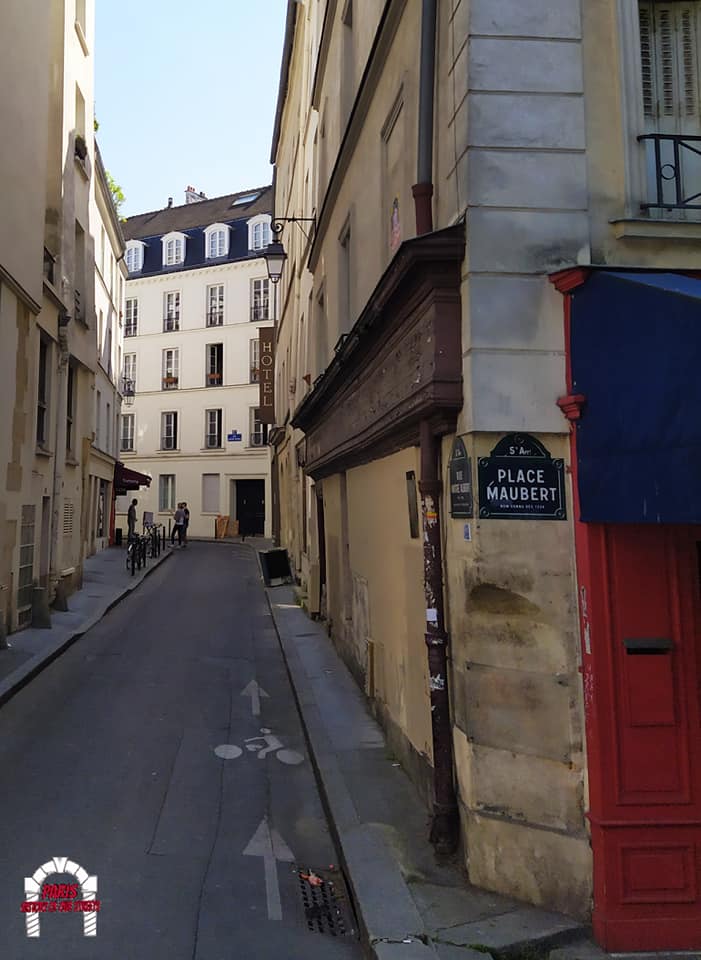
13 rue Maître-Albert Paris 75005

On the 7th of February 1820, the body of Louis-Benoit Zamor was found by his neighbor in his 2nd floor apartment located in the Rue Perdu (today rue Maitre Albert, right by Notre Dame).

Where Zamour lived and died

The writer Jacques Levron remarked that, “He lived in a small, sordid room, disliked by everyone. His body was thrown in a communal pit and no one came to his funeral.”
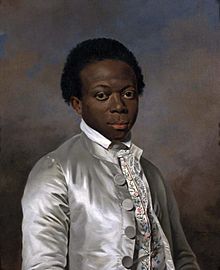
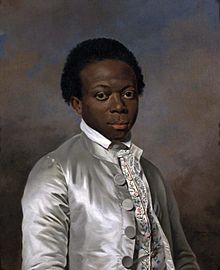
Louis-Benoit Zamor

Zamour spent much of his childhood at Versaille where he lived as the adopted son AKA human slave of Madame du Barry, famous maîtresse-en-titre to Louis XV. Born in Bangladesh around 1762, he was captured as a child by English slave traders then bought to France where he was given as a gift to the king’s favorite plaything. Jeanne Bécu, the former call girl turned Countess who gradually moved up in rank as she moved around the beds of her many lovers, until peaking with Louis XV.

Madame du Barry et le page Zamore painted by Jean-Baptiste André Gautier-Dagoty

But alas, the higher one climbs by giving sexual favors, the farther there is to fall, and du Berry found herself under the blade of the guillotine begging the executioner for “encore un petit moment!” in 1793. Seeking vindication for the years he spent serving her hot chocolate (daily, apparently at 9am) and dressing up to entertain her as a savage African (he was Indian),

Portrait of Du Barry done by  Élisabeth Vigée Le Brun, 1782

However payback is a bitch, and Zamour himself threw Du Barry under the Revolutionary Bus when he testified against her 1792. He acknowledged that even if du Berry treated him to a lavish lifestyle at the French royal court, she humiliated him and made jokes at his expense. She may have baptized and educated him, but he was little more than her human pet. Eventually, she would find herself under the guillotine blade, begging for her life. Unfortunately for Zamour, revenge must not have been so sweet because he found himself imprisoned during the Reign of Terror for several weeks when he was accused of treason as well.

Image of Madame du Barry and Zamour from the Sophia Coppola film Marie Antoinette

He miraculously survived and post-Revolution, he came to the Latin Quarter of Paris, where he was known as a bitter old man. No shit! Having received a valuable education at Versaille, he worked as a tutor but was known to physically abuse the students he worked with. Despite the legacy he was left with, I really think there is more to Zamour than what we know.
latin quarter, Maps

Dungeon Style Nightclubs #1

Caveau de la Bolée 25 rue de l’Hirondelle 75006

As a non-European coming from Wisconsin, USA where a vintage building is maybe 100 years old, I’ve always been starstruck by the medieval caves that are in Paris.

No no, I’m not talking about a bat cave or dungeon (although some of them were once prisons, but that’s another story), I’m referring to what Americans would probably compare to an unfinished basement with cement walls.

Here in Paris, they are often hundreds of years old and most buildings have them. Sometimes they function as storage space (usually the case in apartment buildings like mine) or maybe they have been converted into parking garages.

During the World Wars many served as bomb shelters and before electricity this where you could keep food and wine fresh. But my favorite kind of cave is one that serves a highly essential purpose.NIGHTCLUBS!

Hey, if you want to party all night on a rooftop balcony with an Eiffel Tower view and 20€ cocktails, that’s your business. But FFS, please don’t come to Paris without spending at least one night drinking cheap beer until sunrise in an authentic cave bar.

My favorite “secret” Paris cabaret, Les Trois Mailletz

From your first steps down whatever shallow staircase you take to descend into the depths of history, you’ll be hooked. Sure the bar might be sticky from spilt Jagerbombs and the bathrooms will surely be covered in graffiti- but these kind of pubs are where you are going to have a blast as you dance the night away to 80’s French hits under a 14th century vaulted ceiling amongst Parisians/students/tourists/2nd shift restaurant industry workers of all different ages, backgrounds, and lifestyles.

Stumbling home at 6am

My favorite thing about these kind of places is how unpretentious they are. People come here to let loose and have fun, unlike many other more classy establishments that will deny you entry based on any number of irrelevant factors. From the well-known jazz clubs like Caveau des Oubliettes (former Guillotine Pub, home to a real French Revolution era guillotine blade) et Caveau De La Huchette “officiel” – to the lesser known, yet more authentic The Violon Dingue and La Pomme d’Eve – Paris has many bars like this you won’t find front and center under popular nightclubs in your typical tour guide books- but after 7 years in Paris, these are the places where I’ve had my most wild, memorable nights.

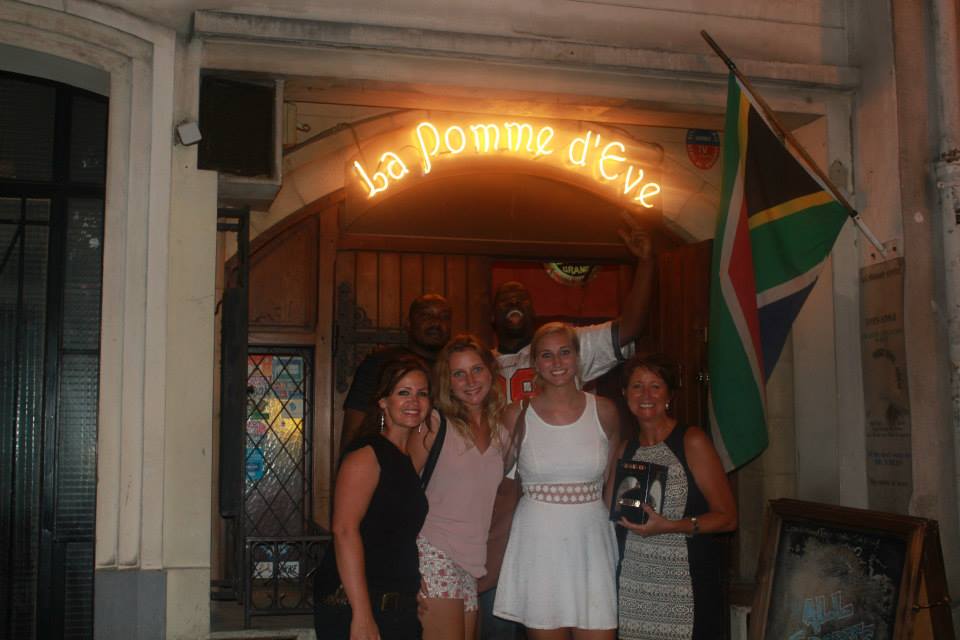
A fun night out at the Pomme d’Eve, one of my favorite late night bars in Paris

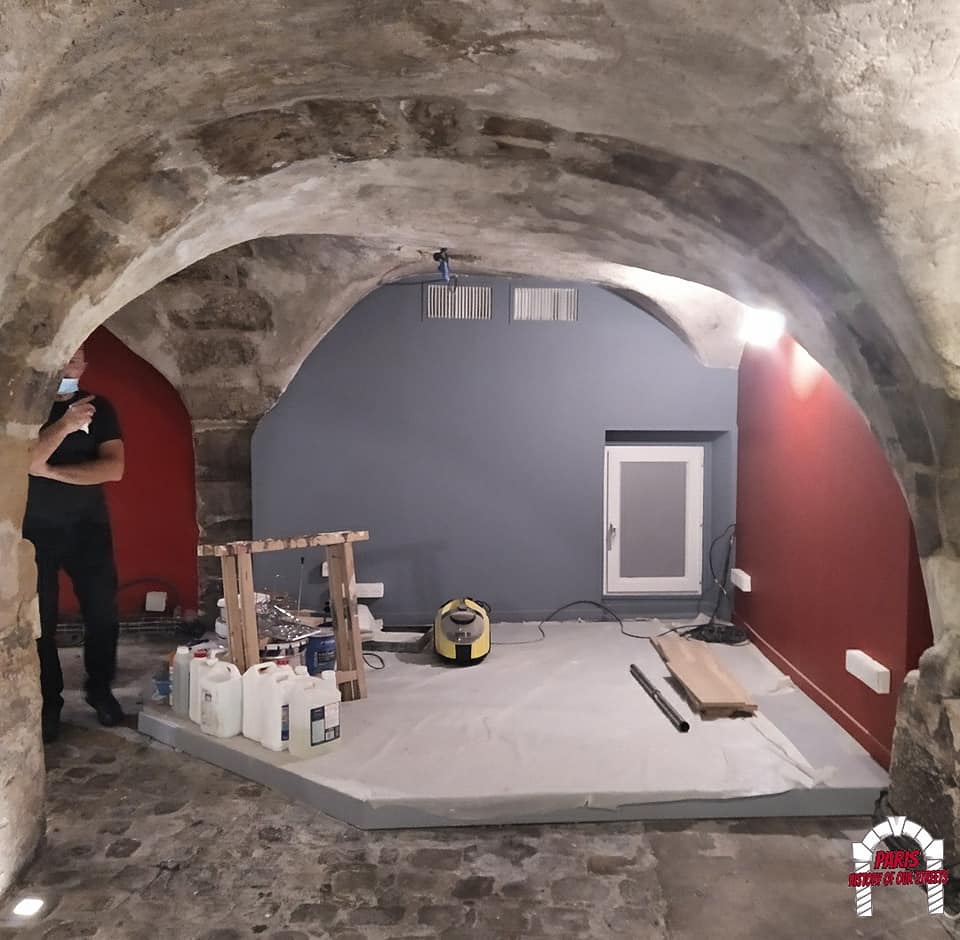
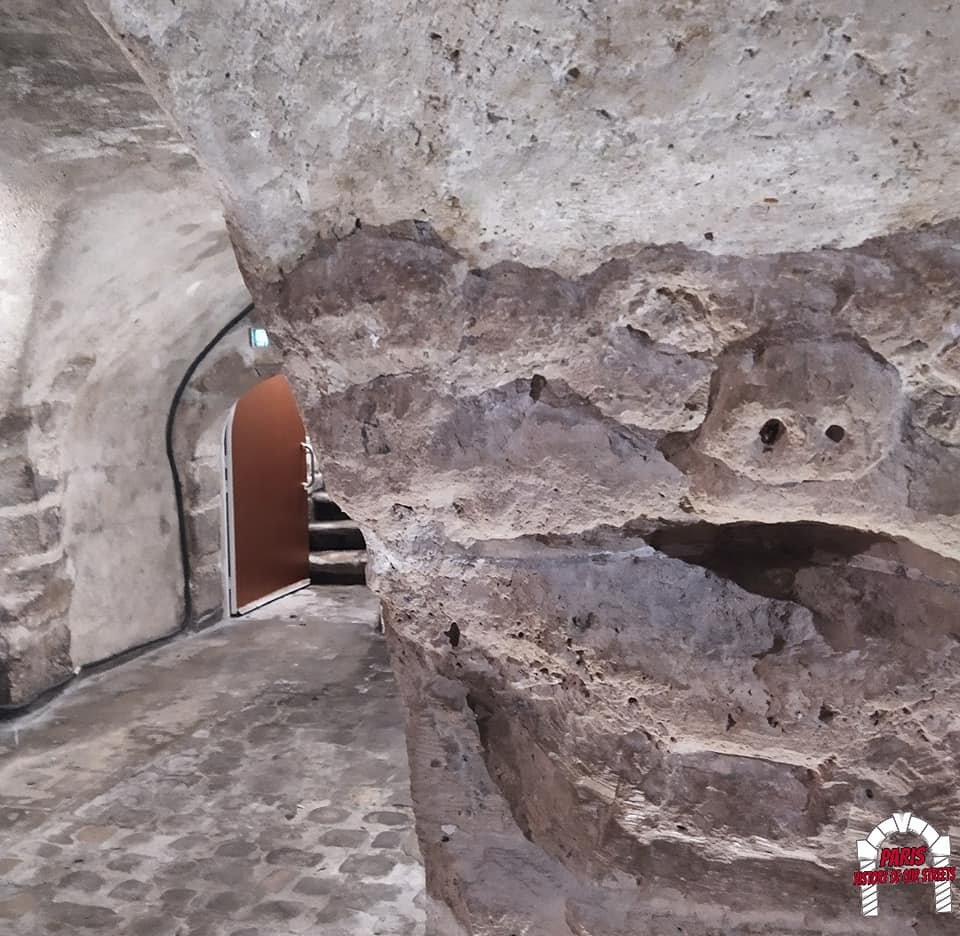
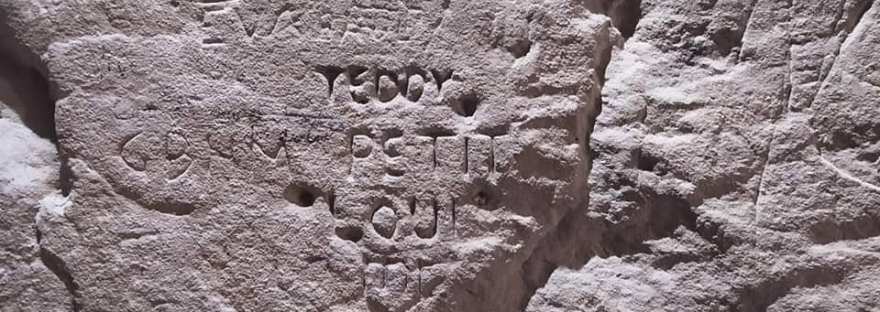
The cave pictured here is the 14th century Caveau de la Bolée, which is currently being restored and updated to be a café by day and cave club after hours. I stopped by recently to see if I could get a look at the cave which the owner was happy to show me.

Historically, this space was initially the cellar of an Abbaye that once stood in this area before turning into various nightclubs frequented by the likes of Charles Baudelaire, Francois Villion, and Paul Verlaine who sought out these discrete hangouts, out of sight and sound from the chaos of the streets above.

Long gone are the days of cigarette smoke, heated political debates, and libertine romances in dark corners; but remnants of the past like grotesque sculptures and perfectly carved signatures will undoubtedly continue to endure for years to come.

Rue de l’Hirondelle

latin quarter, Maps

Dungeon Style Nightclubs #2

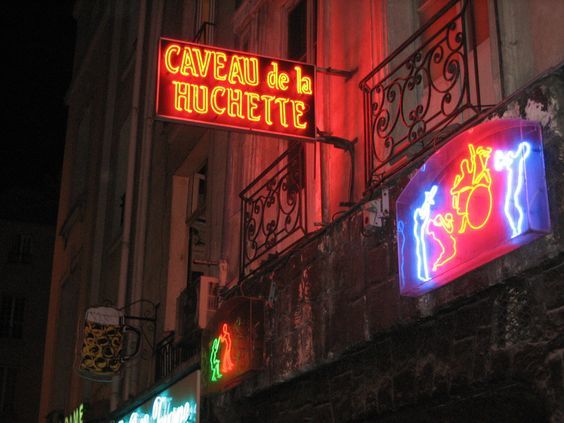
Caveau de la Huchette 5 rue de la Huchette Paris 75005

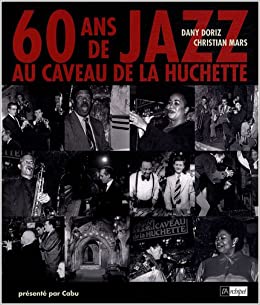
Dating in Paris gets taken to a whole new level, especially when the rendez-vous location is a 16th century medieval cave once frequented by the mythical Templar Knights (think Gerard Butler circa 300 fighting for God rather than Sparta) before evolving into a legendary jazz hotspot in the post WWII period when Paris thrived.

There is much more history to the Caveau de la Huchette, but today I’ll be sharing a bit of my own personal saga from 2014, which I’d like to think I can owe in part to this epic cabaret-theater watering hole of the Latin Quarter.

One of the first dates I had with my French Amour was here and looking back- the noisy cave packed with swing-dance enthusiasts, regulars, and a few odd tourists was the perfect location for a new couple who could barely communicate! (At the time, my French was the equivalent to a 5-year-old child and his English vocabulary consisted of anything you’d say to a tourist in a Paris dive bar)

When he said we would meet on the Rue de la Huchette after sunset, I initially had my doubts. Sure It’s a fun area, but its also super touristy; filled with cheap restaurants serving “Authentic French Food” catered to American tourists and bars advertising free shots where dirty bras hang from the ceiling.

Great location to have a fun night, but not quite romantic, even for this quirky Wisconsin girl who is the farthest thing from high maintenance! I didn’t need a trendy cocktail bar but a place where I’d likely meet an 18 year old American university student with his head in a toilet after too many beers wasn’t what I had in mind.

However my low expectations were replaced with stars that filled my eyes as he paid the small cover inside entryway of the Caveau de la Huchette and we descended down to the cave below, stooped and hand in hand.

What I was met with still remains to be one of my best Paris memories.

What I encountered going down into the cave.. MADNESS!

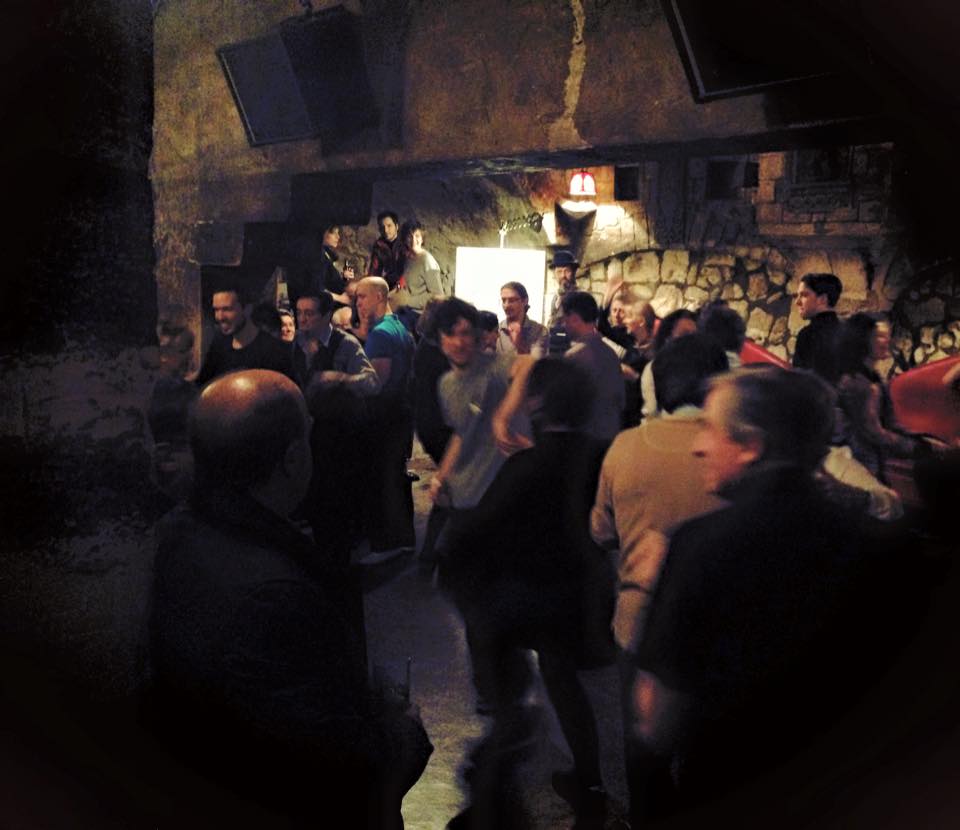
The cave, which was quite large compared to similar underground pubs in the city- was buzzing with couples dancing. And not just any old aimless arms waving and booties shaking, but with authentic swing dancers!

Dapper men were tossing their partners all over the place as a jazz band played on the stage and I felt like I walked onto a 1940’s Fred Astaire film. We took a place in an intimate corner seated on a shaky table where we got to know each other better as we sipped wine and reveled at the scene before us.

An older photo from the Caveau de la Huchette similar to the atmosphere I experienced

But then it got even better.

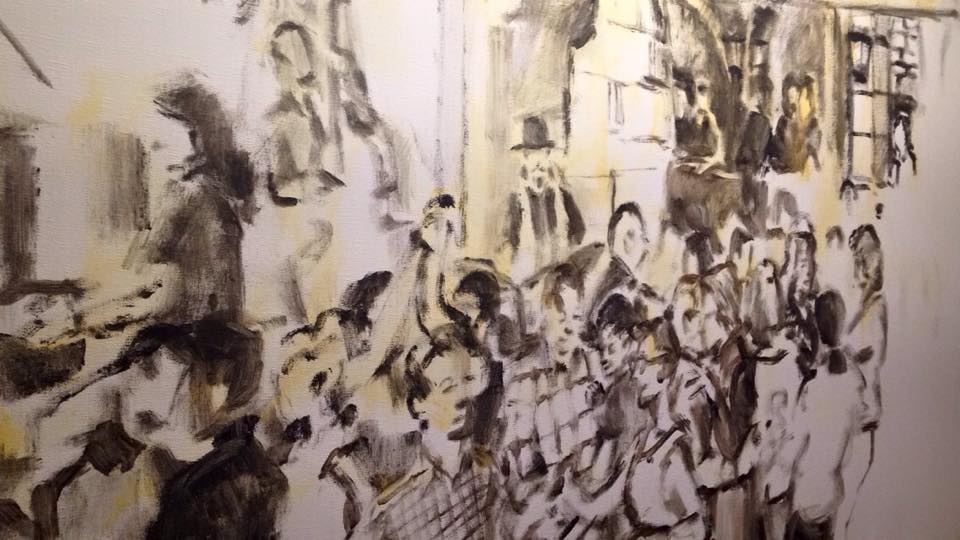
Suddenly a man appeared with a large blank canvas which he set up on an easel beneath a light. Gently rocking back and forth in time with the music; he began to paint the chaotic scene that flowed on and around the dance floor in front of him. When I worked up the courage to go and have a look after he finished, I was amazed to find that we were included in his impromptu masterpiece!

The Painting

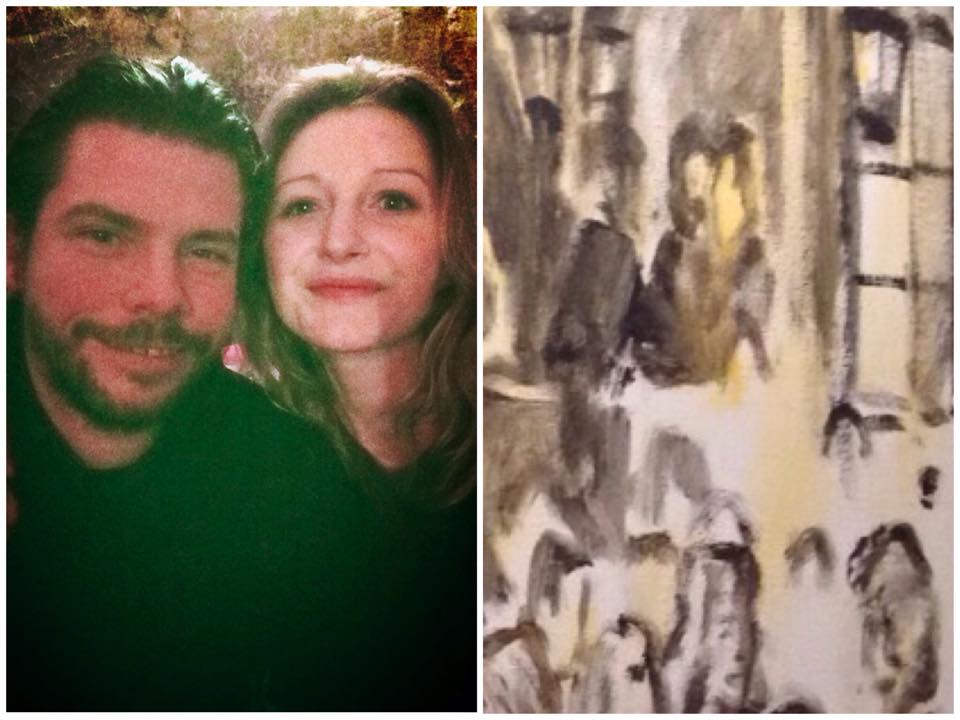
Barely visible in the corner is a couple, a darker bearded face leaning in close to a paler one. (see photos)It was us, forever frozen in the historic Caveau de la Huchette. And at that moment, I knew I found a special guy who might pronounce the word Beach as Bitch but he needed no dictionary to translate the language of love- which for me speaks through history rather than popularity.

First date 2014
Still going strong in 2020!
Maps, Saint Germain des Près and the Eiffel Tower

The Polidor Potty

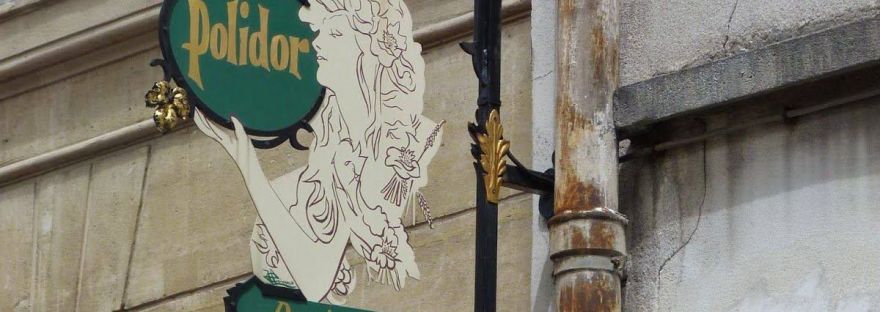
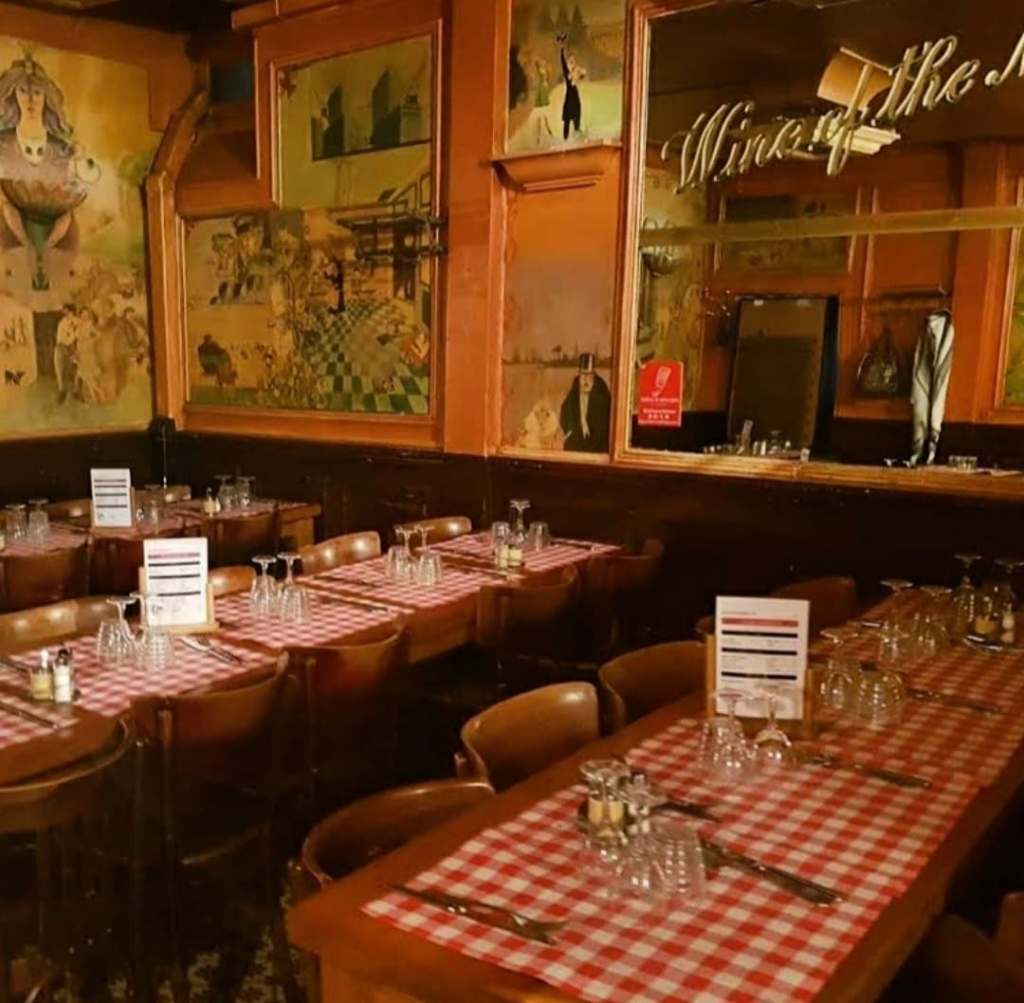
This is the kind of French restaurant that catches my eye. It has everything; affordable hearty fare, a sense of community (close tables mean your neighbors often become part of your conversations), a casual, relaxed atmosphere where no one will judge you for shopping at Primark or Lidl, and best of all- HISTORY.

41 rue Monsieur le Prince Paris 75005

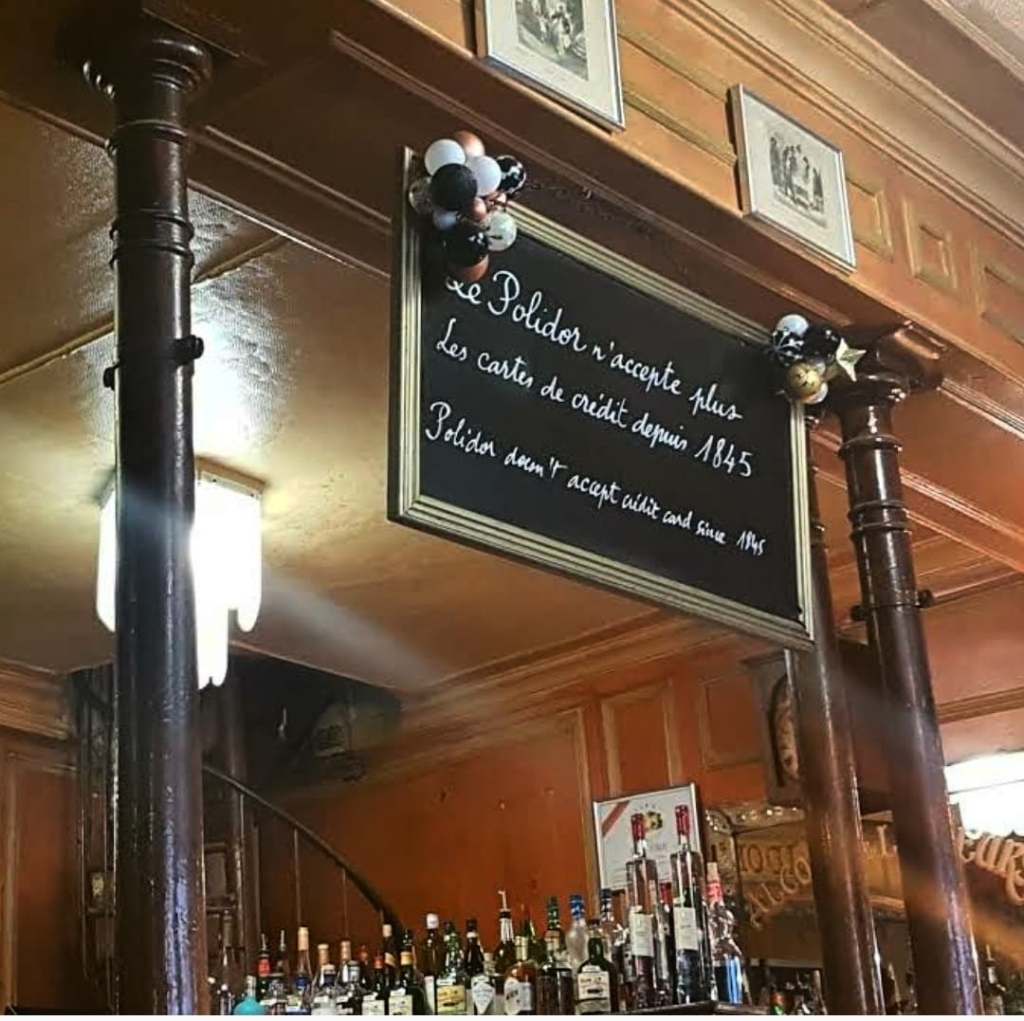
First opening in 1845 as a dairy shop that served meals before becoming a full-fledged Bistro in 1890, the Polidor is considered to be one of the oldest restaurants in Paris. Welcoming everyone from students to authors to poets and playwrites, what has made this place succeed over the years is its’ simplicity and stubborn unwillingness to cater to modern times, which extends from their refusal to use credit cards (a cheeky sign proclaims that haven’t accepted them since 1845) to their vintage latrine.

The Polidor no longer accepts credit cards since 1845

From the rustic décor to the no fuss yet hearty dishes (think French classics like Boeuf Bourguignon and Confit de Canard) coming here makes you feel like you might have stepped back into time to the epoque of James Joyce or Hemingway, who mentions the Polidor in “A Moveable Feast”.

RUSTIC

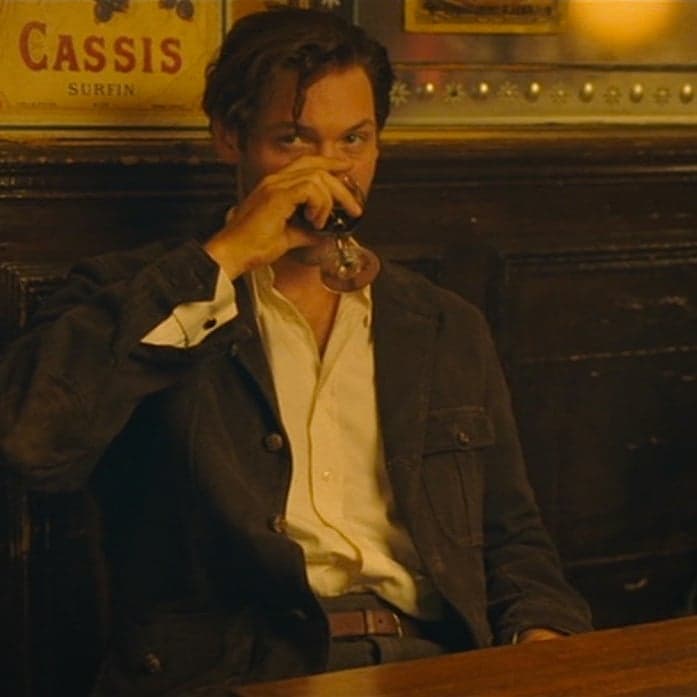
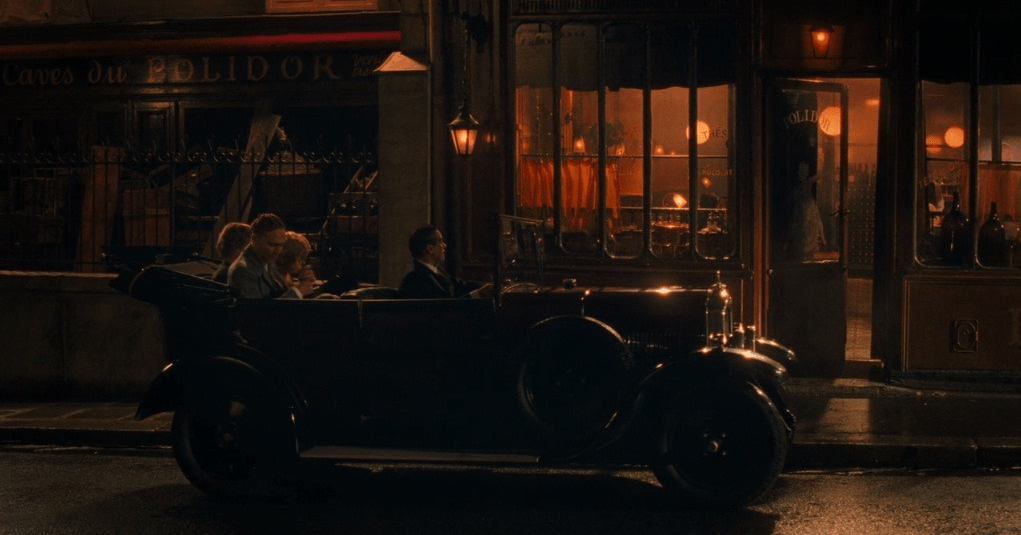
If that doesn’t convince you of its authenticity as a historic hotspot, Woody Allen used the restaurant for a scene in “Midnight in Paris”, the one where that whiny little bitch known as Gil meets the legendary manly Hemingway himself.

I don’t know where I read that this toilet (known as a Turkish Toilet) was here, it’s a bit of an urban legend; but when I went for the first time a few years ago, I made a point to visit it before our meal arrived. When I inquired with the waitress where it was, she started to warn me that it wouldn’t be what I was expecting, but then laughed when I said I knew all about it!

The Turkish Style toilet at the Polidor

The Polidor is currently closed for renovations and expected to reopen in spring. I’m excited to see it, but I hope they haven’t altered the unique historic charm here to suit 21st century sanitary standards. (Check out Google Reviews to see how many surprised diners complain about the toilet).

Maybe I’m just a weirdo, but there’s something coyly delightful about using the same shitter as Iconic Paris Legends of our past. Walking in the footsteps of someone you admire is great, but here you can take it one slippery step further!

latin quarter, Maps

Cutting Corners

Have you ever noticed funny looking corners on old buildings in Paris?

There is a reason!

These corners were cut concavely to reduce damages done by medi-Evil Knievel style drivers who took corners too sharp in their carriages or wagons. They were also a way for Stone Masons to show off their Stereonomy skills. (No no, not the study of stereos. This is a technique used when cutting three dimensional solids into wacky shapes)

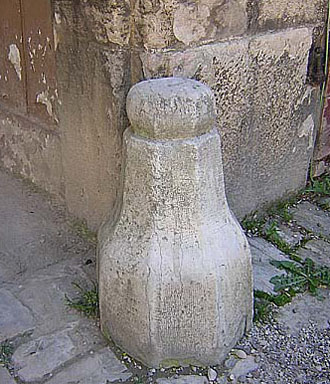
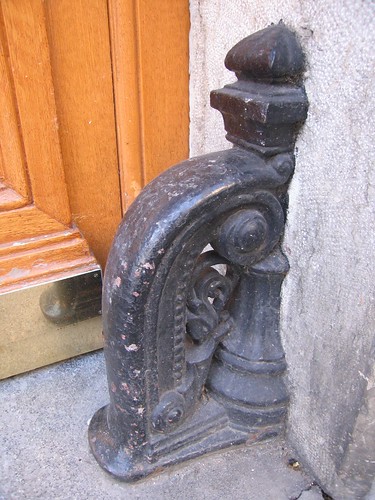
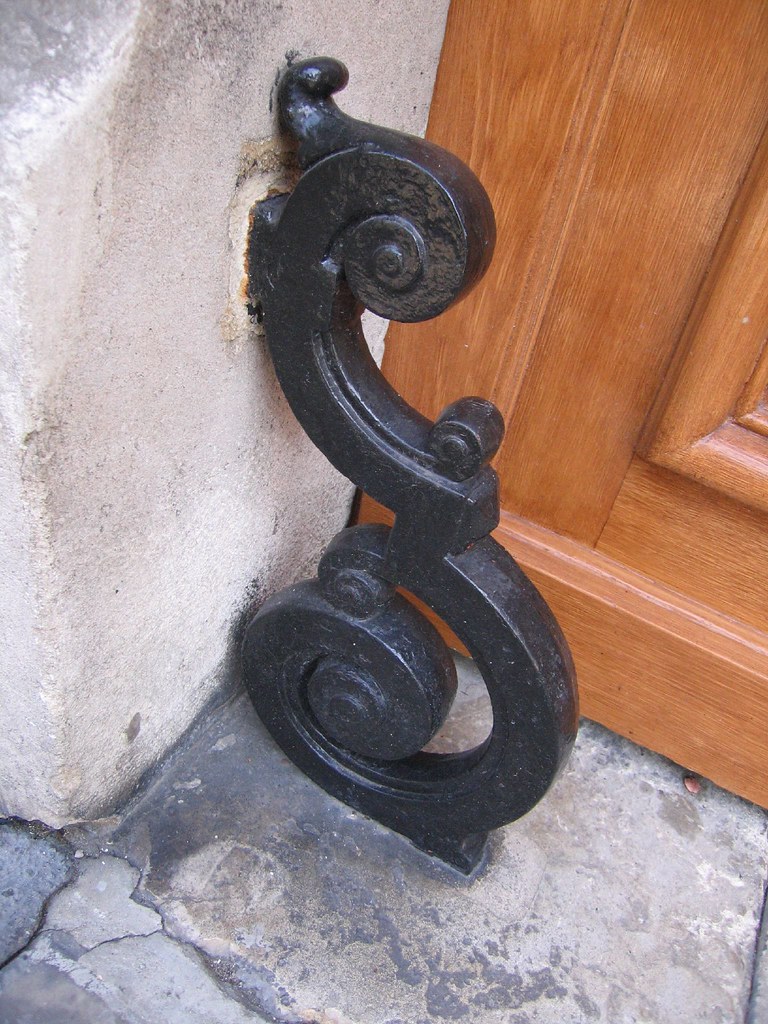
You can find similar Anti-Carriage Wheel Damage Devices at the entrances of many buildings, known as chasse roues/wheel chasers.

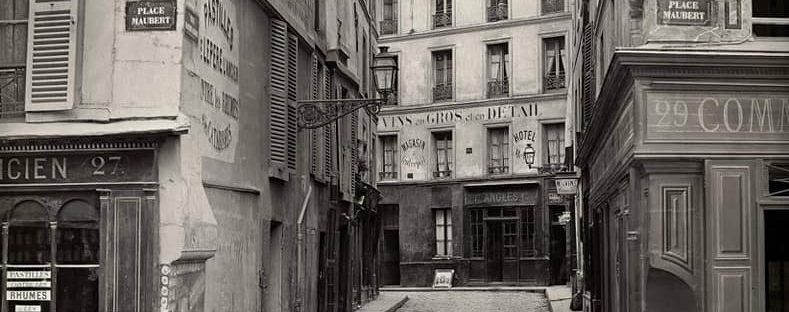
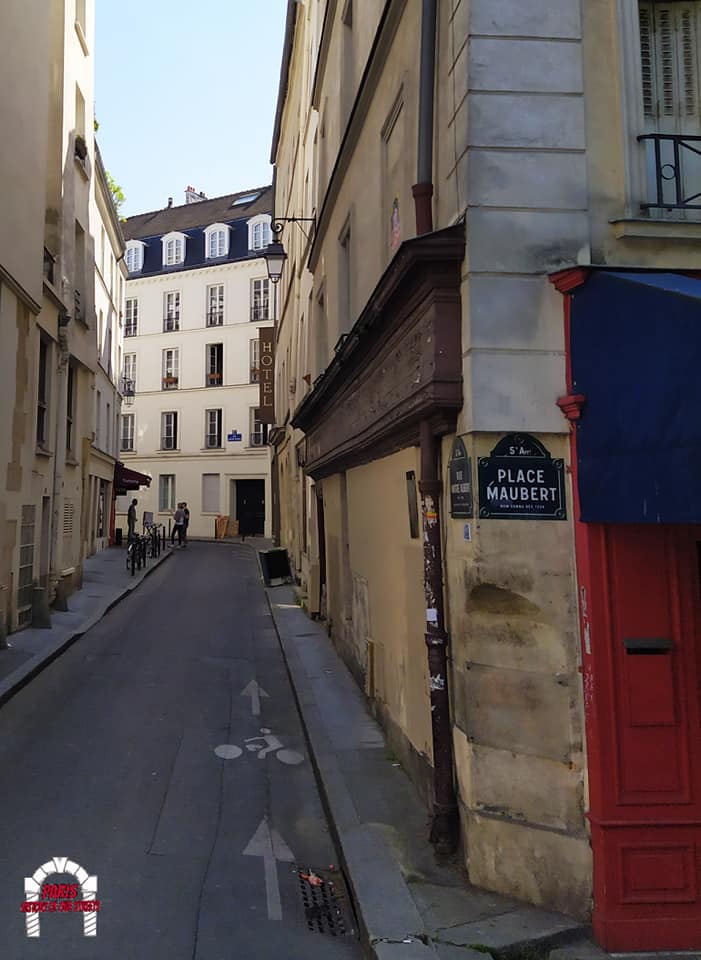
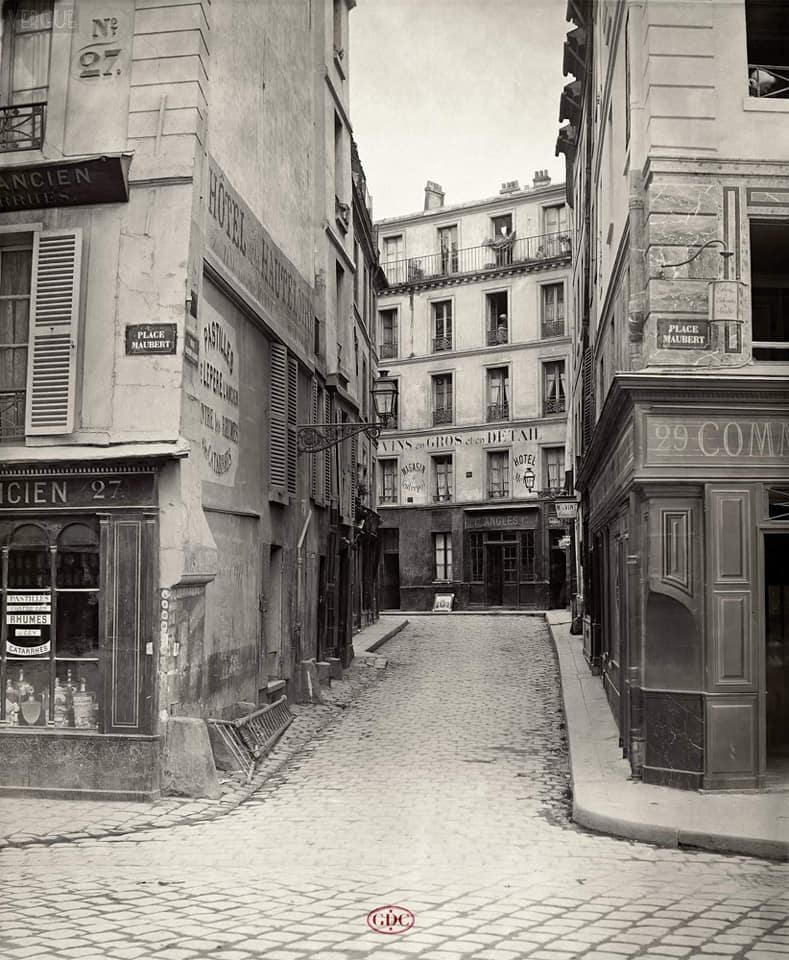
Here is a picture of one of my favorite truncated streets corners in Paris.

Black and White photo taken by Charles Marville, 1866

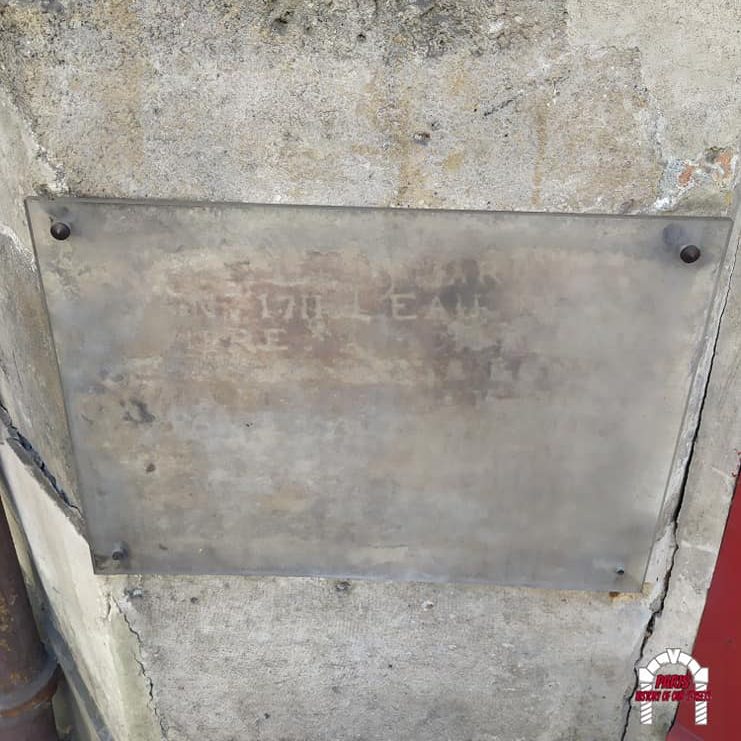
Located at the corner of Rue Maitre Albert and Place Maubert in the 5th, if you get up real close, you can see a super illegible description behind a plate of plexiglass.

This indicates the height of the water level from a flood in 1711, as well as stating that this building was created just a year prior in 1710.