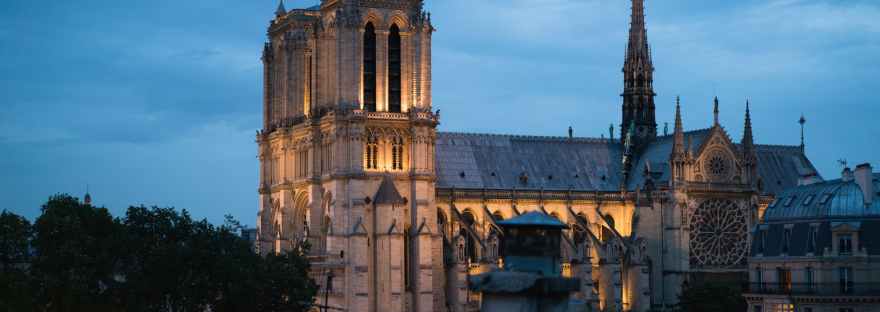
Notre Dame Cathedral is the most visited monument in Europe, receiving about 12 million visitors annually (in contrast to the Eiffel Tower, which receives about half that) and as many as 30,000 people per day. If you’ve ever walked past the parvis (the open area directly in front of the cathedral doors), you know this isn’t an exaggeration; the notoriously long, snaking line to enter seems to have a life of its own as it twists and turns with no formal line boundaries to accommodate everyone waiting to get in.
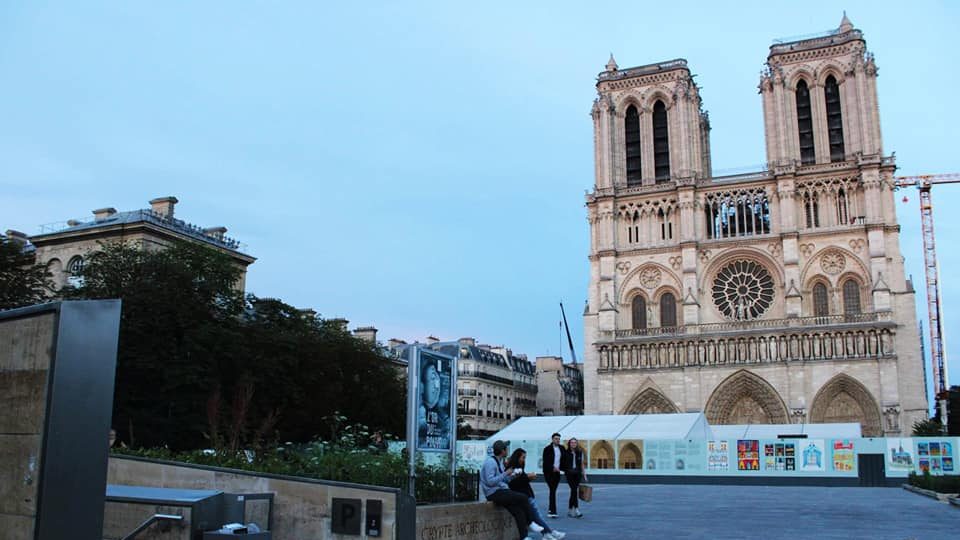
The funny thing is that as these people gaze up towards the 850+ year old towers, an entire museum lays right under their feet. The Archeological Crypt of Notre Dame is my favorite under-rated Paris attraction that doesn’t even make a bleep on most tourist radar and its overlooked entry sits just beyond the parvis. Which is disappointing, because here under the cathedral beats the historical heart of Paris, and walking through it brings you back through 2,000 years of history to a time when Paris was known as the Gallo-Roman city of Lutecia. Throughout Paris and especially on the île de la Cité (the small island where Notre Dame sits and the very center of the city) the history of the city remains underground and built up in layers, with entire time periods superimposed on each other.
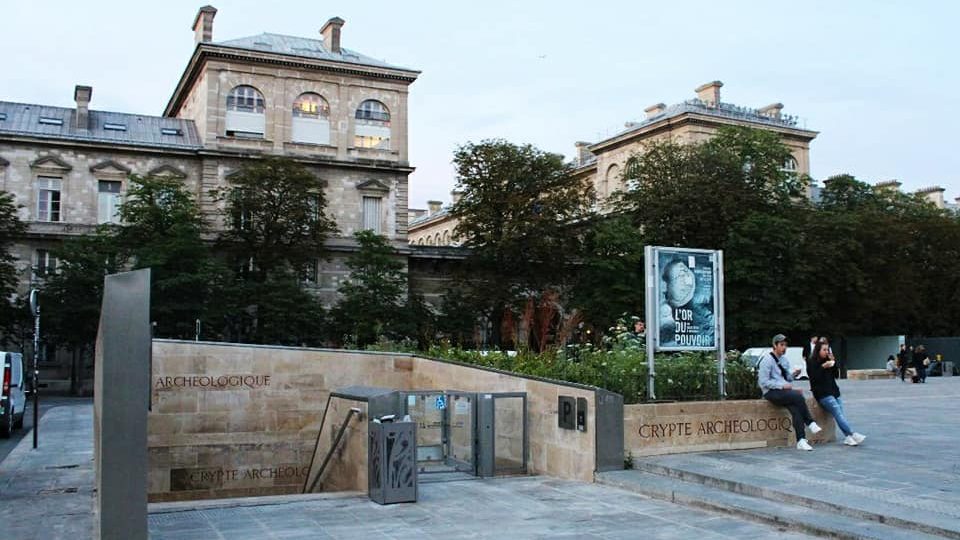
You do some serious digging around here and you are bound to hit a goldmine of history. Which is exactly what happened at the parvis of Notre Dame in 1965 when construction crews discovered vestiges dating as far back as antiquity while they began work for an underground parking garage (which never happened thank god). Over the next 15 years, excavation teams uncovered the foundations (dating as far back as the first century AD) of entire neighborhoods as well as a shipping port, sections of former ramparts, wells, even Roman baths where a sub-ground heating system can still be seen.


Incredibly, with the help of historical records researchers were even able to identify the owners of medieval cellars uncovered here!Over time, these were covered and new homes were built on top of the old ones, slowly raising the ground level and modifying the shape of the island as time went on. When they were rediscovered, instead of covering them up to be forgotten; they were carefully unearthed and studied, then transformed into this fabulous, interactive museum which opened in 1980. I highly recommend anyone interested in Paris history and archeology to check out this museum, (tickets are only 5 euro!) which is always free of lines and crowds unlike other popular tourist attractions. Its not huge but if you want in-depth information of how Paris has transformed itself through the past two millennia you could easily spent an hour or two here.

Have you visited the crypt? If so, what did you think?


 Paris History of our Streets