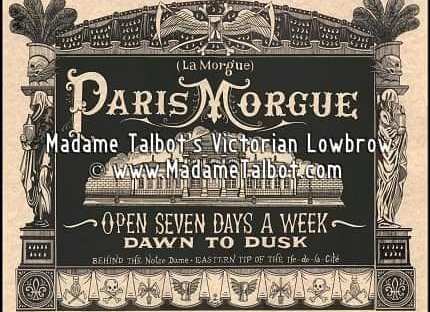
Before The Big Fire, the Cathedral of Notre Dame was one of the most visited landmarks in Europe and about 13 MILLION people come annually to see this gothic wonder. Since it’s first stone was laid over 800 years ago, Our Lady has been a beacon in the city of lights to Parisians, pilgrims, and tourists from all over the world.
Imagine you are a visitor to Paris in the 19th century looking in your travel guide (yes travel guides have been around longer than Rick Steves) at the ile de la cité. Chances are the first recommendation wouldn’t be ND, but rather the other, even more popular attraction in the area… The Morgue.
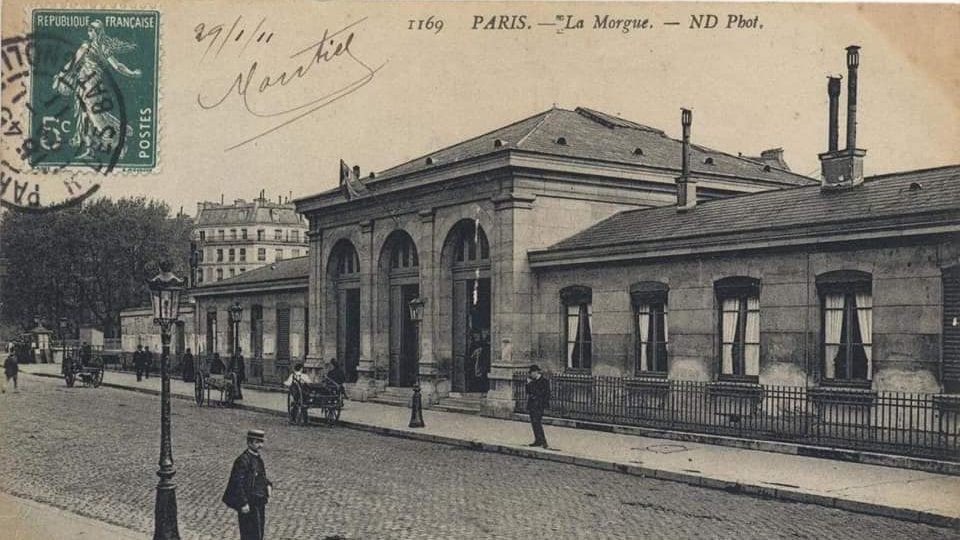
No visit to the Morgue would be complete without a postcard!
Listed as a MUST SEE next to the Eiffel Tower and Catacombs, the morgue was described by Hughes Leroux in 1888 as “a part of every conscientious provincial’s first visit to the capital”.
To give you an idea of its popularity, the Eiffel Tower today receives about 20,000 visitors per day. In the 19th century the Morgue received as many as 40,000. We all know our Victorian predecessors were a rather morbid bunch (“oh poor Granny kicked the bucket last night? Quick Edmond, throw her in her rocking chair and force her eyes open so we can get a photo op before the rigamortus sets in!”) but this macabre tourist attraction might be excessively ghoulish.
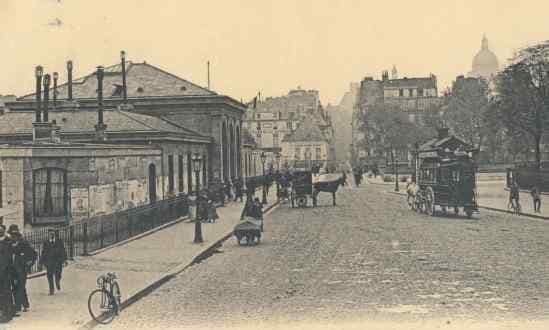

Originally situated on the Quai du Marché Neuf, a larger and more modern Morgue was built in 1864 in the backyard of Notre Dame on the Quai de l’Archevêché. Although the morgue was built for the intended purposes of identifying and embalming bodies (most of which were fished out of the Seine, which conveniently flowed just a few meters away) it was literally advertised as being a sort of grim spectator sport.

Similar to visiting an oddity at a Carnival like a bearded lady or conjoined twins, up to 50 people at a time would pass through the entry and gaze at the cold, naked bodies laid out on marble slabs behind a window of glass.
Anyone and ANYTHING (yes that detached leg might look familiar to someone) that needed to be identified was displayed at the Paris Morgue. Thick velvety curtains were hung at either end of the display room so workers could discreetly change bodies on a regular basis, and then dramatically open the curtains like a stage show.
Spectators would gawk and gossip over the remains; murder victims and young women drew the most crowds. Jersey Shore wasn’t a source of entertainment in the 1800’s, but to get your fix of reality entertainment, you could come to the morgue when the police arranged a special “confrontation” between a murder suspect and his victim! Our wholesome American author Mark Twain was even known to be a regular visitor of the Paris morgue.
Strangely enough, the Morgue wasn’t just a place for tourists. It was a social place to see and be seen; with men, women, and children from all social classes passing through its doors regularly in the name of civic duty, sometimes stopping to have a chat with neighbors outside to gossip over the most recent finds, maybe even buying cookies or gingerbread from various venders near the opening to snack on before entering.
Emile Zola described the morgue in his book Raquin from 1867 as “The morgue is a sight within reach of everybody, and one to which passers-by, rich and poor alike, treat themselves. The door stands open, and all are free to enter. There are admirers of the scene who go out of their way so as not to miss one of these performances of death. If the slabs have nothing on them, visitors leave the building disappointed, feeling as if they had been cheated, and murmuring between their teeth; but when they are fairly well occupied, people crowd in front of them and treat themselves to cheap emotions; they express horror, they joke, they applaud or whistle, as at the theatre, and withdraw satisfied, declaring the Morgue a success on that particular day.”

The morgue was eventually closed in 1907 due to “morality concerns” and this was good timing given the horrors that would soon come from WWI and II.
You may wonder how people not far off from us today, (maybe even some of you Boomers knew them as your parents or grandparents) could entertain themselves in such a horrid way, but its important to note this was during a time when executions were still public and death was much more a part of daily life. Besides, you were probably keen to check out The Body Worlds exhibit when that took the modern world by storm weren’t you?
Today, the building is gone, and a there is a simple park with a Holocaust Memorial in its place.

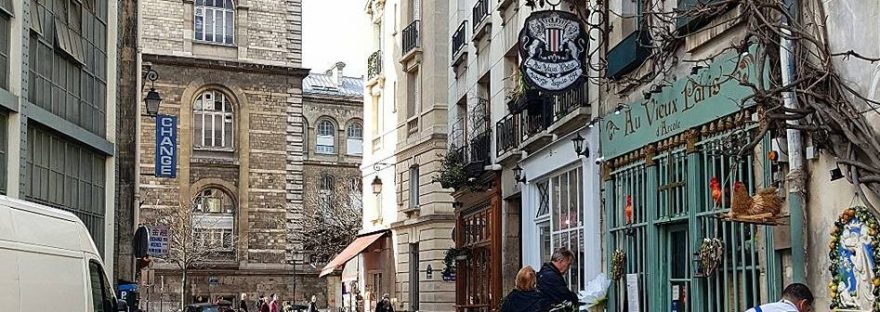


 Paris History of our Streets