latin quarter, Maps

Dungeon Style Nightclubs #2

Caveau de la Huchette 5 rue de la Huchette Paris 75005

Dating in Paris gets taken to a whole new level, especially when the rendez-vous location is a 16th century medieval cave once frequented by the mythical Templar Knights (think Gerard Butler circa 300 fighting for God rather than Sparta) before evolving into a legendary jazz hotspot in the post WWII period when Paris thrived.
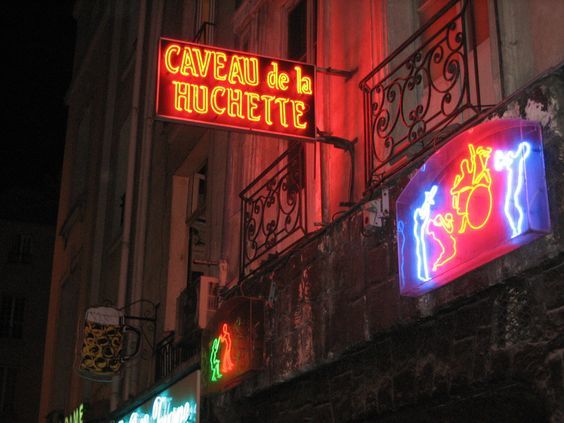
There is much more history to the Caveau de la Huchette, but today I’ll be sharing a bit of my own personal saga from 2014, which I’d like to think I can owe in part to this epic cabaret-theater watering hole of the Latin Quarter.
One of the first dates I had with my French Amour was here and looking back- the noisy cave packed with swing-dance enthusiasts, regulars, and a few odd tourists was the perfect location for a new couple who could barely communicate! (At the time, my French was the equivalent to a 5-year-old child and his English vocabulary consisted of anything you’d say to a tourist in a Paris dive bar)

When he said we would meet on the Rue de la Huchette after sunset, I initially had my doubts. Sure It’s a fun area, but its also super touristy; filled with cheap restaurants serving “Authentic French Food” catered to American tourists and bars advertising free shots where dirty bras hang from the ceiling.

Great location to have a fun night, but not quite romantic, even for this quirky Wisconsin girl who is the farthest thing from high maintenance! I didn’t need a trendy cocktail bar but a place where I’d likely meet an 18 year old American university student with his head in a toilet after too many beers wasn’t what I had in mind.

However my low expectations were replaced with stars that filled my eyes as he paid the small cover inside entryway of the Caveau de la Huchette and we descended down to the cave below, stooped and hand in hand.

What I was met with still remains to be one of my best Paris memories.
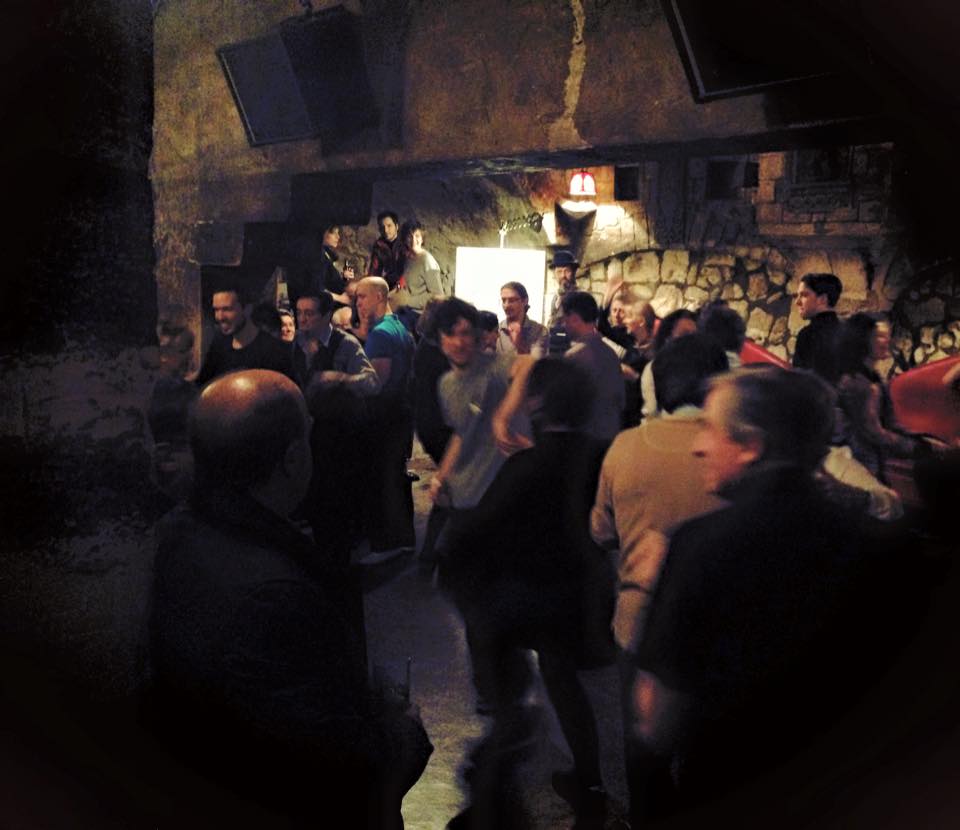
What I encountered going down into the cave.. MADNESS!

The cave, which was quite large compared to similar underground pubs in the city- was buzzing with couples dancing. And not just any old aimless arms waving and booties shaking, but with authentic swing dancers!

Dapper men were tossing their partners all over the place as a jazz band played on the stage and I felt like I walked onto a 1940’s Fred Astaire film. We took a place in an intimate corner seated on a shaky table where we got to know each other better as we sipped wine and reveled at the scene before us.

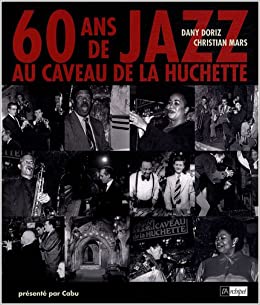
An older photo from the Caveau de la Huchette similar to the atmosphere I experienced

But then it got even better.

Suddenly a man appeared with a large blank canvas which he set up on an easel beneath a light. Gently rocking back and forth in time with the music; he began to paint the chaotic scene that flowed on and around the dance floor in front of him. When I worked up the courage to go and have a look after he finished, I was amazed to find that we were included in his impromptu masterpiece!
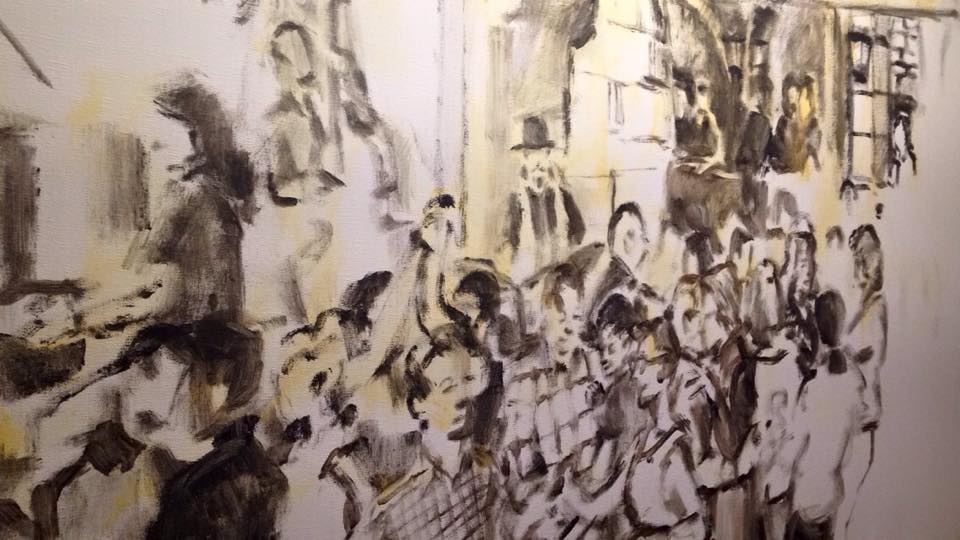
The Painting

Barely visible in the corner is a couple, a darker bearded face leaning in close to a paler one. (see photos)It was us, forever frozen in the historic Caveau de la Huchette. And at that moment, I knew I found a special guy who might pronounce the word Beach as Bitch but he needed no dictionary to translate the language of love- which for me speaks through history rather than popularity.
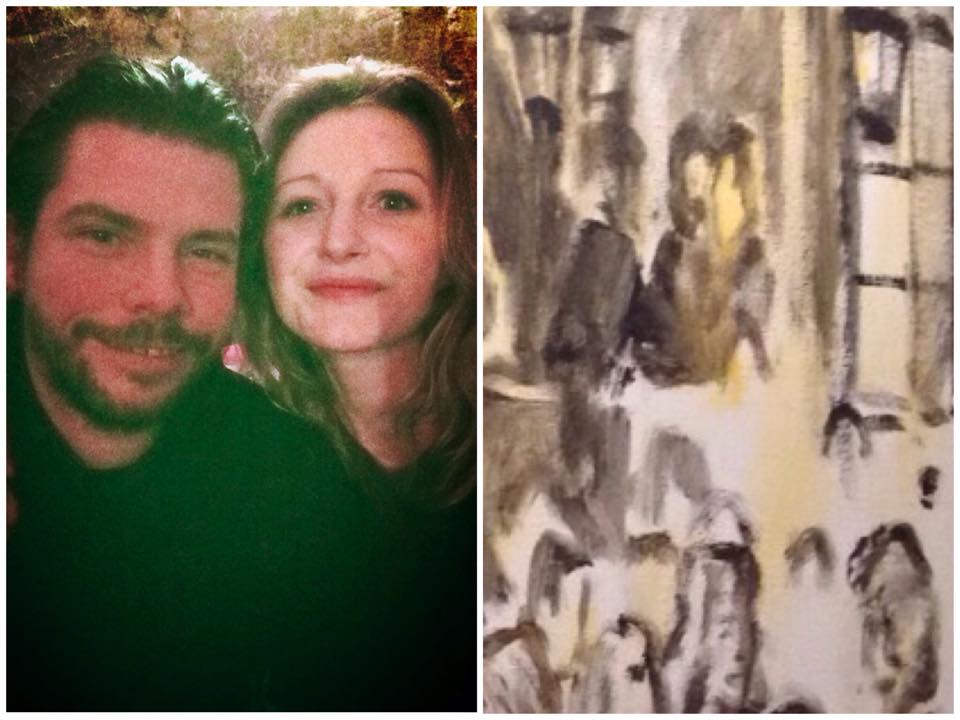
First date 2014
Still going strong in 2020!
latin quarter, Maps

Cutting Corners

Have you ever noticed funny looking corners on old buildings in Paris?

There is a reason!

These corners were cut concavely to reduce damages done by medi-Evil Knievel style drivers who took corners too sharp in their carriages or wagons. They were also a way for Stone Masons to show off their Stereonomy skills. (No no, not the study of stereos. This is a technique used when cutting three dimensional solids into wacky shapes)

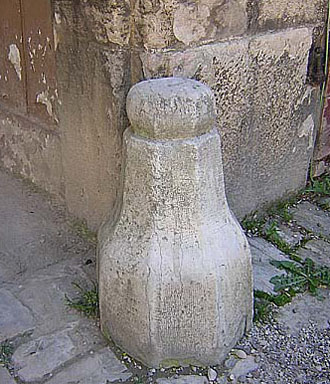
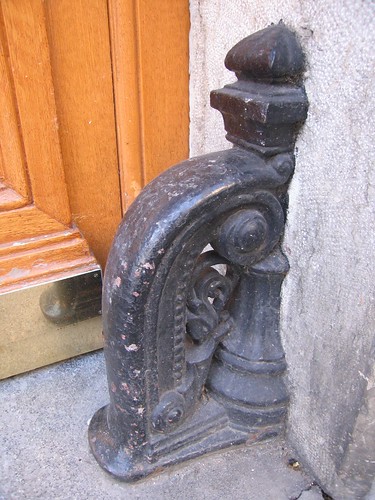
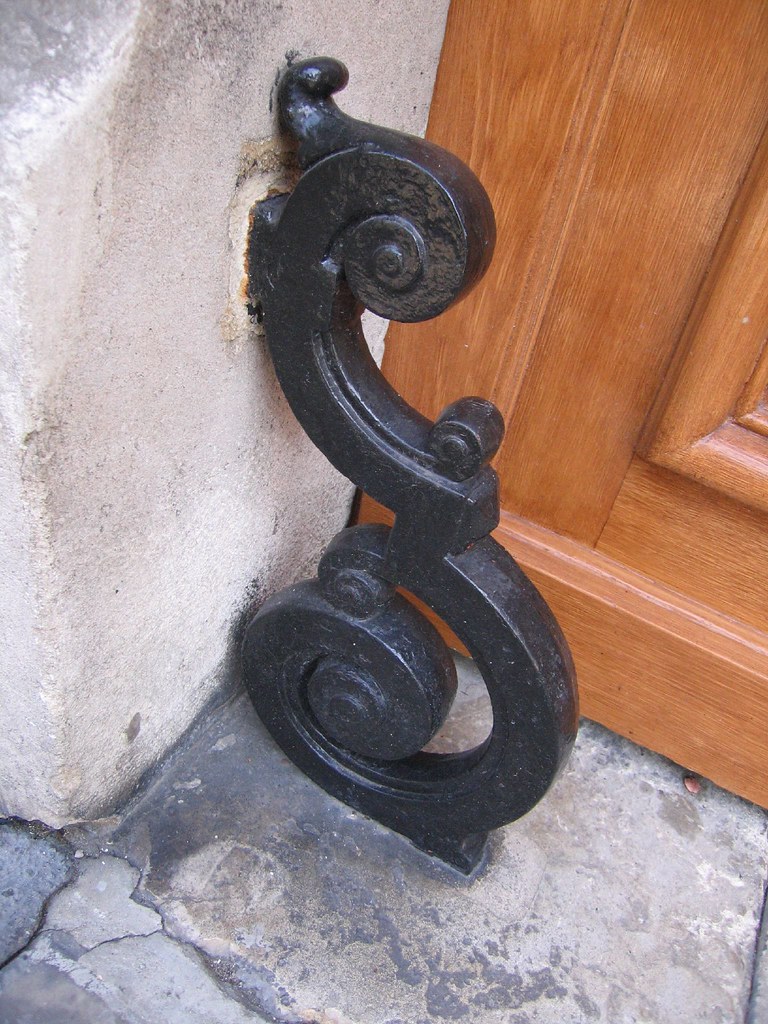
You can find similar Anti-Carriage Wheel Damage Devices at the entrances of many buildings, known as chasse roues/wheel chasers.

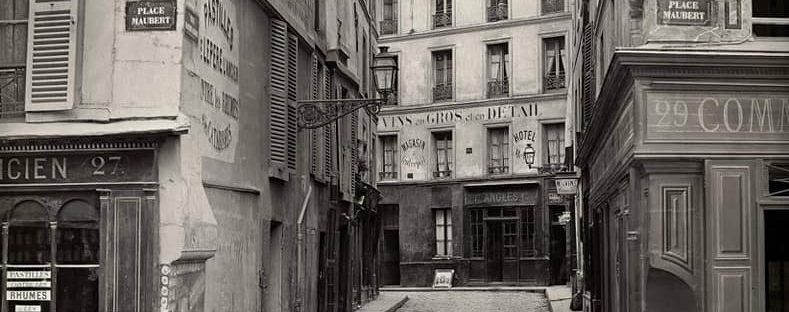
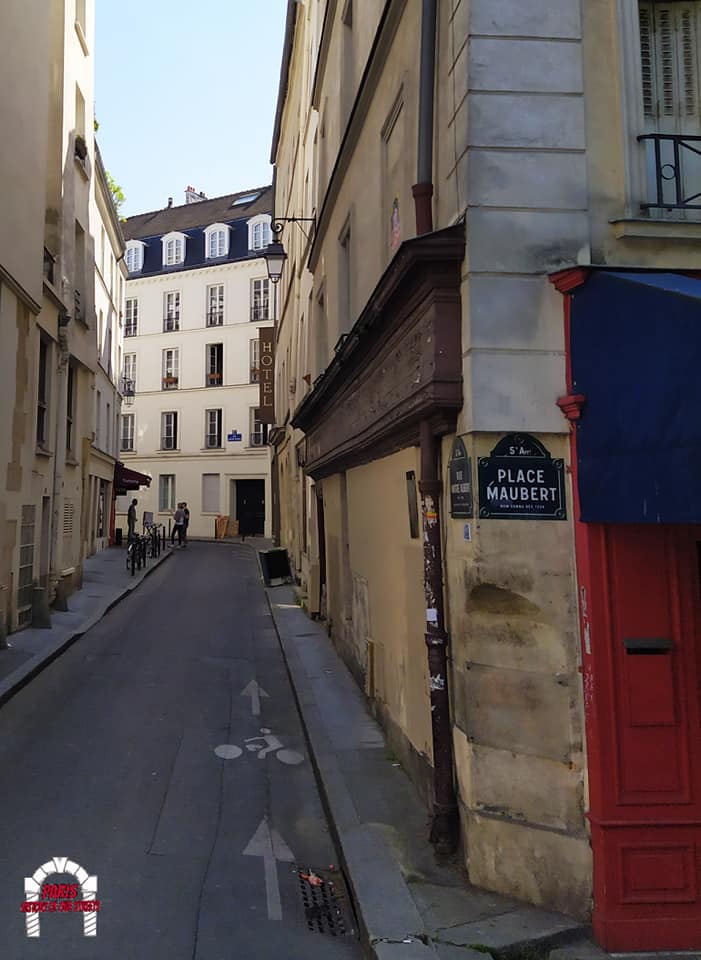
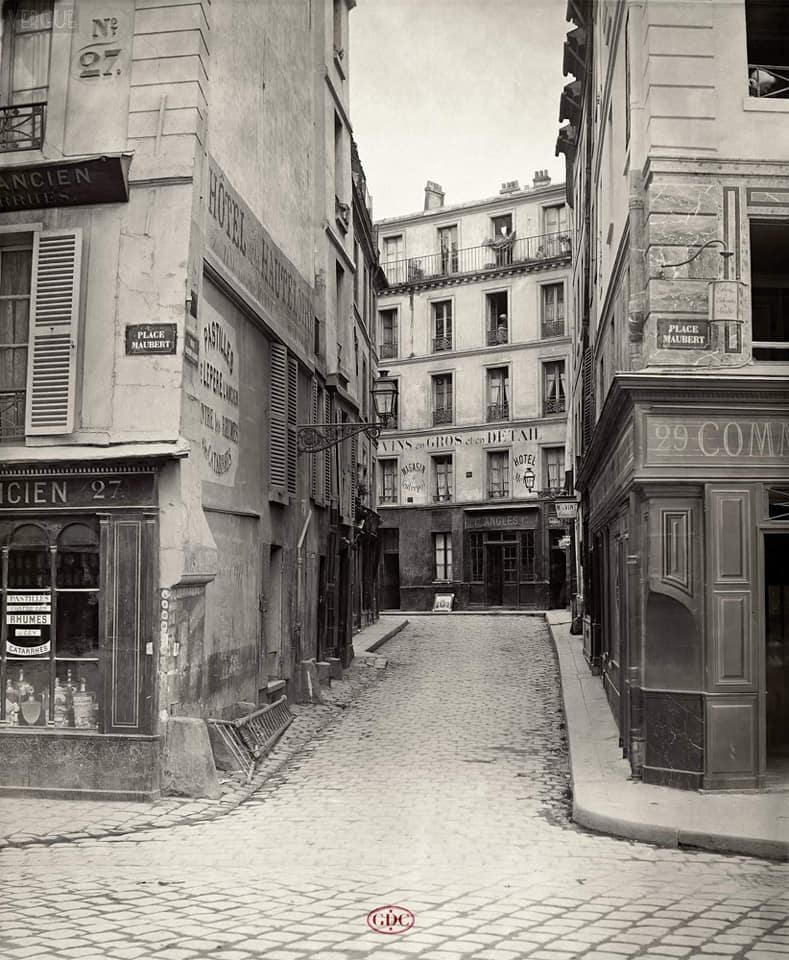
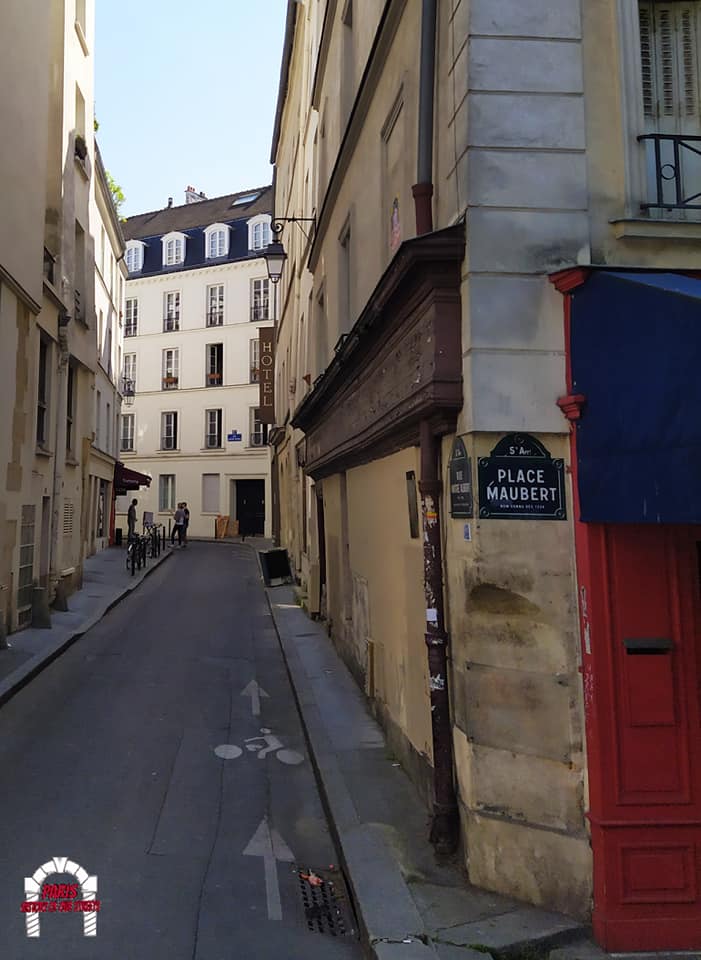
Here is a picture of one of my favorite truncated streets corners in Paris.

Black and White photo taken by Charles Marville, 1866

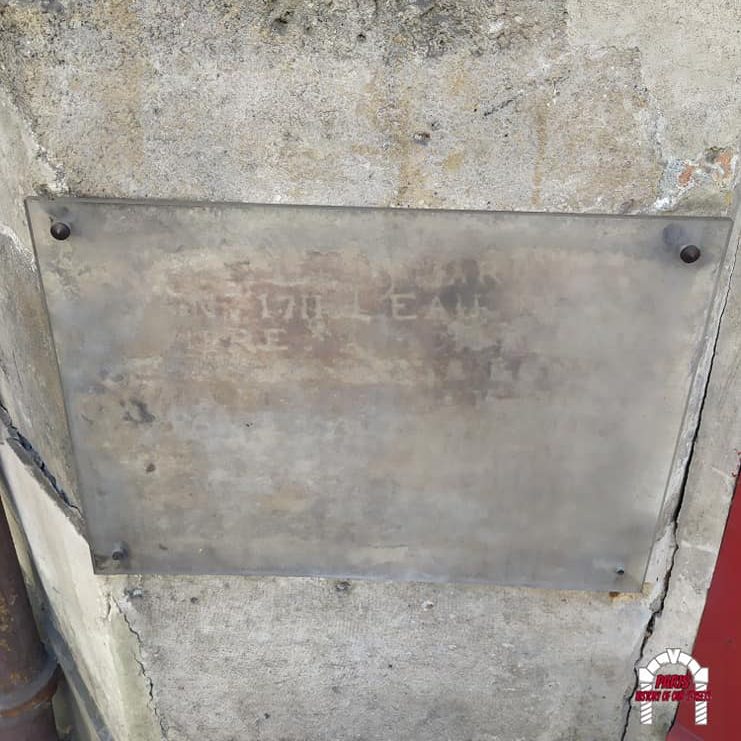
Located at the corner of Rue Maitre Albert and Place Maubert in the 5th, if you get up real close, you can see a super illegible description behind a plate of plexiglass.

This indicates the height of the water level from a flood in 1711, as well as stating that this building was created just a year prior in 1710.

latin quarter, Maps

16th Century Digs

27, 29, and 31 rue Galande Paris 75005

Three curious 15th century buildings, photo from about 1900

These maisons à pignon (gabled houses) are some of the oldest buildings in the city of Paris. They date back to the 15th century guys, that blows my mind! So why don’t we see more of them?

Because they are old as dirt, and about as flammable as a hot fart! We can thank 19th century Paris Urban Planning Transformer Eugene Haussmann for leveling medieval streets just like this that once existed all over Paris. Rue Galande was thankfully preserved.

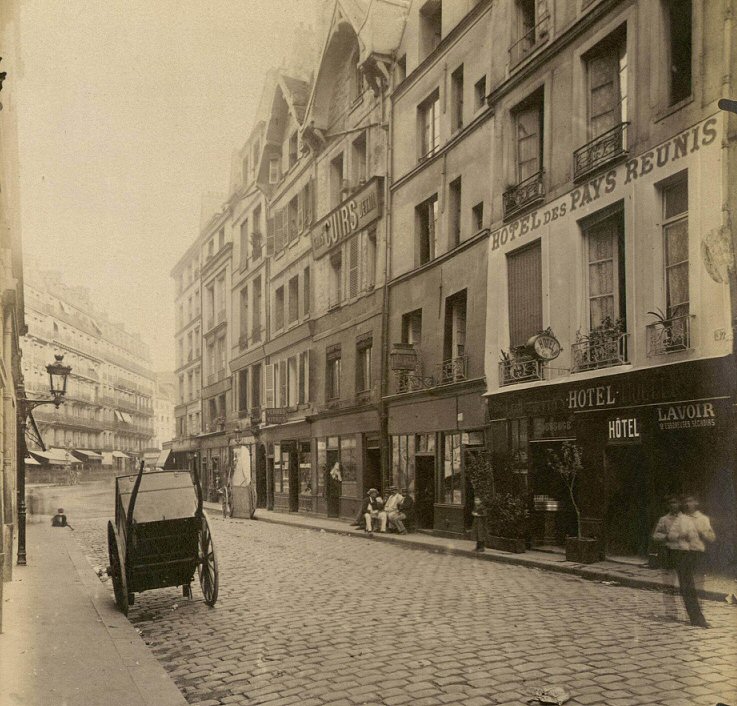
Another view from the other side. This photo was taken around 1900 by Eugene Atget. Can you compare it to the above photo and spot the differences? The Paris Medoc sign has changed to CUIRS

If you were to travel back in time to Paris circa 1600, streets here would be narrow, dark, and rank- all lined with a seemingly endless array of tall and narrow half timbered buildings. (Half timbered because rocks and plaster filled in spaces between wooden supports, as opposed to something like a log cabin built entirely of wood)

To sum it up: if you weren’t like the 1% living a life of luxury in your stone Hôtel Particulier (castle like mansion) you were living in a wooden timber framed house. And heating the rooms, cooking the meals, and boiling your water from a fire. That was, uh, in your wooden house. Smashed up against other wooden houses.

Makes sense! NOT.

Following a disasterous fire in London during May of 1666 that wiped out entire neighborhoods, King Louis XIV realized that his city was very fire friendly, so he passed a law in 1667 that forbid buildings to be constructed as “pignon sur la rue” (with the gabled roof facing outwards perpendicular to the street, giving the roof a triangular appearance) because fires could easily “jump” between roofs that are built this way, (thanks for the heads up London!) as opposed to roofs that ran parallel to the street where a fire proof wall could seperate them. Houses also were required to cover their timber framed facades (front of the building) with plaster as a means of fire prevention.

Very few of these old homes remain in Paris today, but the most well known are these gabled houses in the Marais which many falsely consider to be the oldest.

Rue Francois Miron. Apparently these buildings existed in the 15th century but they were heavily renovated in the 1960’s

I always wonder why these curious buildings of the Rue Galande never make headlines in the “Oldest Buildings of Paris” lists, but I enjoying pointing them out to tourists when I’m in the area.

latin quarter, Maps

Dali Was Here

One of the main purposes of this page is to inform you of the little gems hidden in plain side throughout Paris and this one is sure to be walked past by hundreds of clueless tourists on a daily basis. I’m no collector of fine art (especially modern art- ew gag me) and all I know about Salvador Dali is that he is the creator of various trippy paintings depicting melting clocks and watches,

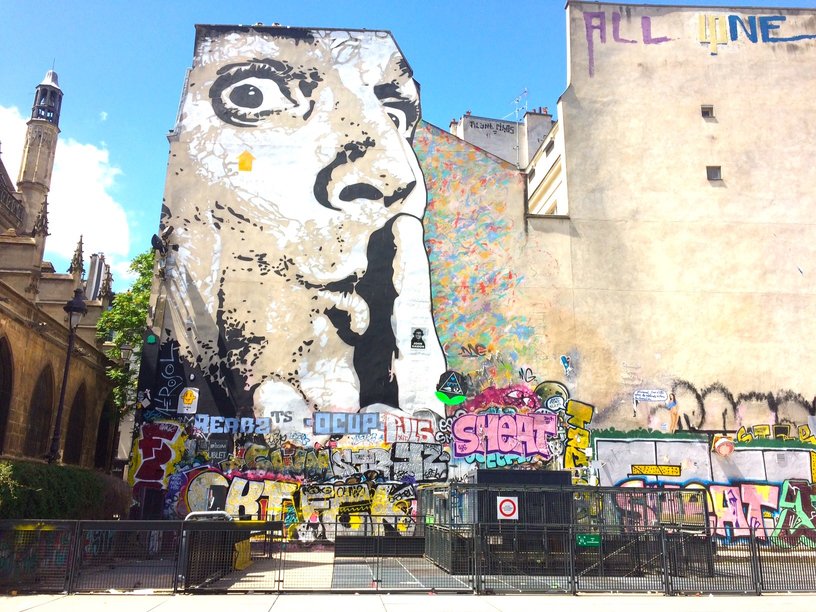
A Dali Wall Mural in Paris, photo by Urban Adventures

Dali lived in Paris in the 60’s/70’s where he used to go for walks with his pet anteater, he was the wrapper designer of Chupa Chump lollipop, and he had one hell of a moustache. But hey, you can find all of this on google yourself. You are here for the secrets right? Well here’s one most people walk by and have no idea even exists..

Dali and his pet Anteater coming up from the metro, 1969

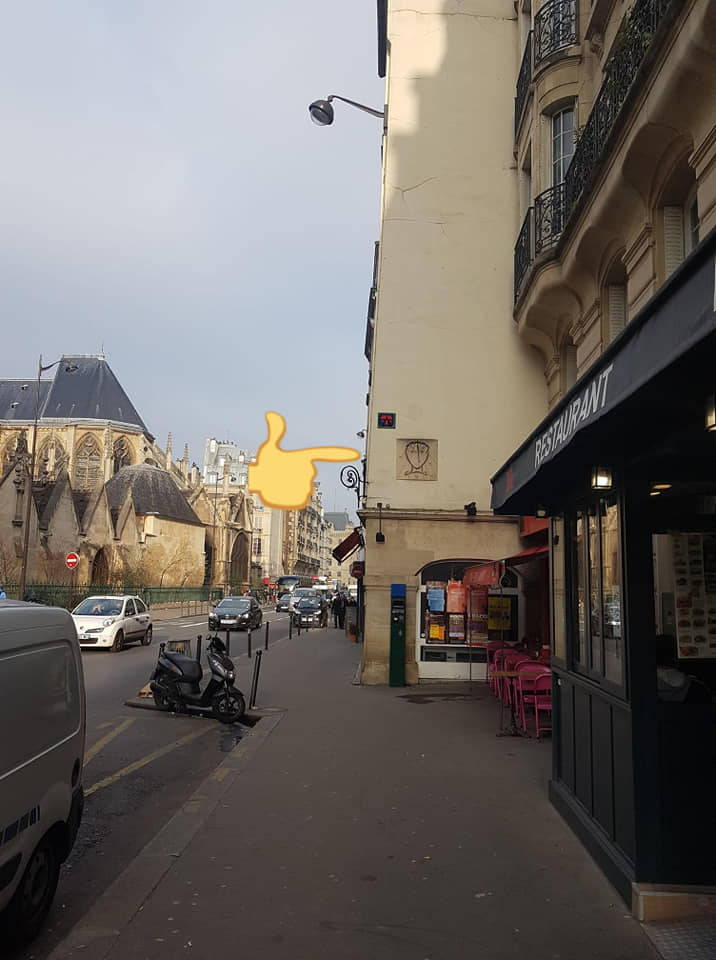
If you walk along the historic Rue Saint Jacques, not far from Notre Dame cathedral, be sure to look up (but also keep an eye out for those god damn annoying electric scooters) so you don’t miss the sun dial he left behind near number 27.

The Rue Saint Jacques looking north from Boulevard Saint Germain

There isn’t much information on this footprint left behind by Dali other than it was painted here by him in 1966 and revealed in a ceremony that included a brass band and his anteater. The image seems to be a combination of the artist (note the ‘stache) and a shell- probably representive of the pilgrimage route Saint Jacques de Compostella which follows its namesake Rue Saint Jacques through Paris all the way down to northwestern Spain. (Dali was Spanish) If you look in the bottom right corner you can see his signature; and the year it was placed here.

latin quarter, Maps

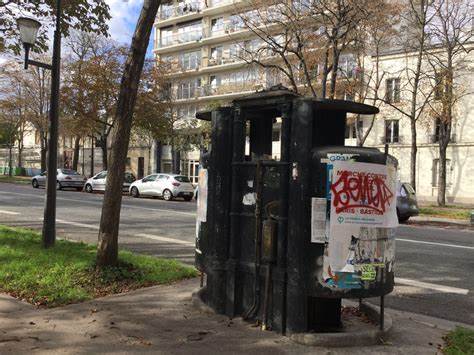
The Last Public Pisser

Boulevard Arago 75013

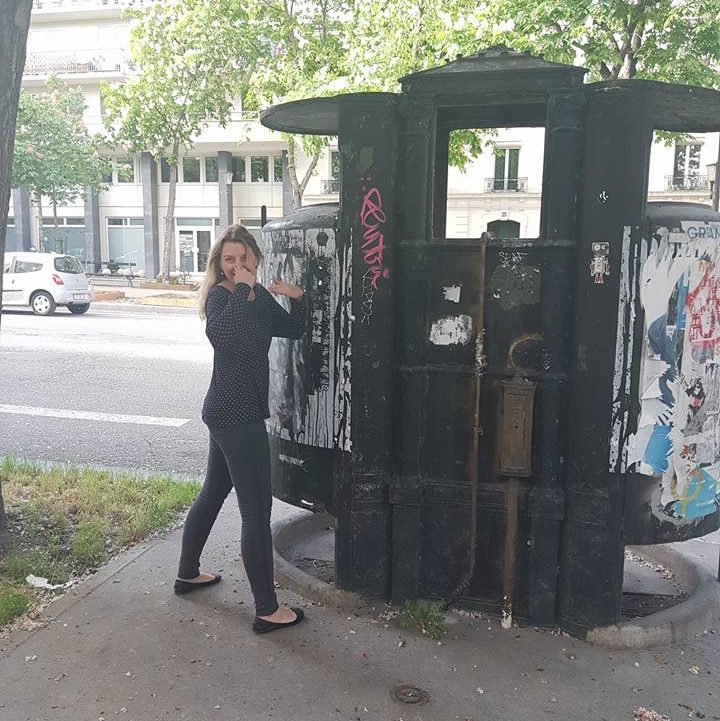
The last public urinal, neglected but still standing proudly

Today I’m taking you on a field trip to view the last remaining vestige of the modern porter potty, a relic of simpler times- when taking a piss in public didn’t mean whipping out your willy behind the limited privacy of your car door and throwing open the golden gates of your bladder while parked on Rue Saint Jacques. (Ran past a guy -in a business suit- doing this very thing in broad daylight recently)

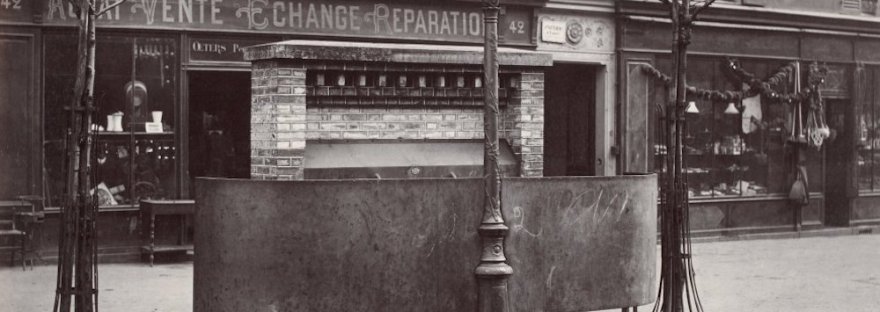
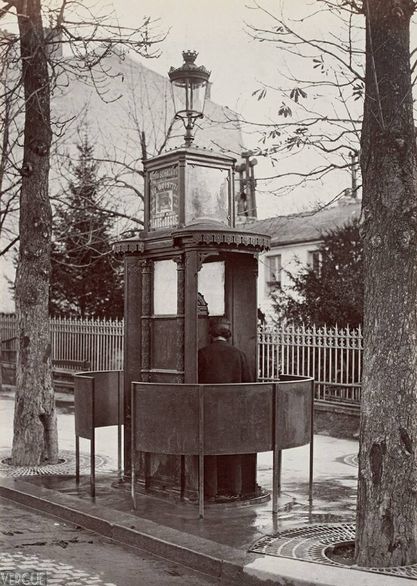
The Pissoir or Vespasienne (named after the ancient roman emperor Vespasien, who taxed people for using public urinals) first came about in the 1830’s in an effort to keep streets cleaner and preserve the dignity of females in the street who may have been unfortunately exposed to Mr. Longfellow during a public wee. It wasn’t long before someone had the bright idea to throw advertisements on the pissoirs to sell various products while also combating public indecency.

A large Vespasienne near the former Les Halles Paris markets

The pissoirs reached their peak in the 1930’s when there were about 1,200 throughout Paris but that number quickly shrank to 329 in 1966, probably due to the city not replacing ones that were broken and run down. After 2006 there was only one, and its currently situated on the picturesque Boulevard Arago in the 13th arrondissement. Its apparently still in use, obvious by its smell. 

That ain’t just normal urine folks. THATS UTI URINE!

Initially I wanted a photo inside, but this is as far as I could go before I started gagging

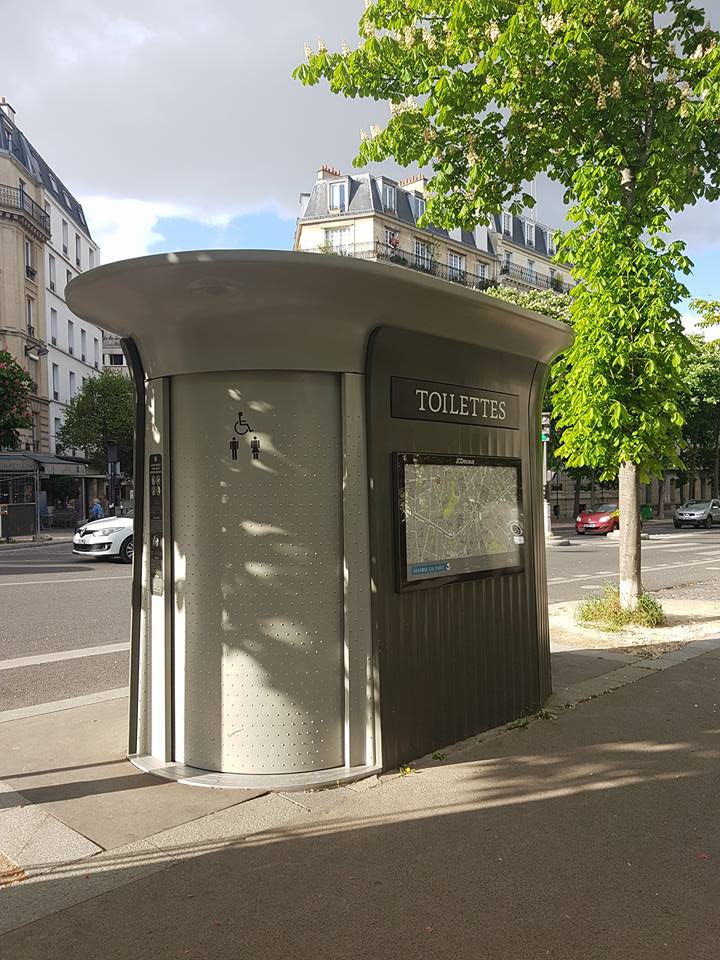
In the early 2000’s, the pissoir made a comeback and was rebaptised as the Sanisette. These bulky grey cube-like self-cleaning public toilets offered more privacy and were less smelly and dirty than the iron pissoirs who were probably only rarely doused with water. Originally you had to pay to use them, but they were made free to the public in 2009. The concept is great; they are accessible to all (male AND FEMALE, and they are wheel chair accessible, which is rare in Paris), they have a rinse cycle after every use, and are environmentally friendly. Some even play music!

There are currently more than 400 Sansinettes in Paris- yet they are used mostly by tourists and drug users. (The door automatically opens after 15 minutes in an ineffective effort to fight this) For myself, I used them in the beginning of my Paris life when I was desperate but now I’d rather pay 1€ for a café and use a dry toilet seat in a café.

Recently, a new type of public urinal (see photo below) has been its appearance in Paris, mostly on the riverbanks of the Seine. Despite its strangely, uhhh feminine appearance- (I’ll refrain from referencing female genitalia) let’s be honest- it’s there to cater to the male picnic population and their bladders full of rosé.

(VULVA VULVA VULVA)