latin quarter, Maps

The Catastrophy of the Archevêché Bridge

Pont de l’Archêveché Paris 75005

Buses having been circulating in Paris for a little over a hundred years and are the preferred method of transportation for Parisians who prefer to avoid the crowds and unpleasant odors from the metro. If you manage to nab a seat, the bus can be quite enjoyable, especially on lines such as 89 (latin quarter), 86 (left bank/Bastille), and 69 (Eiffel tower, Louvre) where for a 2 euro ticket you can have your own Paris tour.

An example of a current Paris bus map

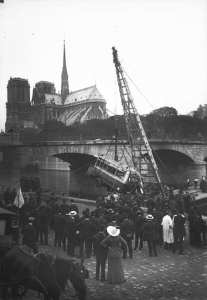
However like any method of transport, accidents do happen, and in this case, don’t necessarily involve a collision on the street. The deadliest Paris bus accident happened on the Archevêché Bridge September 27, 1911 when at about 5pm, the driver of the Line 205 bus (which ran from Jardin des Plantes to Square des Batignolles) lost control after swerving to avoid the same bus coming from the other direction, who had been stopped in the middle of the bridge to avoid running over a jay walking pedestrian.

Crashing through the metal barrier on the bridge, the bus plummeted into the Seine below, hitting the water with a force so hard witnesses described it as a cannon exploding. Carrying 27 people, the bus quickly began to sink to the horror of crowds gathering above.

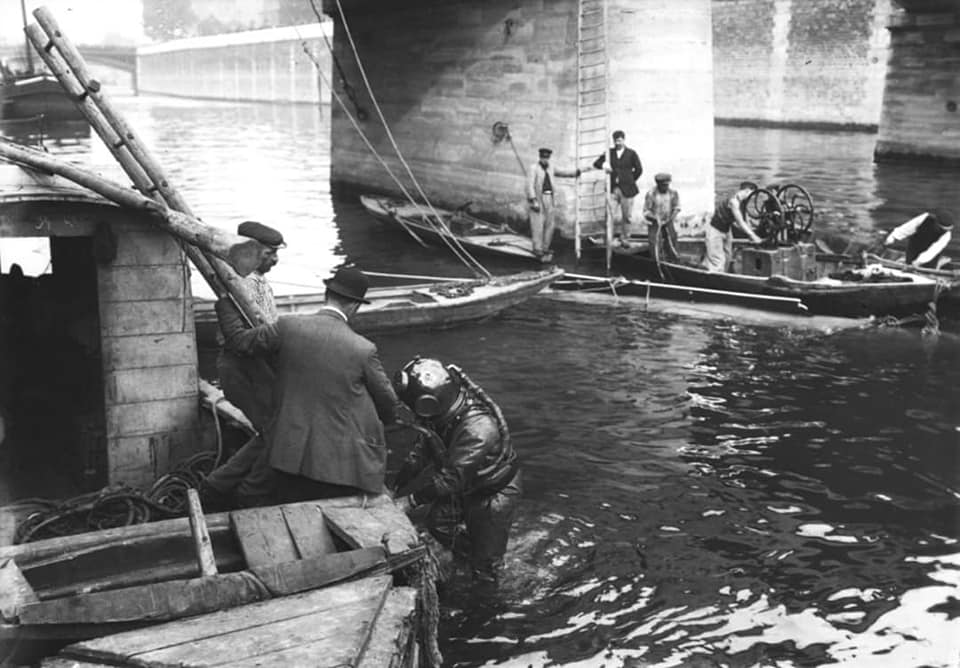
One passenger, Abbot Antoine Richard- was traveling in the first class part of the bus with two children. They were able to escape by a window and after passing the young Max et Marguerite off to a nearby boat, he went back to save four others until his limited eye sight prevented him from finding passengers still trapped in the water. Another hero was Eugène Mèneveux, who was working nearby when the accident happened. A champion swimmer, he rushed to the scene and saved a few people as well. The bus was pulled out of the water the following day. In total, there were 14 deaths including the driver (4 bodies were never recovered, likely swept away) and 9 wounded.
latin quarter, Maps

Zamour, the Beloved Slave of Madame du Barry

13 rue Maître-Albert Paris 75005

On the 7th of February 1820, the body of Louis-Benoit Zamor was found by his neighbor in his 2nd floor apartment located in the Rue Perdu (today rue Maitre Albert, right by Notre Dame).

Where Zamour lived and died

The writer Jacques Levron remarked that, “He lived in a small, sordid room, disliked by everyone. His body was thrown in a communal pit and no one came to his funeral.”

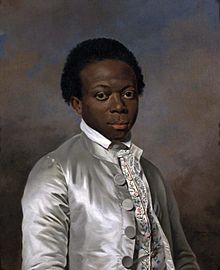
Louis-Benoit Zamor

Zamour spent much of his childhood at Versaille where he lived as the adopted son AKA human slave of Madame du Barry, famous maîtresse-en-titre to Louis XV. Born in Bangladesh around 1762, he was captured as a child by English slave traders then bought to France where he was given as a gift to the king’s favorite plaything. Jeanne Bécu, the former call girl turned Countess who gradually moved up in rank as she moved around the beds of her many lovers, until peaking with Louis XV.

Madame du Barry et le page Zamore painted by Jean-Baptiste André Gautier-Dagoty

But alas, the higher one climbs by giving sexual favors, the farther there is to fall, and du Berry found herself under the blade of the guillotine begging the executioner for “encore un petit moment!” in 1793. Seeking vindication for the years he spent serving her hot chocolate (daily, apparently at 9am) and dressing up to entertain her as a savage African (he was Indian),

Portrait of Du Barry done by  Élisabeth Vigée Le Brun, 1782

However payback is a bitch, and Zamour himself threw Du Barry under the Revolutionary Bus when he testified against her 1792. He acknowledged that even if du Berry treated him to a lavish lifestyle at the French royal court, she humiliated him and made jokes at his expense. She may have baptized and educated him, but he was little more than her human pet. Eventually, she would find herself under the guillotine blade, begging for her life. Unfortunately for Zamour, revenge must not have been so sweet because he found himself imprisoned during the Reign of Terror for several weeks when he was accused of treason as well.

Image of Madame du Barry and Zamour from the Sophia Coppola film Marie Antoinette

He miraculously survived and post-Revolution, he came to the Latin Quarter of Paris, where he was known as a bitter old man. No shit! Having received a valuable education at Versaille, he worked as a tutor but was known to physically abuse the students he worked with. Despite the legacy he was left with, I really think there is more to Zamour than what we know.

latin quarter, Maps

The Last Open Air Family Cryptes

The Garden of Saint-Séverin Paris 75005

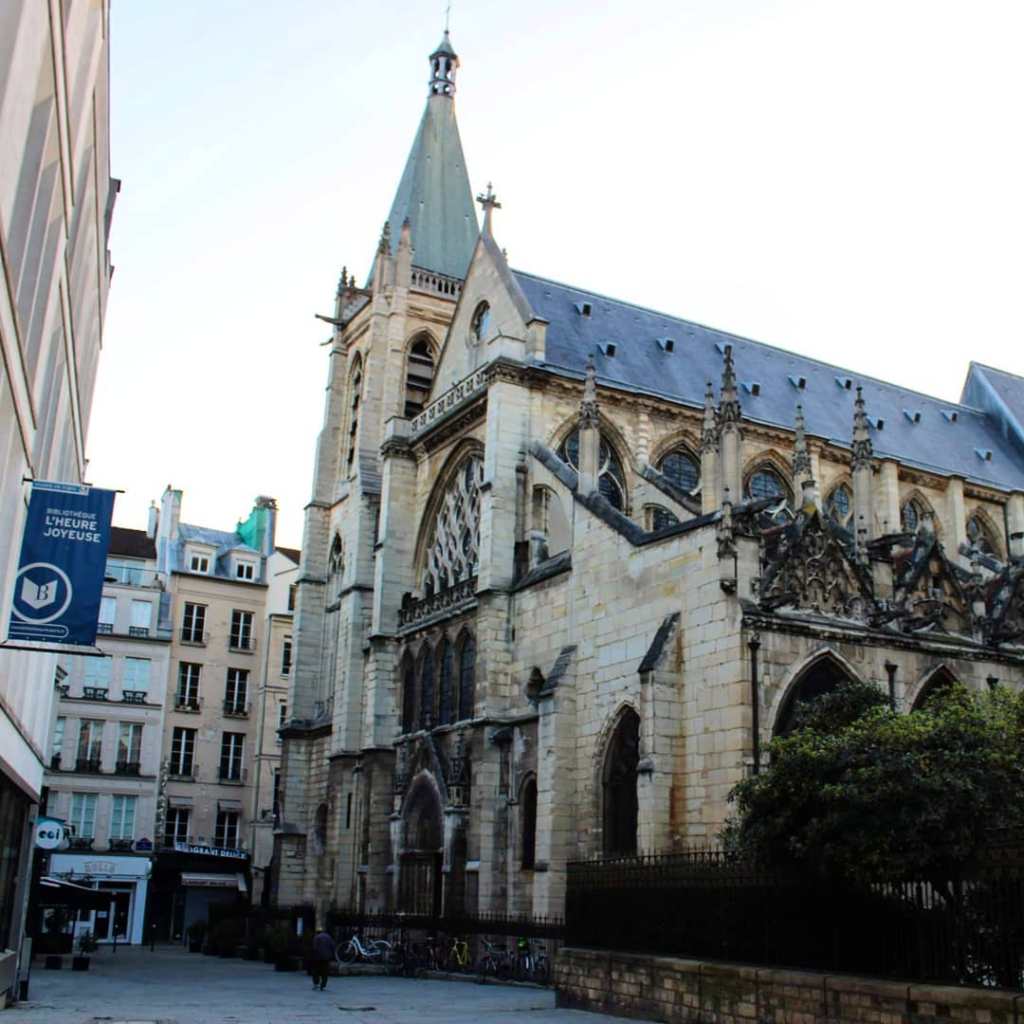
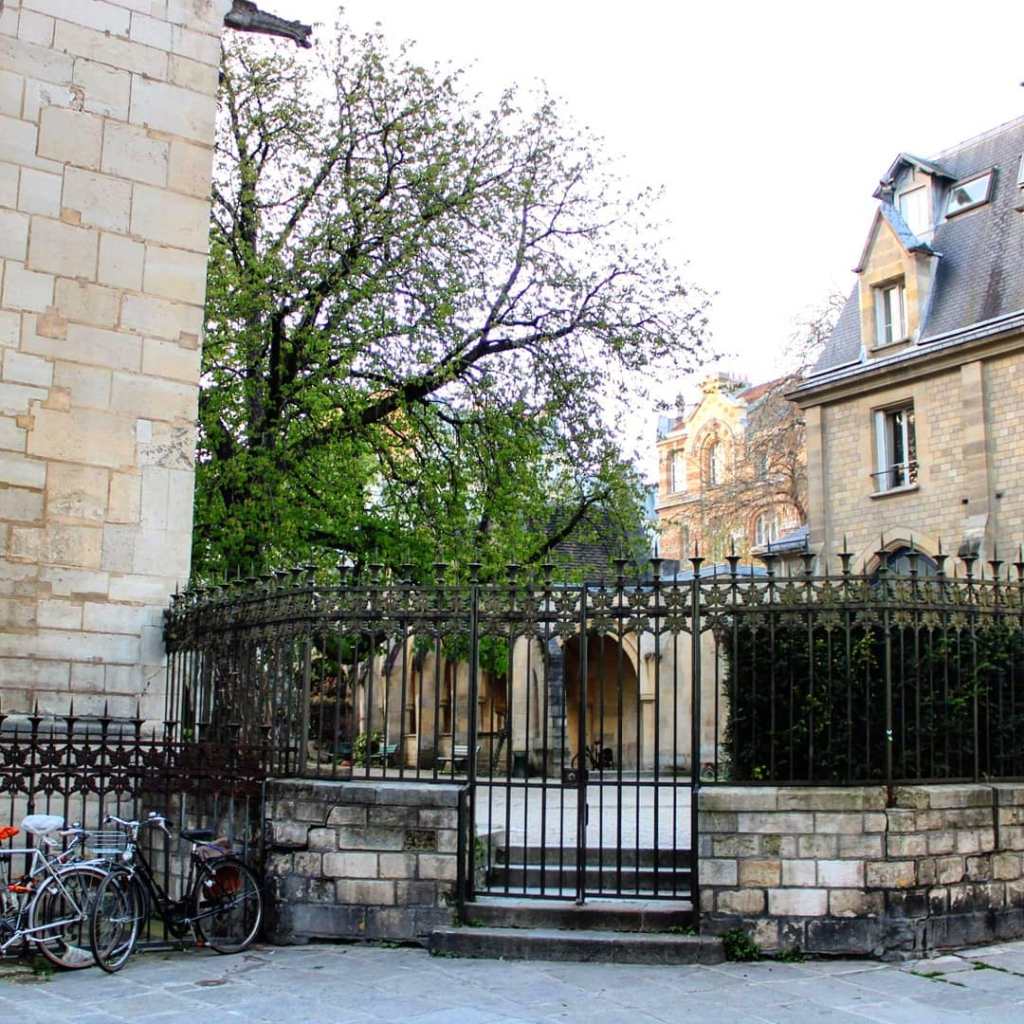
Despite being smack in the middle of the busiest part of the city, you wouldn’t know this secret oasis exists unless you spot it from the Rue des Prêtres Saint-Séverin, and even then, its been closed to the public for a few years.

The 15th century Saint Séverin Church, can you spot the garden?

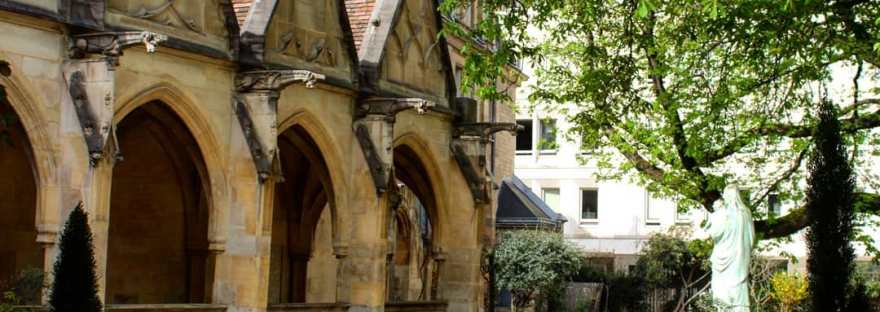
What’s remarkable about this tranquil garden is its gruesome past, which is a lovely contrast to the hoards of Starbucks sipping tourists who walk right past it unaware. From 1250 up until 1674, this garden was actually the final resting place for local Parisians. But this wasn’t your modern landscaped and marble chiseled tombstone decorated with seasonal shrubbery. Oh no, true to medieval form, this was a gruesome cemetery.

The LOCKED entrance of the garden, only open for religious celebrations and BBQ’s

There were two ways you could be interred here.

  1. Simply tossed in the mass common grave with every Tomas, Dagobert, and Godwin
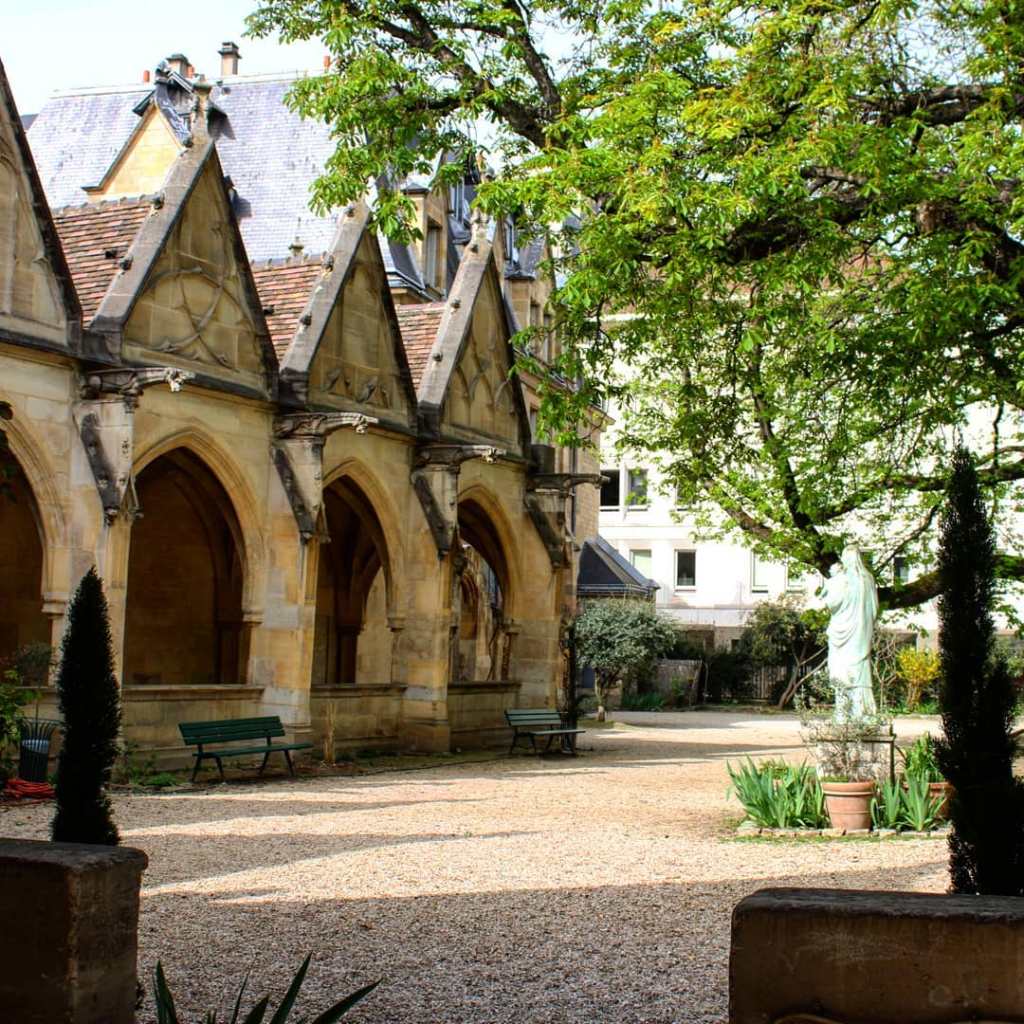
  2. If you were lucky and came from a notable family, your body would be interred within a “charnier” (Latin for Carnalis, or ‘of the flesh’) and left to rot in style piled on top of your ancestors until only your bones remained.
View of the Charnel Houses from the locked gate on the Rue Saint Jacques
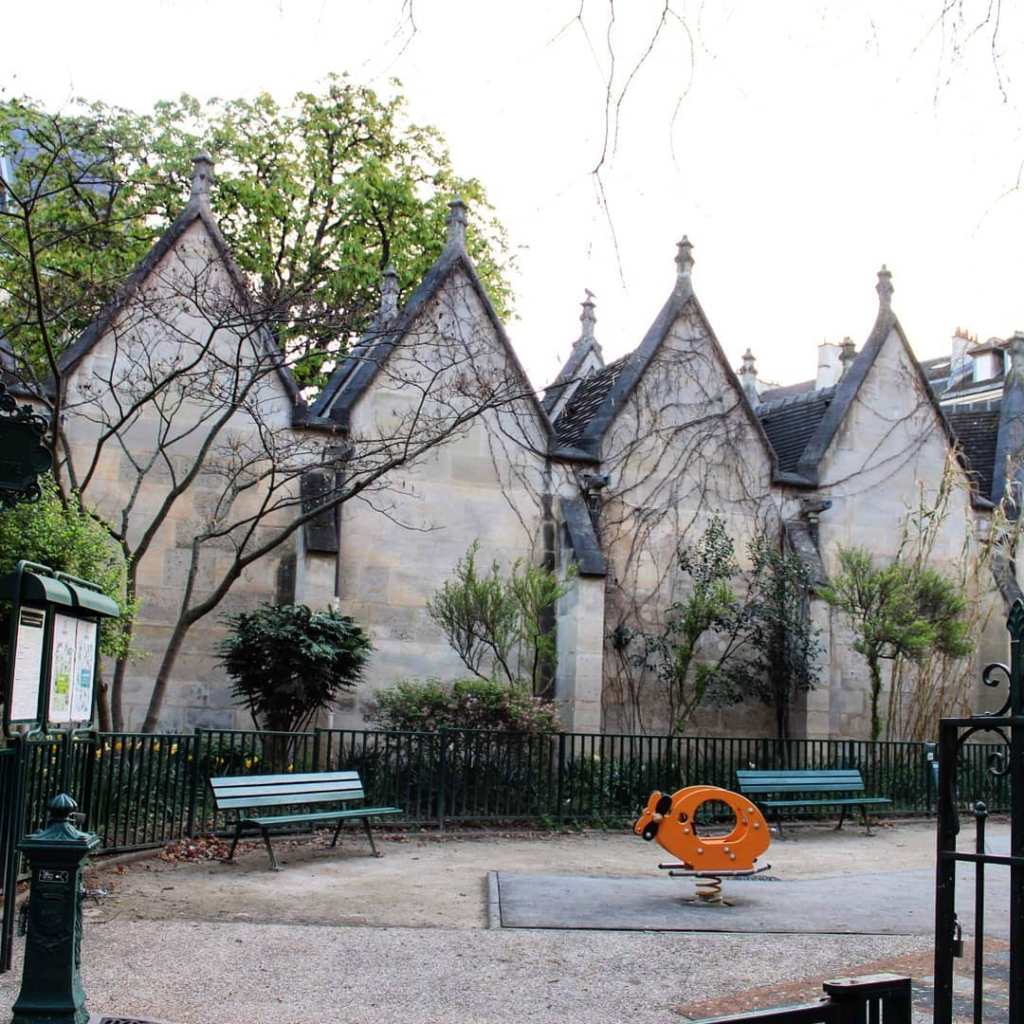
A view from the back of the Charnel Houses, a questionable backdrop for this playground

The word Charnier comes from the Latin word Carnalis, or “of the flesh”. Which is approrpiate considering it was a lot more modest to decompose within the cozy confines of a dozy open air mausoleum than in a mass pit with all the other village plebes.

View of Saint Séverin from 18th century Turgot map with arrow indicating the Charnel Houses

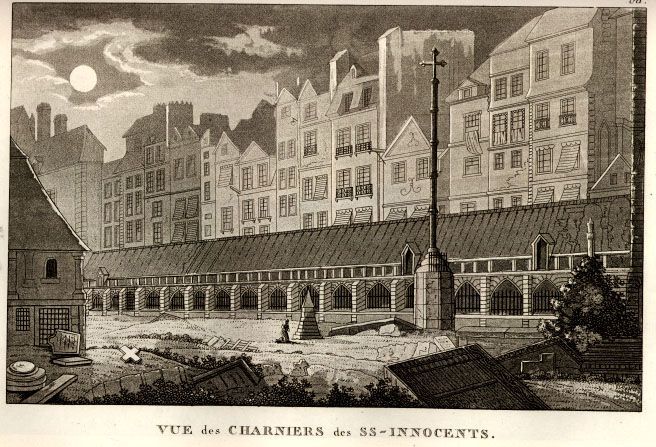
And right here within this garden are the only remaining original Charnel Houses in all of Paris, outfitted with benches instead of generations of decaying bodies. The most famous Charniers were those of the Cimetière des Innocents, an urban necropolis which became so overfilled with the dead that in 1780 a few surrounding basements began to cave in from the pressure of centuries of human remains.

Vue of the Innocents Cemetery

This event would be the catalyst which created the infamous Paris Catacombs when the question of “Well where the heck can we store millions of skeletal remains so they don’t become a serious public health issue?” was answered with “Yo let’s stack them up like Human Jenga pieces in abandoned underground quarry tunnels! IT’S A BINGO!”

The Catacombs of Paris.
Bones from the Innocents Cemetery put here in July 1809

The charniers of Saint Sèverin date from 1430 and originally surrounded this park until their professional retirement in 1674. A few were destroyed and tweeked over the years but the remaining were restored in 1940.

Check out Part 2 to learn how I managed to get past the locked gate in the middle of the night to see the Charniers up close!

latin quarter, Maps

The Treasure of the Rue Mouffetard

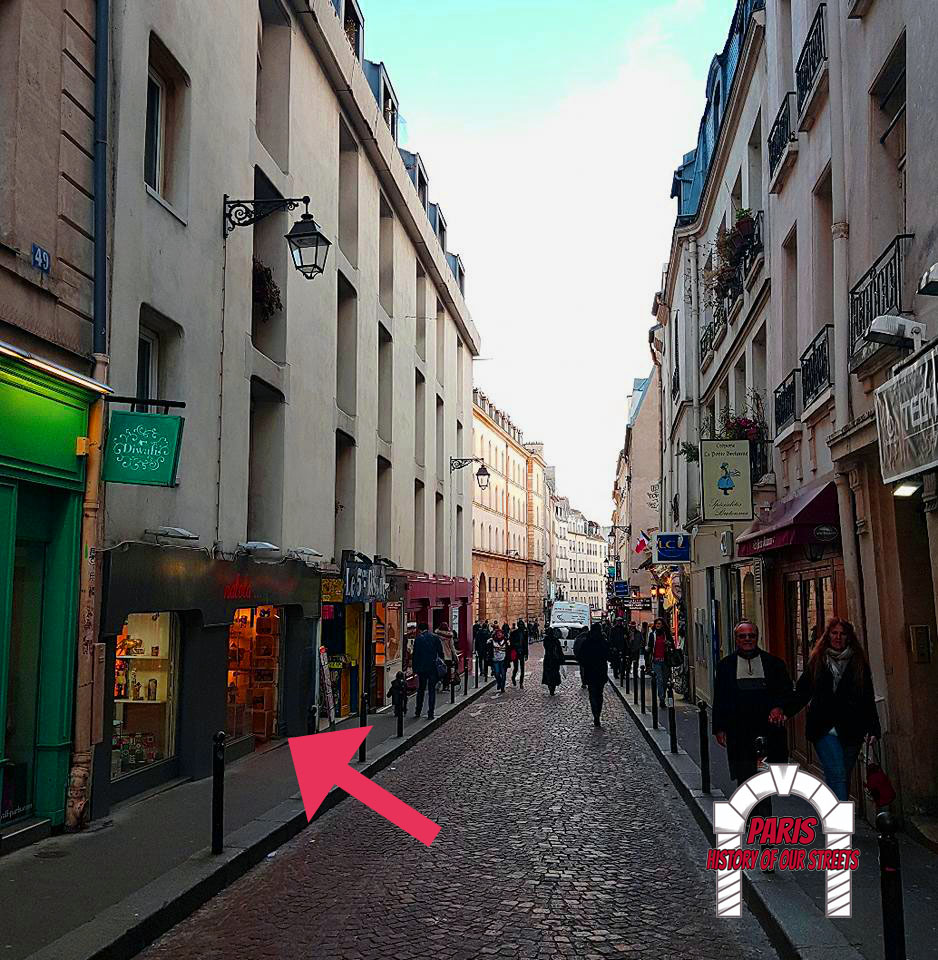
53 rue Mouffetard 75005 Paris

In honor of Saint Patrick’s Day, today I’ll be sharing the true story of a REAL pot of gold, found on the infamous Rue Mouffetard, the beloved street that still manages to retain a touch of authentic Parisian charm.

If you take a look around the area near the interaction of the Rue Pot du Pot de Fer, you will see a souvenir shop, and a vegan Pastry shop, and an E-cigarette Boutique. Hello 2021!! Right where you see a hideously modern building, an old AF apartment building dating to before the 16th century used to stand.

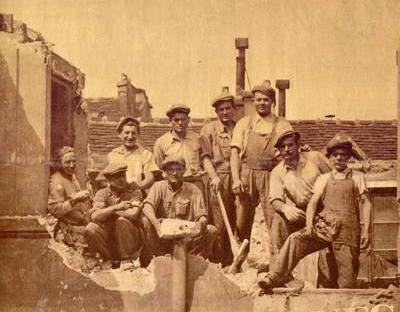
In May of 1938, as it was in the process of being demolished, a treasure was discovered amongst the rubble.. The Treasure of the Rue Mouffetard! When I saw this book title in 2018, I was pretty stunned. I mean, I’m an amateur historian and this is MY street, how have I never heard of this treasure?!

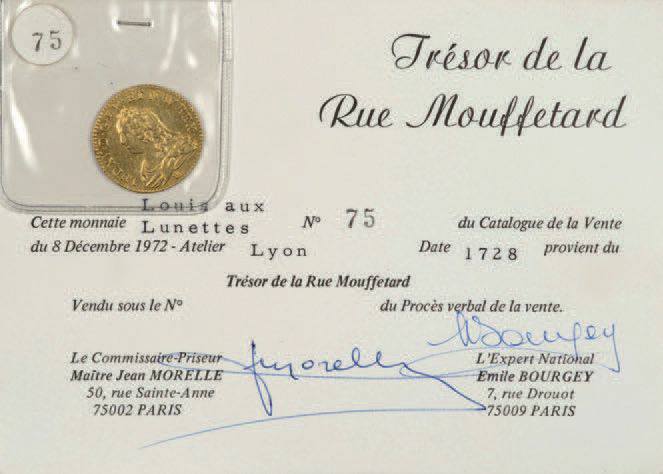
Wrapped neatly in paper detailing the last will and testament of Louis Nivelle dated 16 November, 1756- were 3,556 pieces of gold coins, depicting King Louis XV from the early 1700’s. The demo crew, not exactly familiar with what they had discovered, pocketed what they believed to be old copper coins, and went on with their business. Except for one guy, who took his coins to a jeweler out of curiosity, only to discover the true value of what sat in his pocket.

Hidden treasures

Well the city of Paris was notified, and lucky for them, because about that building that was demolished? Well it was under their ownership! Unfortunately for the construction crew, their “copper” coins were confiscated from their homes and from the neighboring cafés where they were traded for espressos, and even from a candy machine at the metro Robespierre.

So what was all this money doing stashed away? Mr. Nivelle lived a pretty cush life; he was a respected citizen and worked as a secretary for the Big Man King Louis XV himself. But he held dangerous religious beliefs for the time, and also had a bit of a double life. When he died unexpectedly in October of 1757, he must have hidden his fortune at his 2nd “secret” residence on the Rue Mouffetard so well, that his daughter, to whom the will was addressed- never found it.

But the story gets even crazier.. 200 years later when it is rediscovered, the problem of ownership for this hoard of 3,500 gold coins, each worth about $10,000 in 1938 ($174,000 today)- needed to be dealt with and it took the city 11 years to decide.

They eventually gave back a portion to the construction workers, a portion to themselves (this is tax friendly France of course!), AND the descendants of Louis Neville…They found 83!

latin quarter, Maps

Dungeon Style Nightclubs #1

Caveau de la Bolée 25 rue de l’Hirondelle 75006

As a non-European coming from Wisconsin, USA where a vintage building is maybe 100 years old, I’ve always been starstruck by the medieval caves that are in Paris.

No no, I’m not talking about a bat cave or dungeon (although some of them were once prisons, but that’s another story), I’m referring to what Americans would probably compare to an unfinished basement with cement walls.

Here in Paris, they are often hundreds of years old and most buildings have them. Sometimes they function as storage space (usually the case in apartment buildings like mine) or maybe they have been converted into parking garages.

During the World Wars many served as bomb shelters and before electricity this where you could keep food and wine fresh. But my favorite kind of cave is one that serves a highly essential purpose.NIGHTCLUBS!

Hey, if you want to party all night on a rooftop balcony with an Eiffel Tower view and 20€ cocktails, that’s your business. But FFS, please don’t come to Paris without spending at least one night drinking cheap beer until sunrise in an authentic cave bar.

My favorite “secret” Paris cabaret, Les Trois Mailletz

From your first steps down whatever shallow staircase you take to descend into the depths of history, you’ll be hooked. Sure the bar might be sticky from spilt Jagerbombs and the bathrooms will surely be covered in graffiti- but these kind of pubs are where you are going to have a blast as you dance the night away to 80’s French hits under a 14th century vaulted ceiling amongst Parisians/students/tourists/2nd shift restaurant industry workers of all different ages, backgrounds, and lifestyles.

Stumbling home at 6am

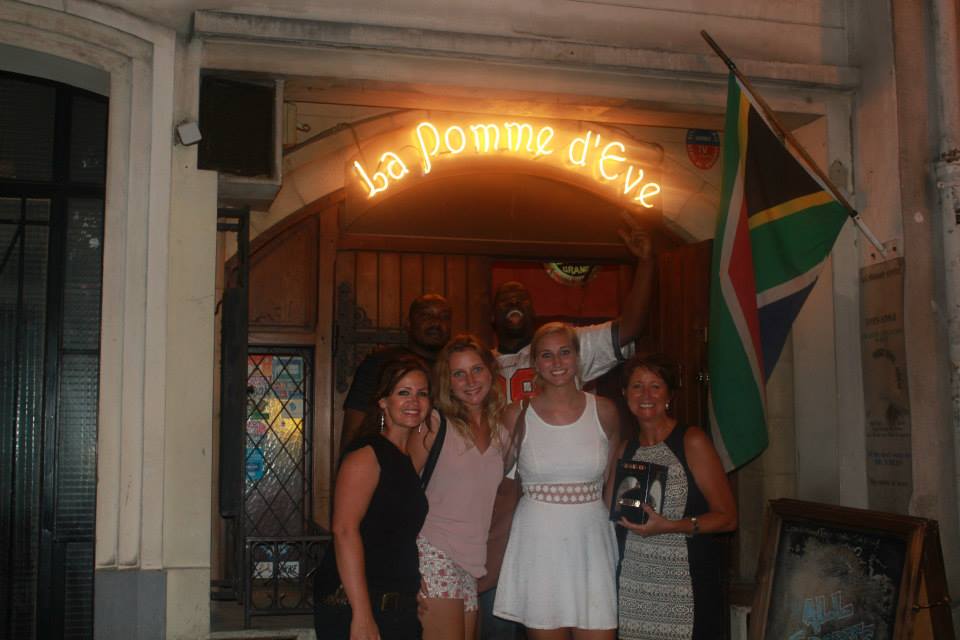
My favorite thing about these kind of places is how unpretentious they are. People come here to let loose and have fun, unlike many other more classy establishments that will deny you entry based on any number of irrelevant factors. From the well-known jazz clubs like Caveau des Oubliettes (former Guillotine Pub, home to a real French Revolution era guillotine blade) et Caveau De La Huchette “officiel” – to the lesser known, yet more authentic The Violon Dingue and La Pomme d’Eve – Paris has many bars like this you won’t find front and center under popular nightclubs in your typical tour guide books- but after 7 years in Paris, these are the places where I’ve had my most wild, memorable nights.

A fun night out at the Pomme d’Eve, one of my favorite late night bars in Paris

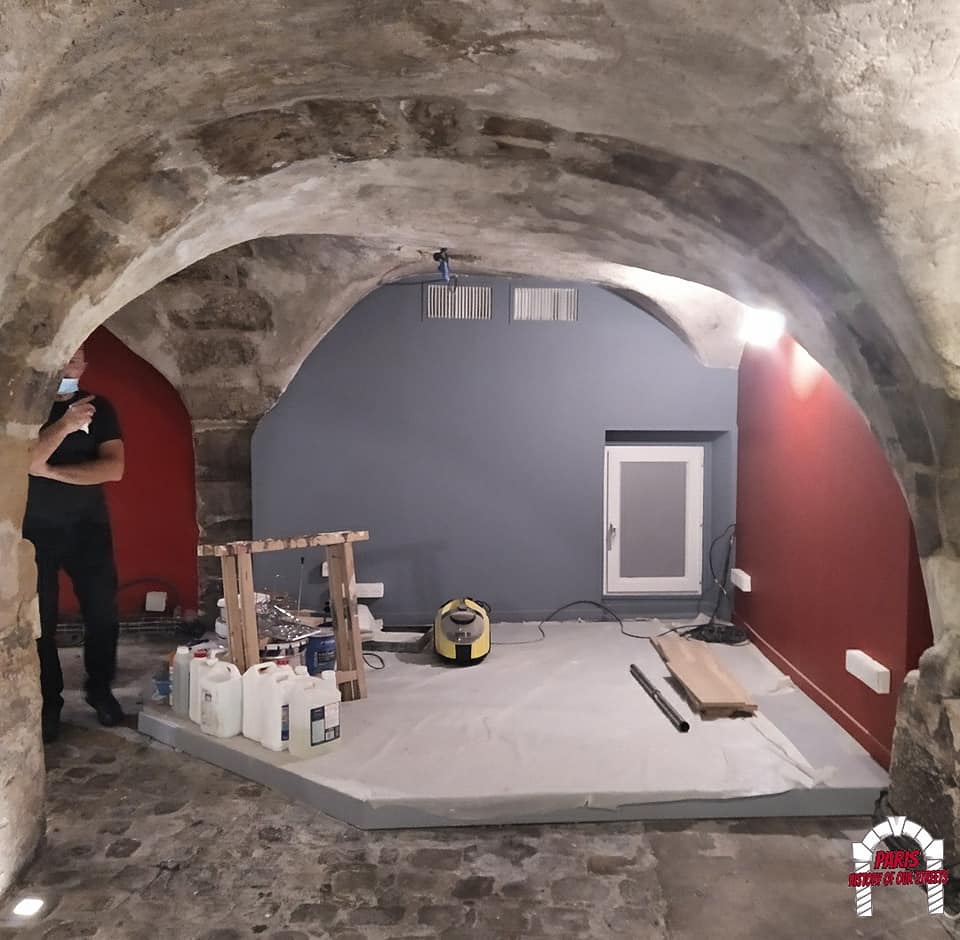
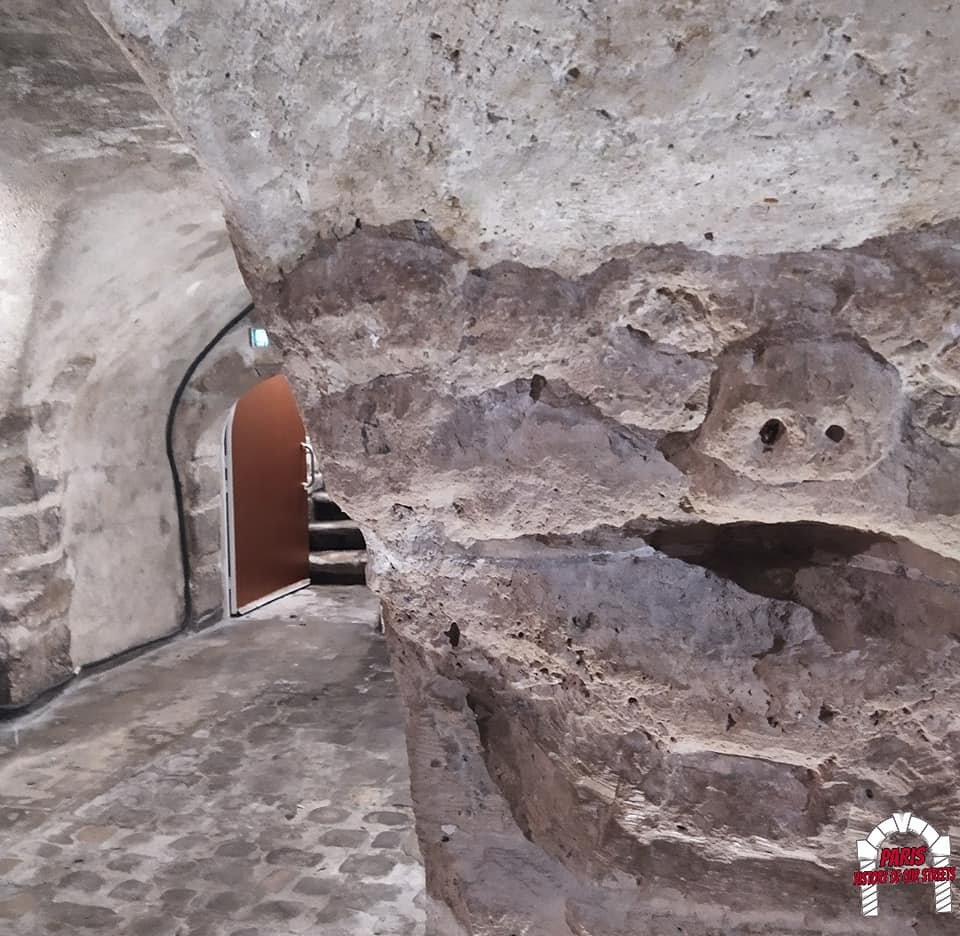
The cave pictured here is the 14th century Caveau de la Bolée, which is currently being restored and updated to be a café by day and cave club after hours. I stopped by recently to see if I could get a look at the cave which the owner was happy to show me.

Historically, this space was initially the cellar of an Abbaye that once stood in this area before turning into various nightclubs frequented by the likes of Charles Baudelaire, Francois Villion, and Paul Verlaine who sought out these discrete hangouts, out of sight and sound from the chaos of the streets above.

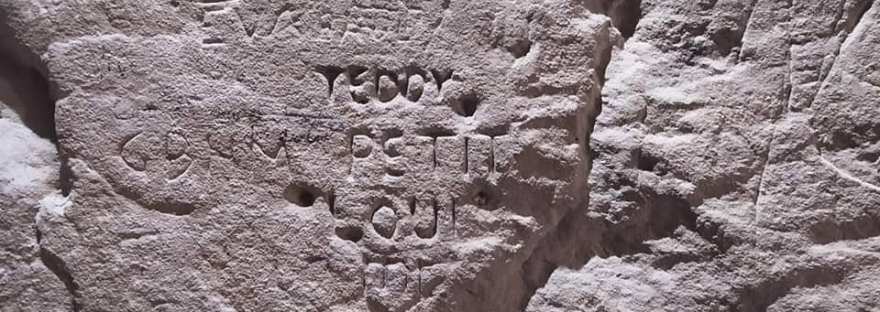
Long gone are the days of cigarette smoke, heated political debates, and libertine romances in dark corners; but remnants of the past like grotesque sculptures and perfectly carved signatures will undoubtedly continue to endure for years to come.

Rue de l’Hirondelle