Maps, Saint Germain des Près and the Eiffel Tower

The First Photographs of the Paris Catacombs

Place Denfert-Rochereau Paris 75014

We all know and recognize the famous photographers of a picturesque old Paris like Robert Doisneau and Henri Cartier-Bresson, but have you heard of Felix Nadar? He was the pioneer of adventure photography in the mid 19th century and the first to capture the city from above in a balloon as well as underground in the 200 miles of tunnels that make up the Paris Catacombs.
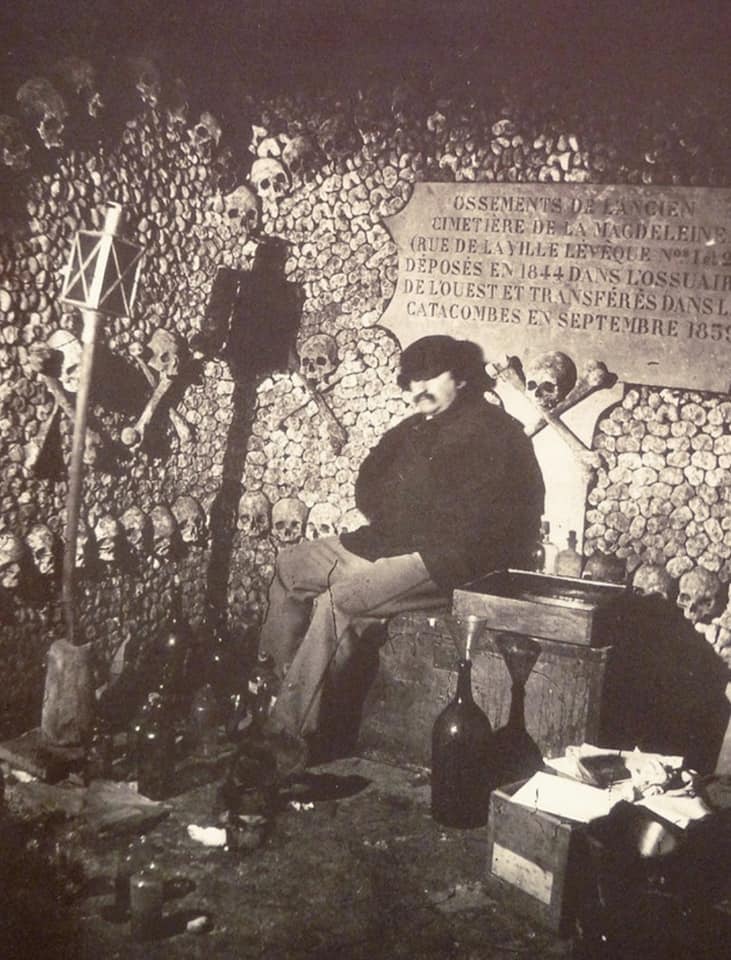
Selfie of Nadar in his “office” 1861. Notice the glass bottles of chemicals at his feet

It is estimated that 6 million bodies are stacked in these former limestone quarries, (a history in itself which I’ll leave for another day) and tours have been given to curiously morbid visitors since 1810 when Louis Etienne Héricart de Thury, who was the director of the Paris Mine Inspection Service, had the idea to turn the disorganized piles of bones into artistic and aesthetically pleasing (look honey, its a heart made of human skulls!) shrines to the dead. The tunnels are illuminated by electricity today, but you can still see traces on the ceiling from when visitors were guided by torches.
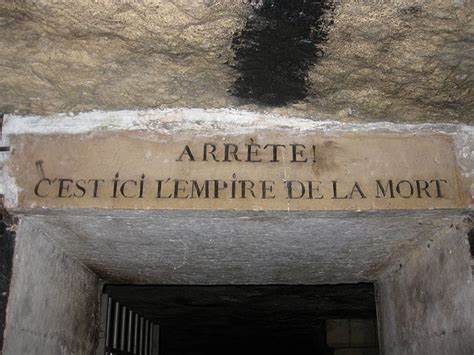
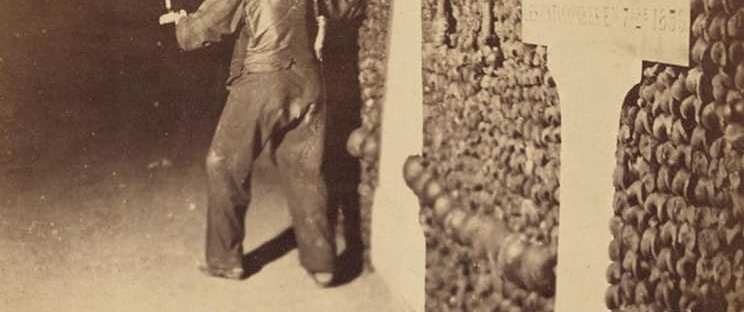
“HAULT! Here is the empire of Death!” Notice the smoke trail above?

Nadar, who opened his photography studio in 1855, began by taking portraits of the Parisian elite like Victor Hugo and Charles Baudelaire, but soon became attracted to more ambitious shots after he invented a new method where he could create copies of his photos, unlike the Daguerreotype predecessor. He began taking pictures underground in the catacombs around 1861 and because there was no light, he faced his first challenge of creating it artificially using an early battery. Named after their German creator, Bunsen batteries had not yet been used below ground and Nadar needed to adapt to their bulkiness by attaching them to leads which could be run from the city down to the tunnels below.
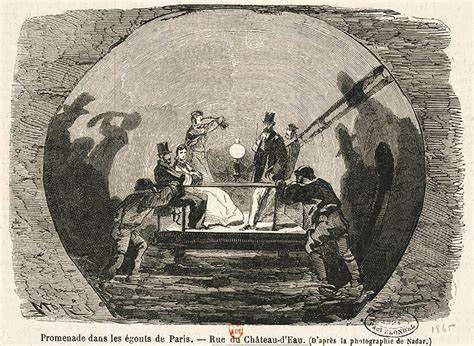
A stroll in the Paris sewers

Revolutionizing this process, as well as his fearless use of equipment and chemicals in these narrow underground tunnels was a dangerous venture that seemed to thrill the ballsy young photographer. After much trial and error, (his assistants impatiently quipped that they would die down there before they could successfully get photos) he was finally able to successfully capture images of the ossuary; becoming the first to photograph some of the oldest human remains in existence.
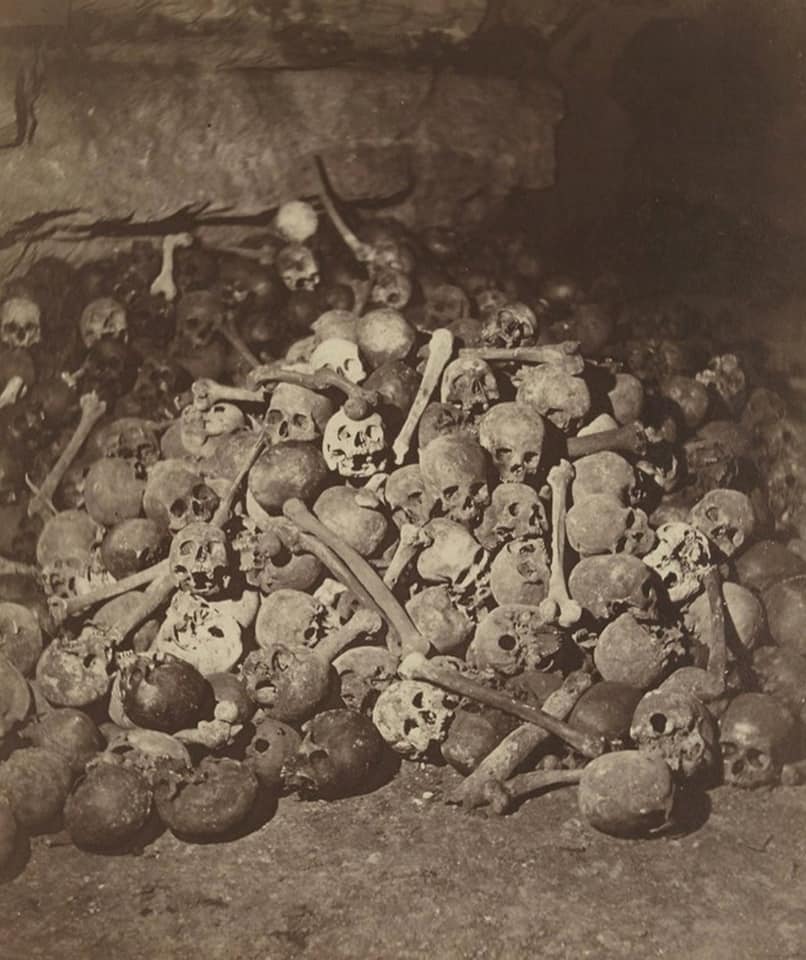
It’s interesting to note how it wasn’t just about the photos, but the experience he wanted to share in visiting such a remarkably significant place. He wrote in his memoirs “the fragment that your foot just bumped into, this debris without a name, is perhaps one of your grandfathers.” Because the picture exposure was as long as 18 minutes, he used mannequins dressed as catacomb workers to give people an idea of what it was like to visit these tunnels and a sense of their limited space.
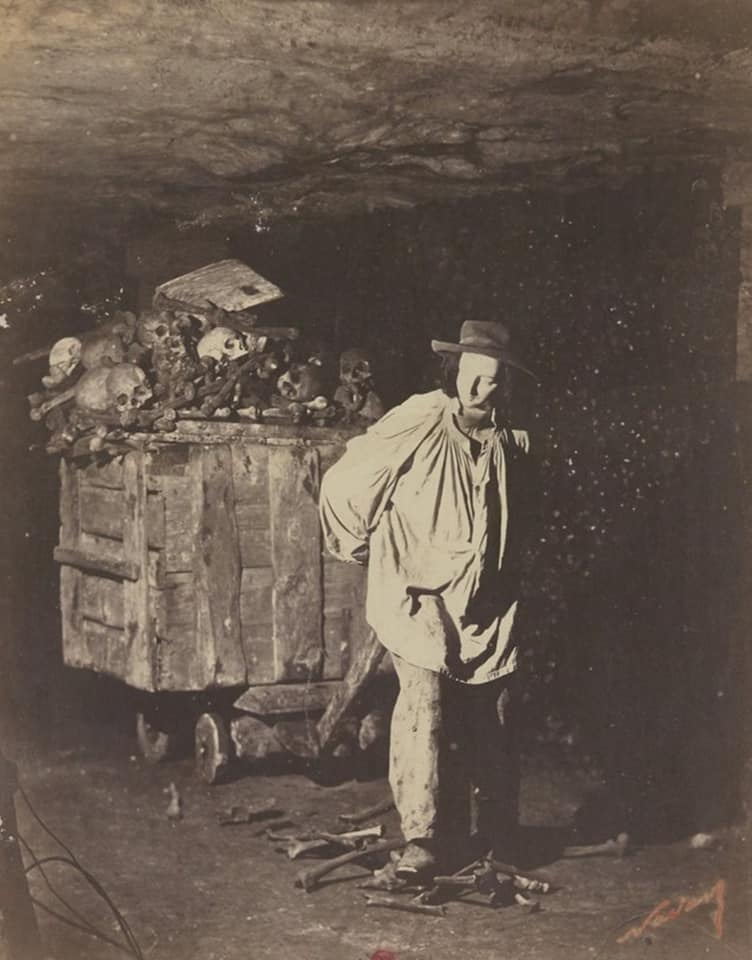
Can you spot the mannequin?

Thanks to his efforts, the photos he took and then presented at the 1862 International Exhibition in London would be a hit; creating a boom in the popularity of the catacombs, which still exists today as one of the most popular Paris attractions (with a notoriously long queue!).

If you haven’t seen them yet, the catacombs are a unique way to see centuries of Paris history amongst the remains of those who once lived it. And if you are worried it might be too gruesome, this tourist’s review in 1810 sums it up. “I’ve seen death, it is right in front of my eyes, but my stomach is grumbling, and I’d much rather eat”.
ile de la cité, Maps

The First Captured Image of Movement

21 Quai de Bourbon Paris 75004

I don’t know about anyone else, but when I see an old photograph taken in Paris, my first thoughts are “Where was this taken” and ‘Can I see this same image through my camera lens today?”.

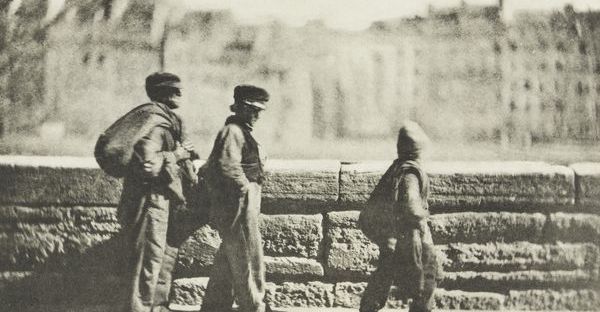
Maybe it’s part of my fascination with the idea that I am walking in the same steps of someone from the past, who although may be long gone- can still share with me this same setting (more or less) some 170 years later? I’m obsessed with the concept of “FIRSTS”, and I stumbled upon this photo (or Daguerreotype if you want to be precise) taken around 1851 by French photographer and artist Charles Nègre, who was noted for his preference of photographing the working class. (Hell yeah! A photographer of the PEOPLE!)

Remarkably, this is considered THE FIRST captured image of movement. These three youngsters are chimney sweeps, walking along the Quai de Bourbon on the northern side of ile Saint Louis.

I immediately analyzed this photo, looking for clues to give its precise location today. It means a lot more to me if I can pinpoint THAT EXACT SPOT. The paving on the wall has obviously been replaced. (But you know damn well I would have sought out these exact crevices had it not been) You can’t see much definition of the buildings in the background, located on the opposite Quai des Célestins- plus that area was largely leveled in the mid 1900’s. I looked for more info on the photograph and discovered that Charles had a workshop on the Quai at number 21. Presuming he took this photo not far from his workshop, this is the closest image I could come up with that did not contain trees.

TAH-DAH! Long before child labor laws, you can imagine these boys working under these hazardous conditions likely missed out on a childhood we take for granted today. I feel somewhat comforted that even if they weren’t aware in that moment of their participation in this FIRST, their suffering counted for something and here they are remembered in 2021.

latin quarter, Maps, The Louvre and Palais Royal

Here Comes Joannie! Part Four

DISCLAIMER : This is the finale of a 4 post series! Don’t be a tete de cul, (butthead) if you haven’t read parts 1-3, don’t read any further! Here’s a handy link to them below..

Here Comes Joannie! Part One

Learn about this badass farmgirl turned warrior feminist led by God in the first part of this series.

Here Comes Joannie! Part Two

Discover the secret courtyard that marks the exact location where Joan of Arc was injured during the Siege of Paris

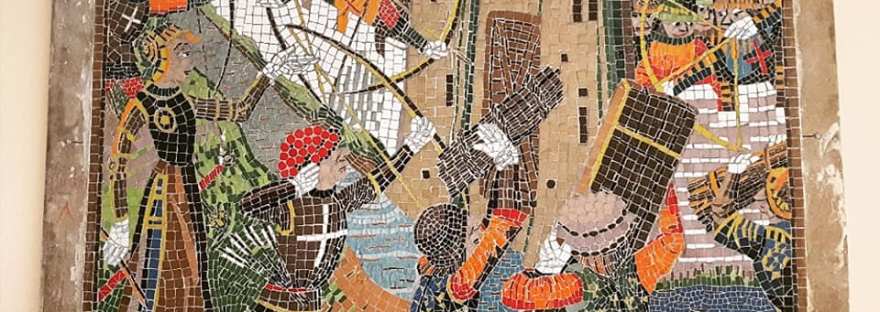
RECAP: I’ve just found the contact for the man incharge of the Joan of Arc Association and he’s asked me to send him an email detailing why I want to see the mosiac. I write up a lengthy explaination and he responds within a day. It turns out the mosaic was moved after renovations at the school (it would have been destroyed otherwise, Yikes!) to the entryway at 8 rue Vavin in the 6th, the building that is currently the headquarters for “The Rights for the Ancient Religious Combatants” and a friend to the JOA Association.

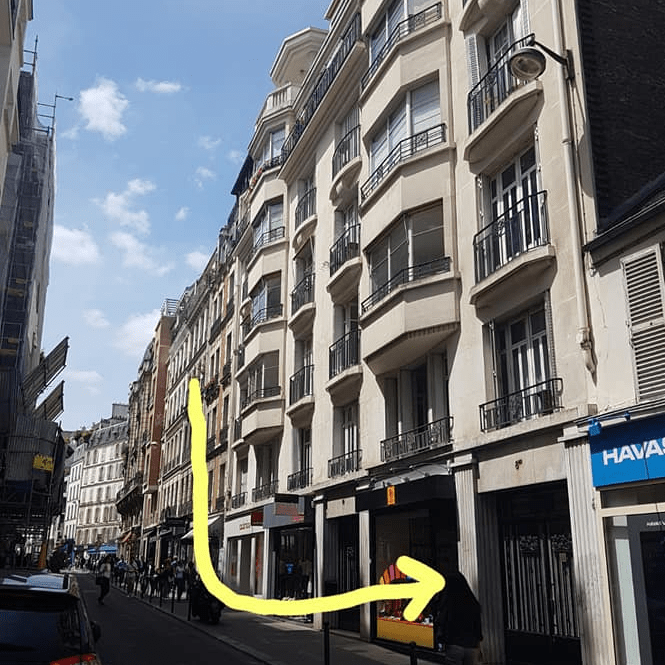
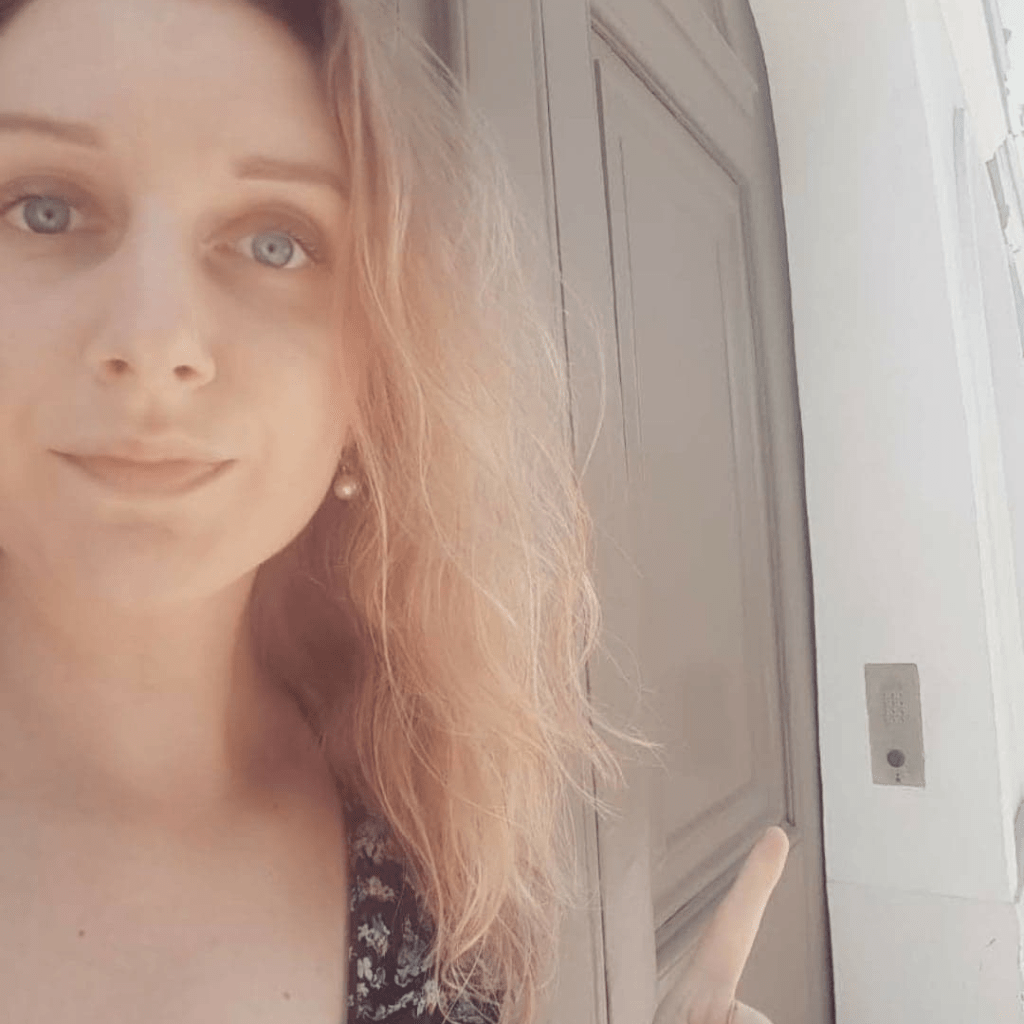
Surprisingly, Pierre senses my desperation and gives me the code for the door so I can visit the mosaic when I want. (I like Pierre a lot already. I bet he would be a good partner in crime to solve HISTORY MYSTERIES) He sends me attachments of the JOA Association activities and I’m impressed. They meet several times a year to walk the same route JOA took when she was here in 1429. The mosaic was also recently blessed by a priest. So I go to 8 bis rue Vavin and I’m nervously sweating. What’s the next step if it’s not here? I’ve had enough of waiting outside doors for nothing damnit!

Please excuse my shitty arrow

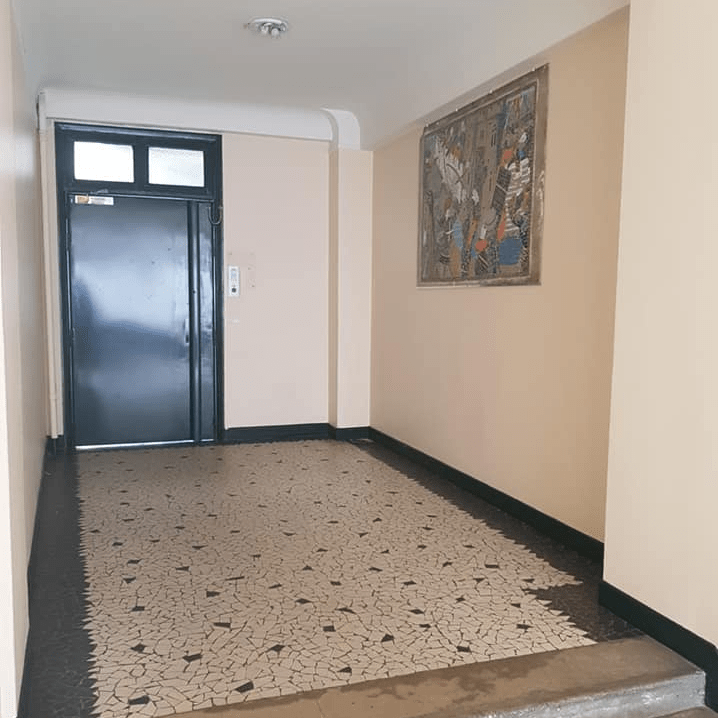
I enter the code Pierre gave me and the door effortlessly opens. And there it is. The mosaic of Joan of Arc. I found it. I SOLVED A PARIS HISTORY MYSTERY THAT NO ONE EVEN KNEW EXISTED.

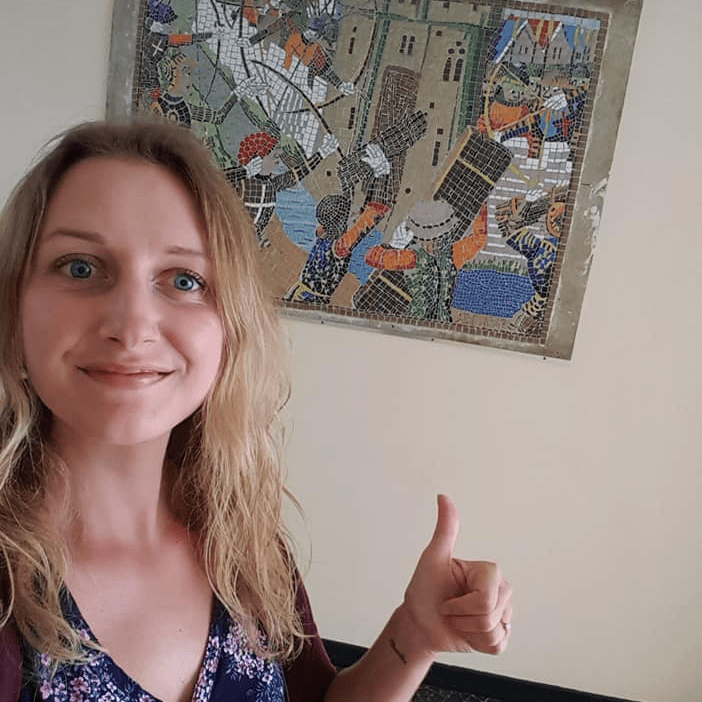
What I saw when I walked in

The ironic thing was that after all these trips to the 1st arrondissement waiting outside that door, harassing people living there, and pissing off a high school door guard- the mosaic was literally like 600 meters from my apartment the whole time. I let myself study it awhile before I took pictures. I got close to it, I touched it. I briefly humped it. It was bigger than I imagined. I looked at Joan and I tried to picture myself in her boots, standing before Paris, wanting so badly to take it back from the English. Motivated by God yet surrounded by death, how did she find the strength?

Joan and I

I was disappointed to see she was in a dress (one of the reasons she was executed was for cross dressing. At her trial shd explained that she wore male clothing so that she could wear armor to fight and also to deter men from attempting to rape her) but then again, the mosaic is based upon the medieval manuscripts of Martial d’Auvergne written in 1484 entitled “Vigiles du Roi Charles VII”.

I took a few pictures and I turned around to leave. I looked back one more time at Joan. I found her and I felt lighter. No angels appeared at my shoulder to fist pump me, but I had the impression they were smiling at me from above.

Maps, The Louvre and Palais Royal

Here Comes Joannie! Part Three

If you haven’t read PART 1 or 2, cease reading! Go back and catch up before continuing….

RECAP! I’ve encountered a dead end on the first step of my hunt for the mythical mosaic of Joan of Arc attempting to breech the walls of Paris before she got kebab’d by a crossbow. AAAIIIEEE!

The mosaic depicted in the photo which I found from some random website I stumbled across is gone. That means I have a HISTORY MYSTERY to solve. And being the stubborn SOB that I am, I’m ready to do a little sleuthing. But where do I start?

The entryway at 15 rue de Richeleau

1. Am I in the right place? I compare the printout from the website to the courtyard in front of me. It’s been updated for sure, but no doubt about it- this is the place. Again I go back and I wait outside the locked entry, hoping a resident will either come or go, and tell me where I can find the mosaic. This is not as easy nor as quick as I hoped. I wait about 30 minutes, springing myself upon the first 2 people that enter the door. Neither of them have ever seen the mosaic and are visibly disturbed at the desperation of the sweaty crazy lady in their courtyard until I show them the printout.

Outside 15 rue Richeleau waiting by the Digicode to get in ..

The online website paris-autrement.paris where I first found this mosaic was dated the 29th of January 2013 so it was removed sometime between then and now; in this time span of 7 years, SOMEONE must know what happened right? These people don’t and I’m disappointed that they don’t even really seem to care. While I didn’t find what I was looking for, I’m still tickled to be at the very spot where the Badass/Saintly Joan of Arc was injured during her mission from God. Could it be that I am on a mission from God as well?

2. I send a message to the website Paris Autrement asking them if they are aware of the mosaic whereabouts. I receive a response a week later that assured me the mosaic was there, and the writer had seen it in 2013. Well OK. I’m on my own I guess! Mosaïque de Jeanne d’Arc blessée au 15 rue de Richelieu – Paris Autrement (paris-autrement.paris)

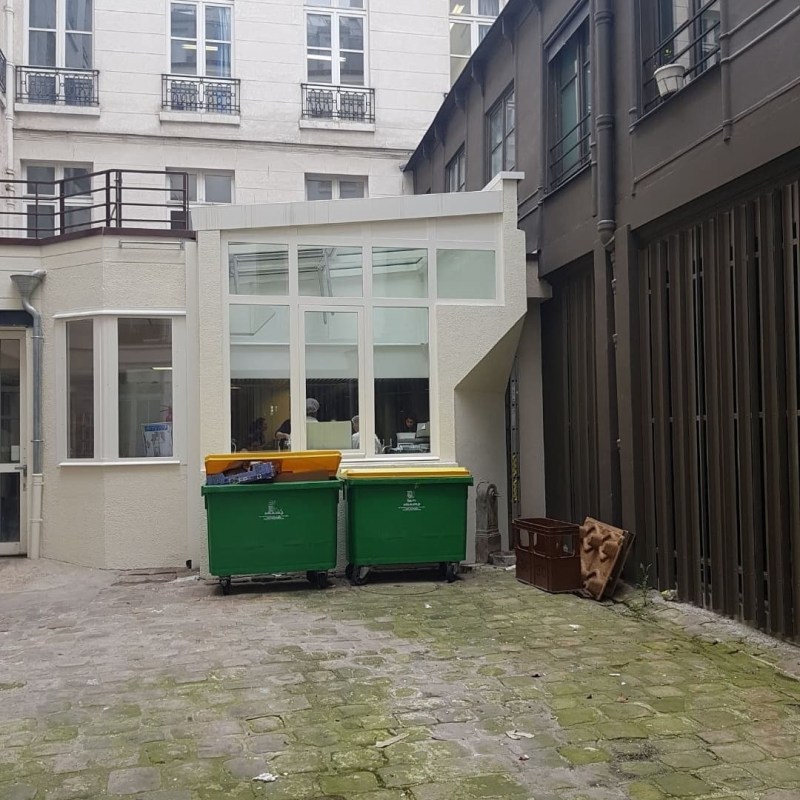
3. I go to the creators of the mosaic itself in 1987, the High School J .B .Poquelin, which is the building located on the other side of the courtyard, and in fact, it appears that their cafeteria is the window behind the dumpsters. They had a fricken INAUGURATION CEREMONY with the goddamn mayor, someone in this school must have some idea to where it has gone in the past 7 years since the website took the picture right? So I go to the high school. I ring for the guardian (the school doorman) and immediately start out telling them I am a journalist (of Facebook but I left that out) and I’m investigating a mosaic of Joan of Arc that has gone missing from the courtyard of the building on the other side. You know, the one that this very school had the idea to make some 20 years prior. Surely they know of it right? No, they don’t. I show them the article and the photos. The guardian is not enthusiastic to help me. I ask to speak to someone, anyone, a teacher perhaps, one that has been there a few years- but I am shot down. The guardian sighs like he encounters HISTORY MYSTERIES all the time, and tells me to try going to city hall of the 1st arrondissement.

4. I go to city hall and I explain the situation. (Still going with the fake journalist theme) They make copies of the printouts I have of the website explaining the mosaic and pictures of the courtyard. They ask for my business card. This journalist doesn’t have one. They tell me they will get back to me.

5. I make business cards with my information. Instead of journalist, I am now a professional amateur historian.

6. I try to make better use of my time and multi task training for a half marathon and solving HISTORY MYSTERIES at the same time. I decide to stalk the inhabitants again at 15 rue de Richeleau and run there, again waiting outside the entrance around 18H. No one comes. I ask a security guy working the hotel next door if he has ever heard or seen this mosaic. He has no idea what I’m talking about and doesn’t seem to know who Joan of Arc even is.

7. I go back to the school; insisting that I speak with someone. They tell me to leave. So I go back to the city hall. It’s been a month since I went there and no one has responded. (This is normal in Paris. I ask “isn’t there someone like in charge of all things history in this arrondissement? No?” They tell me no one knows of any mosaic. The receptionist sadly tells me it was probably destroyed. I don’t believe her. I continue with my pursuits.

8. I run back to 15 rue de Richeleau during marathon training and FINALLY I have some answers. A resident of the building seems put off when I approach her dripping in sweat and smelling of desperation but she lights up when I show her the mosaic printouts and ask if she knows where it is. She says that the mosaic was taken down when the cafeteria of the high school was renovated a year or two ago. She thinks the Association of Joan of Arc currently has it.9. The Association of Joan of Arc! Well eat my face and call me Jeffrey Dahmer, there’s a JOA ASSOCIATION! I look up the website and find their hours. I go way up to Morodor/northern Paris and am disappointed to see a building that is under heavy construction and clearly not currently the place for the official JOA fanclub. I call the number listed on the website.

10. Monsieur Pierre Maire responds to my call. I tell him I am in front of the JOA Association address, but it looks like nobody’s there. He confirms that they are no longer at that address. I explain my situation and ask if he knows where the mosaic is. He does and tells me that he will send me a picture. I say NOPE I want to see it in real life. He asks me to send him an email explaining everything again and that he will get back to me. And here is where I’ll insert a cliffhanger.

Does she find the mosaic? Does it still exist? Was she arrested for Loitering/Harassment?

Maps, The Marais

The Maison d’Ourscamp

44-46, rue François Miron 75004 Paris

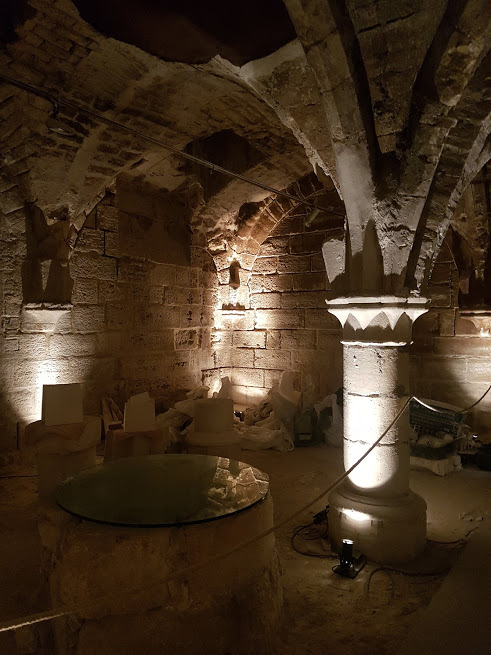
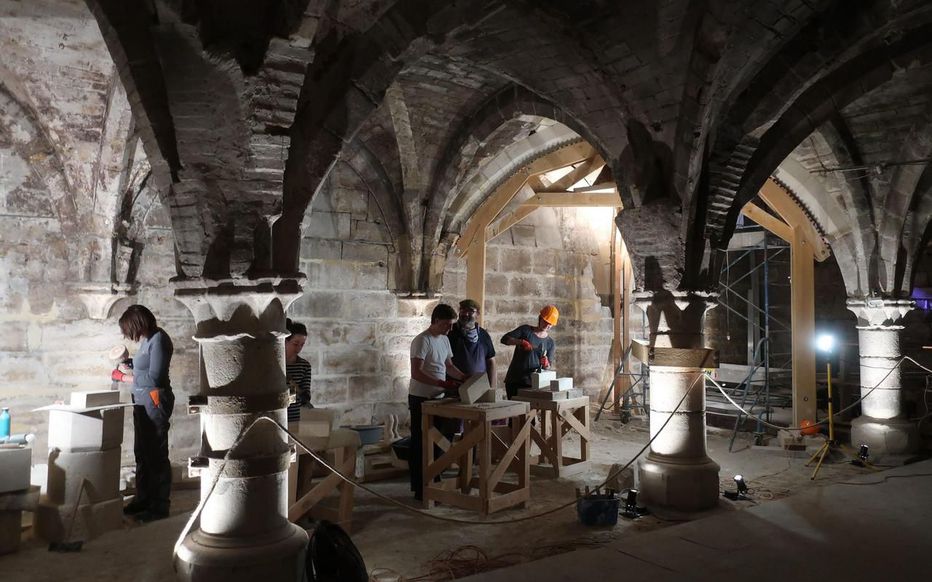
During an exceptionally hot Paris weekend in June 2019, I was in a sweater and hard hat, assisting in the restoration of a chilly 13th century cellar in the heart of the Marais district in Paris.

I have no business handling power tools

Taken under the bearded wing of the coolest medieval expert stone mason David Poiron, I spent all weekend in heavy-duty gloves chiseling away at limestone blocks and destroying chunks of a vaulted archway that was to be restored. I probably inhaled a whole lot of 700-year-old gravel, but being in the company of other like-minded fans of history for an entire weekend was pretty incredible.

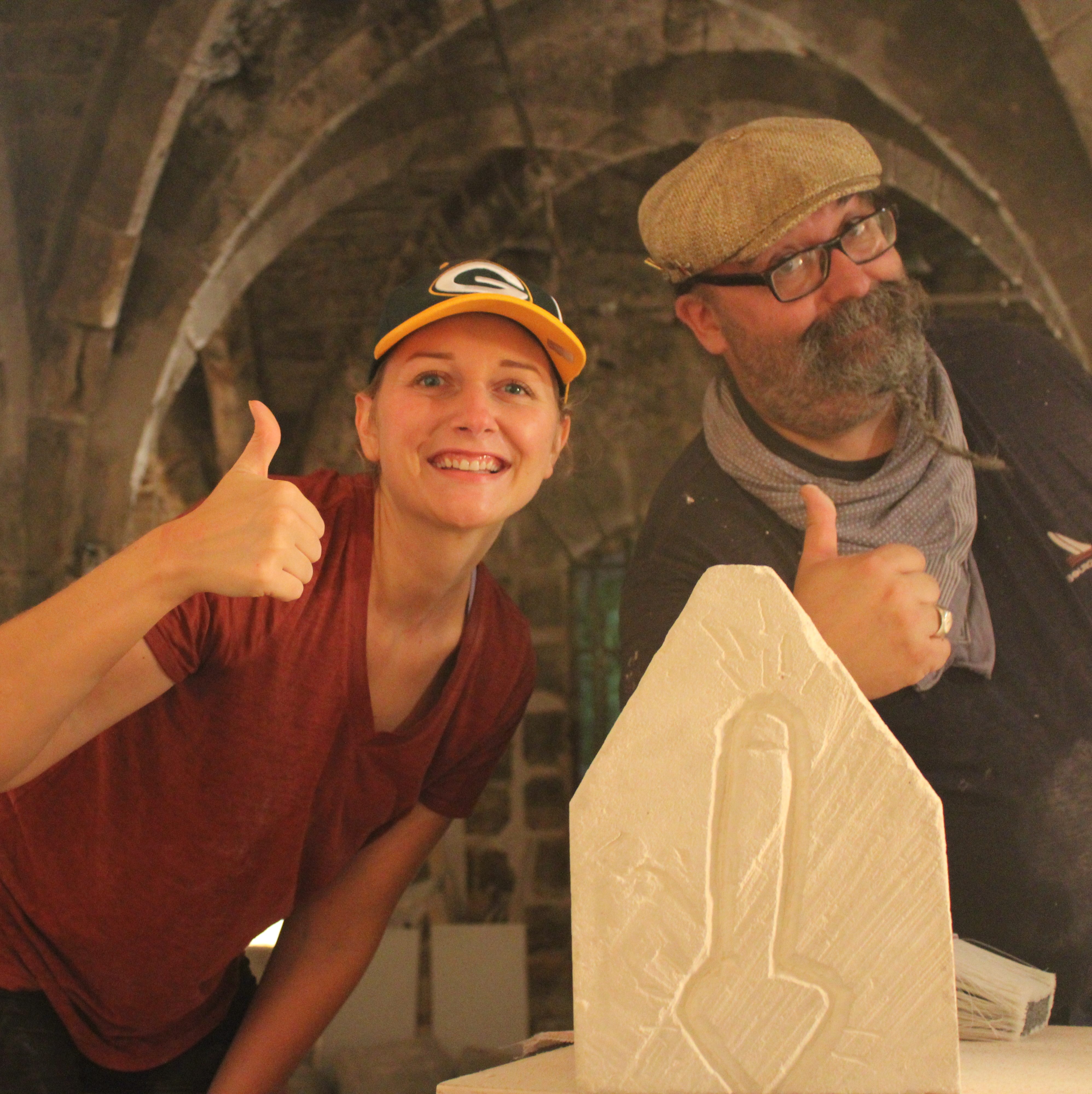
Stone Maison Extraordinaire David

Armed with blunt and heavy tools I have no business handling, my mission that weekend consisted mostly of Bitch Work I was happy to be delegated due to my lack of stone cutting skills, like chiseling ridges in heavy blocks. These cumbersome but necessary ridges, made using iron wide toothed chisels, served to help the paint stick better to the stone it was placed against. Each of these blocks had a particular shape carved into each side; also to help the bonding agent to adhere better than being up against solid smooth stone.

And because the cellar is a historically protected site, you can’t just throw these guys in a machine to be spat out 30 seconds later perfectly shaped. Any work done here has to be done the same way it was originally done, with the same tools, materials, and methods. This is one reason why rebuilding Notre Dame cathedral is so complicated; much of the wood used to create the roof doesn’t exist anymore. The block I worked with that day will eventually be used to create a new identical rib for a damaged vault.

AND GUYS GUESS WHAT, as destiny would have it, the first stone I chose to shape already had been touched by a former cheeky stone mason who might have been my soul mate. In addition to a borderline perverse and immature sense of humor, this mysterious personage was also mathematically correct. Because this design will be fitted against an exact replica on another block and filled with glue it won’t be seen, so anyone clutching their peals can just relax.

As David pointed out to me in between my sporadique giggling fits, the phallus was carved using the Golden Ratio. So what is that? Well its super fucking cool that’s what. A mix of science and evolutionary psychology, the GR is the comparison of any two aspects, often using body parts that have the same ratios, on EVERYONE, that leads us to proportion them in the ideal way.

PERFECTION

Try to follow as I explain while being as politically correct as possible. The measurements from lower nut sac to dick hole were identical to the distance between my pinky finger tip and thumb finger tip. From exterior left ball to the right ball, my index finger was an exact match. One could say deez nuts are perfect, in the eyes of God.

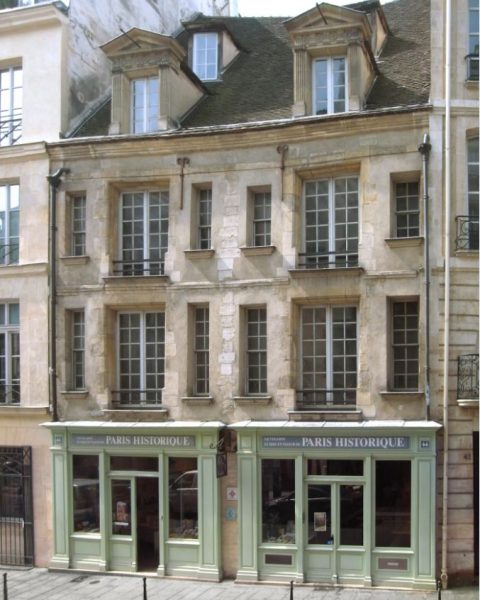
If you are in Paris, you can check out the cellar and its building for yourself at l’Association Paris Historique 44-46 rue François-Miron in the 4th arrondisement. They have been in the process of restoring this cellar since the 60’s, which was once part of a building belonging to 13th Cistercian monks before that building was demolished, and the current one put in place in the 15th century, right on top of the old one, leaving the cellar in need of some TLC but intact.

To join as a member costs only 40 euro per year and they host a ton of interesting events like historical tours (which you get a discounted rate) and discussions with historical experts. Link here Association Paris Historique – Sauvegarde et mise en valeur (paris-historique.org)