Maps, Opera and Les Grands Boulevards

The Bazar de la Charité Disaster : Part Three

Warning: This post contains images that may be disturbing.

Witnesses claimed that only 2 weeks before the fire, the famous Parisian psychic Madame Henriette Couedon entered a trance and ominously foresaw “near the Champs Elysées, I see a place not high, for it is not for pity.. but for the purpose of charity. I see the fire rising and the people screaming. Grilled flesh, charred bodies..”
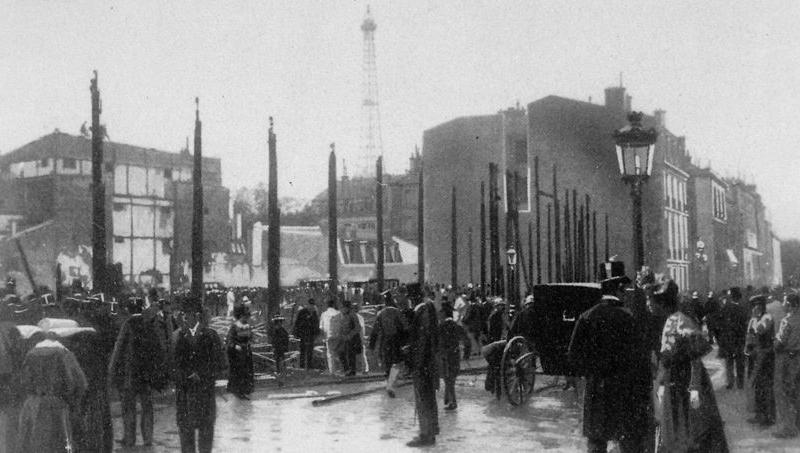
The remains of the building after the catastrophy. Notice the Eiffel Tower barely visible in the back

In the hours after 17h30 on May 4th 1897, a 2nd wave of horrors emerged from the smoking ashes where only one hour prior the annual Bazaar de la Charité had stood. The injured that were well off were discreetly taken home where they had private doctors and nurses to care for their wounds. The nearby Palais de l’Industry (today the site of the Petit and Grand Palais) became a makeshift morgue, where the husbands and fathers were sent when they couldn’t find their wives, daughters, and children at the nearby hospital. There they were forced to attempt to identify their loved ones, most of which were burned beyond recognition.

Identifying the remains of loved ones

The corpses once known by their respectable titles such as Countess d’Hunolstein, Marquise Maison, and Baroness Laumont were now distinguished by what little remained of them. One maid was able to find her mistress by the charred remains of a petticoat and the stitching she recognized as her own. Others were claimed by their jewelry and marriage rings. In one of the first cases of forensic dentistry, the Duchess of Alencon was identified by her gold fillings. As many as 30 corpses were simply beyond any recognition.
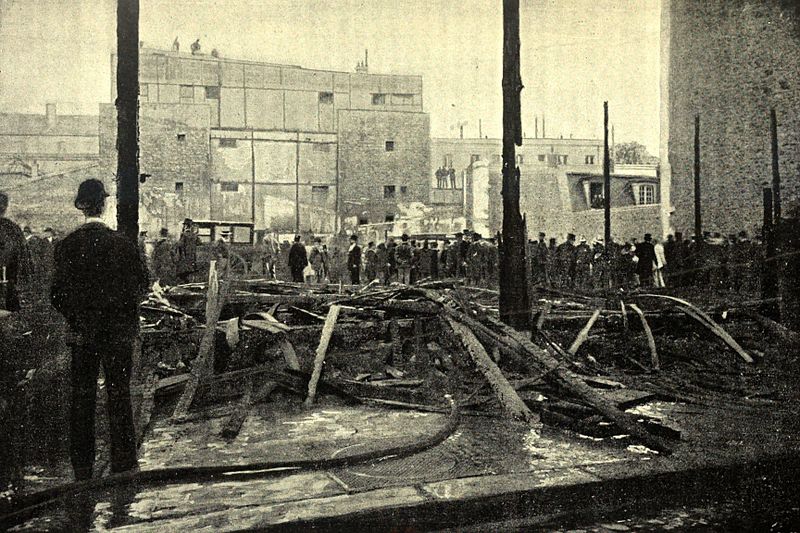
Post Fire

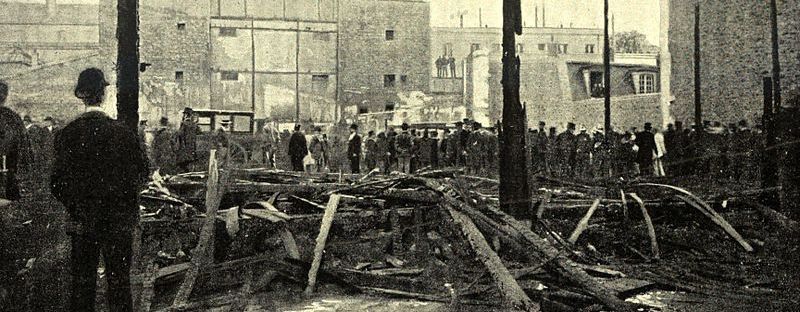
Back at the site of the fire, a more gruesome task was being completed of which war veteran George Grison, who witnessed the horrors of 1870- declared to have never seen anything so grisly. Many of the victims had succumbed not to the flames, but to being trampled upon. The fire burned so savagely that body parts were unidentifiable. The press went wild and narrated the disaster down to the most macabre details, describing the charred and nude bodies of former female social and religious elite with disturbingly intimate details.
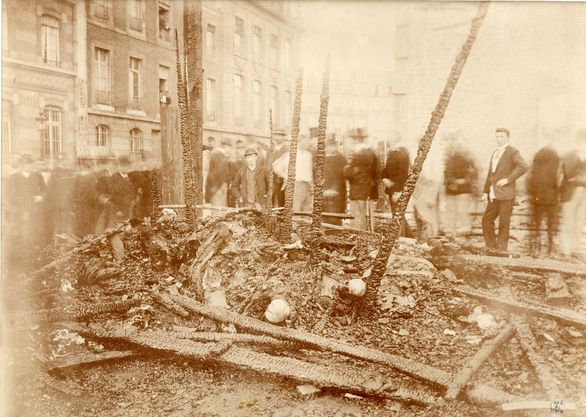
Post fire. You can see human skulls among the rubble. Image from BHP

Combined with PTSD and disfigurement of many survivors, this created a cloud of shame over the fire that led to its memory being repressed by polite society. Gentlemen who lost their female family members, some their wives, mothers, and daughters all at once- retreated to their country homes and mourned privately away from society.Burn victims recovered at home, then hid with their scars for the rest of their lives. The lucky ones who escaped unharmed often never spoke of it again, and its only thanks to the popularity of genealogy tracking that many current descendants are discovering they had ancestors who perished here- the living preferred to keep those horrors in the past.
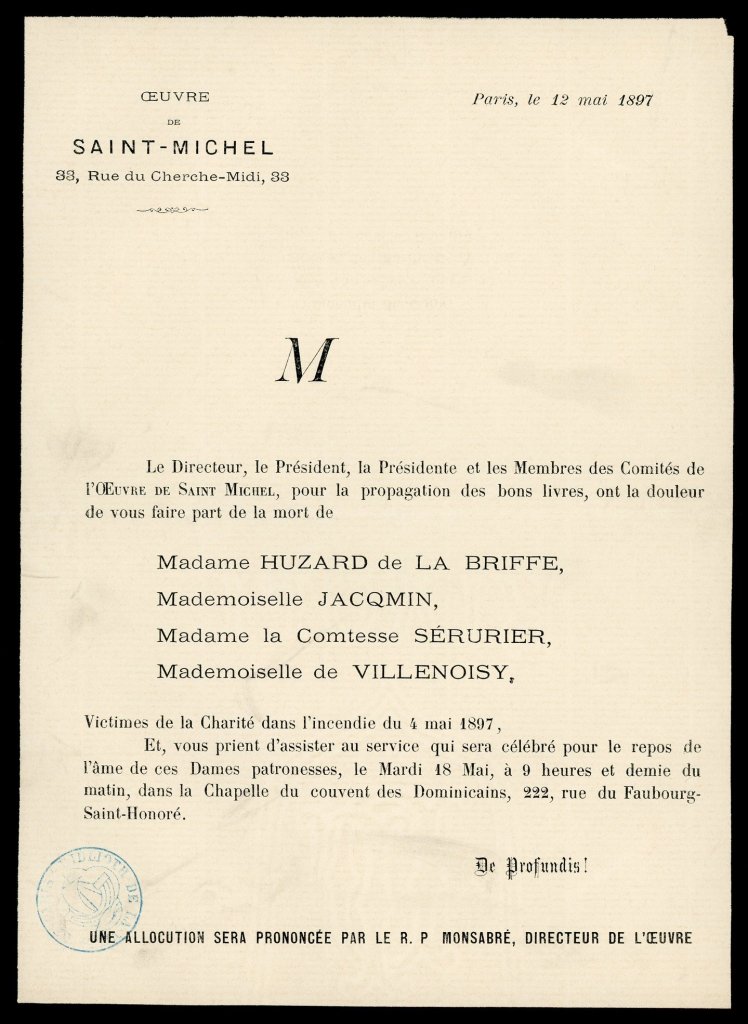
A death announcement for four fire victims

The press also focused on the controversies around the fire as a battle of the sexes and social discrimination. They implied that the reason for the disparities between the men and women (118 females and 7 males, including a 4 year old orphan) was because the men savagely sacrificed the women to survive. A New York Times headline on May 16th read “Cowardice of Paris Men Exhibited in Brutal Form During the Burning of the Charity Bazaar”. Today this is considered an exaggeration because so few men were present inside the bazar itself at the time of the fire.

Whatever brutal acts did occur can only be attributed to the animalistic fight to survive. However it was obvious that the real heroes of the fire were the working class, like the stable hands and kitchen workers that saved so many lives. For these reasons, as well as the upcoming horrors of both world wars; that the tragedy of the Bazar de la Charité became largely obscure and unknown.
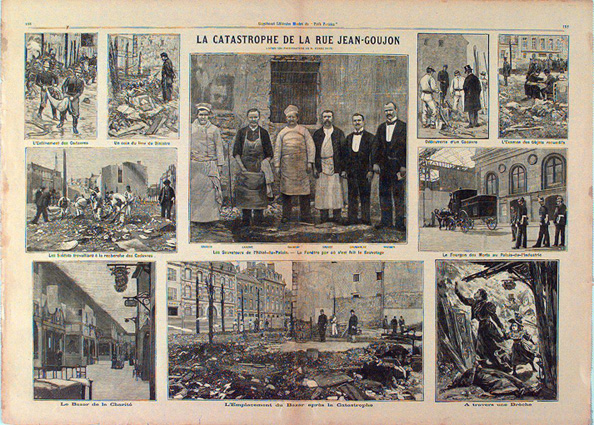
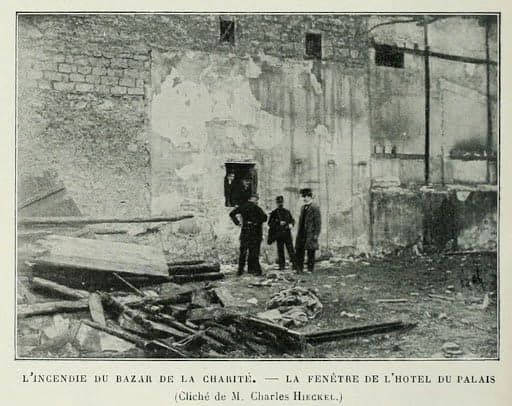
The Catastrophy of the Rue Jean Goujon. The men pictured are those who worked at the hotel behind the Bazar who pulled up women from a small window

Post fire, Parisians were in mourning, but they were also mad. Who was to blame? At the memorial service of Notre Dame on May 8th, the priest implied the fire was a consequence of man and their endless pursuit of science, which caused them to provoke the wrath of God. At the trial, the projectionist claimed he had tried to explain the potential dangers with his allotted lack of space, but nothing was done. When one of the organizers later testified, it was said by a witness that when asked if the building was safe, he replied “Of course, smoking will not be allowed inside”.

It was determined that the president of the charity held the most responsibility for negligence, but because he had saved the lives of a few women (although his sister perished) he was let off with a large fine and ruined reputation. Ultimately, the fault was in the structure, which lacked clearly marked exits.

The building plan. Notice the “vague terrain” in the back. To the left you can see an alley which opened up onto the street, but was so narrow it was missed by the people desperate to escape. The cinema room where the fire started is near the center, above the letters marked C.

It didn’t help that the tinderbox-like framing held endless potential explosives inside, where everything from the combustible wall drapery to the highly flammable lotions worn in the hair of the women contributed to the fire’s intensity. In addition, a lack of available water prevented the fire fighters from suppressing the flames as fast as they could have. All of these issues brought new legislation to protect the public from fire at large events. Continue to Part Four for more.
Maps, Opera and Les Grands Boulevards

The Bazar de la Charité Disaster: Part Two

If you haven’t already read Part One, I strongly encourage you to before continuing here!

Disclaimer- if you’ve been following this page for awhile, you know I try to find the humor in anything. However, this is one instance where there is none to be found. I’ve done a lot of research into the subject and I wrote this being mindful of the more gruesome details while still intending to share this historical event accurately, thus some can’t be avoided. Here’s your warning to not continue if you are triggered by this sort of subject.

It was reported that within 3 minutes from the time the projectionist’s assistant lit the match, the entirety of the bazaar was up in flames. An explosion caused by the combustion of the ether vapors combined with the highly flammable materials used to construct and decorate the bazaar created a perfect storm that would later become the worst fire related tragedy Paris had ever known.

The fire made headlines around the world

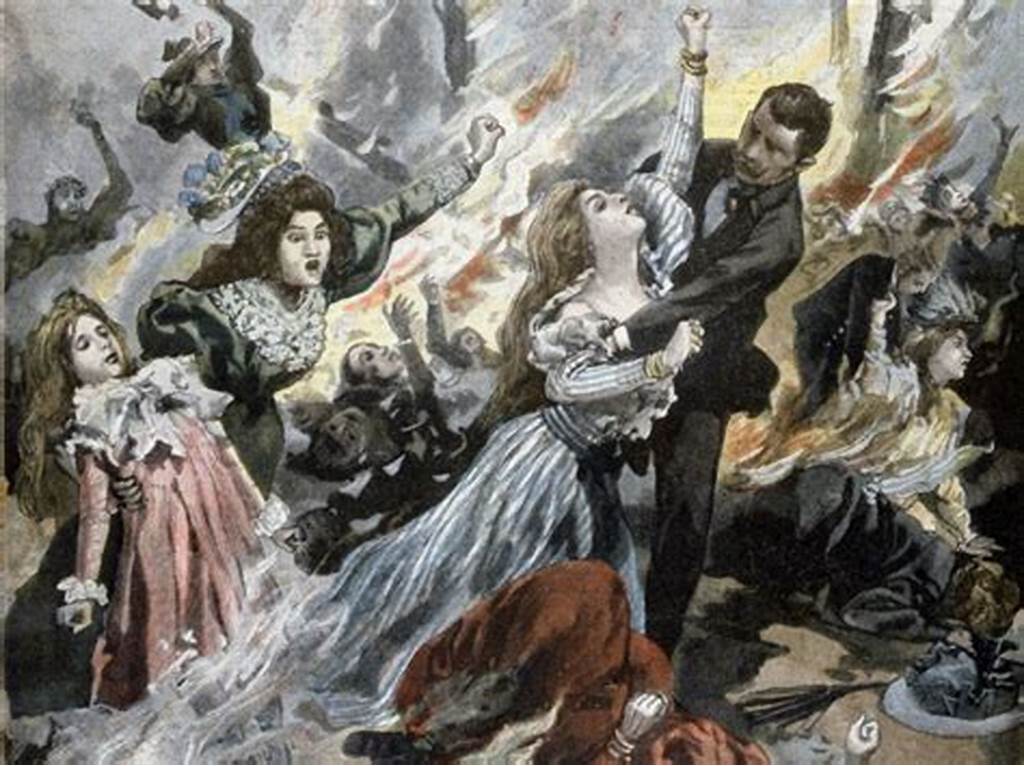
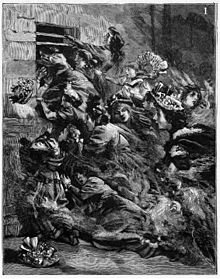
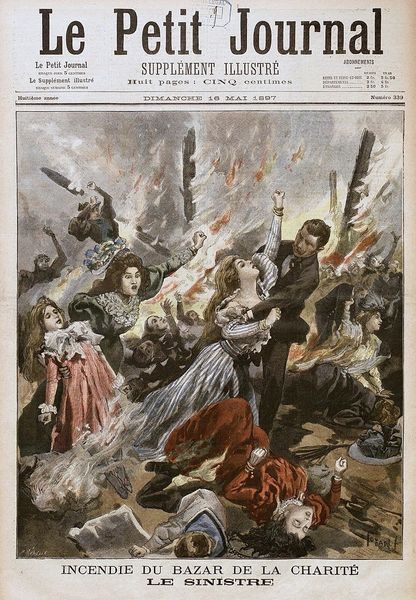
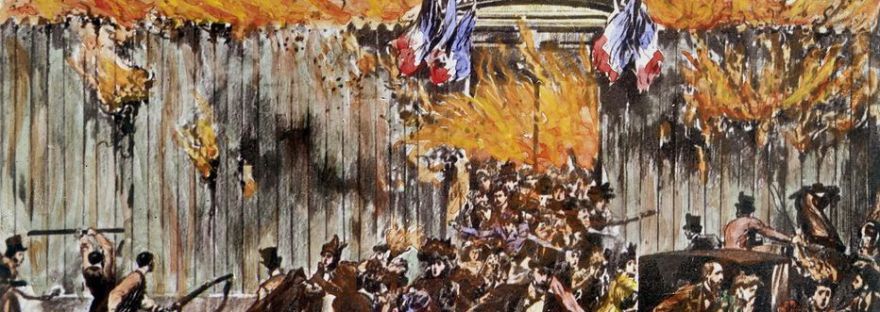
By the time the crowd realized what was happening, it was already too late and panic ensued. The sky painted canvas that stretched over the ceiling burst into a wave of fire and literally began to rain upon the crowds below as everyone rushed together to escape. The most fashionable women of Paris society with their giant silken hats and dresses made of taffeta and mousseline stood no chance and ignited where they stood, spreading the fire to those around them as they spun in circles tearing at their flaming skirts.

One can only imagine the horror these people must have felt as they tried to escape

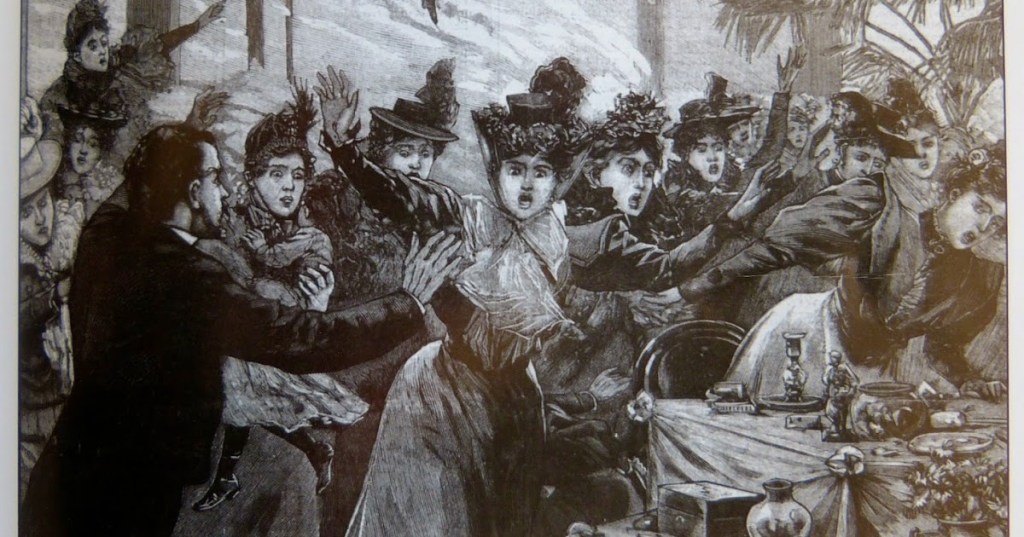
The estimated 1,200-1,800 people in that space began to surge towards the only way out; two revolving doors which quickly became overrun by the frenzied crowds. Those lucky enough to be near the entrance steadily streamed onto the street screaming for help, but soon the doors themselves became blocked as too many people tried to cram through them, creating a human barricade. All social etiquette was abandoned and people began to push and trample over others in a desperate, animalistic attempt to escape.

Desperation to escape the flames

It was later said that the few men who were present at this female-organised event violently pushed women out of their way to escape, some even using their canes to help clear the path. (more on this controversial subject tomorrow) However, throughout this inferno of living hell, a few acts of heroism managed to save lives that would have otherwise been lost.

Those that escaped often collapsed as soon as they exited the building, further complicating the exit for those behind them

The Duchess Sophie Charlotte stoically declared that she would not leave until the nuns and women working beside her were saved first. A survivor’s testimony reported she seemed to be patiently awaiting her death, and was last seen on her knees praying, her hands clasped with women around her.

Behind the bazaar was an open empty space almost entirely enclosed by the surrounding buildings. The back wall was that of the Hotel du Palais, (no longer in existance) where a single metal barred kitchen window was located several feet up from off the ground. The workers inside somehow managed to remove the bars and pull up nearly 150 women, some by their hair. They later recounted how the hysteria to get through the small window forced them to break the fingers from hands that clawed at them in order to continue saving lives. Countess Jeanne de Kergorlay, a large woman, was seen hoisting women up to this window forgoing her own rescue.

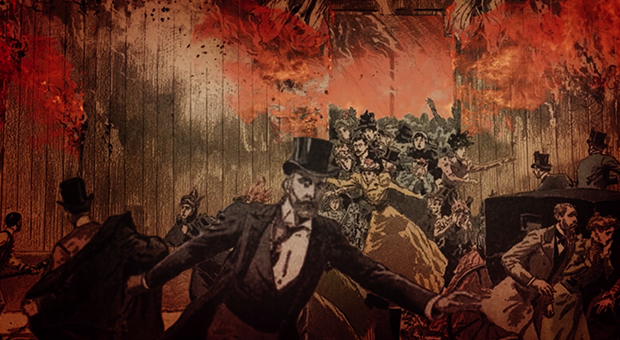
Directly across the street from the bazaar were stables owned by the Rothschild empire, and the coachmen there immediately tried breaking into the wall with anything they could get their hands on. One of these men would later be awarded the Legion d’honneur for his heroism. He managed to use the iron shaft of horse hitch to ram a small hole into the wall. With others covering him by spraying water at his back through the hole, he was able to enter the building and carry survivors out in his arms one by one (if you have seen the series you will recognize this part played by the dashing Victor Meutelet).

A depiction of the fire, notice the man using the iron hitch on the left to create an opening

A few frantic survivors somehow made their way back inside when they realized their daughters or mothers were not with them, further complicating those desperately trying to escape through the same revolving door. Most of them didn’t come back out. In the meantime, the nearby horse drawn fire brigade was called for and arrived within 10 minutes, but there was little they could do as they couldn’t get through the doors with so many people trying to get out.

Escaping the fire

They fiercely hacked away at the building with axes as the few small windows began to explode from the heat, which was so intense they had trouble even to approach. Crowds gathered, some helping the injured, some staring helplessly at the burning building as the screams inside began to subside. By 17h30, about one hour after the fire started, it was done. The surrounding buildings were saved and the flames extinguished, but the nightmare was not yet over.

The number of victims was totaled at 125, of which only 7 were male– and 250 injured. Pretty heavy stuff huh? If you are wondering why you haven’t heard of this real-life nightmare as compared to similar catastrophes like the sinking of the Titanic 17 years later; stay tuned for tomorrow. I’ve attached the trailer to the series (based on these events) known in English as the “Bonfire of Destiny”, to give you an idea of how this tragedy may have appeared to those who experienced it. It is available on Netflix at the time of this publication.

Maps, Opera and Les Grands Boulevards

The Bazar de la Charité Disaster: Part One

Rue Jean Goujon 75008 Paris

On May 4, 1895 the worst Paris fire disaster occured just steps from the fashionable Champs Elysées. Recently repopularized from the loosely based mini-series that aired in France a year ago, the controversial tragedy and its aftermath peeled back scars from wounds that still don’t seem to be healed more than a century later. It’s a long history of a brief event full of details so I’ll be spreading it out over multiple posts.

The mini series loosely based on these events

Since 1885, The Bazaar de la Charité was an annual event organized by the Catholic church and aristocracy of France where donations of valuables would be given to the organization, then sold to the public during a carnival of sorts, with the profits going to charity. The Bazaar was a hugely popular occasion with people coming from all over the world to bid on jewelry, art, and collectibles of the crème de la crème of Parisian society, as well as to mingle with these 19th century celebrities up close (kinda like going to a rummage sale at Oprah’s house).

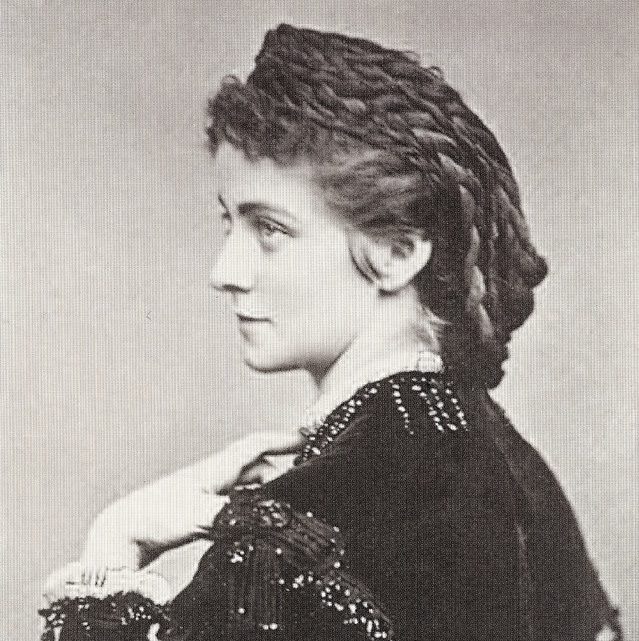
As high-class women during this time period didn’t work, they were expected to fill their free time with socially acceptable hobbies, such as religious or charitable work. For this reason, the Bazaar was considered a “woman’s event” and men did not play a significant role in the planning or execution of it. In 1897, the event received extra special press because it was to be attended by the pious Sophie Charlotte; Duchess of Alençon and sister to Empress Elisabeth of Austria, aka SISSI.

Duchess Sophie Charlotte

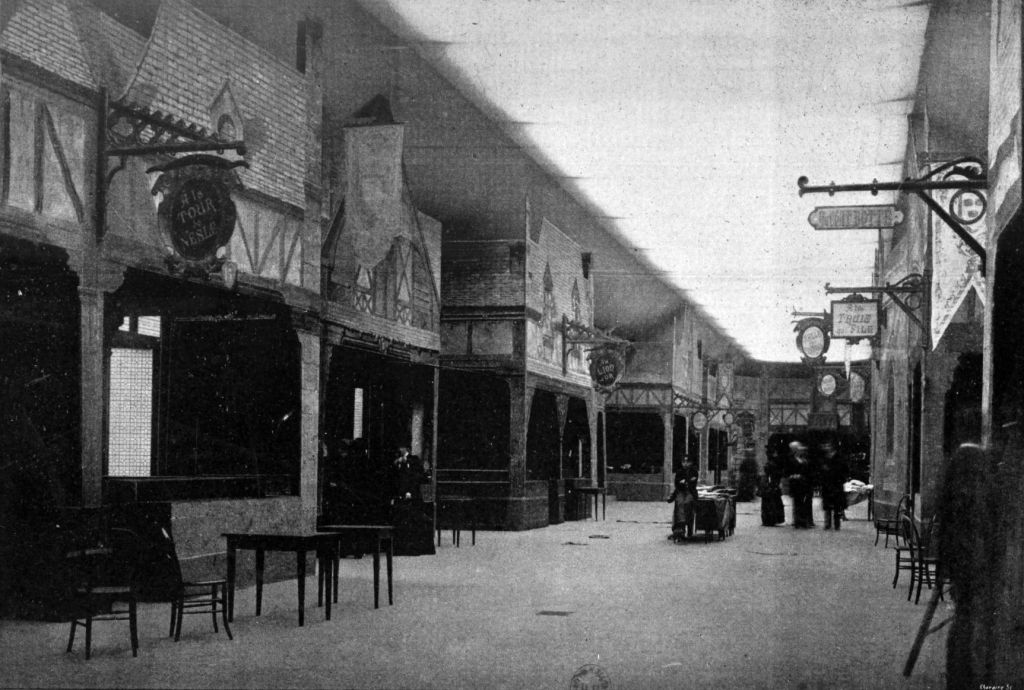
The theme that year was Medieval Streets of Paris and a temporary wooden building was erected on an empty lot near the river Seine, with two revolving doors from the street opening to a long and narrow room (80m long x 14m wide/262 by 42 feet) comprised of 28 stalls decorated with cardboard and paper-mâché as if they were shops from 14th century France (see photo). A canvas ceiling was painted to resemble the sky and a large helium filled balloon floated in the center.

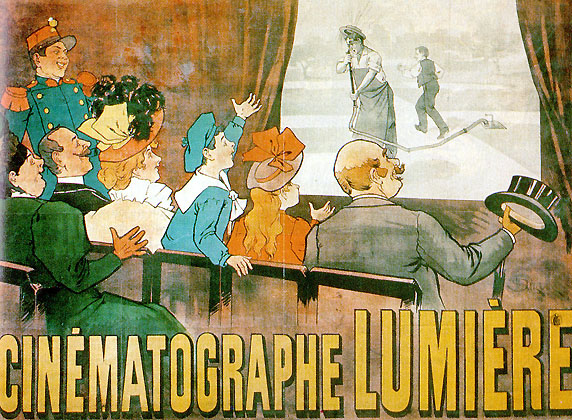
In the back, a small space was dedicated to the curious new attraction of the late 19th century- a cinema. The Lumière brothers had projected the first motion picture in Paris only 18 months prior and a high selling point of this years event was a special screening for a short film. See where I’m going with this?

On May 4th, the second day of the event, as many as 1,800 people came to the Bazaar. Catholic nuns and aristocratic women accompanied by their servants and children, as well as the general public- all crammed into the narrow space. Predominately female, their wide skirts and elegantly coiffed hair made conditions even more cramped. The auction began at 15h after it was blessed by priest and hoards of people steadily began streaming in through two turnstiles, their husbands and valets bidding them a good afternoon, probably reminding their wives and daughters to not spend too much!

At 16h, the projectionist was overwhelmed. The excitement of the motion picture brought too many people to his small room, and he barely had enough space to access his equipment, which consisted of a hand cracked projector, oxygen tubing, lamp and cans of ether- all of which was hidden behind a thick tar covered curtain. His earlier complaints of lack of space had fallen upon deaf ears. At approximately 16h15, the lamp suddenly went out and the tiny room was swept into darkness. The projectionist needed more ether and asked his assistant for a light. Rather than opening the curtain and bothering the crowd with the harsh glare when the lamp was relit, he kept it closed, and struck a match. Within seconds, the linen sky covering the timber building of the Bazaar de la Charité was consumed by an inferno of flames. By 17h30, everything in this space ceased to exist.

Continue with Part Two!

latin quarter, Maps

The Last Wooden Staircase

8 rue Boutebrie Paris 75005

The Rue Boutebrie has been around since the 13th century and began as Rue Erembourg de Brie, after a noble who lived there. There are two very interesting and old things on this street that make this girl giddy with glee.

1. If you’re an Original Gansta Paris History of our Streets faithful follower, you already know that the house at number 6 is OLD AS DIRT (not even the owner of the restaurant on the ground level knew the building’s age) because it has the signature gabled roof/maison à pignon that can only mean it was constructed before the 17th century. (These kinds of buildings with roofs facing the street were forbidden to be built after 1667 when King Louis XIV deemed them a fire risk. There are only about 20 or so of these old sexy beasts still in this area of Paris)

2. Thanks to the nice guy at Grains Nobles, I was able to breech the locked entryway at number 8 to take a peek at the historic treasure waiting in the hallway. Like a medieval prostitute with a bad case of the clap, this staircase has been AROUND.

Just a typical entranceway to a 16th century building right? WRONG!

This wooden sculpted masterpiece has been in this building since the late 16th century and was classified a historic monument in 1925. It is in incredible condition- it appears to have been resurfaced recently because I find it hard to believe anything this smooth and shiny could be 400+ years old.

I walked it up to the 5th floor hoping I could run into one of the apartment owners (whom I would automatically befriend because who doesn’t love a girl only 3 years past her prime with a passion for history and nice long legs? They would then invite me into their 16th century home where we would share a café and count the inevitable cockroaches who skitter past that undoubtedly live in their walls) but alas, no one was home.

Side Note: Gonnorhea was referred to as the clap before it was even Gonnorhea; described in medevial times as a clapping burning sensation during urination.

paris firsts

The First Paris Aerial Photo

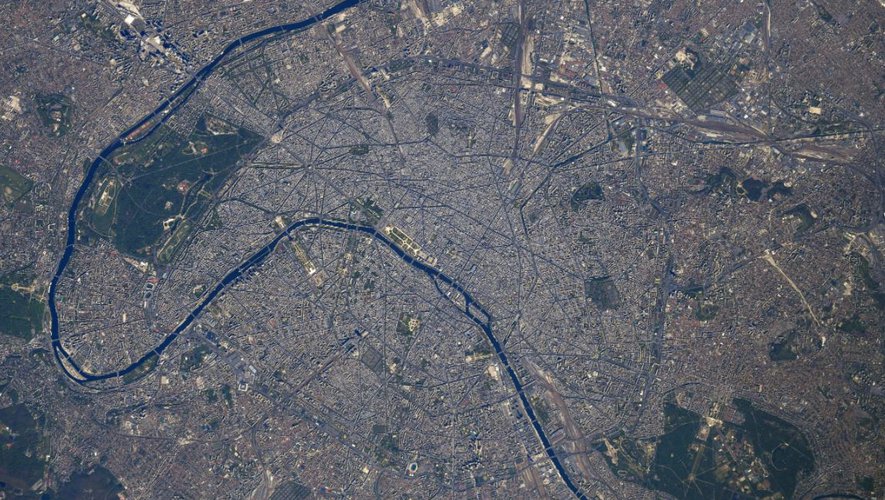
Thomas Pesquet just shared this photo he took on the International Space Station of Paris from above and it made me wonder … Who took THE FIRST aerial photograph of Paris?

VIew of Paris from the International Space Station, Thomas Pesquet 28 April 2021

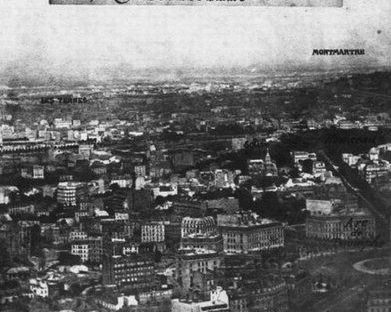
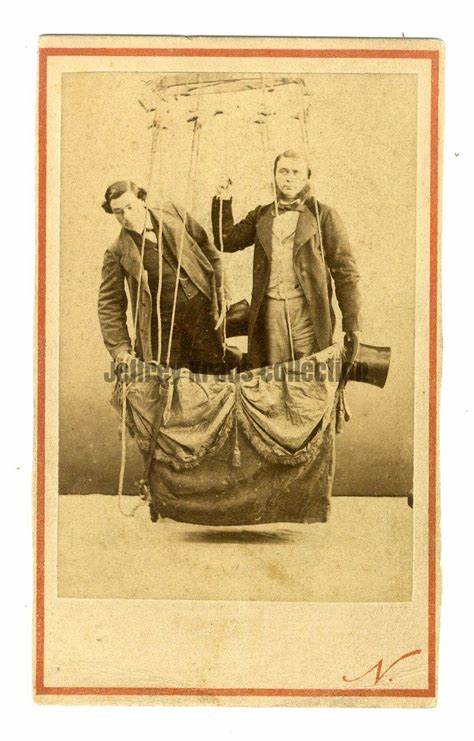
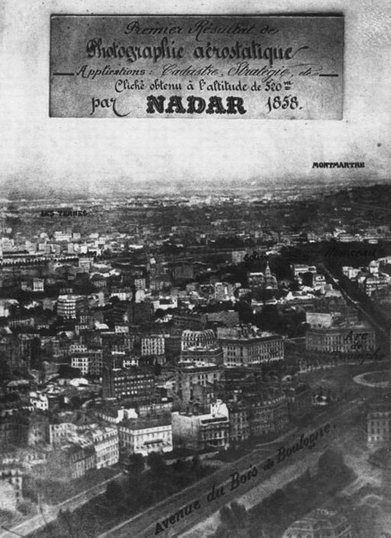
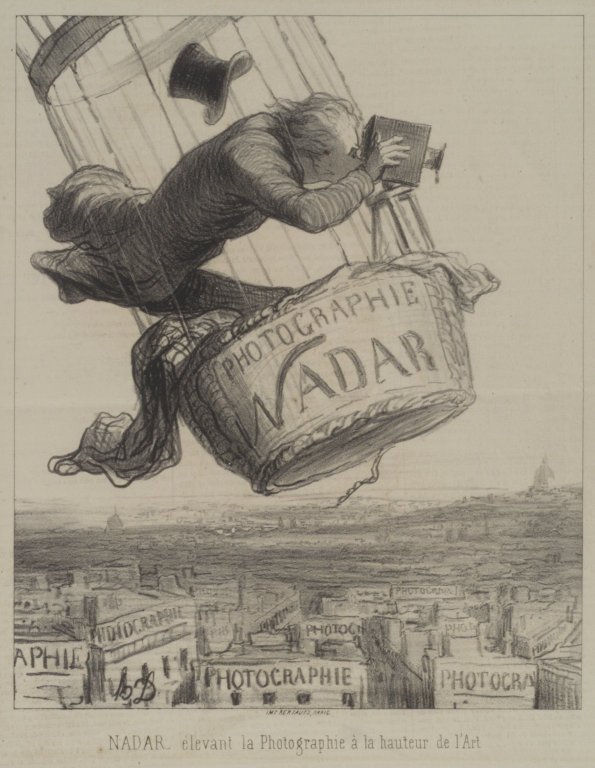
That honor goes to old school adventure photographer Félix Nadar who sailed the skys of Paris in 1858 via hot air balloon with the help of two Aeronautique Pioneers, the brothers Louis and Jules Godard.

Soaring the skies via Fireball Balloon wasn’t exactly new technology at the time, The French were responsible for that FIRST too in 1783 thanks to another set of brothers, Joseph-Michel and Jacques-Étienne Montgolfier. (fun fact- in French a hot air balloon is called a Montolfier)

(Nadar elevating Photography to Art), published in Le Boulevard, May 25, 1862.

Nadar holds the honor of being the first badass to take advantage of those heights and bring his camera along for the ride. Only 150 years (and a few kilometers) of difference between Thomas Pesquet and Félix Nadar’s aerial photos of the city of lights.

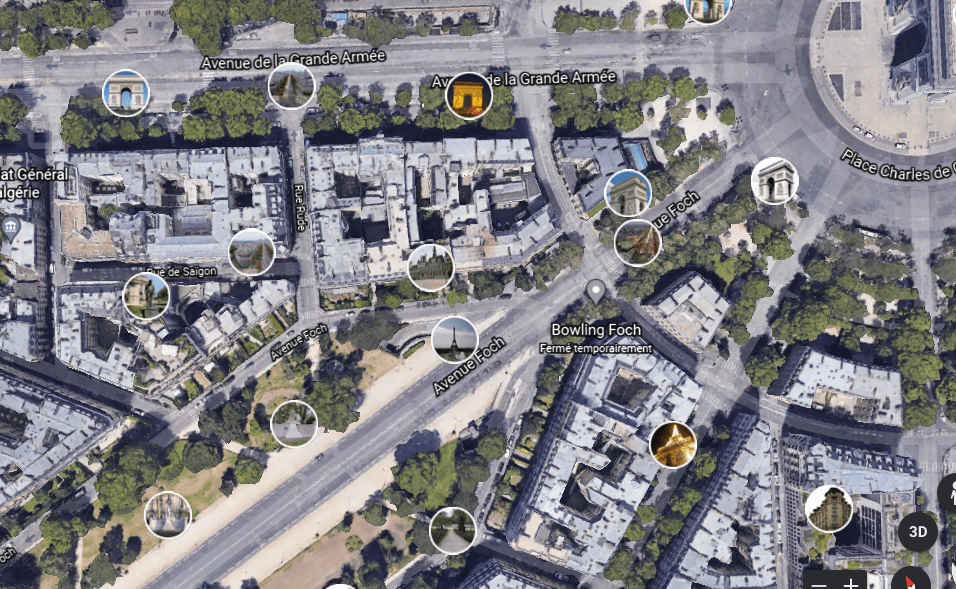
Same-ish view of Nadar’s photo today via Google Earth, taken near the Arc de Triumph and Avenue Foch

Unfortunately Nadar had a falling out with the brothers in 1863 and he prematurely ended his days of adventure photography.

JUST KIDDING! Where do you go when ground zero bores you and the skies are no longer within reach? Down of course! Where Nadar also made another historic FIRST. Check out the link below.