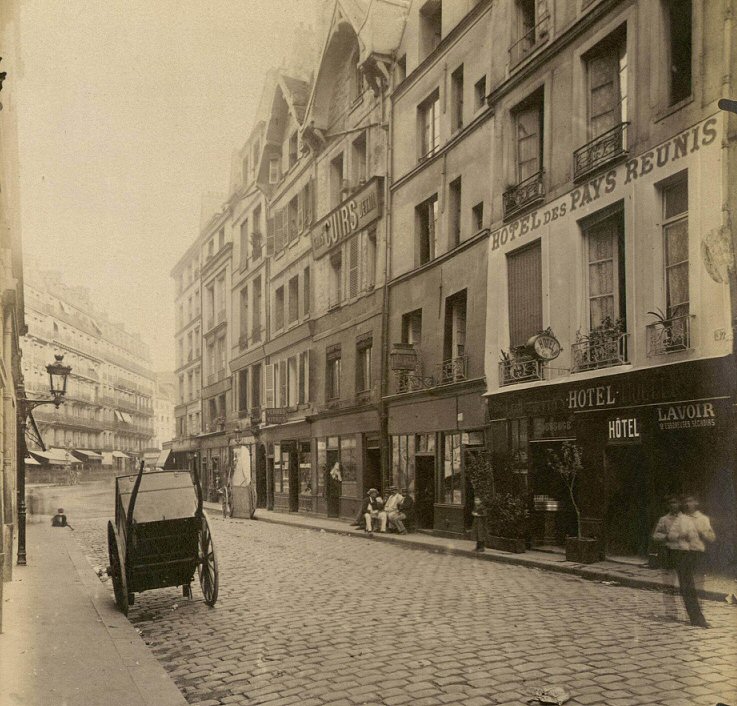
Three curious 15th century buildings, photo from about 1900
These maisons à pignon (gabled houses) are some of the oldest buildings in the city of Paris. They date back to the 15th century guys, that blows my mind! So why don’t we see more of them?
Because they are old as dirt, and about as flammable as a hot fart! We can thank 19th century Paris Urban Planning Transformer Eugene Haussmann for leveling medieval streets just like this that once existed all over Paris. Rue Galande was thankfully preserved.
Another view from the other side. This photo was taken around 1900 by Eugene Atget. Can you compare it to the above photo and spot the differences? The Paris Medoc sign has changed to CUIRS
If you were to travel back in time to Paris circa 1600, streets here would be narrow, dark, and rank- all lined with a seemingly endless array of tall and narrow half timbered buildings. (Half timbered because rocks and plaster filled in spaces between wooden supports, as opposed to something like a log cabin built entirely of wood)
To sum it up: if you weren’t like the 1% living a life of luxury in your stone Hôtel Particulier (castle like mansion) you were living in a wooden timber framed house. And heating the rooms, cooking the meals, and boiling your water from a fire. That was, uh, in your wooden house. Smashed up against other wooden houses.
Makes sense! NOT.
Following a disasterous fire in London during May of 1666 that wiped out entire neighborhoods, King Louis XIV realized that his city was very fire friendly, so he passed a law in 1667 that forbid buildings to be constructed as “pignon sur la rue” (with the gabled roof facing outwards perpendicular to the street, giving the roof a triangular appearance) because fires could easily “jump” between roofs that are built this way, (thanks for the heads up London!) as opposed to roofs that ran parallel to the street where a fire proof wall could seperate them. Houses also were required to cover their timber framed facades (front of the building) with plaster as a means of fire prevention.
Very few of these old homes remain in Paris today, but the most well known are these gabled houses in the Marais which many falsely consider to be the oldest.
Rue Francois Miron. Apparently these buildings existed in the 15th century but they were heavily renovated in the 1960’s
I always wonder why these curious buildings of the Rue Galande never make headlines in the “Oldest Buildings of Paris” lists, but I enjoying pointing them out to tourists when I’m in the area.
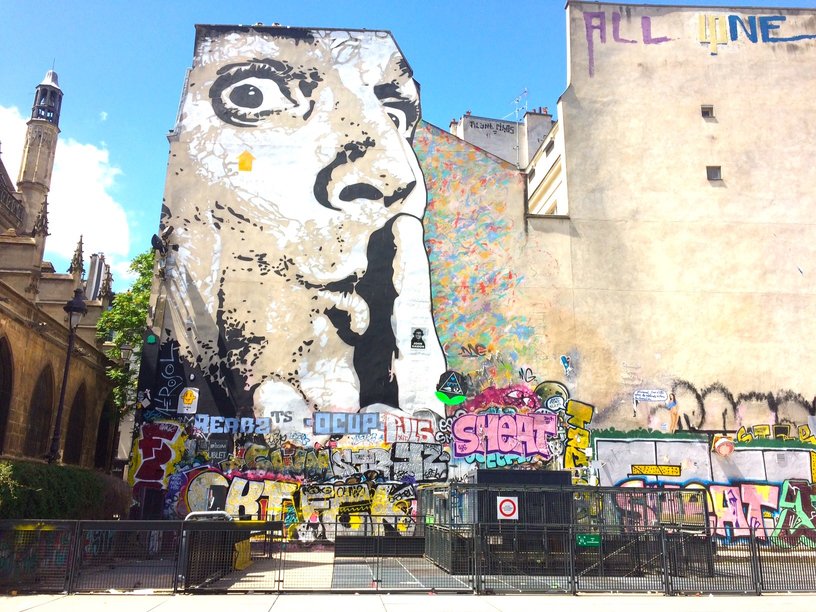
One of the main purposes of this page is to inform you of the little gems hidden in plain side throughout Paris and this one is sure to be walked past by hundreds of clueless tourists on a daily basis. I’m no collector of fine art (especially modern art- ew gag me) and all I know about Salvador Dali is that he is the creator of various trippy paintings depicting melting clocks and watches,
A Dali Wall Mural in Paris, photo by Urban Adventures
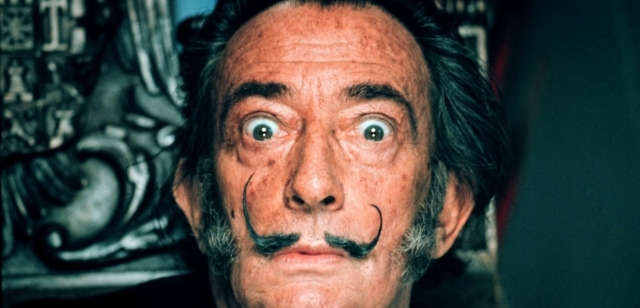
Dali lived in Paris in the 60’s/70’s where he used to go for walks with his pet anteater, he was the wrapper designer of Chupa Chump lollipop, and he had one hell of a moustache. But hey, you can find all of this on google yourself. You are here for the secrets right? Well here’s one most people walk by and have no idea even exists..
Dali and his pet Anteater coming up from the metro, 1969
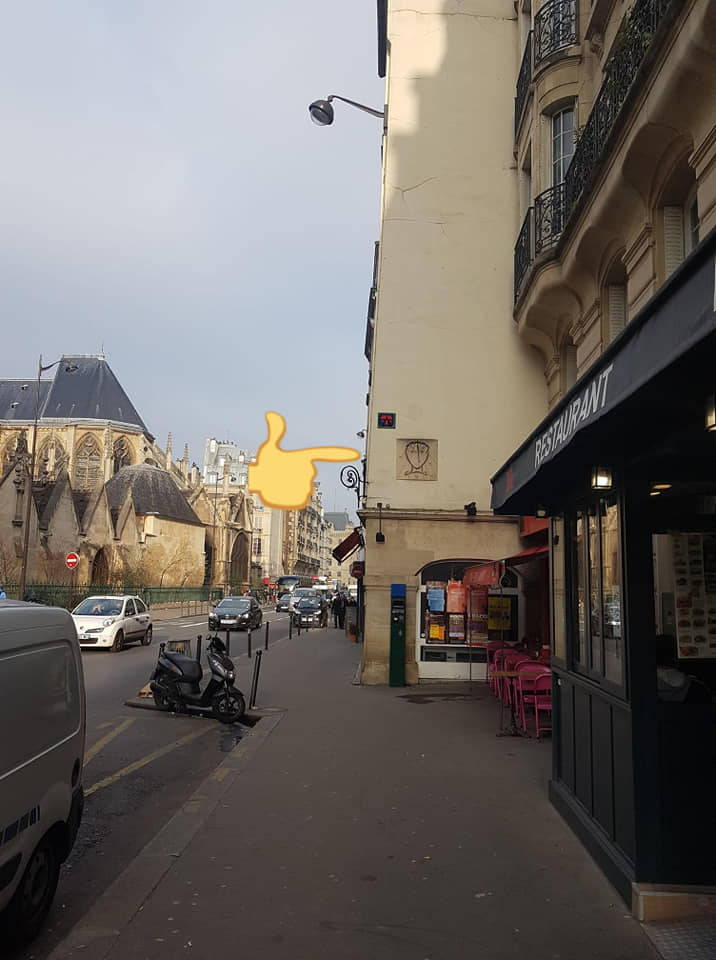
If you walk along the historic Rue Saint Jacques, not far from Notre Dame cathedral, be sure to look up (but also keep an eye out for those god damn annoying electric scooters) so you don’t miss the sun dial he left behind near number 27.
The Rue Saint Jacques looking north from Boulevard Saint Germain
There isn’t much information on this footprint left behind by Dali other than it was painted here by him in 1966 and revealed in a ceremony that included a brass band and his anteater. The image seems to be a combination of the artist (note the ‘stache) and a shell- probably representive of the pilgrimage route Saint Jacques de Compostella which follows its namesake Rue Saint Jacques through Paris all the way down to northwestern Spain. (Dali was Spanish) If you look in the bottom right corner you can see his signature; and the year it was placed here.
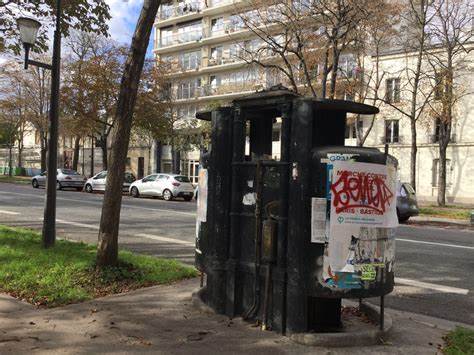
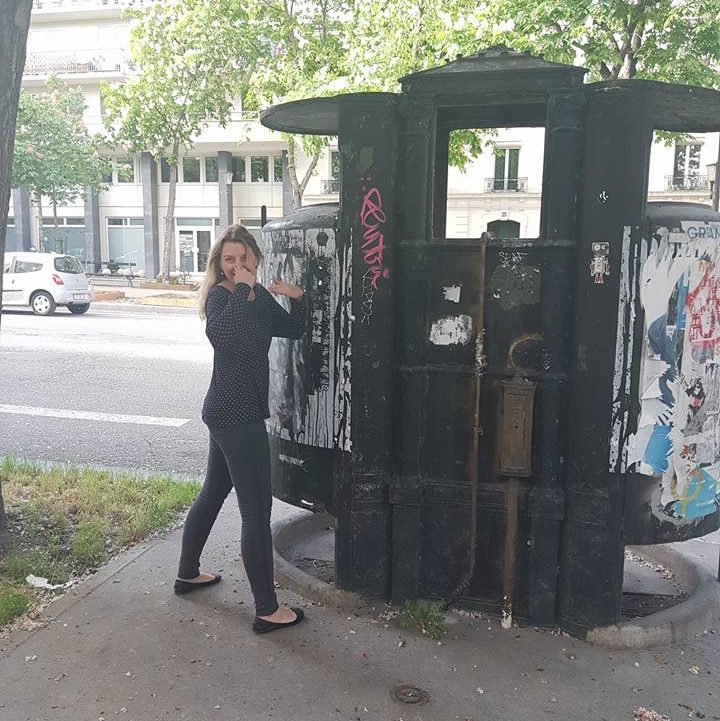
The last public urinal, neglected but still standing proudly
Today I’m taking you on a field trip to view the last remaining vestige of the modern porter potty, a relic of simpler times- when taking a piss in public didn’t mean whipping out your willy behind the limited privacy of your car door and throwing open the golden gates of your bladder while parked on Rue Saint Jacques. (Ran past a guy -in a business suit- doing this very thing in broad daylight recently)
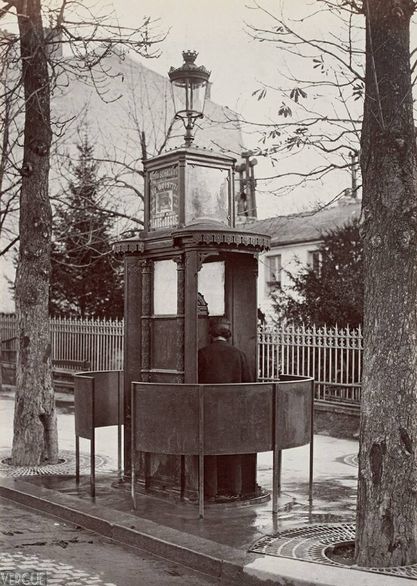
The Pissoir or Vespasienne (named after the ancient roman emperor Vespasien, who taxed people for using public urinals) first came about in the 1830’s in an effort to keep streets cleaner and preserve the dignity of females in the street who may have been unfortunately exposed to Mr. Longfellow during a public wee. It wasn’t long before someone had the bright idea to throw advertisements on the pissoirs to sell various products while also combating public indecency.
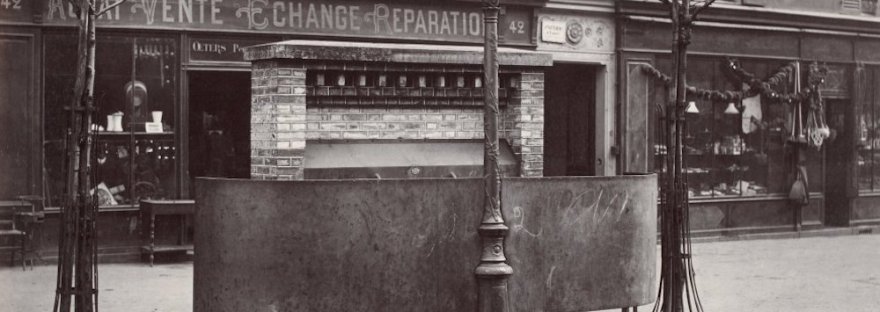
A large Vespasienne near the former Les Halles Paris markets
The pissoirs reached their peak in the 1930’s when there were about 1,200 throughout Paris but that number quickly shrank to 329 in 1966, probably due to the city not replacing ones that were broken and run down. After 2006 there was only one, and its currently situated on the picturesque Boulevard Arago in the 13th arrondissement. Its apparently still in use, obvious by its smell.
That ain’t just normal urine folks. THATS UTI URINE!
Initially I wanted a photo inside, but this is as far as I could go before I started gagging
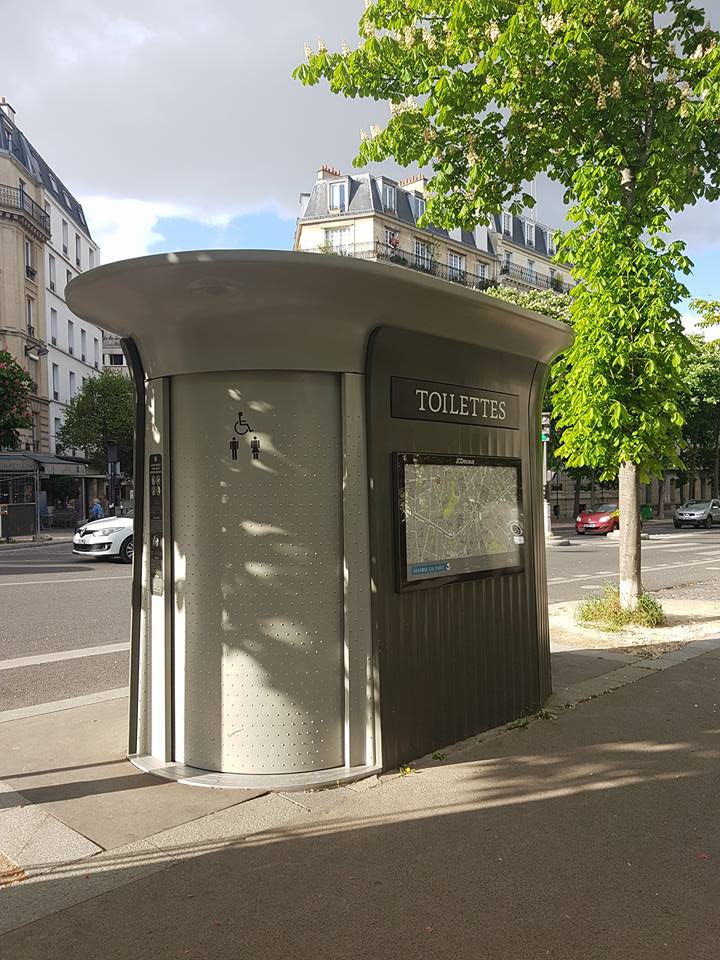
In the early 2000’s, the pissoir made a comeback and was rebaptised as the Sanisette. These bulky grey cube-like self-cleaning public toilets offered more privacy and were less smelly and dirty than the iron pissoirs who were probably only rarely doused with water. Originally you had to pay to use them, but they were made free to the public in 2009. The concept is great; they are accessible to all (male AND FEMALE, and they are wheel chair accessible, which is rare in Paris), they have a rinse cycle after every use, and are environmentally friendly. Some even play music!
The Old School Vespasienne VS The Modern Sansinette
There are currently more than 400 Sansinettes in Paris- yet they are used mostly by tourists and drug users. (The door automatically opens after 15 minutes in an ineffective effort to fight this) For myself, I used them in the beginning of my Paris life when I was desperate but now I’d rather pay 1€ for a café and use a dry toilet seat in a café.
Recently, a new type of public urinal (see photo below) has been its appearance in Paris, mostly on the riverbanks of the Seine. Despite its strangely, uhhh feminine appearance- (I’ll refrain from referencing female genitalia) let’s be honest- it’s there to cater to the male picnic population and their bladders full of rosé.
Before The Big Fire, the Cathedral of Notre Dame was one of the most visited landmarks in Europe and about 13 MILLION people come annually to see this gothic wonder. Since it’s first stone was laid over 800 years ago, Our Lady has been a beacon in the city of lights to Parisians, pilgrims, and tourists from all over the world.
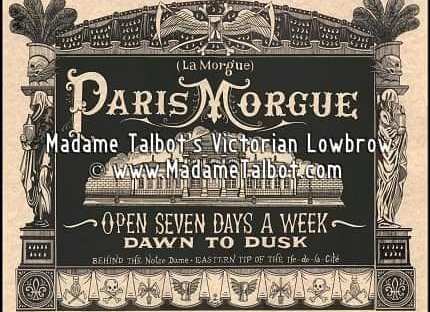
Imagine you are a visitor to Paris in the 19th century looking in your travel guide (yes travel guides have been around longer than Rick Steves) at the ile de la cité. Chances are the first recommendation wouldn’t be ND, but rather the other, even more popular attraction in the area… The Morgue.
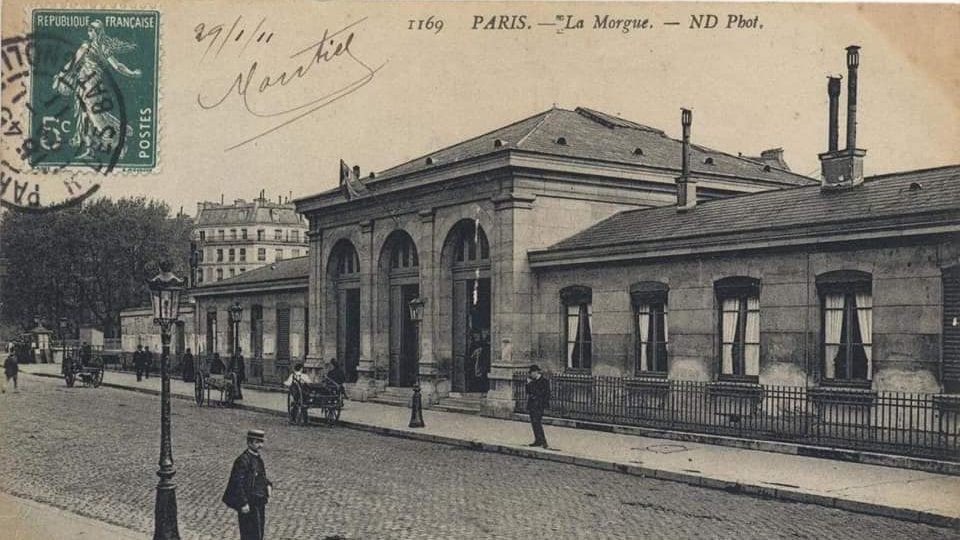
No visit to the Morgue would be complete without a postcard!
Listed as a MUST SEE next to the Eiffel Tower and Catacombs, the morgue was described by Hughes Leroux in 1888 as “a part of every conscientious provincial’s first visit to the capital”.
To give you an idea of its popularity, the Eiffel Tower today receives about 20,000 visitors per day. In the 19th century the Morgue received as many as 40,000. We all know our Victorian predecessors were a rather morbid bunch (“oh poor Granny kicked the bucket last night? Quick Edmond, throw her in her rocking chair and force her eyes open so we can get a photo op before the rigamortus sets in!”) but this macabre tourist attraction might be excessively ghoulish.
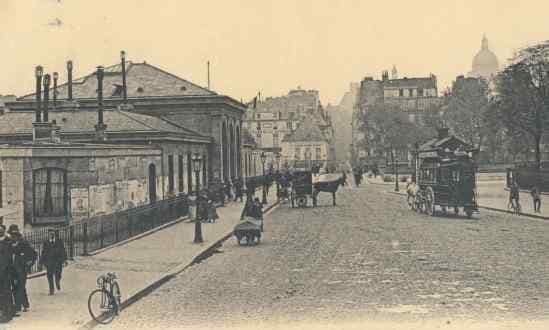
Originally situated on the Quai du Marché Neuf, a larger and more modern Morgue was built in 1864 in the backyard of Notre Dame on the Quai de l’Archevêché. Although the morgue was built for the intended purposes of identifying and embalming bodies (most of which were fished out of the Seine, which conveniently flowed just a few meters away) it was literally advertised as being a sort of grim spectator sport.
Morgue interior in 1845
Similar to visiting an oddity at a Carnival like a bearded lady or conjoined twins, up to 50 people at a time would pass through the entry and gaze at the cold, naked bodies laid out on marble slabs behind a window of glass.
Anyone and ANYTHING (yes that detached leg might look familiar to someone) that needed to be identified was displayed at the Paris Morgue. Thick velvety curtains were hung at either end of the display room so workers could discreetly change bodies on a regular basis, and then dramatically open the curtains like a stage show.
Spectators would gawk and gossip over the remains; murder victims and young women drew the most crowds. Jersey Shore wasn’t a source of entertainment in the 1800’s, but to get your fix of reality entertainment, you could come to the morgue when the police arranged a special “confrontation” between a murder suspect and his victim! Our wholesome American author Mark Twain was even known to be a regular visitor of the Paris morgue.
Strangely enough, the Morgue wasn’t just a place for tourists. It was a social place to see and be seen; with men, women, and children from all social classes passing through its doors regularly in the name of civic duty, sometimes stopping to have a chat with neighbors outside to gossip over the most recent finds, maybe even buying cookies or gingerbread from various venders near the opening to snack on before entering.
Emile Zola described the morgue in his book Raquin from 1867 as “The morgue is a sight within reach of everybody, and one to which passers-by, rich and poor alike, treat themselves. The door stands open, and all are free to enter. There are admirers of the scene who go out of their way so as not to miss one of these performances of death. If the slabs have nothing on them, visitors leave the building disappointed, feeling as if they had been cheated, and murmuring between their teeth; but when they are fairly well occupied, people crowd in front of them and treat themselves to cheap emotions; they express horror, they joke, they applaud or whistle, as at the theatre, and withdraw satisfied, declaring the Morgue a success on that particular day.”
The morgue was eventually closed in 1907 due to “morality concerns” and this was good timing given the horrors that would soon come from WWI and II.
You may wonder how people not far off from us today, (maybe even some of you Boomers knew them as your parents or grandparents) could entertain themselves in such a horrid way, but its important to note this was during a time when executions were still public and death was much more a part of daily life. Besides, you were probably keen to check out The Body Worlds exhibit when that took the modern world by storm weren’t you?
Today, the building is gone, and a there is a simple park with a Holocaust Memorial in its place.
Today I want to share with you one of my most precious Paris discoveries, the kind of tale that just blows my mind continually, and makes me want to cover all the other secrets undoubtedly hidden, LITERALLY, in the streets of Paris.
I hope I am not boring you with Notre Dame hidden gems, but you can’t deny that this 856 year old behemoth of a historical landmark has more drama than one of those paperback romance novels from the 80’s with a bare-chested Fabio deflowering a graciously bosomed Dame in his arms on the cover.
In one of the greatest archeological discoveries (in my humble amateur non-archeologist opinion) of the 20th century, was the random unearthing of 21 stone heads and other fragmented sculptures during the renovation of The French Bank of Foreign Trade, which was located in the Hotel Moreau in the 9th arrondissement of Paris.
Let’s go back to the time of the French Revolution..
The Cathedral in 1845
By order of the Convention of Paris in 1793 (the new government which took the place of the head-less Louis XVI and French Monarchy) all images of tyranny and superstition were to be eradicated. It started off innocently enough; streets and squares were renamed (Place Louis XV became the infamous Place de la Revolution, where King Louis XV’s grandson King Louis XVI would be decapitated) and statues like that of King Henry IV that sat next to the Pont Neuf were discarded.
Everyone going BANANAS at the Place de la Revolution
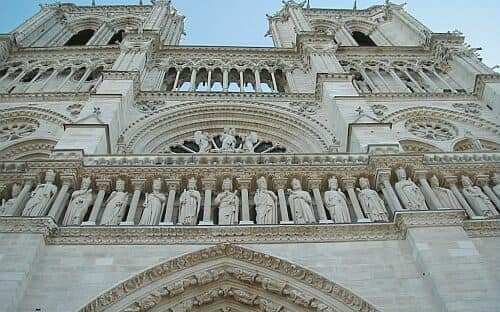
Unfortunately for French History and Culture, in the ensuing witch hunt of anything resembling royalty, the French people got a little too carried away with their mad frenzy to bring all the power to the people, and made a few mistakes by destroying their heritage (hmm this seems to be a popular theme). Notably, on October 23, 1793 some asshole stood in front of Notre Dame cathedral and pointed to the 28 statues gracing the three portals and shouted “hey, guys!! Check it out! See those Royal-ish statues way the hell up there? Those are FRENCH KINGS! Let’s mutilate them, and push them off the edge!!” and everyone was like “Hell yeah!” and voila, bye-bye 630 year old relics of gothic architecture.
In their haste, they had mistaken the Gallery of the Kings of Juda as French Kings, and these limestone statues were pushed off the Cathedral and discarded. Reconstructed and added to the cathedral during the 19th century, (and who assume their position today) the original heads were assumed to have been thrown in the river Seine.
Or not. PLOT TWIST!
Monsieur Jean-Baptiste Lakanal, a weathly Parisian lawyer bought the heads of the statues in 1796 (apparently, they were just piled up in a nearby street for three years until people started complaining) and used them as a sort of foundation for the mansion/hotel particulier he was building on the Rue de la Chaussée d’Antin. A devout Catholic and knowing the real significance of the statues (but wanting to be discreet, because no one wanted to appear to have sympathy for the royalty during the French Revolution, duh), he followed the rules of “destroying” religious relics and buried each 3.5 meter head with respect, all interred in a line and facing the same direction.
He died not long after his home was finished and like many other significant historical artifacts, the heads were forgotten.. but not forever! Some 180 years later, in spring of 1977- construction workers were enlarging the basement at the French Bank of Foreign Trade, and they unearthed 21 heads (the other 7 are still missing).
Where the heads were uncovered..
In another remarkable twist of fate, the President of this very bank, Francois Giscard d’Estaing, who was the cousin and good friend of the French President (of the 5th Republic) in 1977, Valéry Giscard d’Estaing- was very knowledgeable in archeology and suspected immediately that the heads found in the foundations of his bank were the original Kings of Juda. With the help of other archeologists and historians, Francois proved himself right, especially when the heads were discovered to carry the same traces of paint used to decorate Notre Dame when it was first built! (Did you know Notre Dame Cathedral used to be COLORFUL? IS YOUR MIND BLOWN?!)
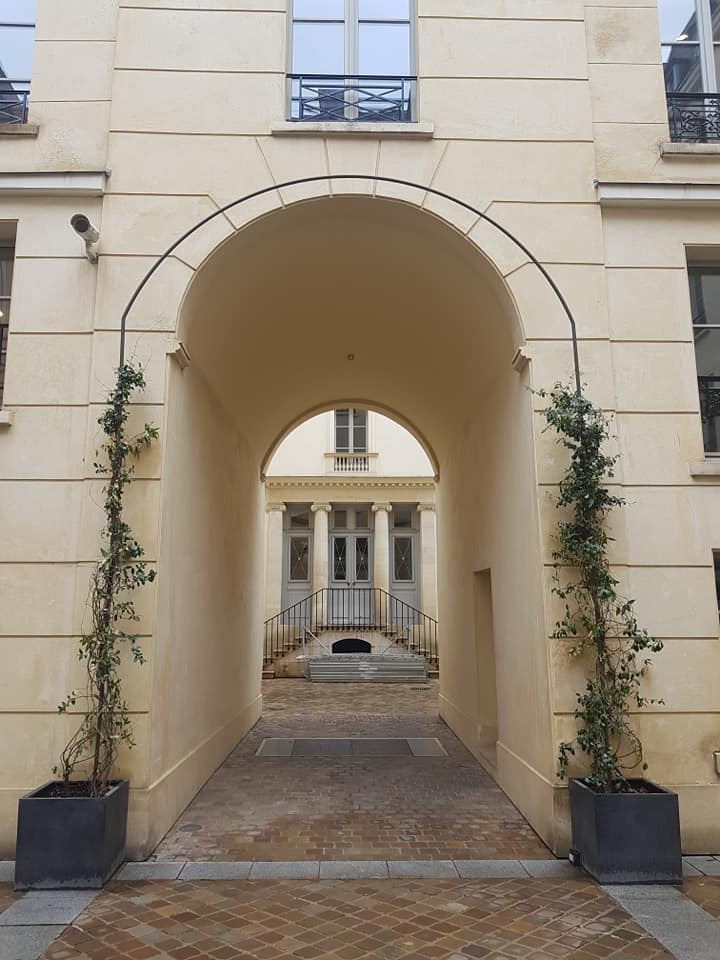
The Hotel Moreau today at 20 rue de la Chaussée d’Antin
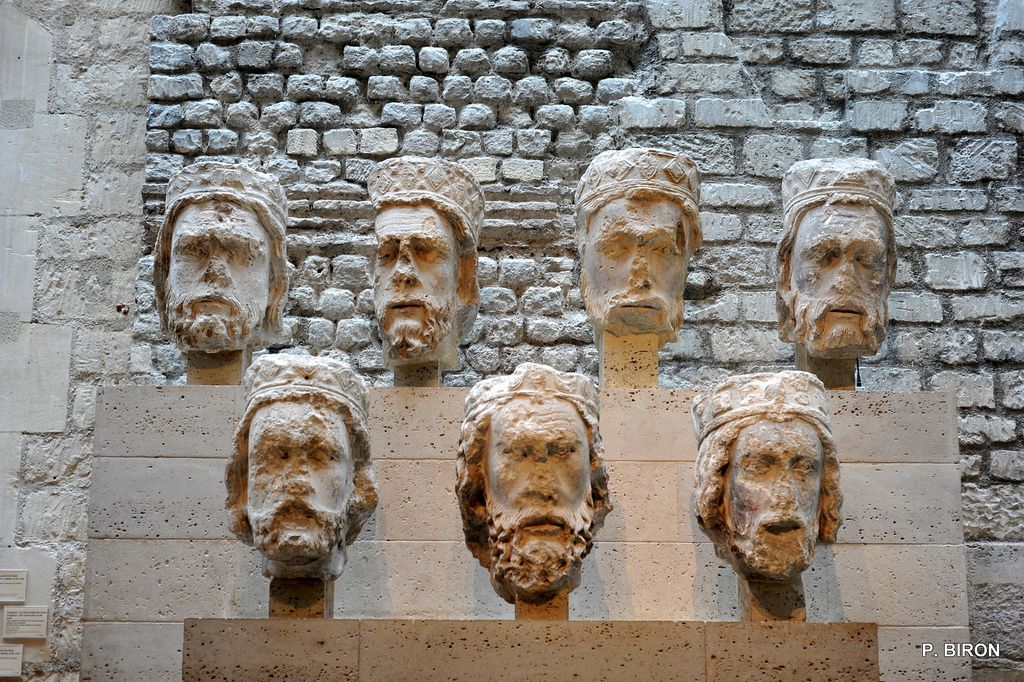
The heads were excavated, and put on display at the Cluny Museum, not far from their original home, where they remain today. And to wrap this up with a BANG, let’s appreciate the randomness of the unearthing of these statues. As Francois Giscard said himself, “Its an extraordinary coincidence that I should be the one to find them. I can only hope that the cousin of the French president of the 5th Republic can repair the misfortune caused by the President of the 1st Republic!”
The original heads at the Cluny Museum
I’m genuinely curious how many of my followers knew about this; its really one of the best, yet widely unknown “secrets” in Paris in my opinion! Please comment below!













 Paris History of our Streets